The plan is to sail from Suriname to one of the most beautiful sailing regions in the world - the Caribbean. Stubborn is to be left in Curaçao. The choice of location has several reasons. Yachts can be kept there indefinitely without the need for import, hurricanes do not cause destruction. If necessary, both in Curaçao and in nearby Aruba, the yacht can be taken out of the water at a slightly higher cost and also left for any length of time. The aim is for the ABC islands (Aruba, Bonaire, Curaçao) to serve as a base for the next several years. However, to reach the safe areas, it is necessary to pass through those, that are occasionally visited by hurricanes in the summer. Such a journey can only be undertaken without risk in the winter. The long holiday break and winter holidays right after are favorable to the plans.
Before departure, as usual, there are emotions. Is the yacht okay, will there be no issues with the customs procedures and will Stubborn be allowed to leave Suriname after such a long time, will the new marina owner not demand higher fees (over a year ago someone else bought it and is now running it). And to add to everything else, the USA is escalating actions towards Venezuela. Although poverty in the country leads to piracy, and the poor situation of the neighbor has significantly worsened security in Trinidad and Tobago, an open military conflict no one needs an open military conflict. Just in case, there is a plan B - a return to French Guiana. For now, the websites and apps tracking maritime traffic in the Caribbean reassure that everything looks normal there - thousands of units sailing between the islands. The Atlantic regatta of tourist yachts - ARC is also starting. In the family-style event, about 200 boats head from Las Palmas de Gran Canaria to Saint Lucia and then will move around somewhere in the Caribbean. Therefore, life goes on normally, day by day, reassuring worried friends and family, and on December 9th, we take a KLM flight to Suriname.
Prior to departure, Kama receives Christmas presents, including the desired acrylic markers. This allows for a more enjoyable time at the airports, and later during the cruise, she paints the stormboard in her bunk.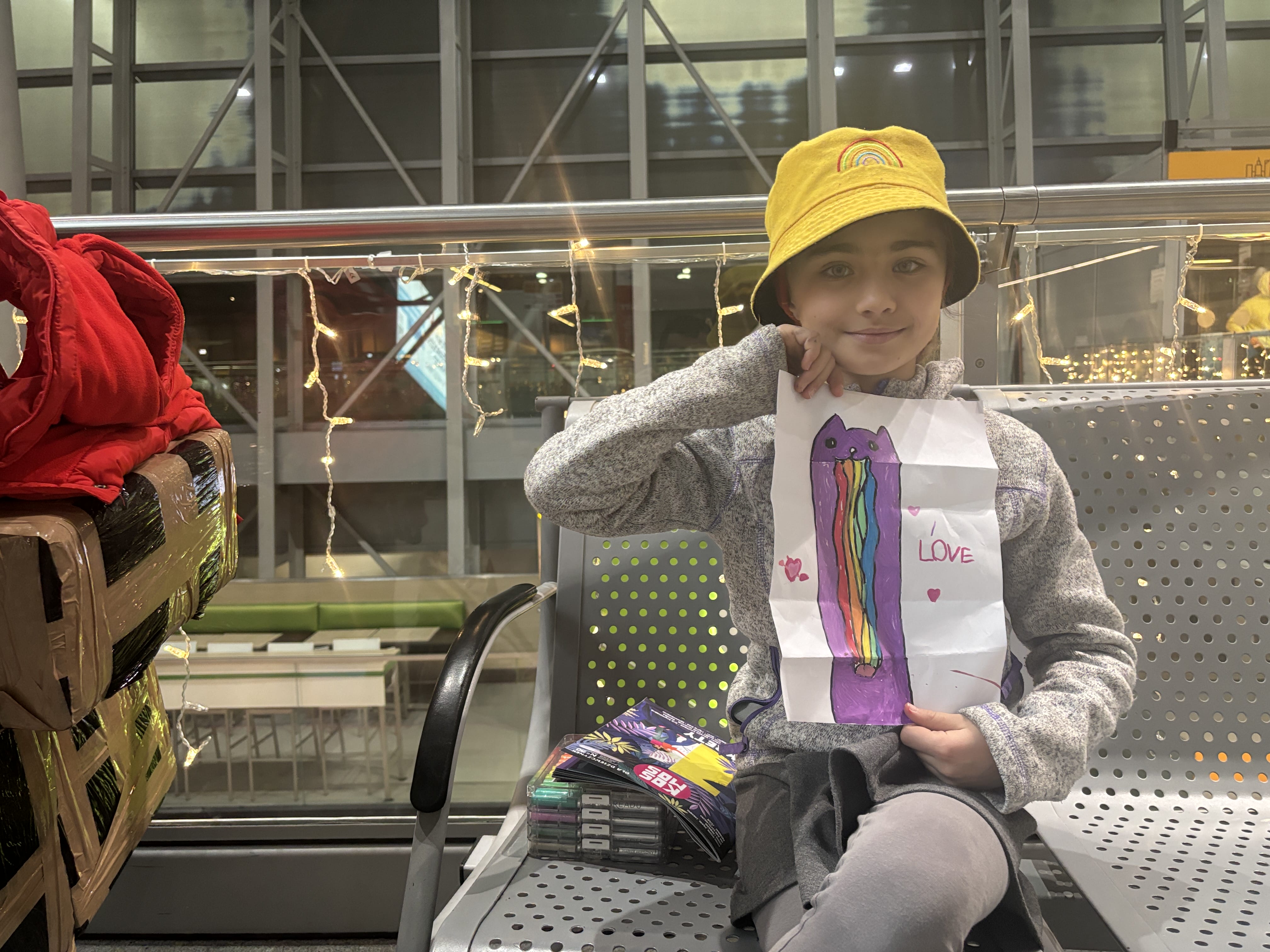
We don't want to take suitcases with us because then we would only be able to return with hand luggage. However, we have a lot to take in this direction - primarily new ropes (in Suriname, you can only get mooring ropes, but not ones suitable as halyards and sheets), pouches that we plan to attach to the harnesses for more convenient access to a knife, flashlight, PLB, and MoB system tags (during the Atlantic voyage we kept them in bum bags, but the strings fastening them to the harnesses often got tangled, hence the change). We are also taking spare, stainless steel tubes for potential wind vane repair and rope and cones to make a Jordan series drogue. This kind of drogue performs better than the "classic" one because wave crests disturb the work of only some cones (and not one big one) at a time. Additionally, it's easier to pull it piece by piece onto the yacht (the force decreases with every meter retrieved). Besides using the drogue in storm conditions (rarely, but they occurred even in December in this region), the drogue helps stabilize the yacht and provides time for repairs in the event of rudder failure, or simply allows for sail changes in more challenging conditions. Zuza is experimentally sewing the drogue cones from three different materials - dyneema, polyester, and nylon ripstop. We plan to try which work best and are the most durable.
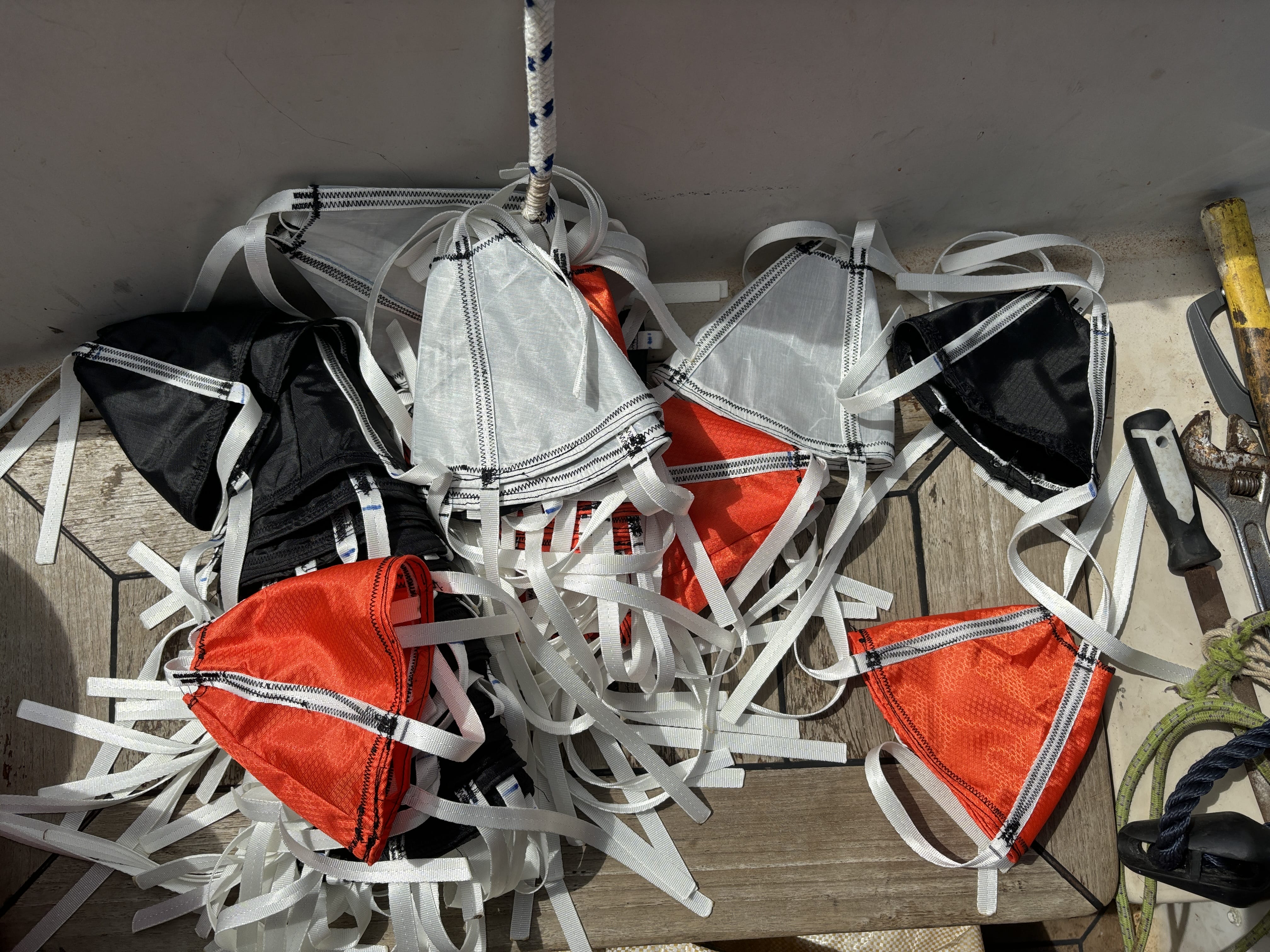
During the cruise, we towed three of them to avoid creating unnecessary resistance. With normal sailing speed of 4-5 knots, all performed well and none showed signs of wear. In reports on using Jordan series drogue in storm conditions, there was a problem of rapid deterioration of standard dacron as well as delamination of nylon ripstop (once recommended for this application). Our nylon material indeed delaminated under strong kneading by hand. It's hard to say whether other materials we tested will also prove to be durable under intense work in water, so finally we splice all three alternately and hope never to use our drogue.
In addition, we carry dozens of smaller items in the luggage. Whenever we bring luggage, it seems like there will be little left for next year, but during the cruise the list always grows.
All this is packed in cardboard boxes and carefully taped. We worry that strange packages might raise suspicion at the airport, but everything goes smoothly. Waiting for luggage in Paramaribo, we discover that a few other people also decided to transport items in cardboard boxes.
Suriname
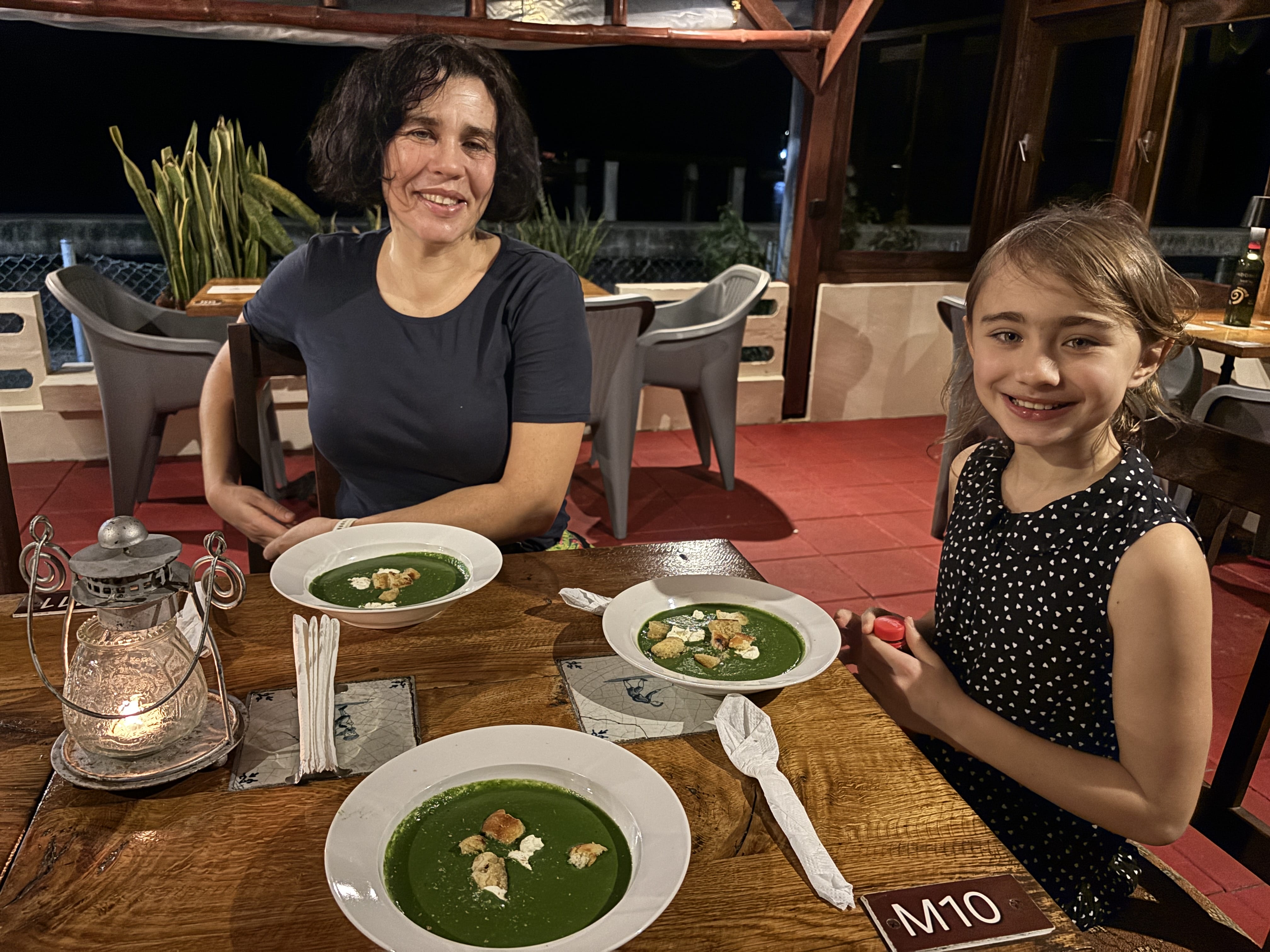
In the early afternoon 10.12, we land in Suriname. As agreed, a taxi driver named Hari awaits us and takes us straight to the marina. Here, we meet the new manager, Erik, and his wife. It turns out we are lucky - the restaurant is officially closed today because the hosts' friend, a renowned Surinamese chef, is currently training the staff, and we are invited to a dinner they are preparing together. While waiting for the food, we talk with the chef's wife, Marieke. She is Dutch and moved to Paramaribo as a teenager, where she met her future husband. Both studied in the Netherlands but felt that Suriname was their place on earth, so they returned and settled in the suburbs of Paramaribo. He cooks, and she promotes Surinamese art. She runs a blog http://srananart.wordpress.com, a photo gallery https://www.flickr.com/photos/srananart, Instagram: https://www.instagram.com/srananart, and X: https://x.com/srananart. The pleasant conversation is crowned with a delicious dinner.
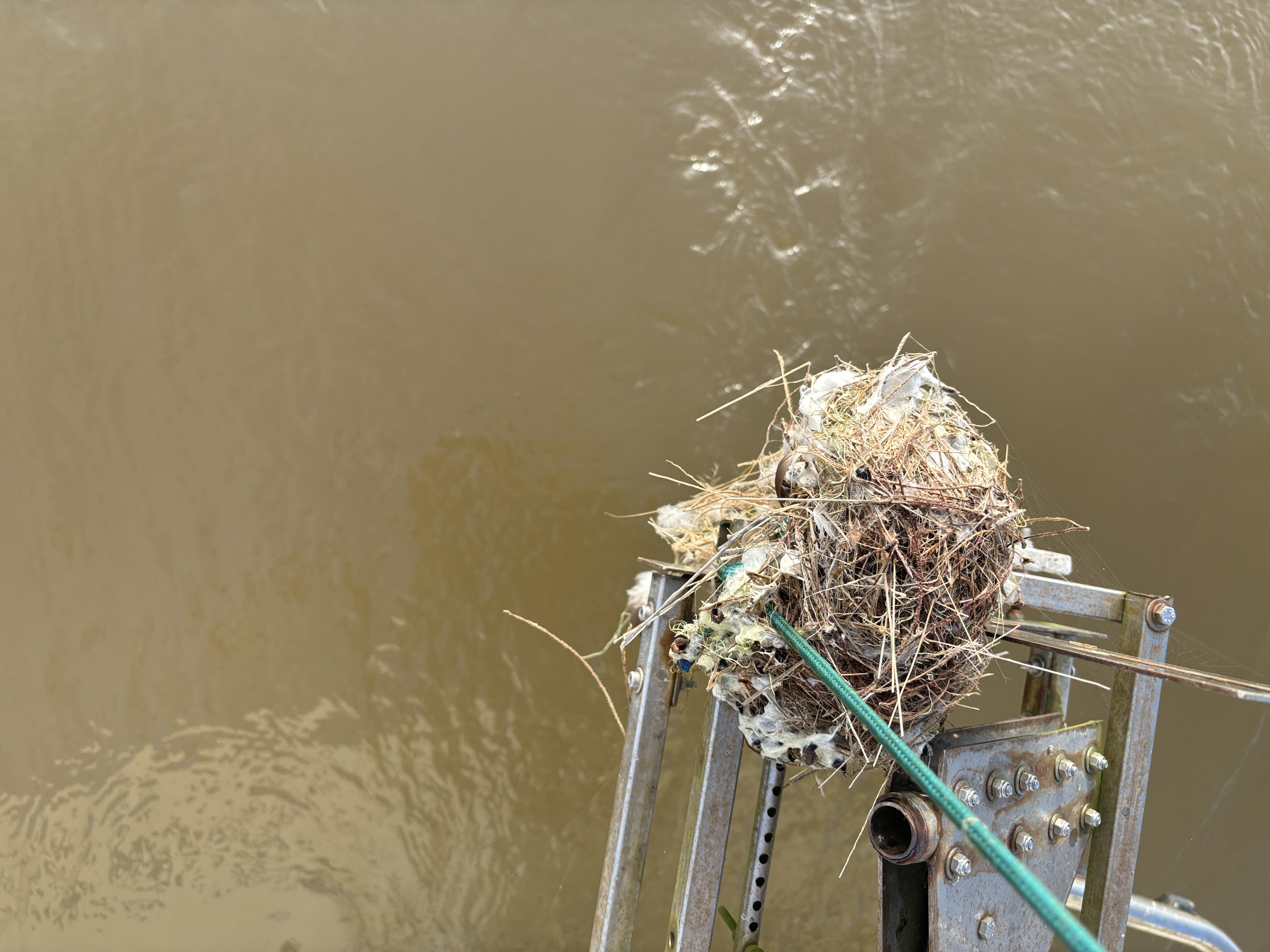
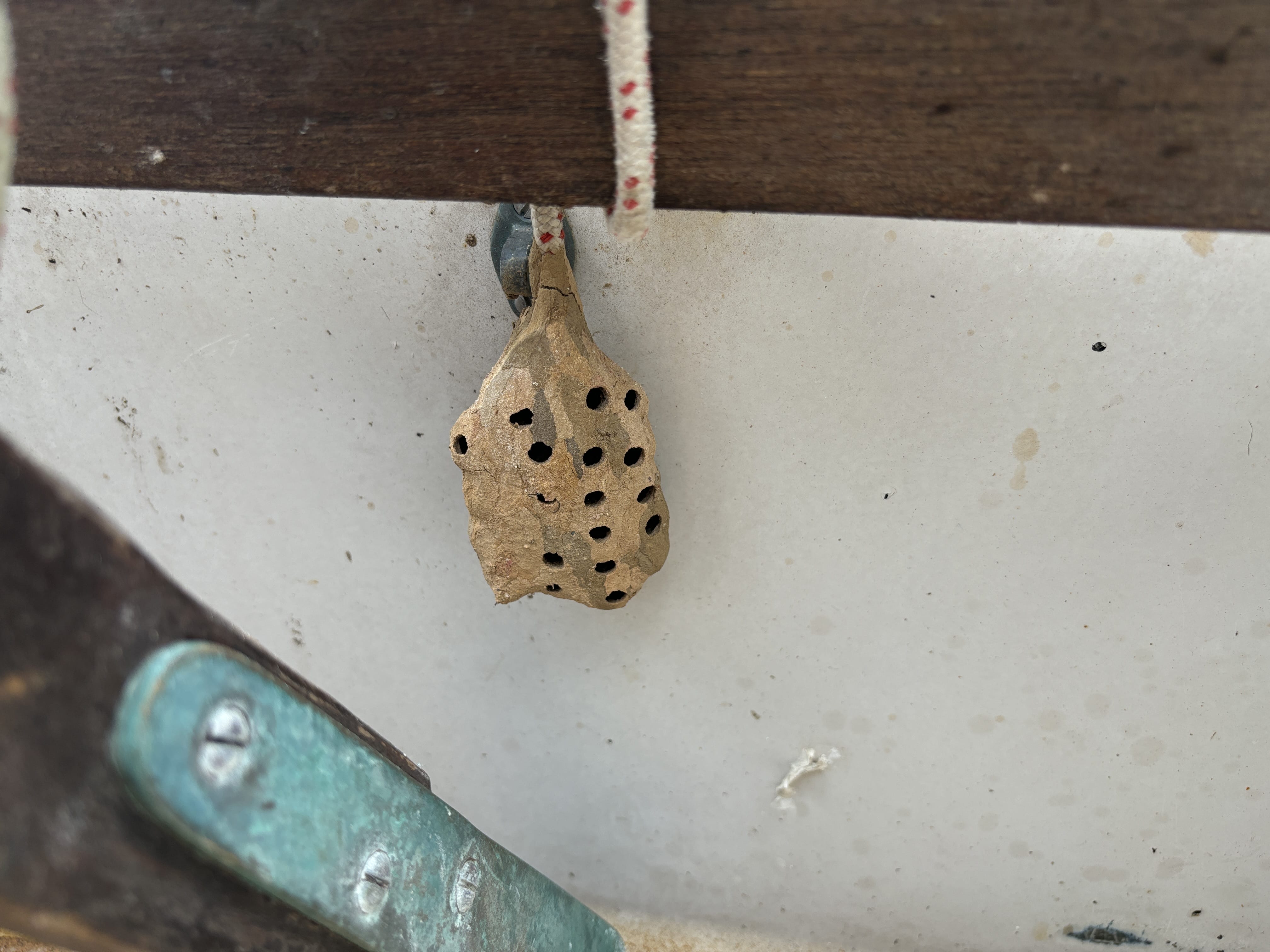
In the evening, we arrive at the yacht. Wilco, who took care of Stubborn during our one and a half year absence, did a great job - it is clear that the boat was regularly aired and is dry inside. Contrary to our fears, we do not discover a snake in any corner, but we do find three abandoned nests - a bird's nest on the autopilot, and nests of unknown insects on the lines in two places.
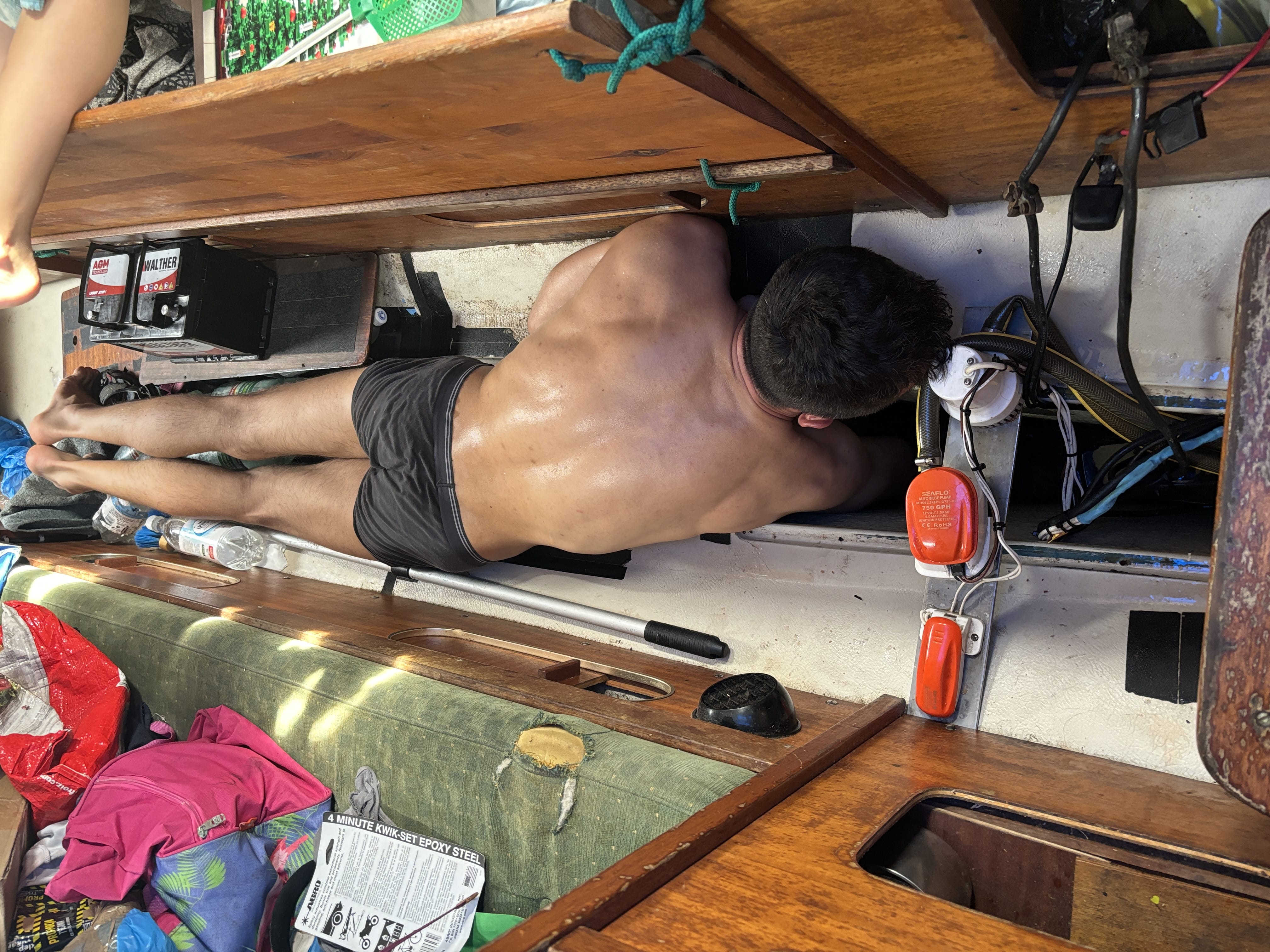
Tired but happy, we fall asleep. The marathon of works begins the next day. Theare are some planned like replacement of halyards, sheets, and fuel filters. Unfortunately there are unexpected ones as well. We need to replace both batteries, the anchor chain, and damaged MPPT (Maximum Power Point Tracking) regulators of our solar panels with ordinary modular DC/DC converters with adjustable output voltage (brought for another occasion, but we are really lucky to have them, otherwise we would be left with only one small solar panel). We also discover another batch of hardener for resin in the bilge - it turns out that transferring it from the original packaging to supposedly strong plastic bottles was not a good idea. Additionally, filtering the fuel and cleaning the tanks, as some biological sludge has accumulated despite the added poison. Smaller repairs are hard to count. We also have to officially check out of Suriname and gather supplies for the further journey - everywhere we read that the Caribbean is really expensive, and it is better to have as much food as possible with us. Kamil, who shoulders the majority of the work, loses about 2 kg. Meanwhile, Zuza develops some sort of allergy and swells.
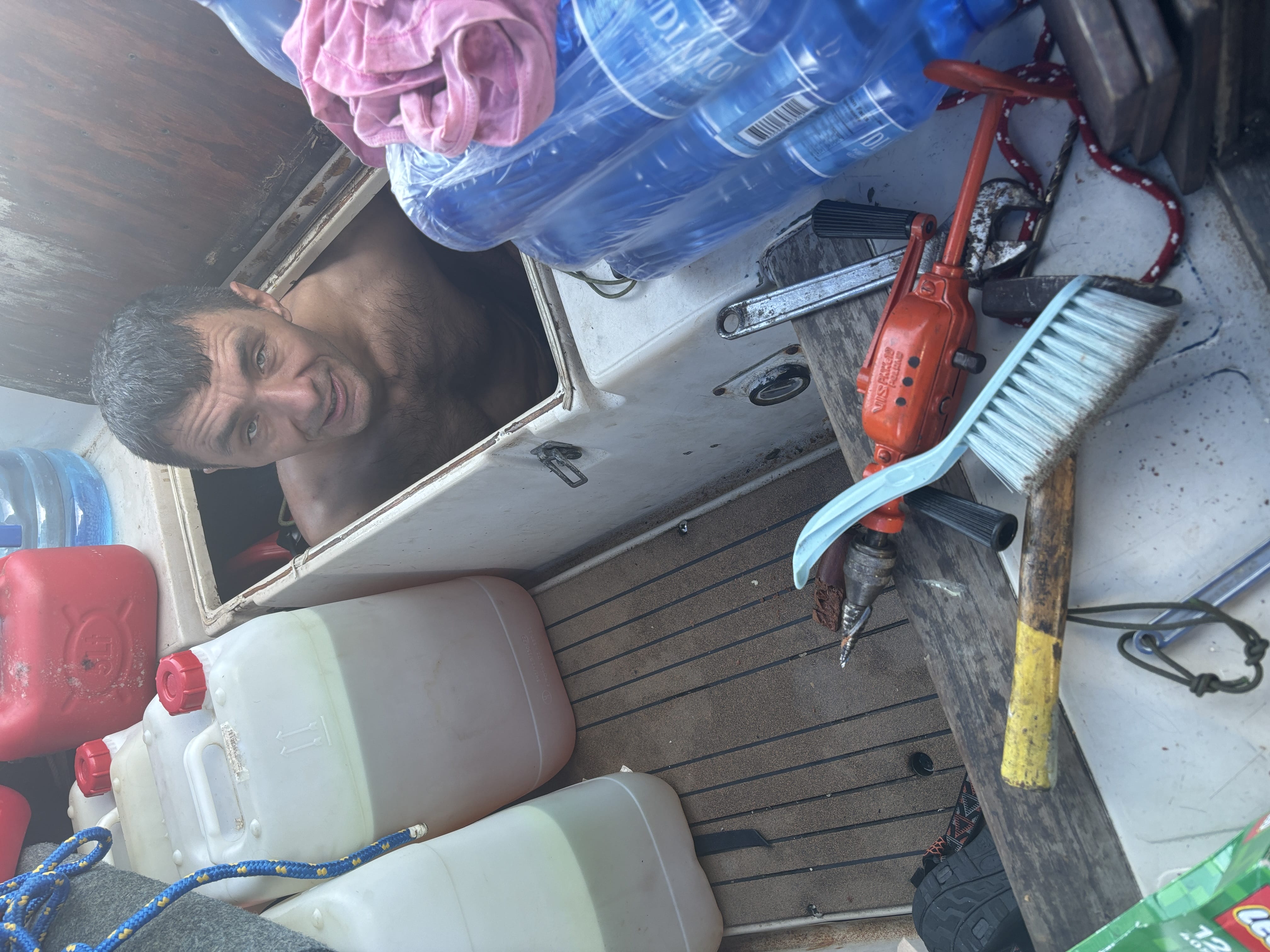
14.12 we manage to finish the preparations. We use a natural shower and pool.
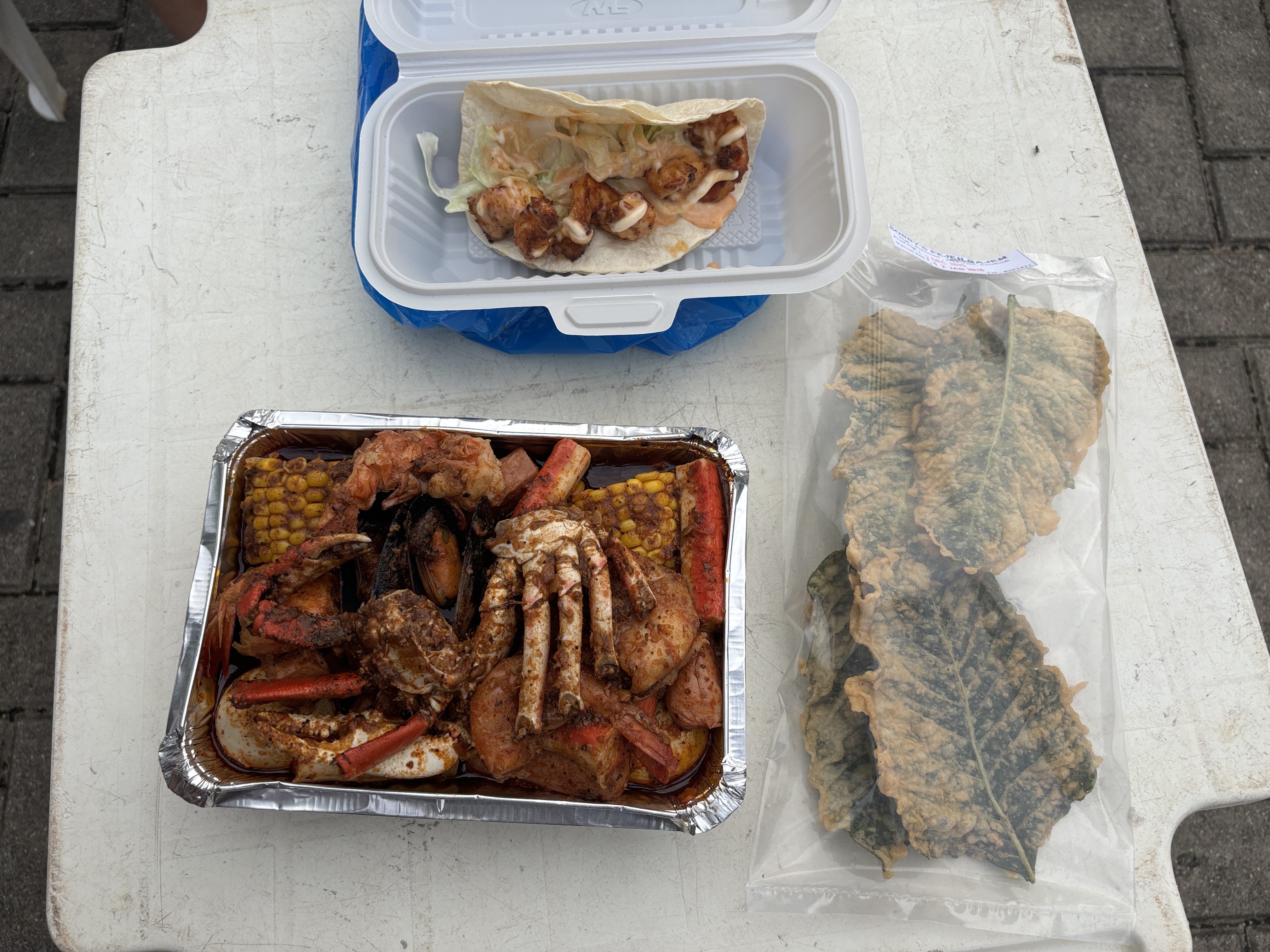
Christmas Festival takes place this evening in Domburg. Although Suriname is truly a religious and cultural melting pot, Christmas is evidently such a lovely holiday that everyone celebrates it. We indulge in a dish of shrimp, sausages, eggs, potatoes, and crab in a spicy sauce, along with perfectly seasoned sausages. We snack on leaves fried in batter. We ask how to crush the crab shell. Seeing our puzzled faces, the vendors pull out plastic forks but explain that the dishes are intended to be eaten with hands and there are no "golden pincers" for the crab; the shell must be cracked with teeth. We eat according to custom, getting really messy in the process, but the food is delicious.
At the end, we settle up with the marina. Erik fulfills the terms of the agreement made with the previous owner one and a half years ago, which pleases us greatly. The evening fireworks, which we admire from the boat, are a perfect end to a great day.
Back on the Ocean
On December 15th, we leave Domburg and move to an anchorage at the mouth of the Suriname River, and the next morning we set out into the ocean. We're apprehensive about this stretch, as we haven't had a chance to experience the waves and get over our seasickness this year. We try to keep things light, eat little, and stay safe. Zuza and Kama also take some Biodramine (Spanish medicine with dimenhydrinate), so we spend the first day in good shape and spirits. At night, we cross the edge of the continental shelf and pass a number of ships with limited maneuverability. They're clearly drilling for oil.
On the second night, the forecast is 20-25kt (unfortunately, the forecast changes from day to day, making it difficult to wait for a good one). The Guiana current has weakened further offshore and doesn't carry westwards as much, so we can go on a fuller course. We decide to drop the mainsail and stay on the jib. It goes well until suddenly, a whitewater wave spills over the side and rolls us so hard that the laptop from the right berth lands in the left berth. Fortunately, it is in a "pelicase" - a specially purchased case that withstands such "attractions." We are reminded that according to Czesław Marchaj's research, even a low rolling wave relative to the side can capsize a yacht when it hits from the side, so we change course. A full backstay would take us too far away, so we go under the jib to as sharp a close haul as possible. The waves wash over more from the bow, and it is better. However, Stubborn keeps pounding the bottom against the water, jumping off waves, and we worry if the rigging will withstand it. Strongly reefing the jib on the roller helps, and we manage to survive the night. Fortunately, the wind is gentler the next day, and we can rest. There are a lot of flying fish visible.
We are worried because Kama is lying flat and complaining about a headache. In the cockpit, the sun is blazing, and it is very hot below deck. It's uncomfortable here and there. Kamil gives the daughter a drink every 10 minutes because she's half-conscious and sweating heavily. We are wondering what it could be - sea sickness definitely contributes, but it's not just that - is it a mild sunstroke or something more serious? Clearly, the child feels awful. Will Neptune have mercy and grant a beautiful, calm night at sea on Kamil's birthday? Will Kama's health be a gift?
This night is different from previous ones. The wind is light. Occasional clouds pass by, along with heavy rain and strong squalls. Visibility is zero in the rain, but there's no lightning. The ocean is unusually calm. The air is noticeably cooler.
Kamil is just about to come off watch when he notices a faint light flashing over the waves, or even two, at a close distance to each other, right on our course. It can't be a large ship, because then you'd see a glow earlier. It's not on the AIS. After a moment, the light is already visible constantly, it doesn't hide behind the waves. So we're closing in quickly. We change course by 40 degrees and turn on the radar. Nothing can be seen on the radar—either the object in front of us is too far away or it blends with the wave echo—so it's small. Suddenly, something turns on two large spotlights, and from their distance from each other, it's clear that it's not far away (the two lights don't merge). It shines in our direction. Quite far from pirate areas, but...? Could it be a military patrol boat? What to do? Call on the radio? Not call? We proceed on a course changed by 90 degrees, observing the lights on the beam. After a few minutes, it's clear that the bearing changes, and the object isn't approaching. So it illuminated itself for us to avoid it. Maybe a fisherman or a sea angler. Atlantic kayakers probably have AIS? When we pass, the foreign boat quickly turns off the lights and soon disappears. It must have been something small and very close. A strange incident, 100nm from Barbados and even further from the shores of South America. We look behind the stern again. In the wake, bioluminescent creatures flicker like stars.
Between the rains, the sky is starry. A few of them fall in a spectacular way, drawing distinct, bright streaks. The night is not completely silent but beautiful and much calmer than the previous ones. In the morning, Kama wakes up in a much better state and eats a bit of Kamil's birthday risotto, which has been waiting for her since yesterday. So, it is indeed a night of fulfilled dreams...
We're halfway to Barbados. The next day is tiring, but not as hectic; the miles pass by slowly, but they pass. The next day, we're all in better spirits, knowing Barbados is within reach. Finally, we drop anchor at 2:00 a.m. Both adults collapse and sleep until 9:00 a.m., when the hungry child wakes up. We make breakfast, swim in the sea, declutter the boat a bit, and then finally begin to enjoy Barbados.
Barbados
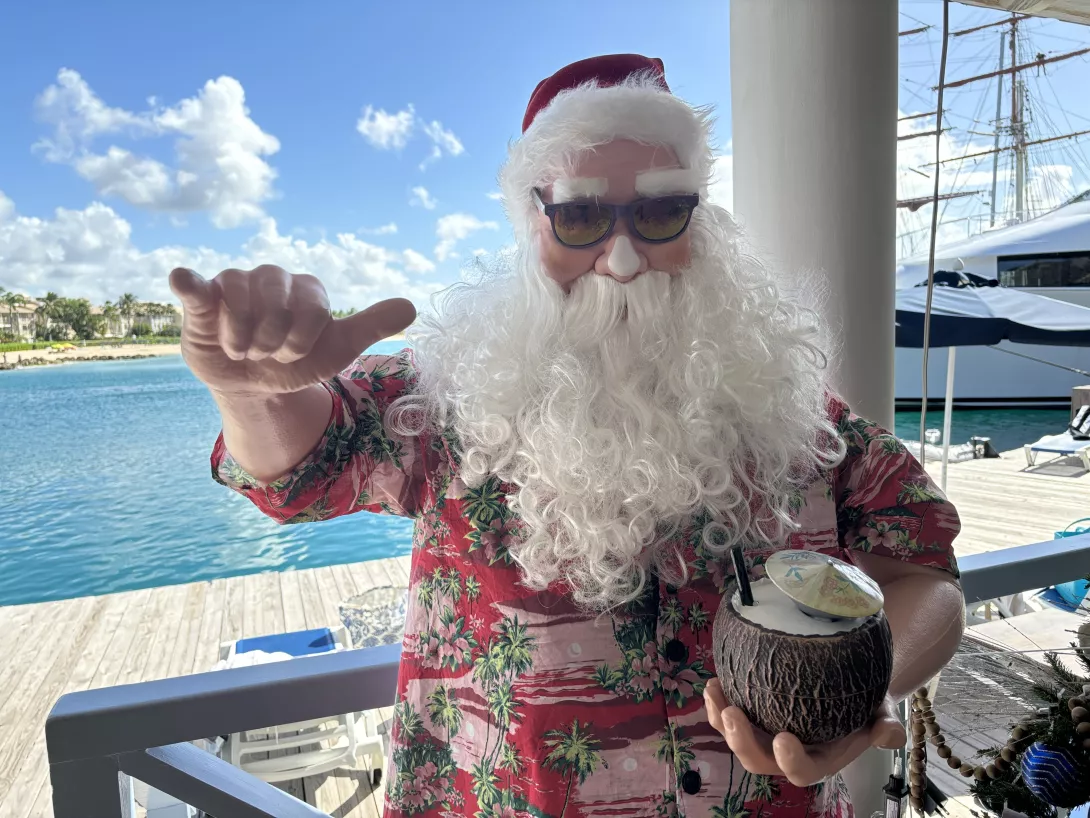
Sightseeing of the island should begin with a visit to the migration office. The jetty for dinghies is located by a tavern, where we are greeted by a Santa in a Hawaiian shirt. Although we land in front of the office at the start of the lunch break and have to wait over an hour for the staff to return, the time pleasantly passes by chatting with other sailors. The group of visitors is very "Baltic" - German, Danish, Swedish, and additionally Swiss. Finally, the office reopens, the formalities are not very lengthy and proceed in a friendly atmosphere. Finally, we can head into town.
We find an ATM, eat pizza at a local fast food place, and return to the boat - we are still tired after the crossing. For the next few days, we laze around and hardly move from the boat. On December 23, we head to town along the beach. Trees line the shore with the ominous Spanish name manzanilla de la muerte - contact with their sap, bark, fruit, or even water dripping from the leaves during the rain can cause severe burns, blindness, or even death.
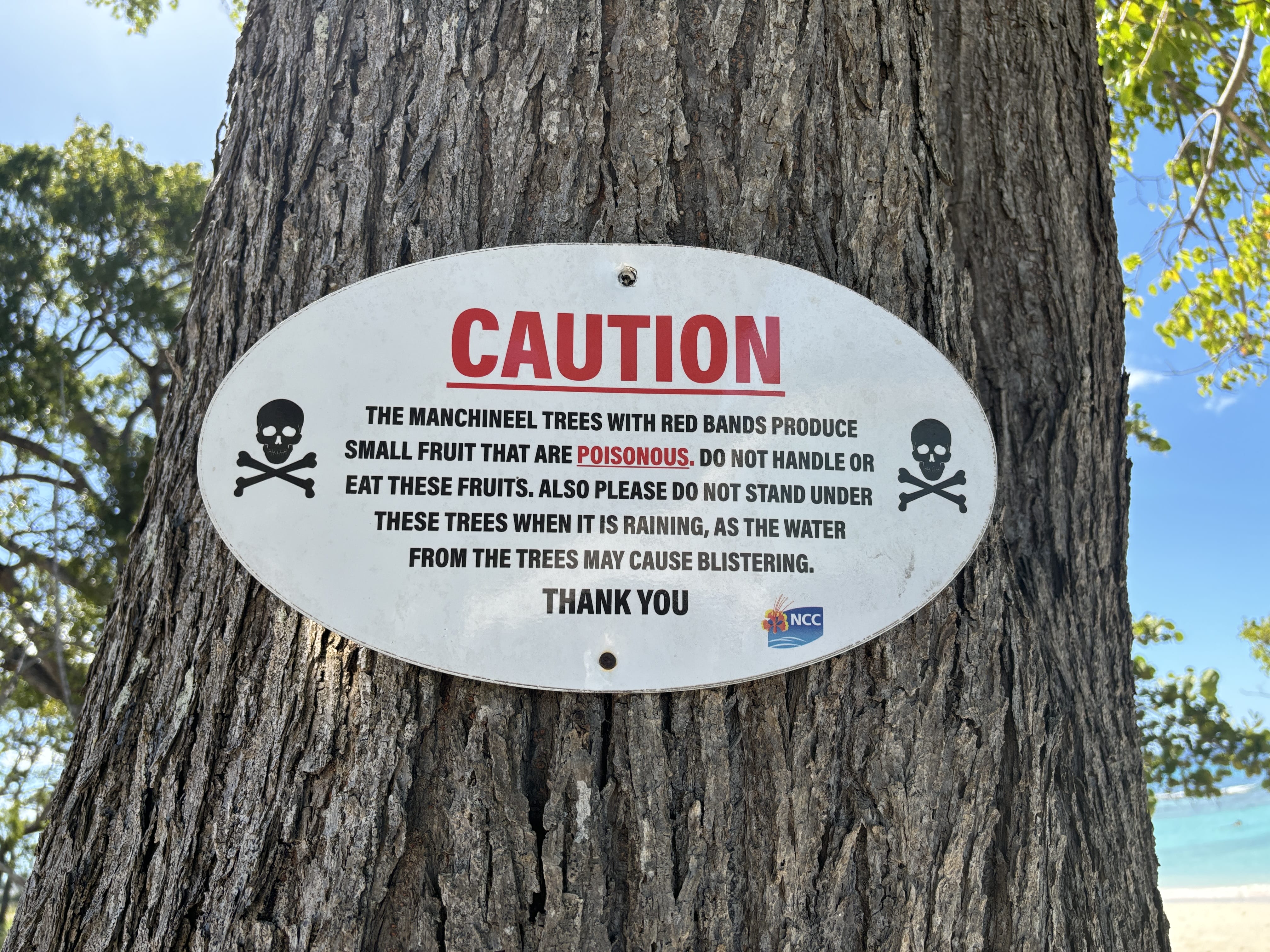
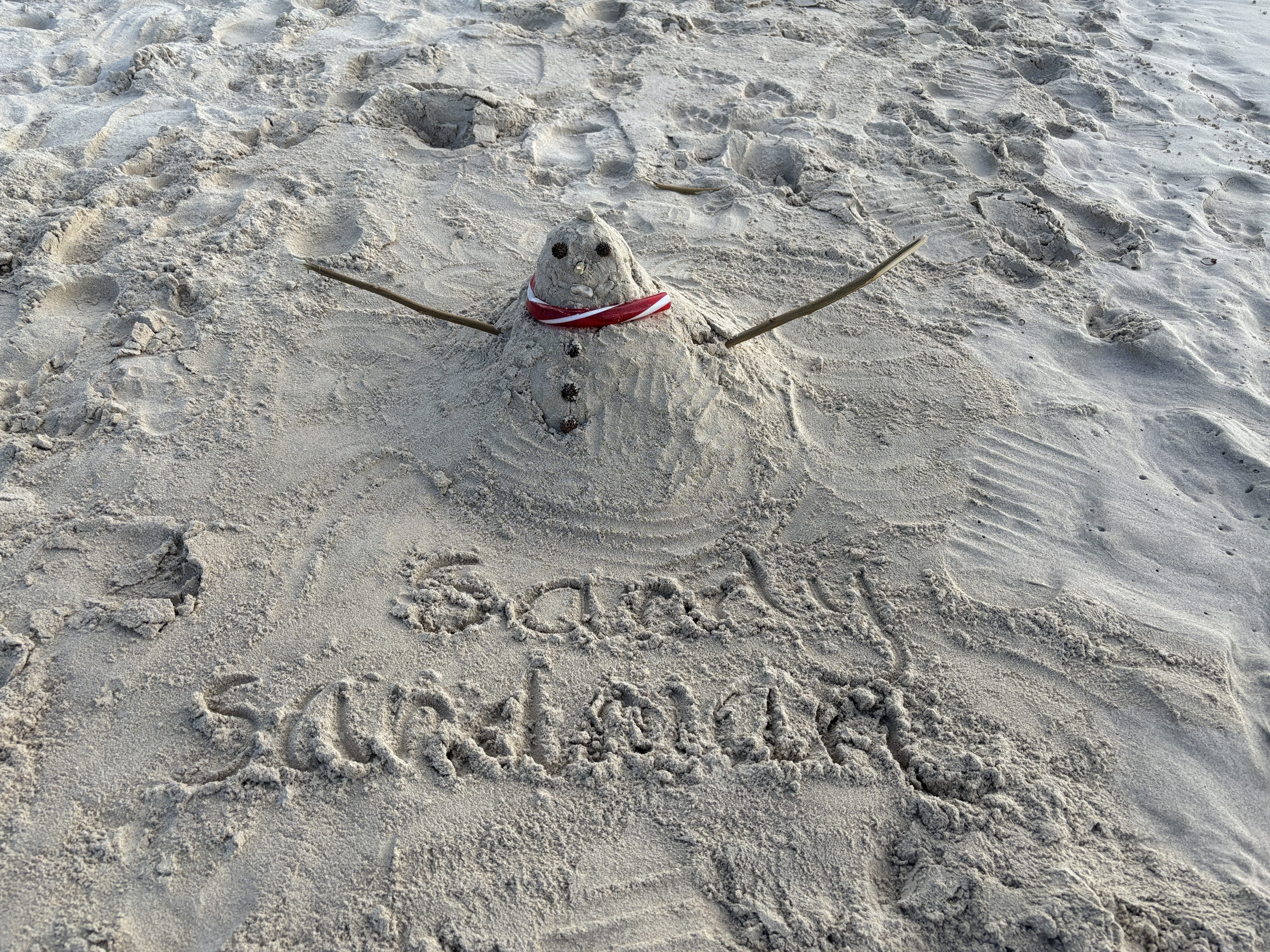
Fortunately, it is dry today. Besides, the atmosphere is idyllic.
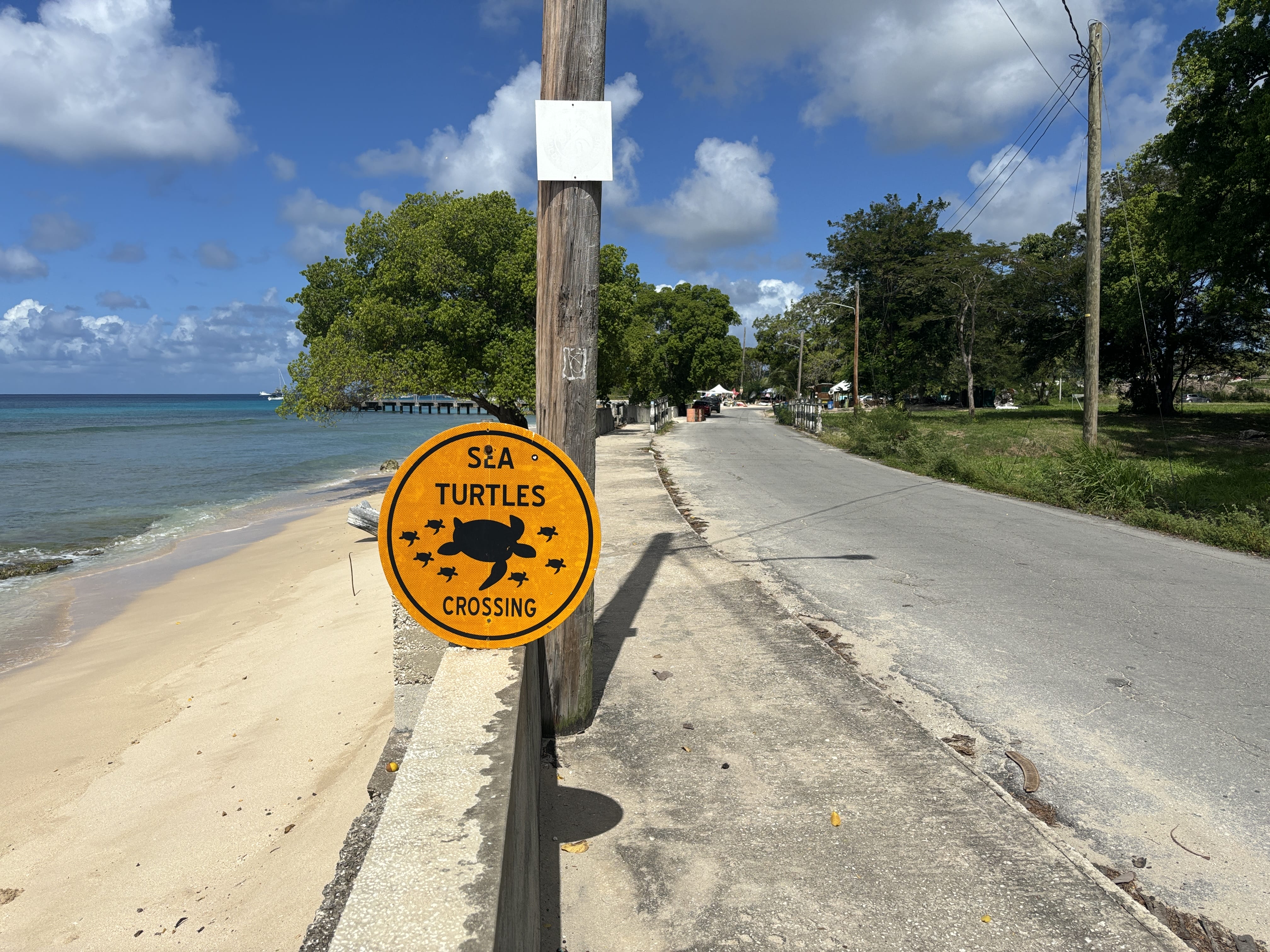
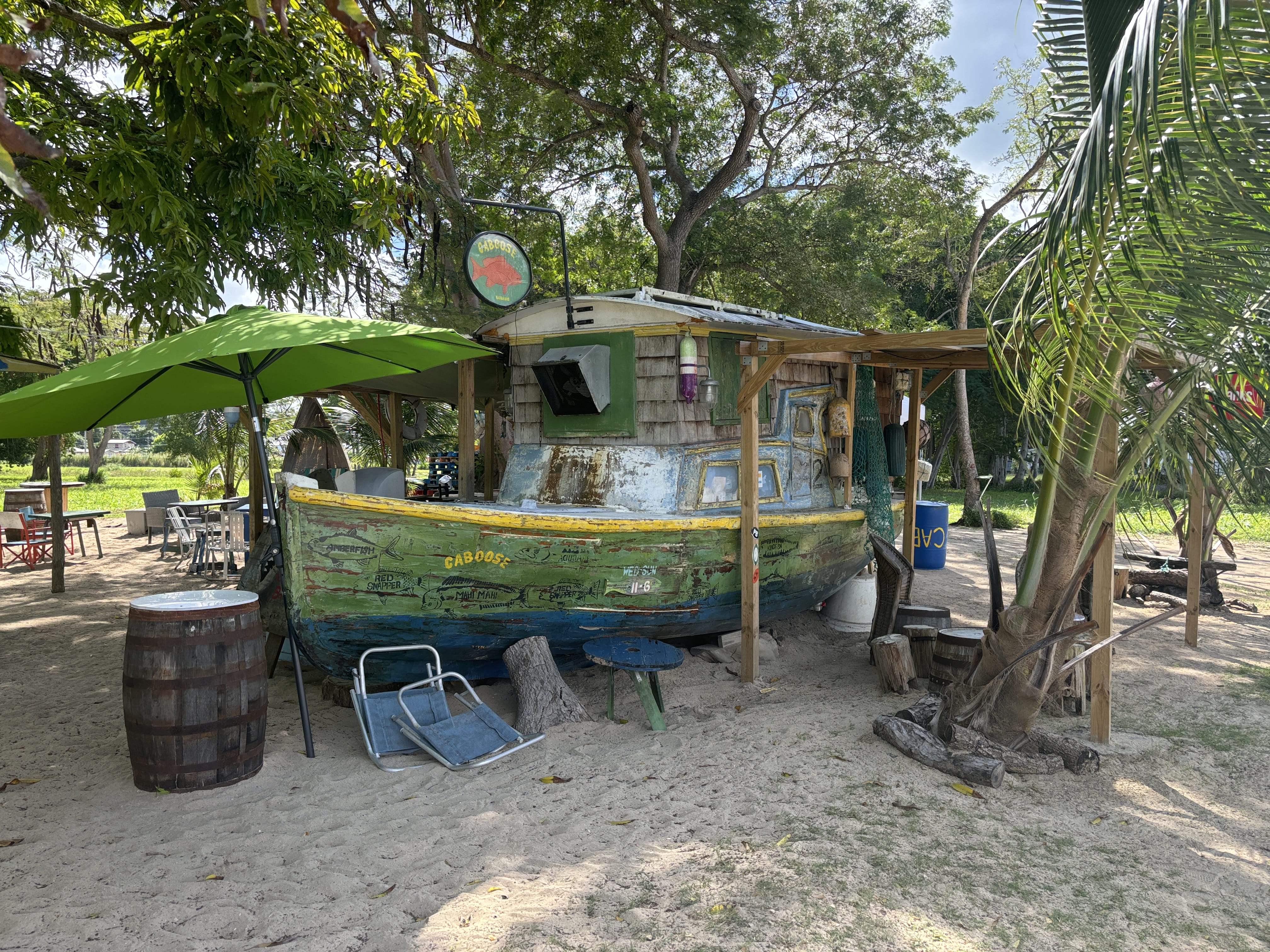
Everywhere, funny crabs are running around.
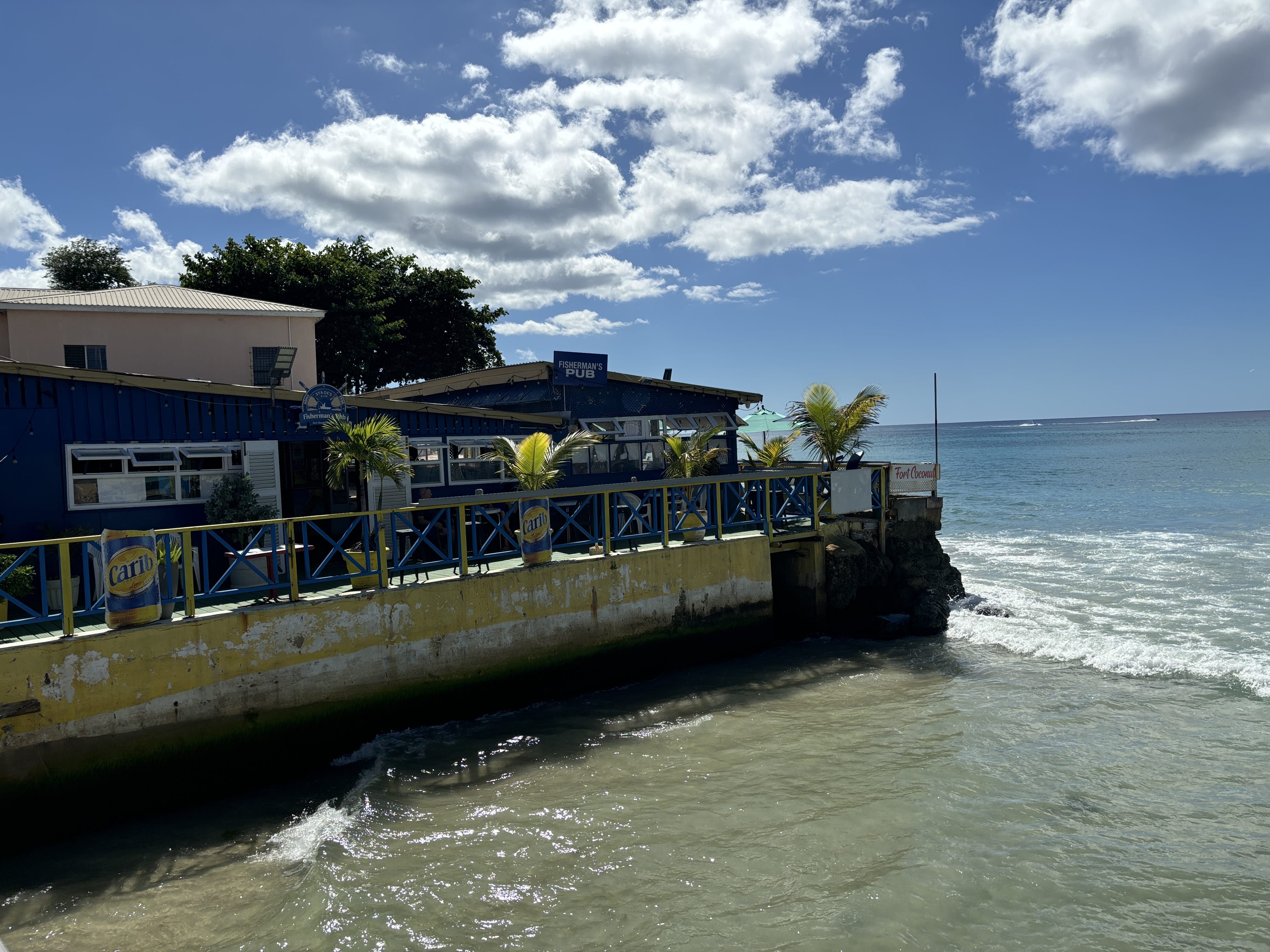
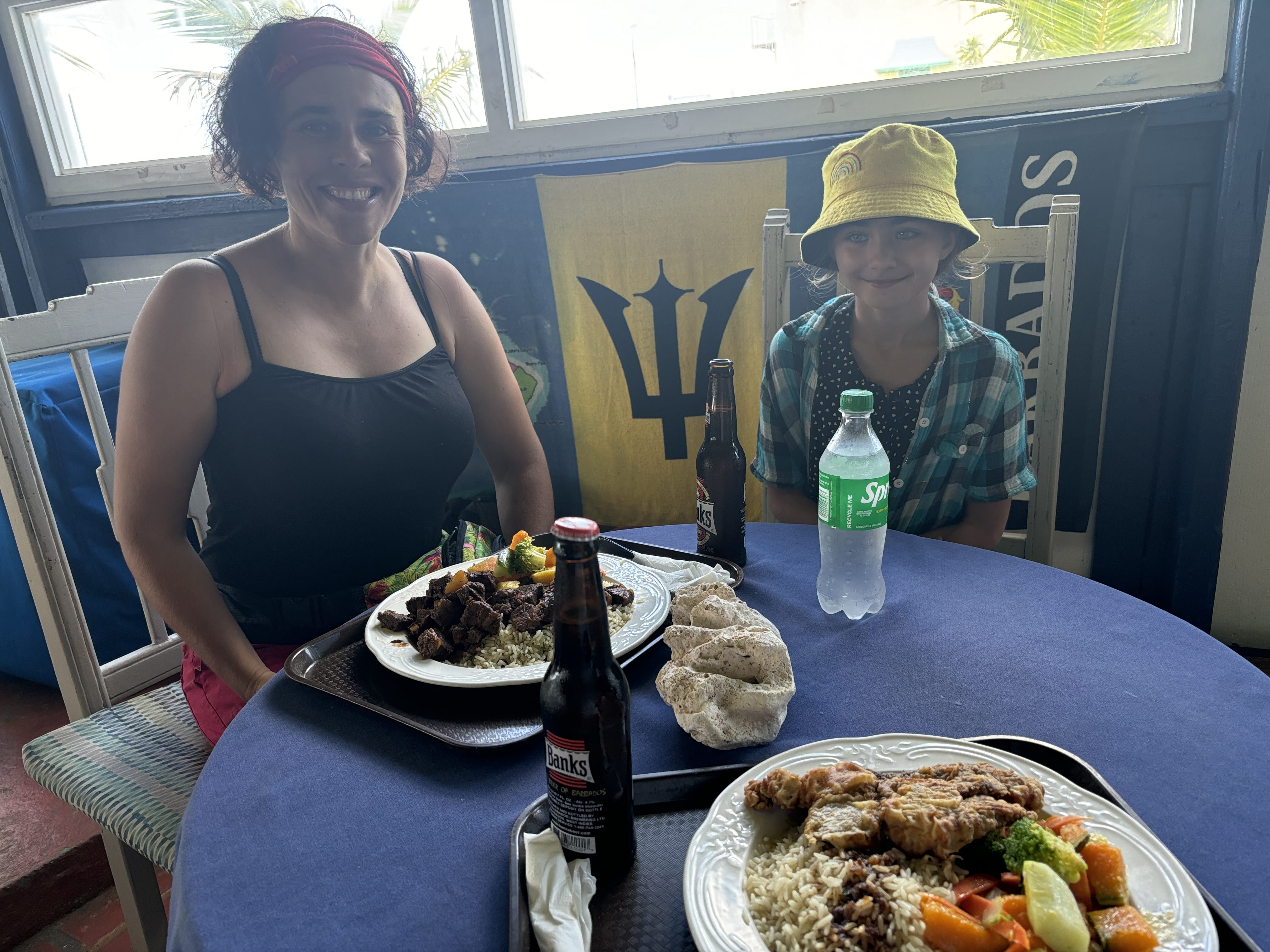
We reach the tavern, which has been run by the same family for three generations. Prices are moderate for Barbados, and the portions are so large that we order two for three people, and still, we are full until the evening. This way, we try fried mahi-mahi and Creole pork stew.
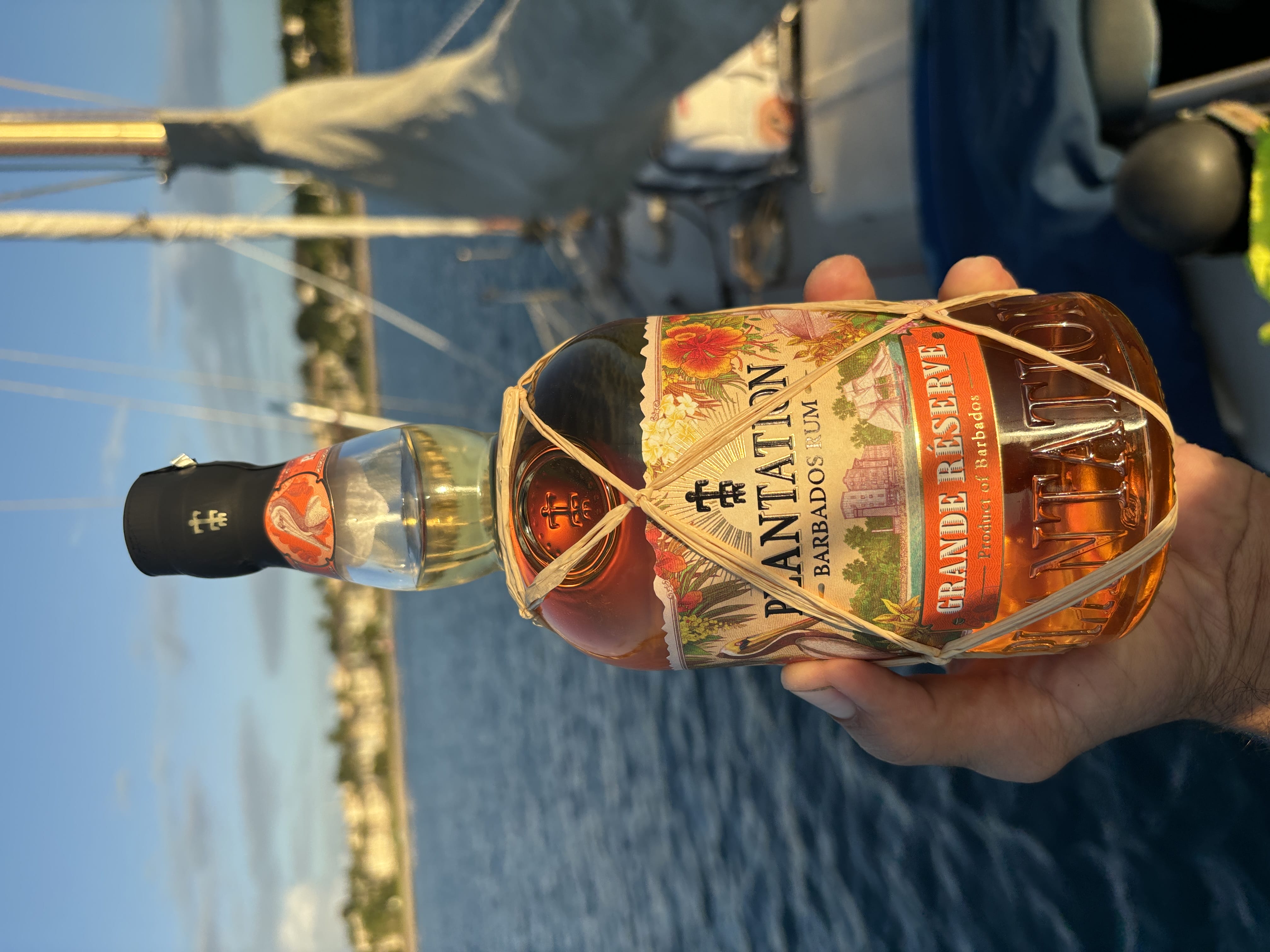
We also visit the local supermarket, where we manage to buy herring. It turns out that we could also get beets here, but we already have three packages of Grandma Zosia's borscht specially brought from Poland (our favorite quick-preparation dishes), so we pass on them. Instead, we buy coconuts, cucumbers, and soursop. We also take rum, two Bajan (as the residents of Barbados call themselves) sauces - spicy and herbal, and mauby syrup - something very Caribbean judging by the description on the bottle. The herbal sauce turns out to be very tasty, and it turns out that the name One Drop for the spicy sauce is not an exaggeration - one drop is enough for a dish.
We read that mauby bark is said to have wonderful anti-inflammatory and blood pressure-lowering properties, and the syrup is recommended to be drunk with cold water. We quickly understand why the water should be cold - the drink is quite bitter and a bit "challenging" for our unaccustomed palates. Eventually, we find a use for it - it goes well with instant coffee, and over time we've even started to like it.
On December 24th around noon, we call our families, who are just sitting down for Christmas Eve dinner. It's cold in Poland, but we are in the tropics.
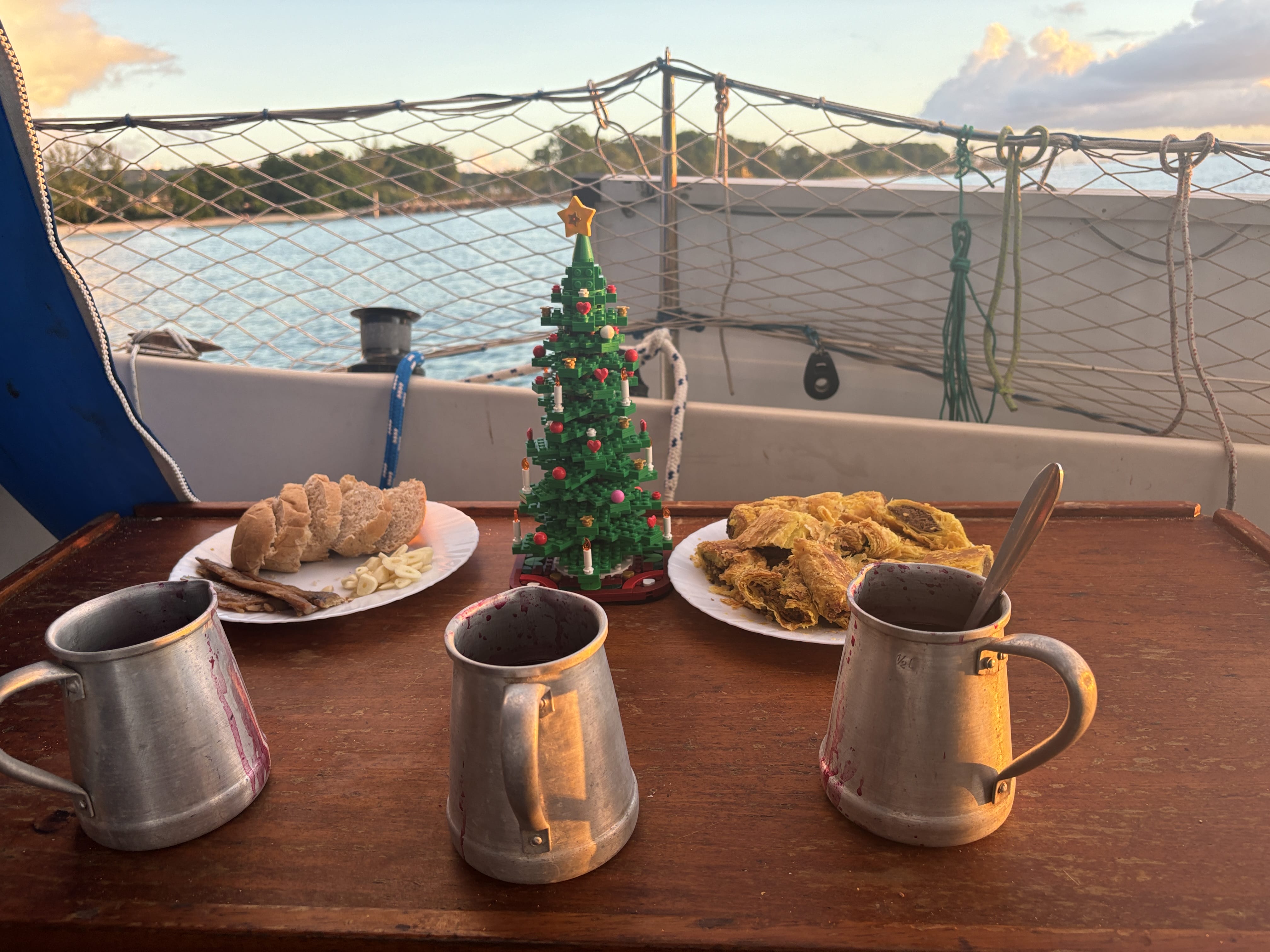
At sunset, we finish assembling the Lego Christmas tree gifted to us by the foresighted Brother Kamil and sit down for supper - beet soup from Poland and local herring and cake.
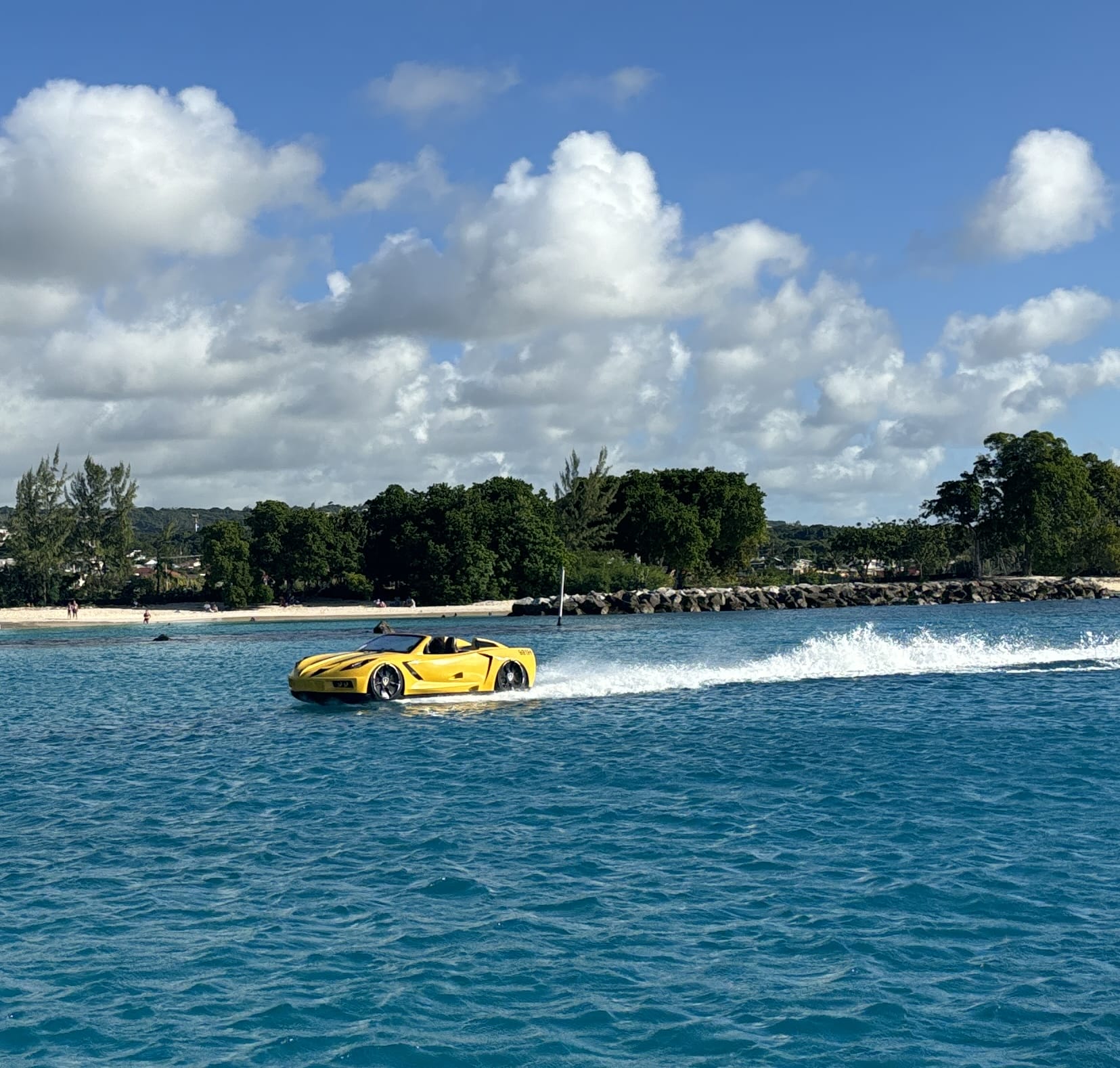
The vast majority of residents in Barbados are Anglicans, so everything is closed on December 25th and 26th. Locals and tourists only come to the beach to splash around in the turquoise waters and lounge on the white sand.
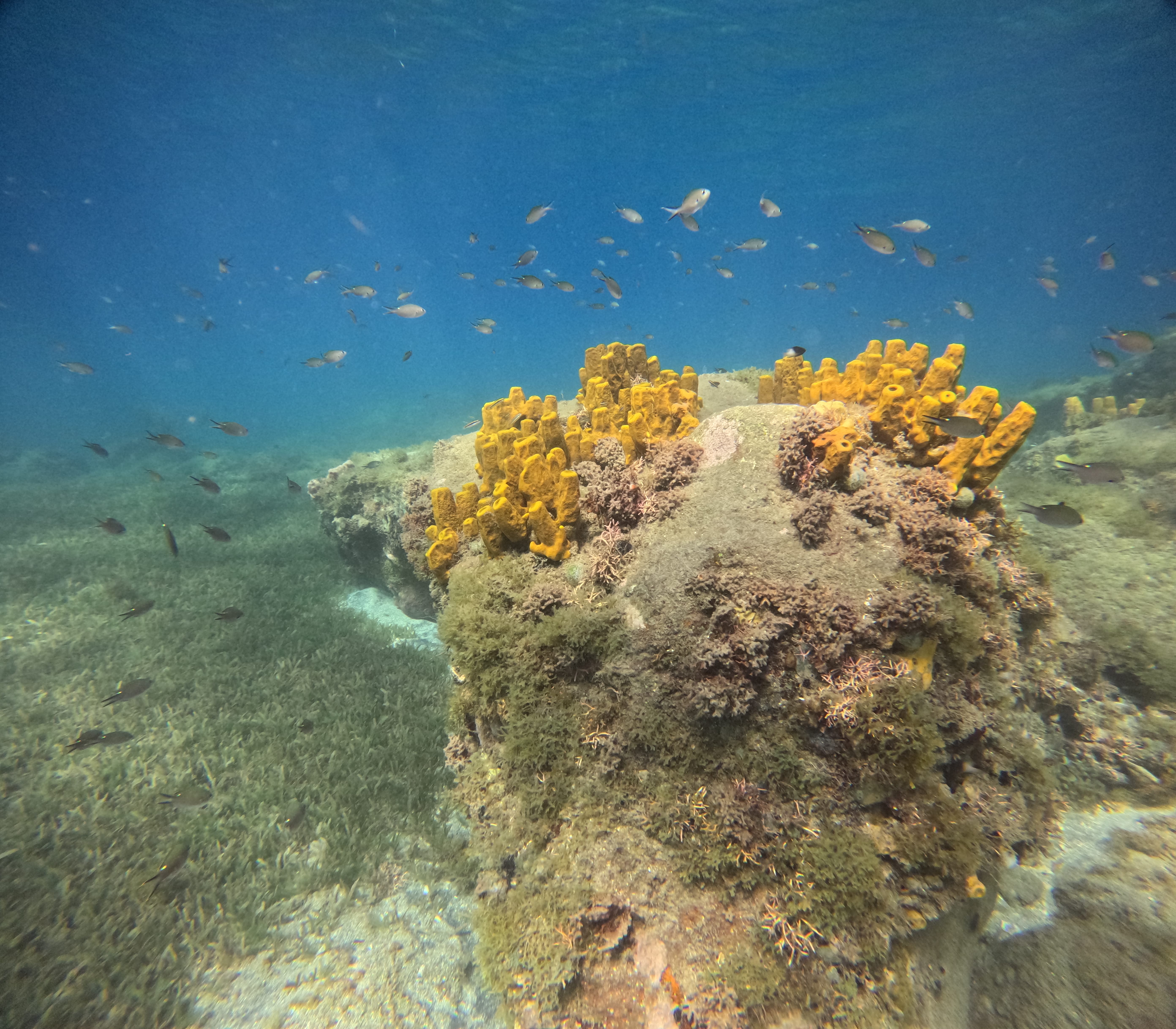
Generally, staying in Barbados is very pleasant, but we want to have time for other islands. For the past two days, the water turbidity (caused by a change in wave direction) has made snorkeling difficult, and we haven't taken any underwater photos yet. Nevertheless, we decide to move on to Martinique on December 27. On December 26, we check out with the courteous Barbadian customs officers, who invite us to visit again, and prepare for the crossing. It's nearly 120 miles, so we'll need almost twenty four hours to get there. In the morning, the water is clear again, allowing Kamil to capture some cool photos of sponges and other sea creatures. Fully satisfied, we move on.
Martinique
The wind is good and the voyage is pleasant. Long unseen dolphins appear which further lifts our spirits.
Unfortunately, at night, the angle bracket of the autopilot pushrod breaks, so we have to steer manually for 1/3 of the way (we don't want to repair it overnight).
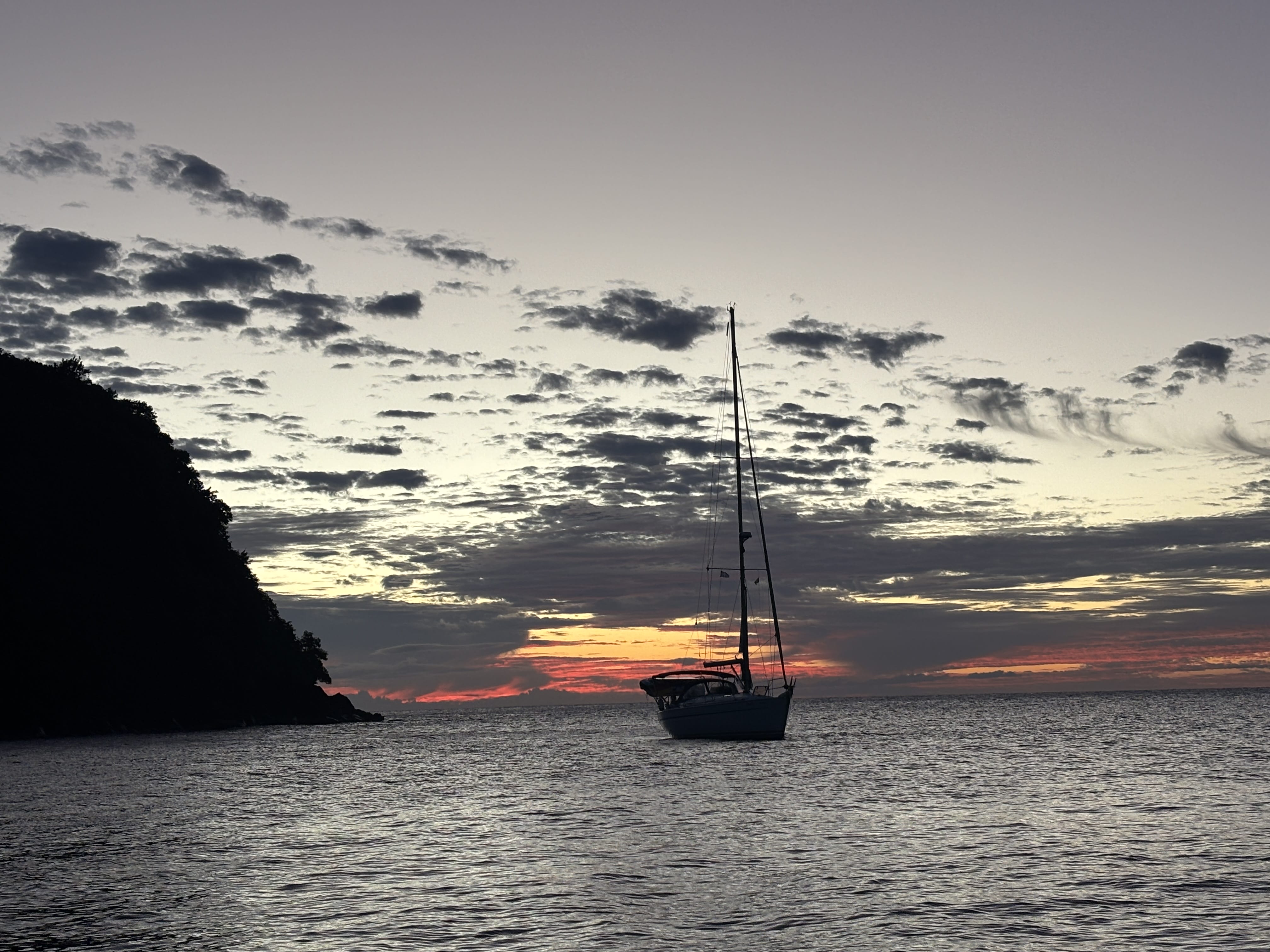
Most sailors crossing the Atlantic in winter land in Martinique. There are many marinas and anchorages here where one can rest. Additionally, there are boats sailing around the Caribbean, making it one of the more popular sailing islands in the region. Statistics show that Martinique ranks high among islands where yachts are robbed (it ranked fourth in 2025 according to the Caribbean Safety and Security Net - https://thecsssn.org). Whole boats are not stolen, but dinghies with engines or equipment. Sometimes items from inside the yacht, even while the owners are present. It affects only a small percentage of yachts, but it would always be unpleasant to be in that percentage. Therefore, long-unused padlocks are being retrieved to lock cockpit lockers, and Kamil installs slides to allow the hatch to be locked from the inside. This way, a potential nighttime thief would make noise before getting inside. Initially, we use them very diligently, but as the journey progresses, it becomes evident that the islands are generally safe (probably no less safe than the streets of Warsaw).
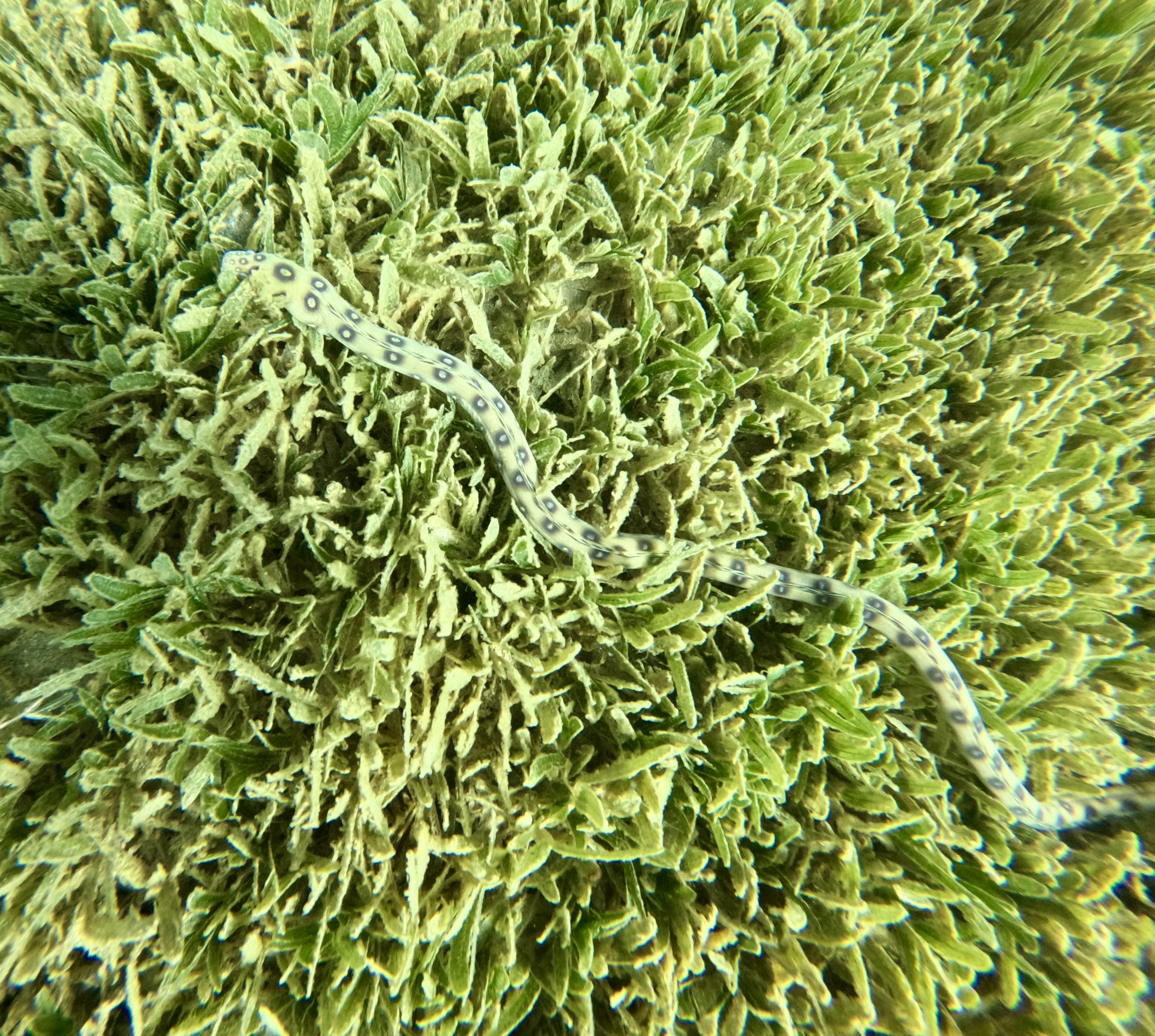
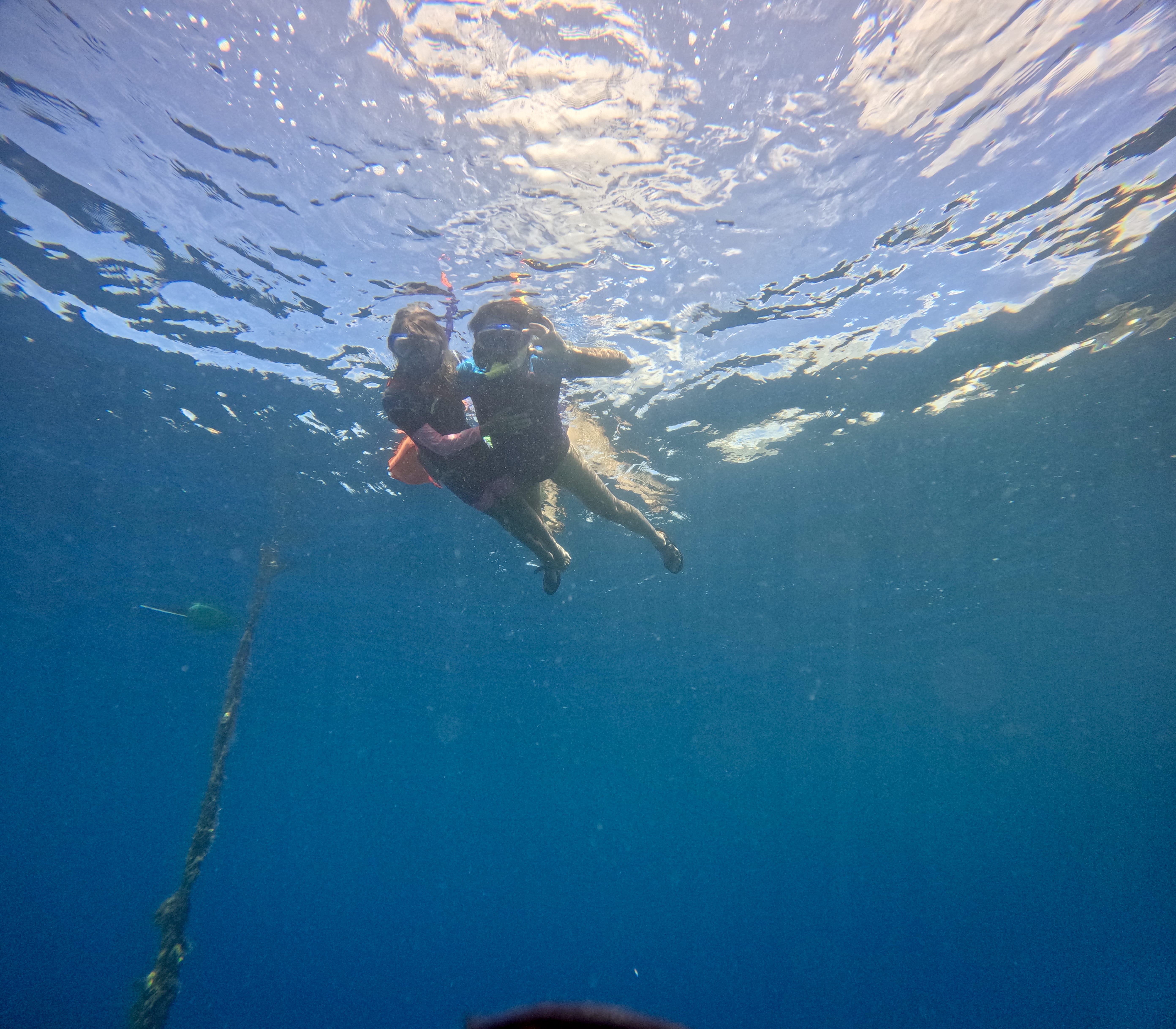
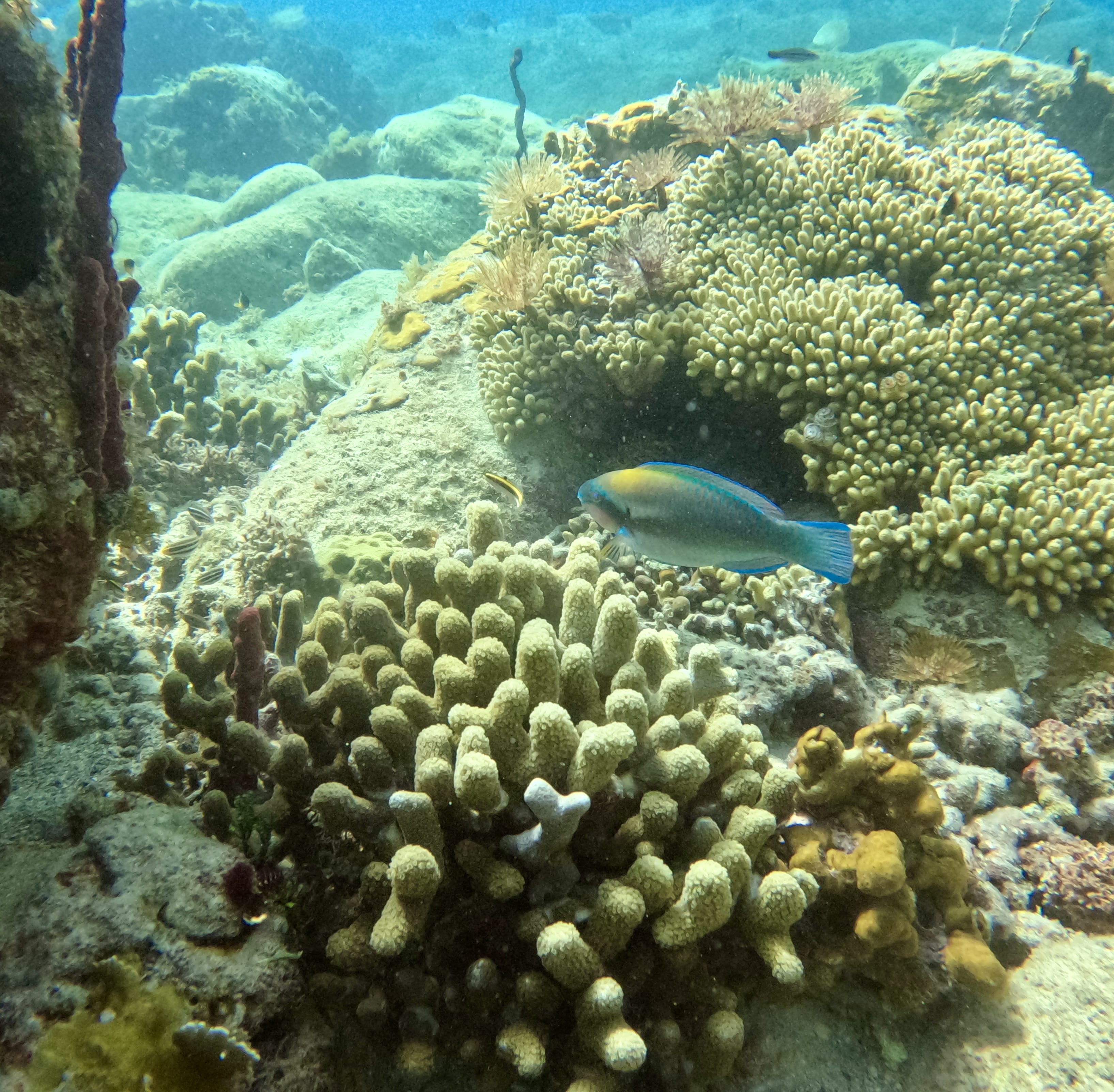
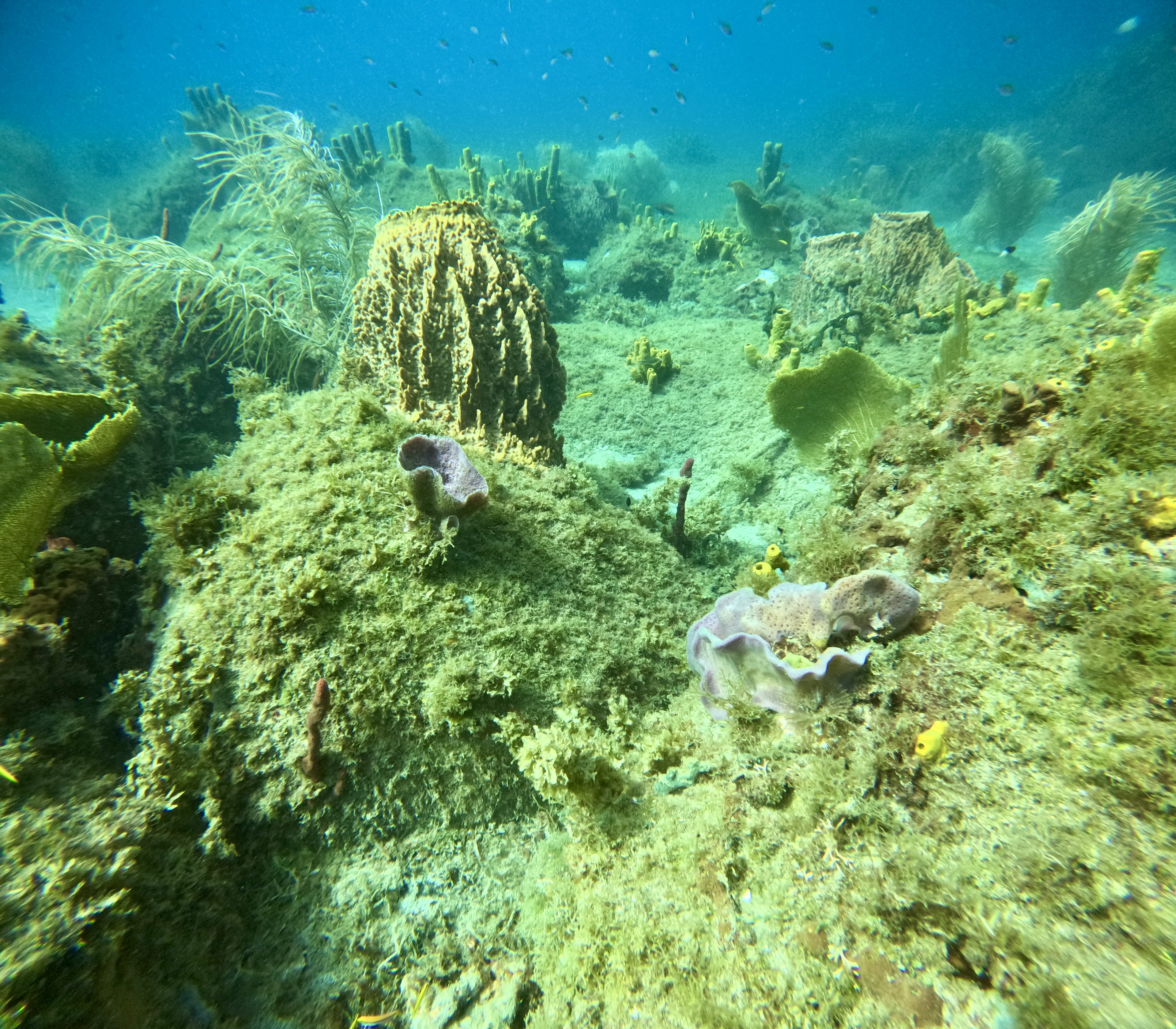
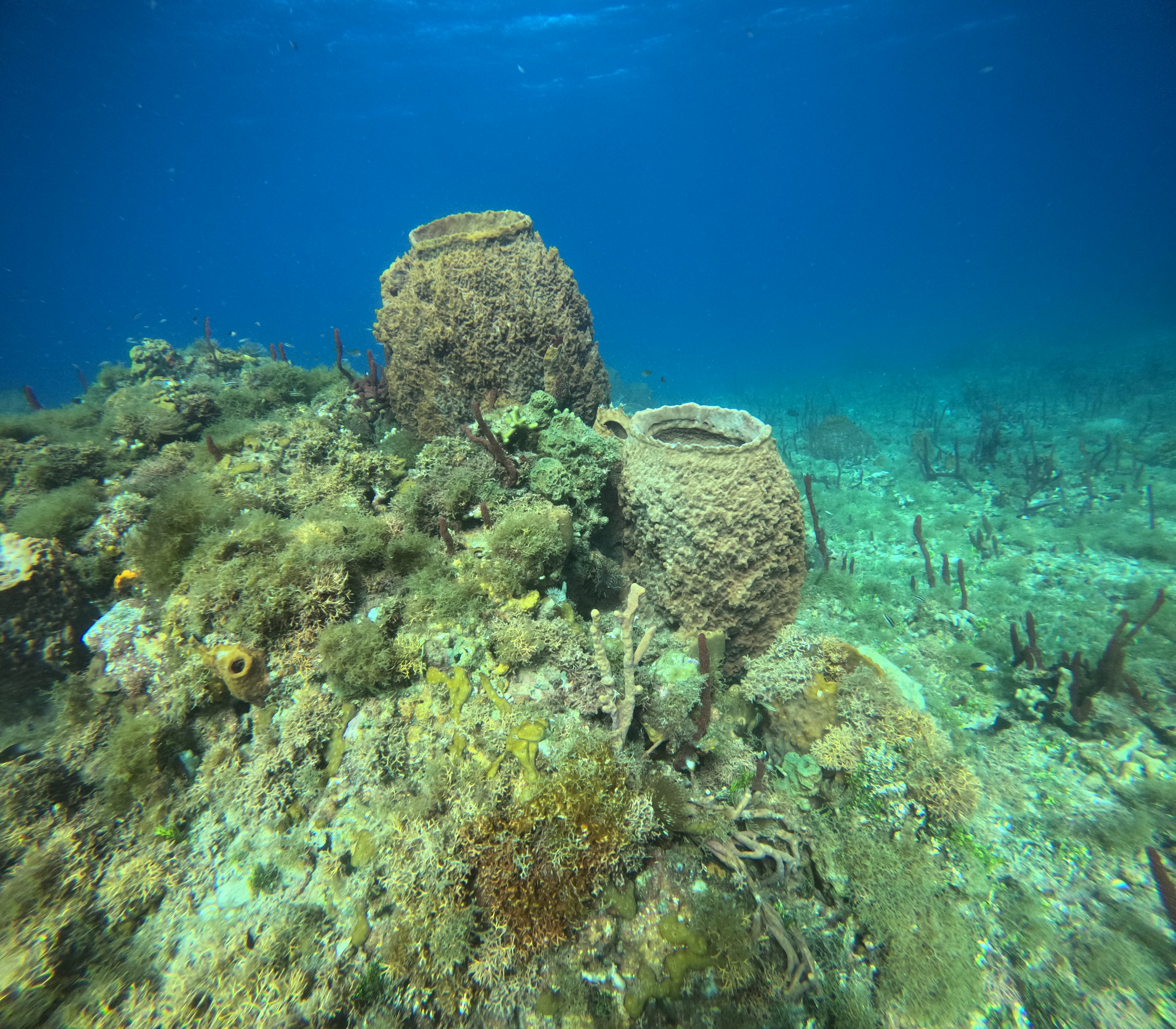
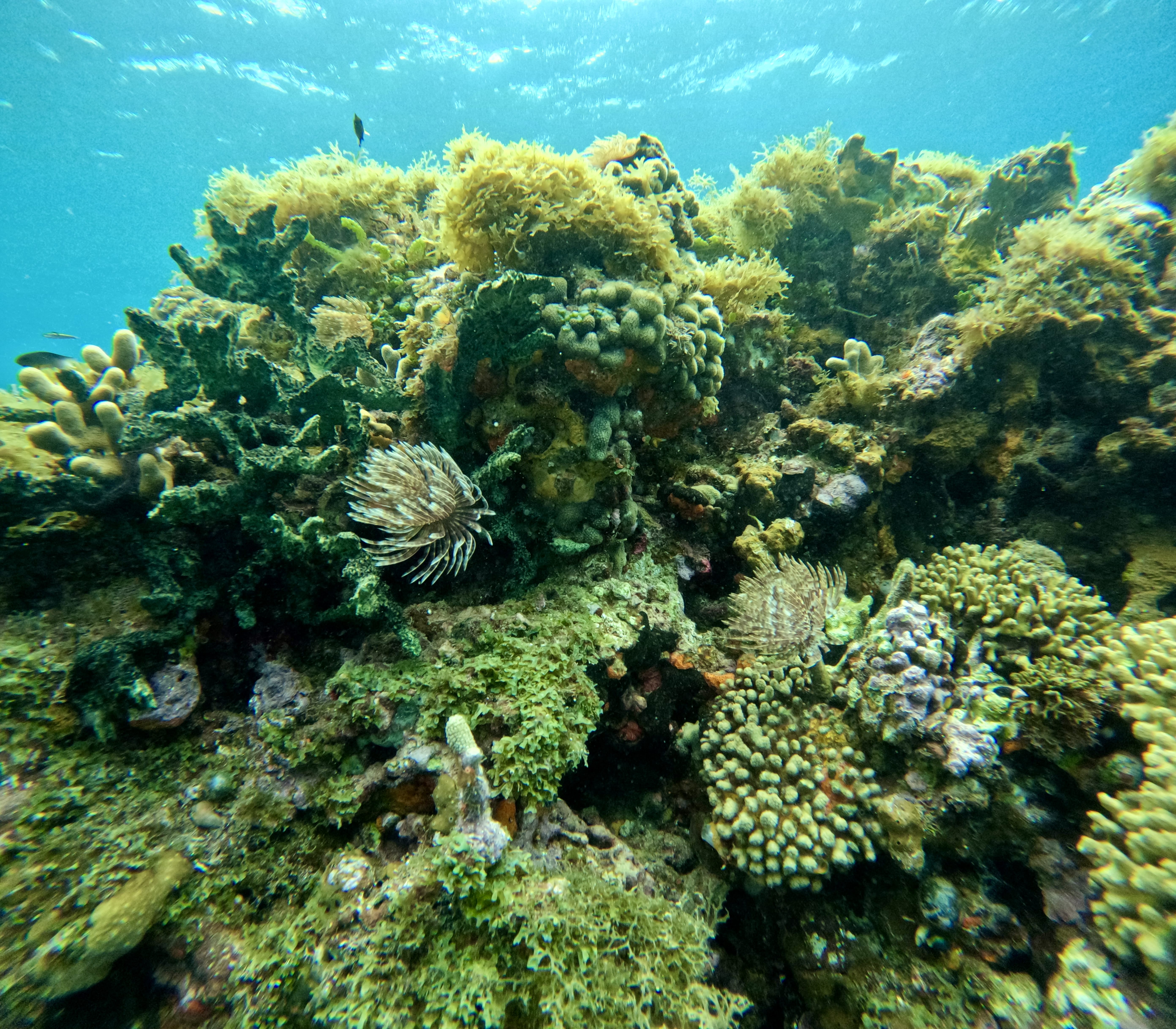
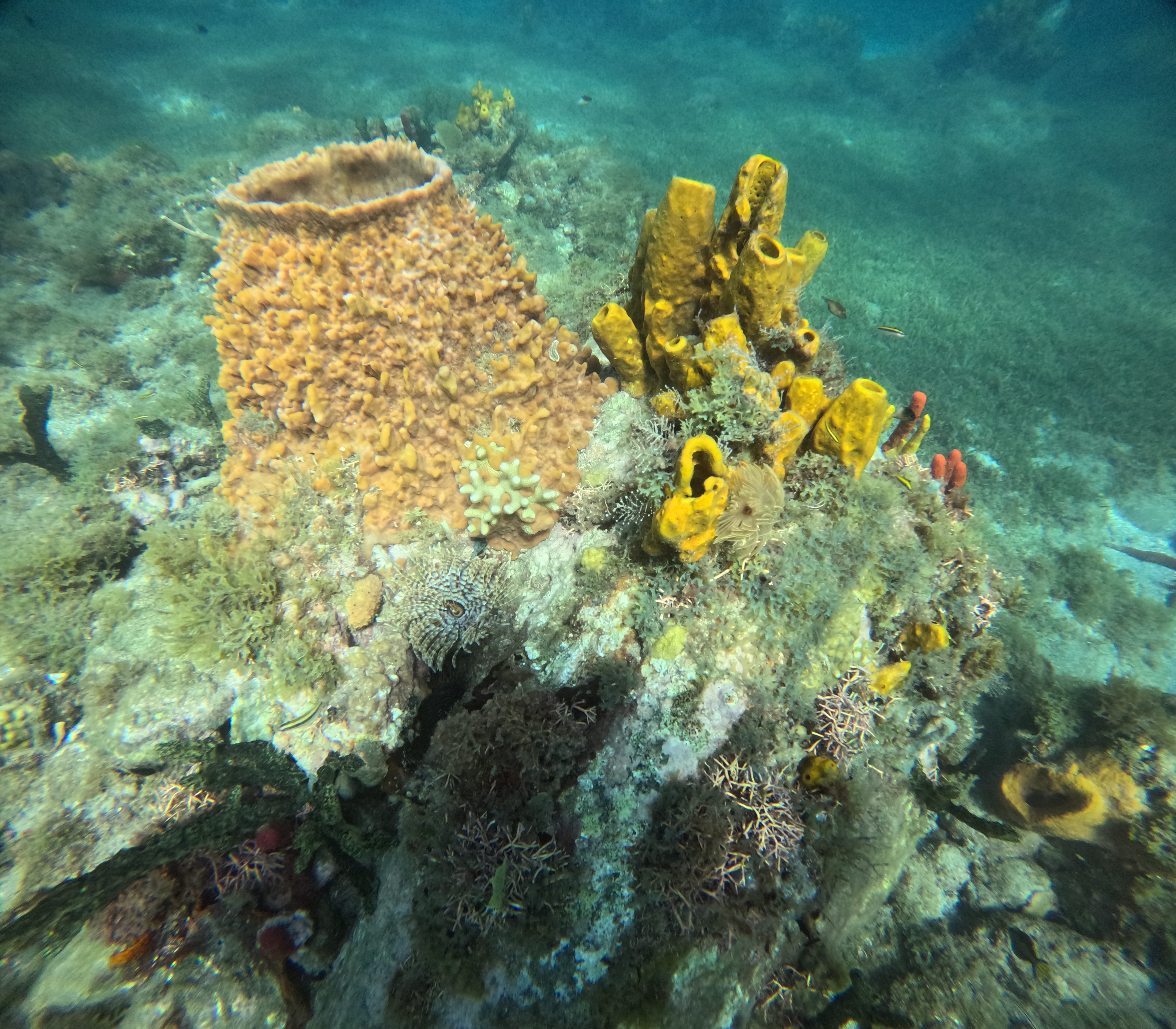
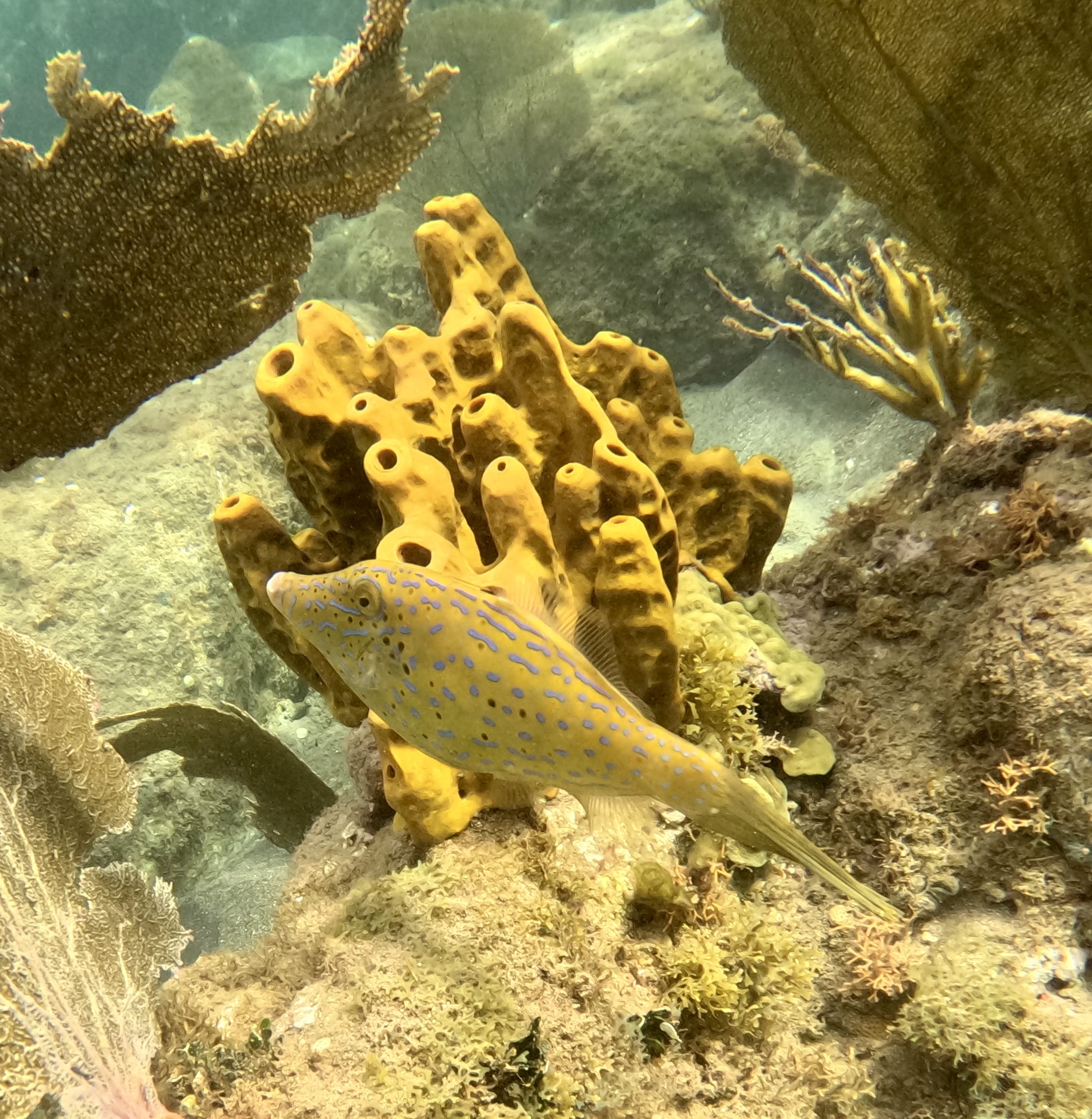
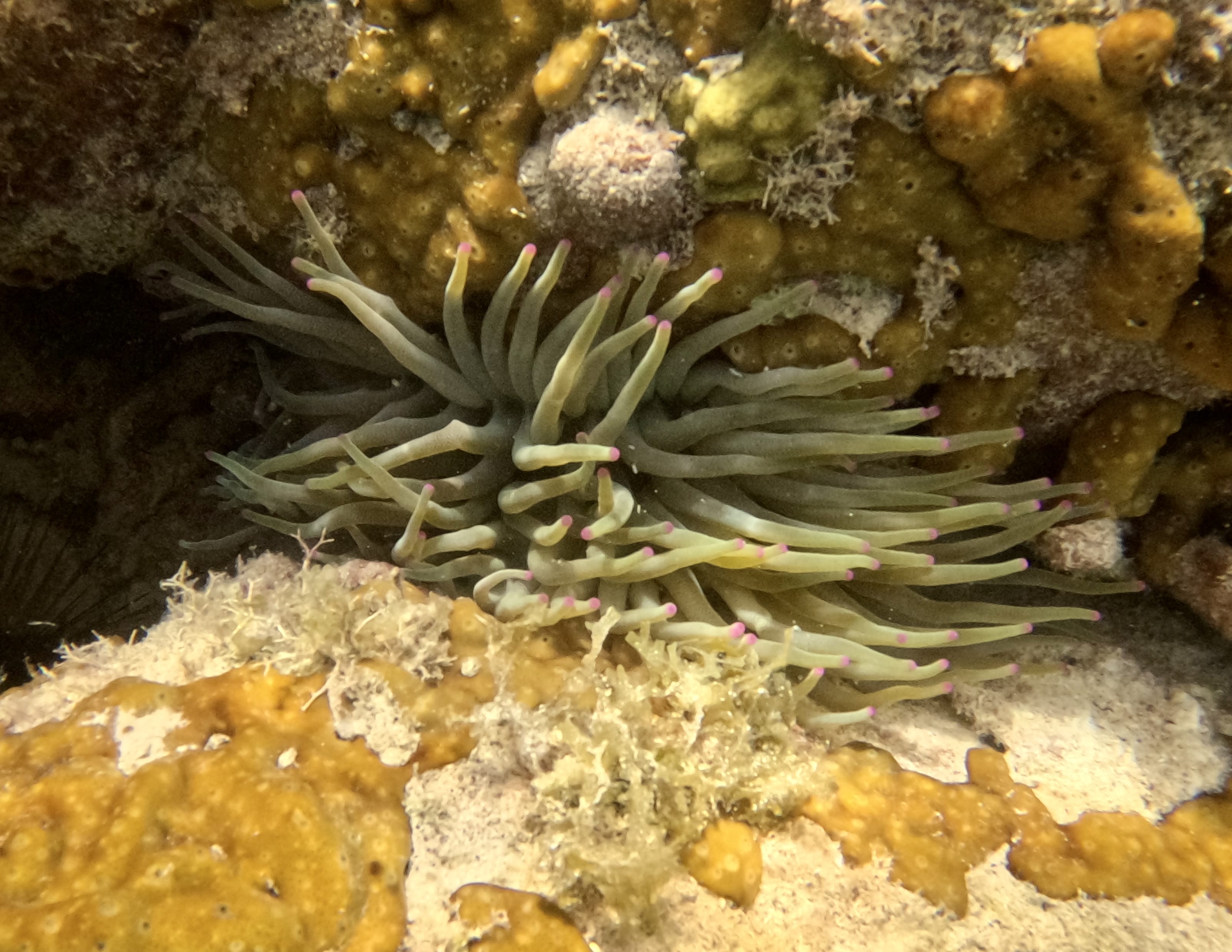
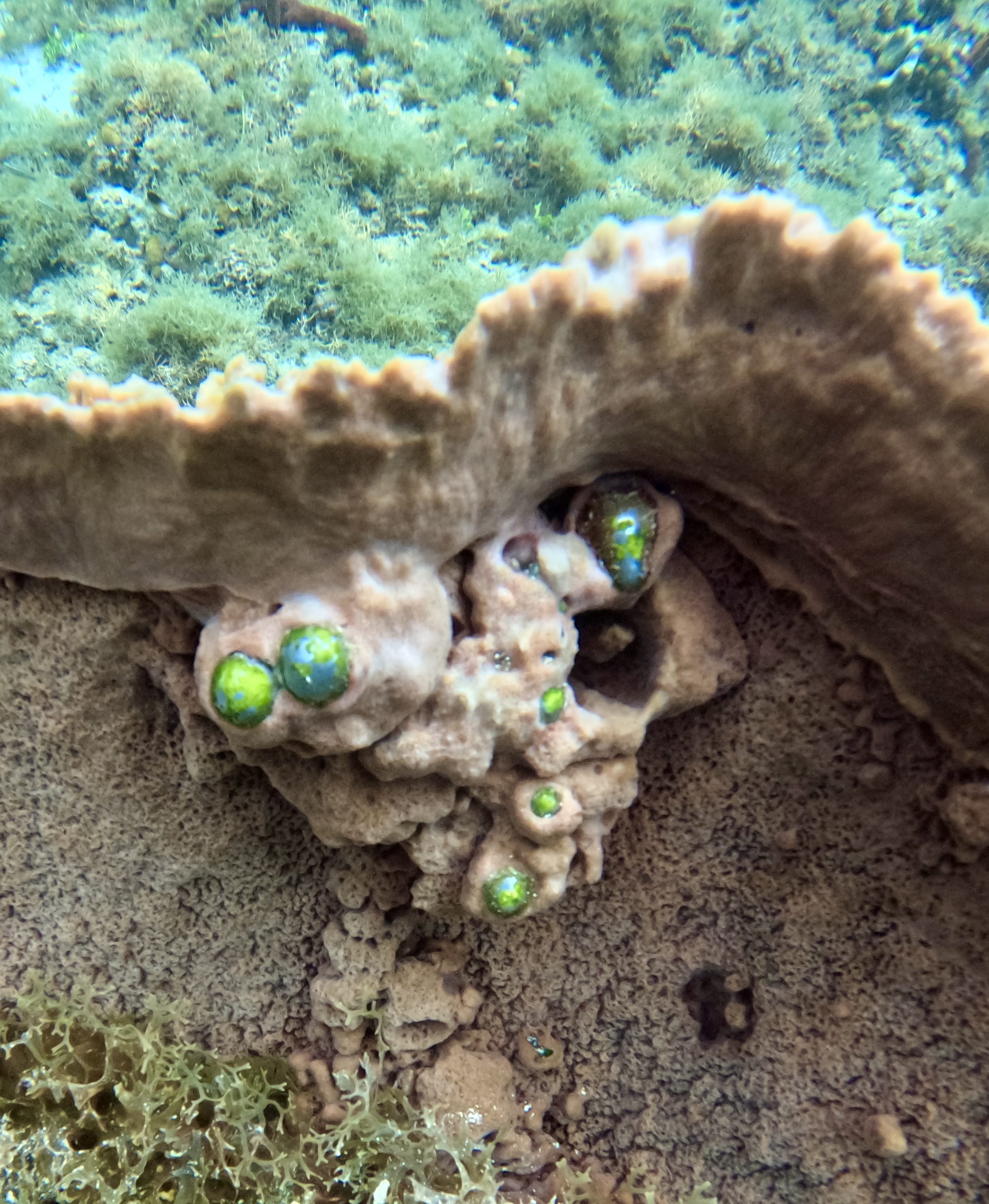
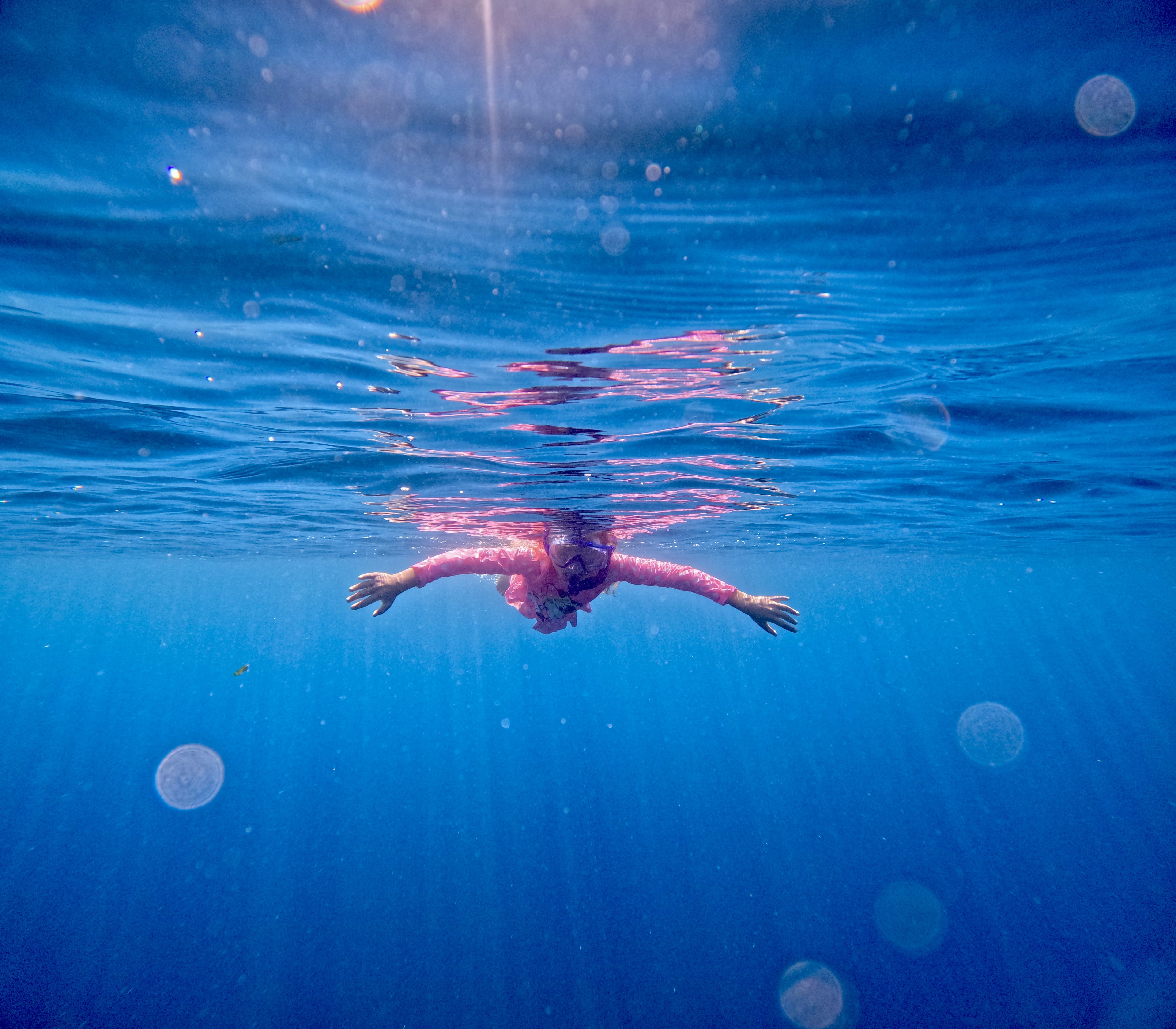
We bypass the crowded Cul de Sac du Marin bay. For the night, we stop at a small, maximum three-boat anchorage of Anse du Foul. The place is very picturesque, and additionally, great for diving - various corals and sponges grow on a vertical wall - there is also a small ravine with many fish swimming around. Kamil and Kamilka set out on a photographic hunt. He has a GoPro and fins, while she has a swimmer's buoy. Together they approach the reef and look for interesting objects. If something is found, he dives to take a photo while she stays on the surface with the buoy to secure the spot. Here are the results of their work:
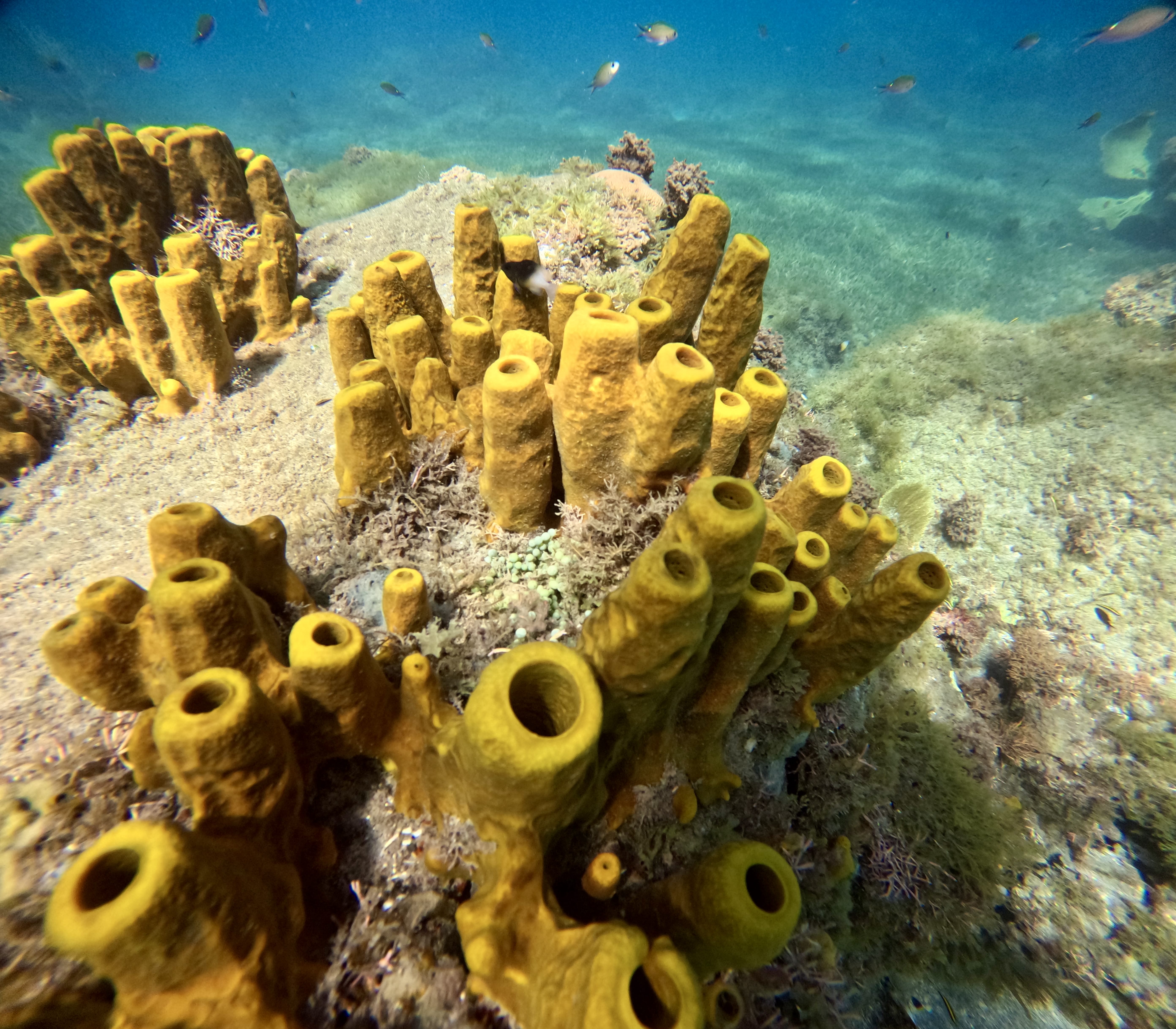
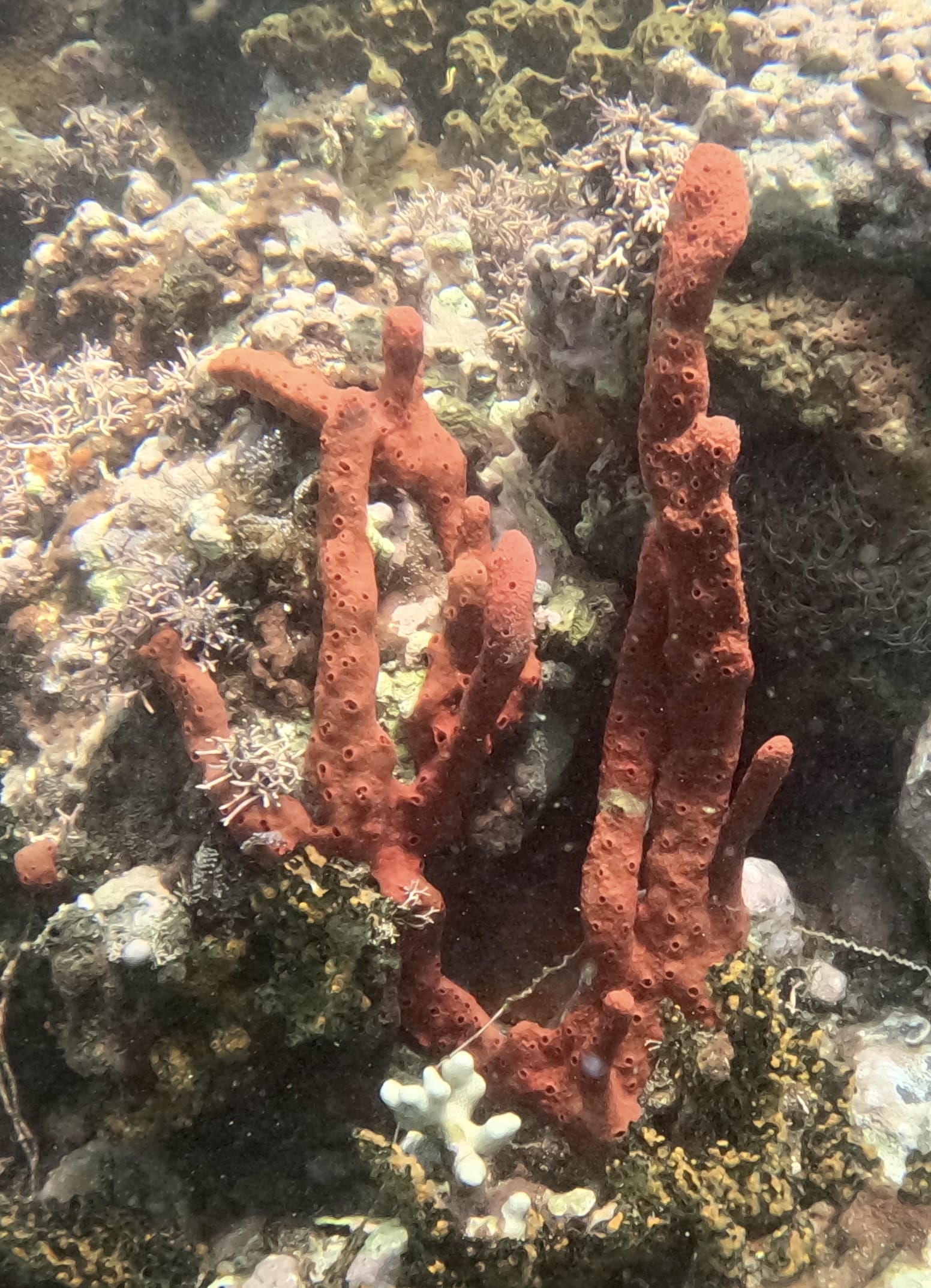
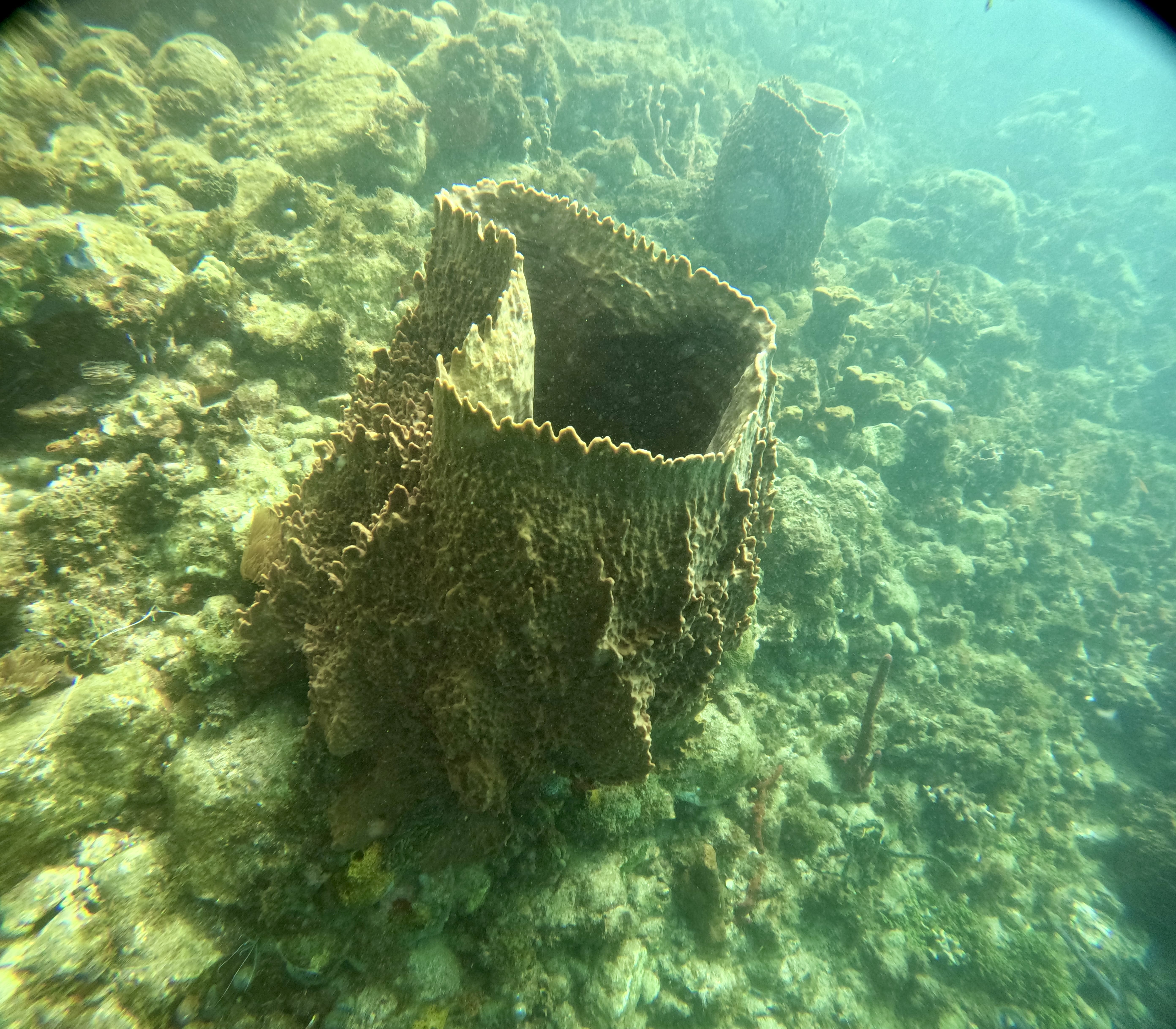
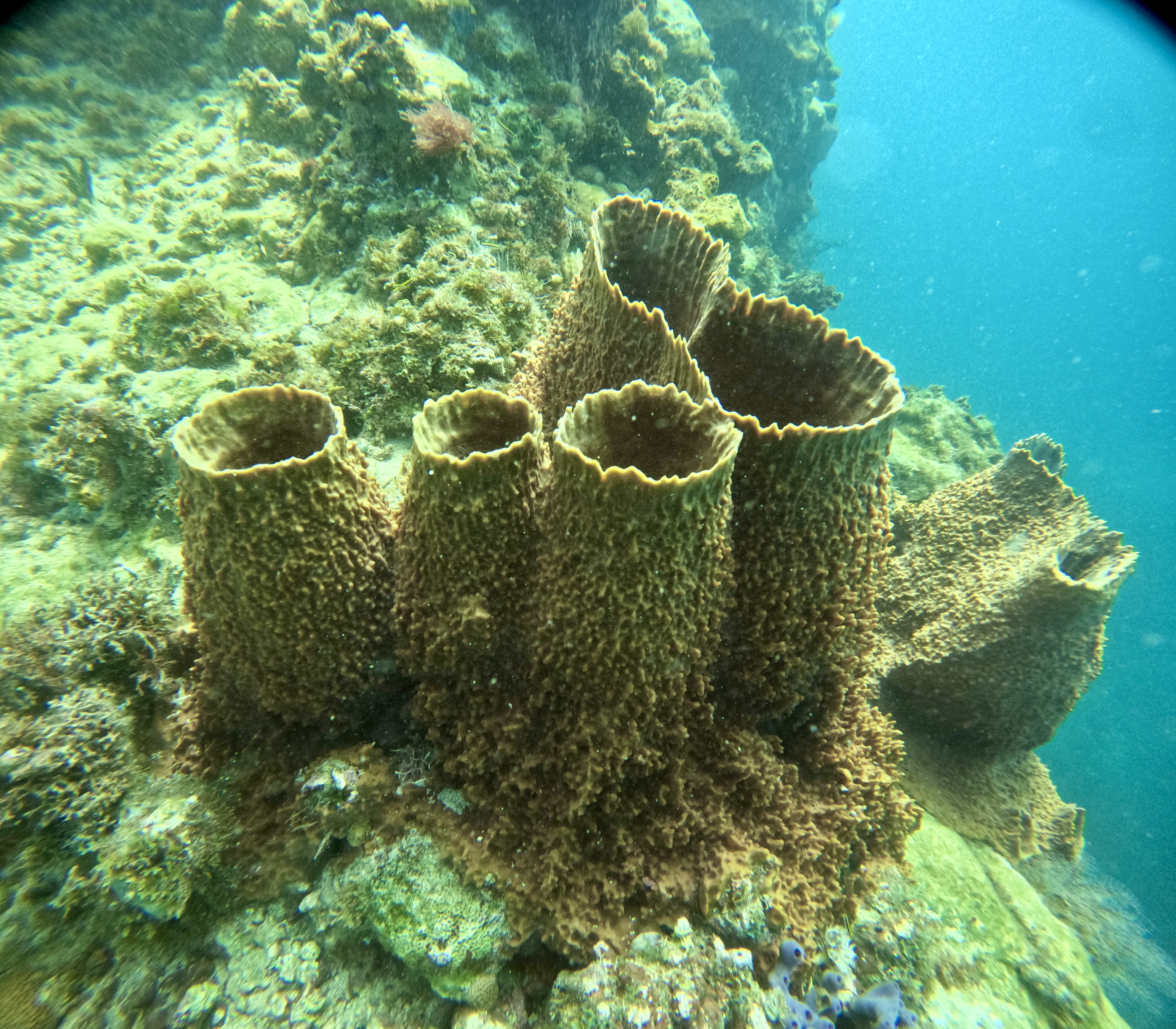
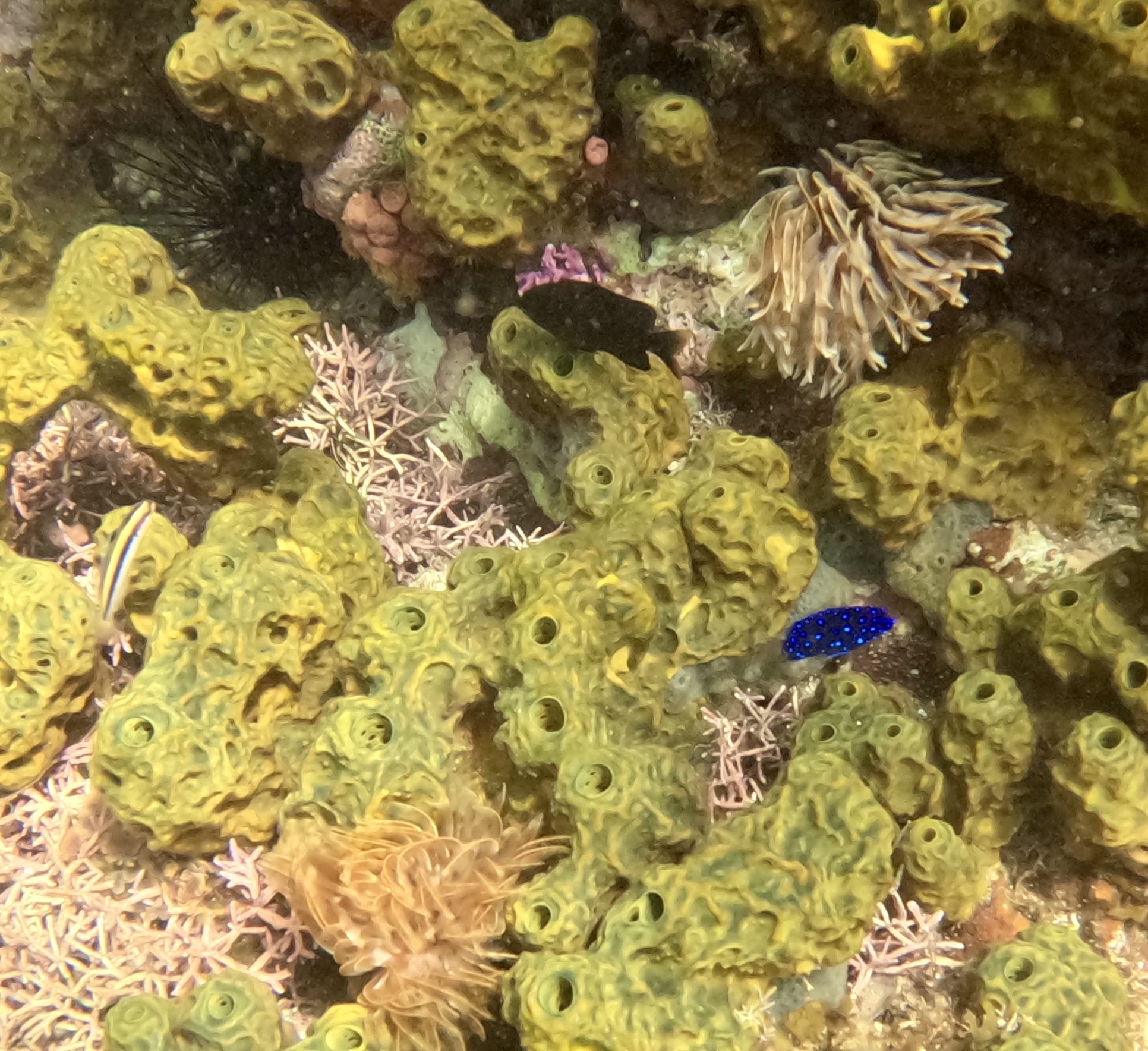
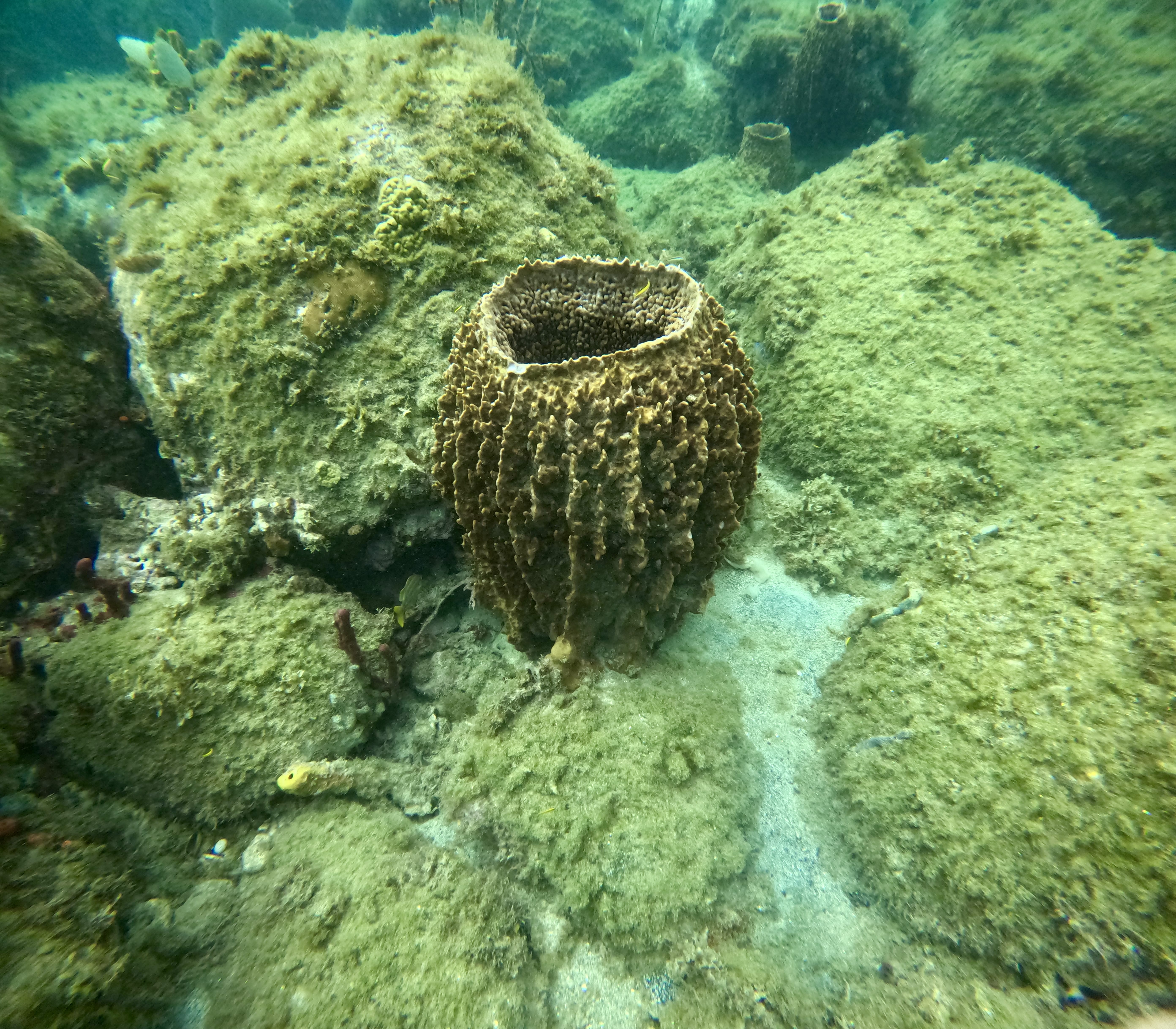
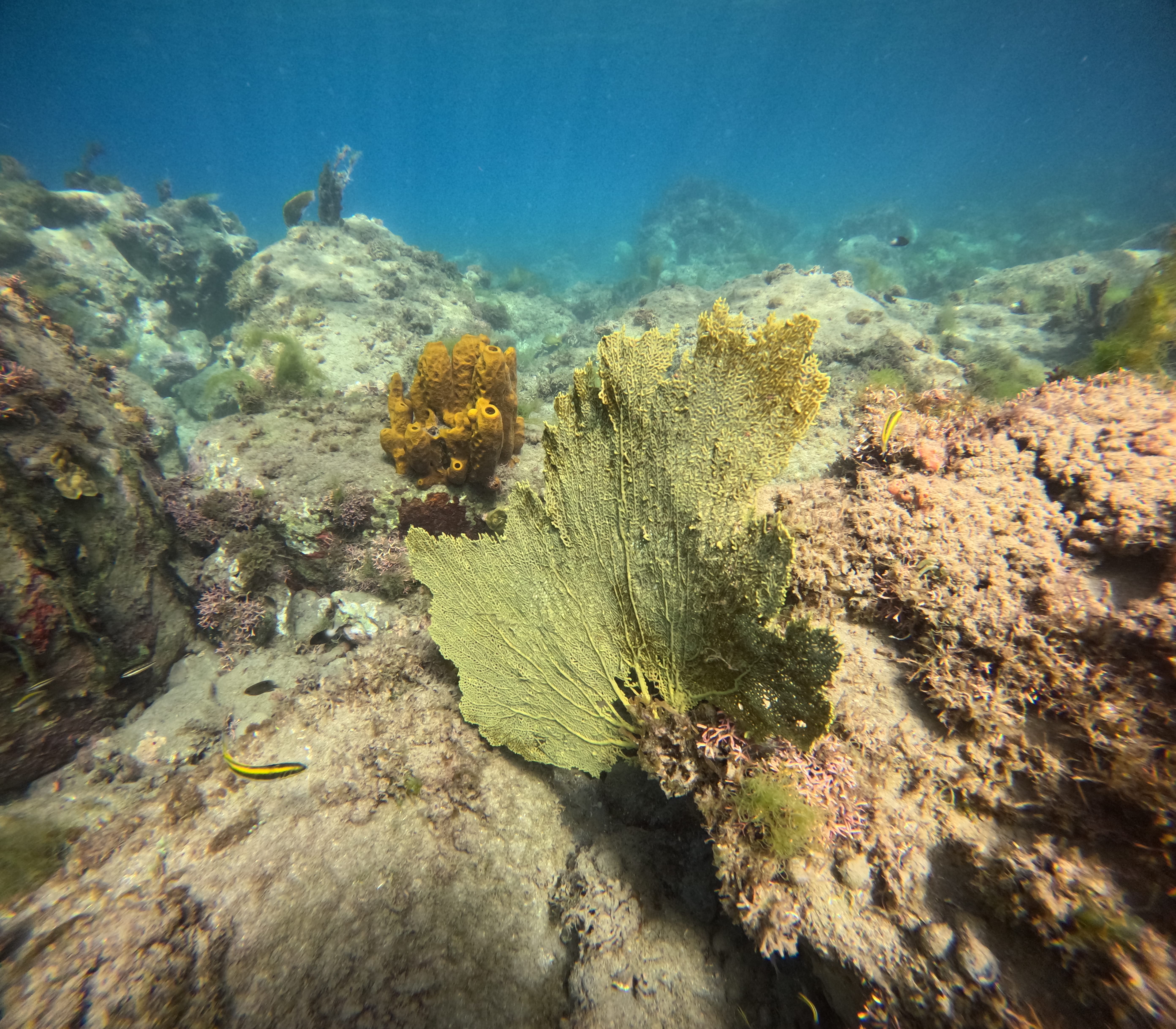
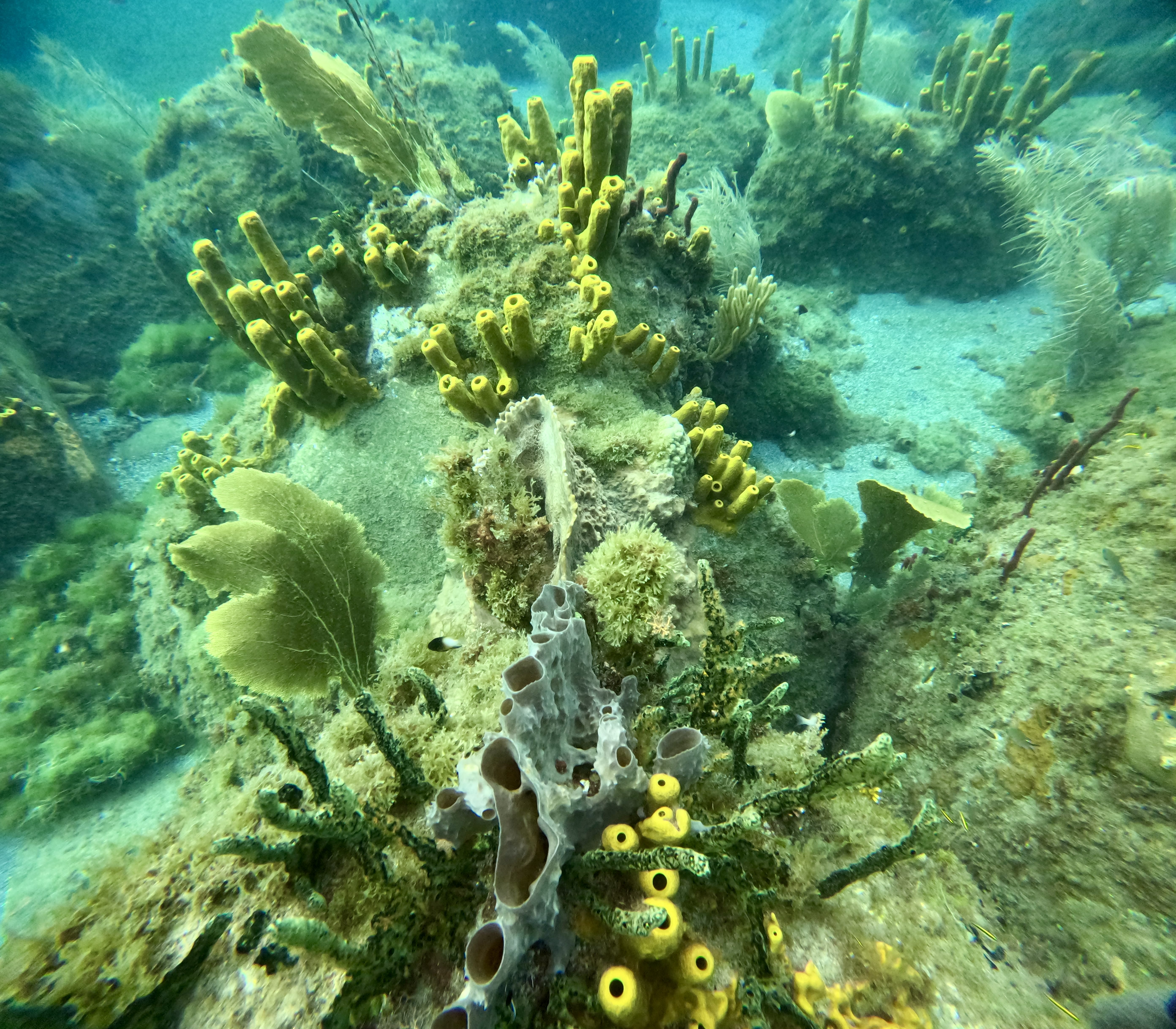
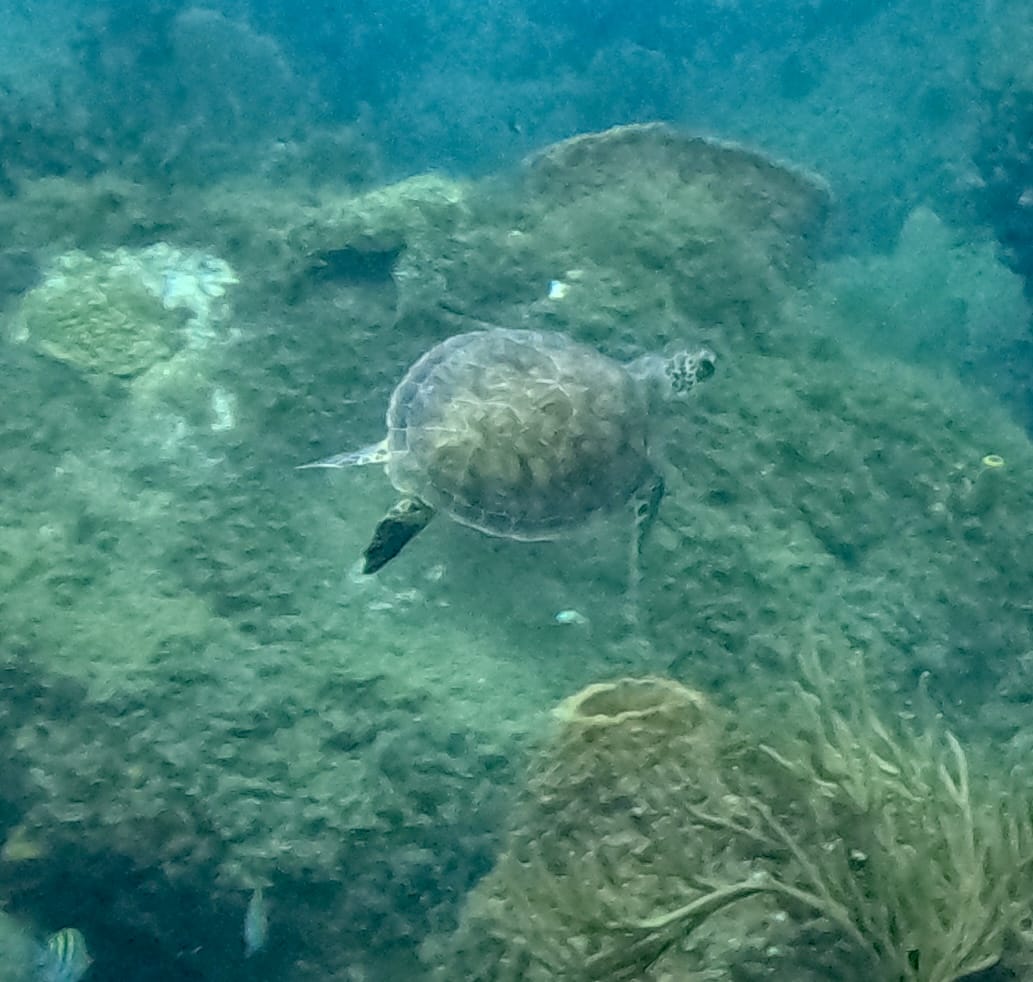
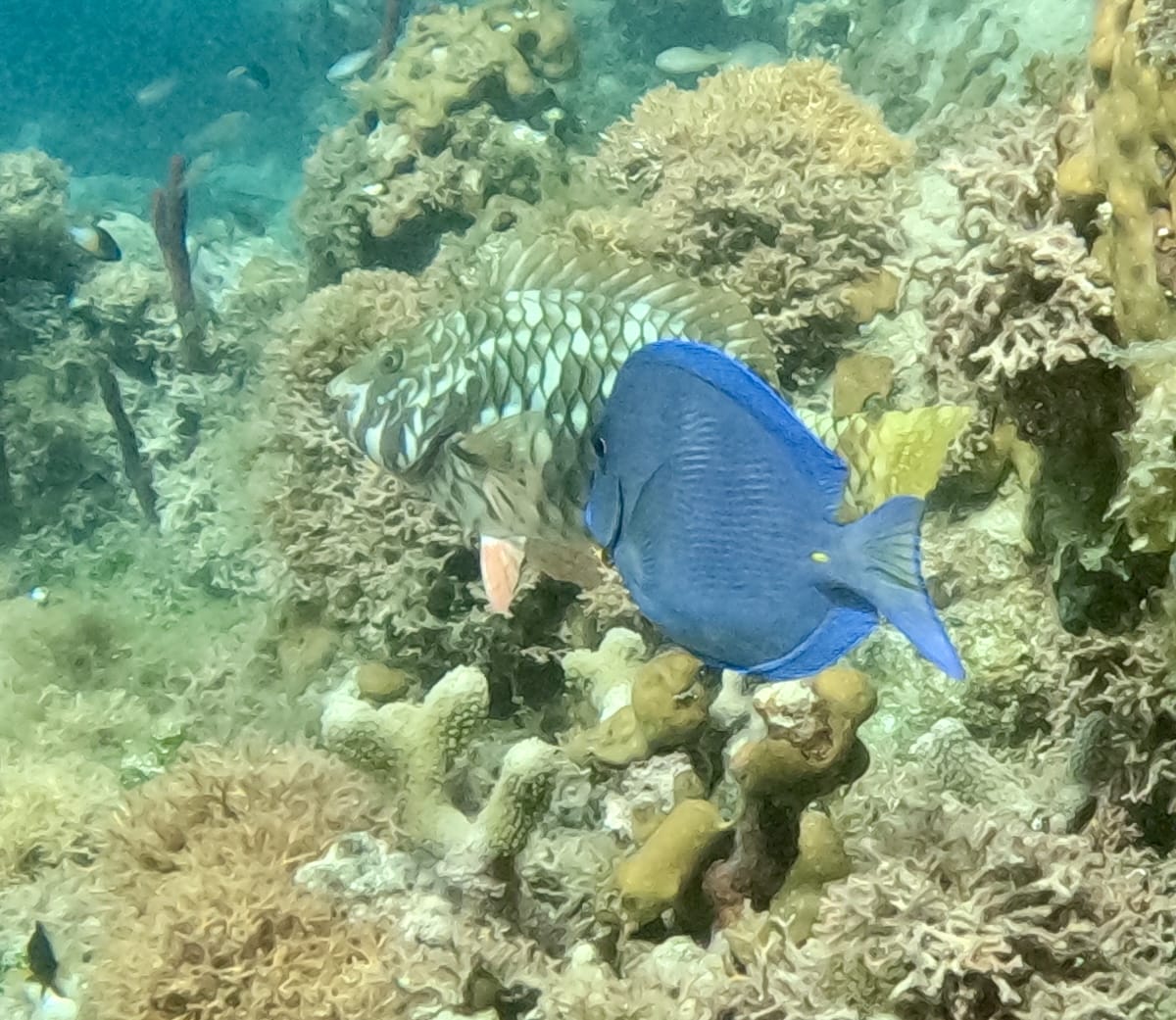
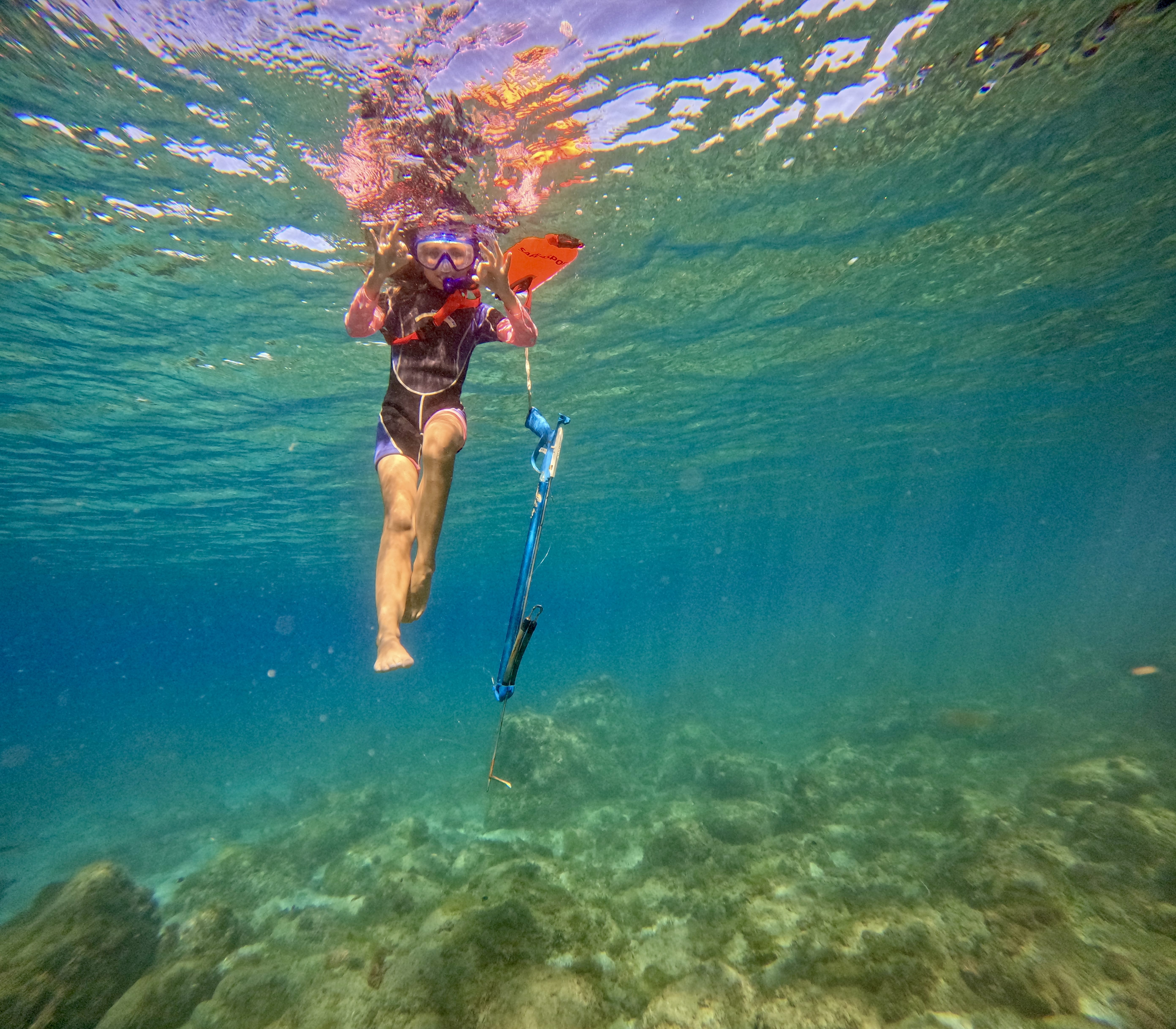
Zuza swims after them because we are afraid to leave the boat alone if we are not sure how well the anchor holds, and there are vertical rock walls nearby.
The next day, feeling somewhat more confident that Stubborn is holding up well, all three of us head to the beach bar. It's quite expensive, but Kamil hopes that by feeding the child sweet potato fries and skewers, it will stop her longing for school canteen lunches, which Kama had recalled as the pinnacle of culinary excellence during the cruise.
On December 30th, we move to the anchorage at Pointe du Bout. There are supposed to be two underwater wrecks among the attractions. Many boats are anchored there, and the wind is quite strong, so we try anchoring in several places (the anchor occasionally drags). While turning the engine on and off during parking, Zuza accidentally turns off its cooling system. Old diesels quickly corroded from the salts in the seawater reacting with the steel in the cooling circuit. The previous owner made a modification - the engine is cooled with glycol pumped by an electric pump. The mechanical pump from the engine pumps water, which cools the glycol in the heat exchanger, and then this water cools the muffler. This solution also has its drawbacks - any minor electrical failure (like corrosion in the fuse holder) and the pump doesn't work. This time, the key was left in the position without the electric pump. In five minutes, the glycol boiled. If it had been cloudy, we might have noticed that the green light of cooling wasn't on, but in the middle of the day under the tropical sun, it was hardly visible. The thermometer hit the 120-degree limit, and half of the glycol bubbled out (analog thermometer gauge is also electric powered, so it was dead before the electric mpower was restored). After cooling down, the engine started, but smoked terribly, leaked fuel at the filter seal, and lacked power.
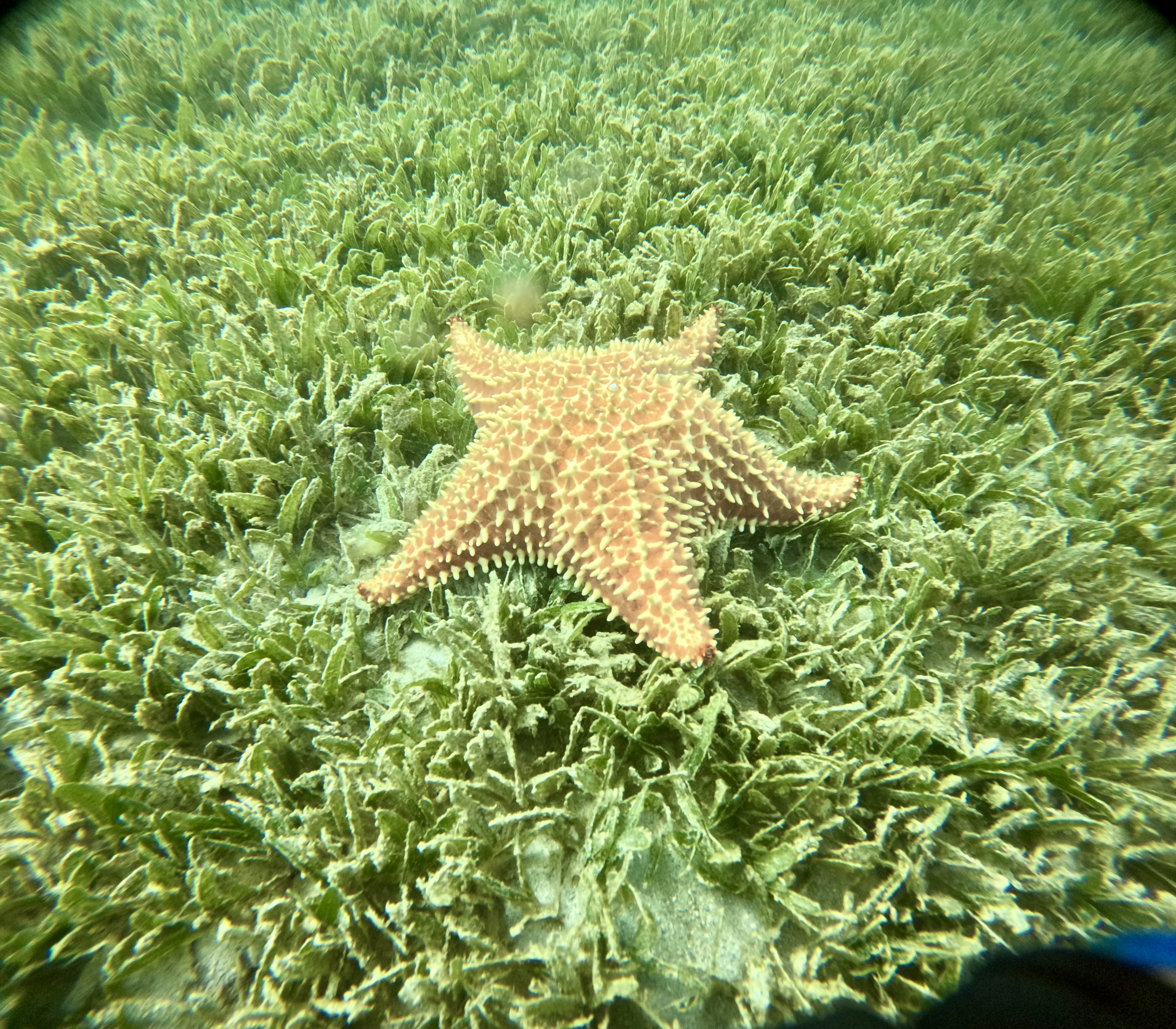
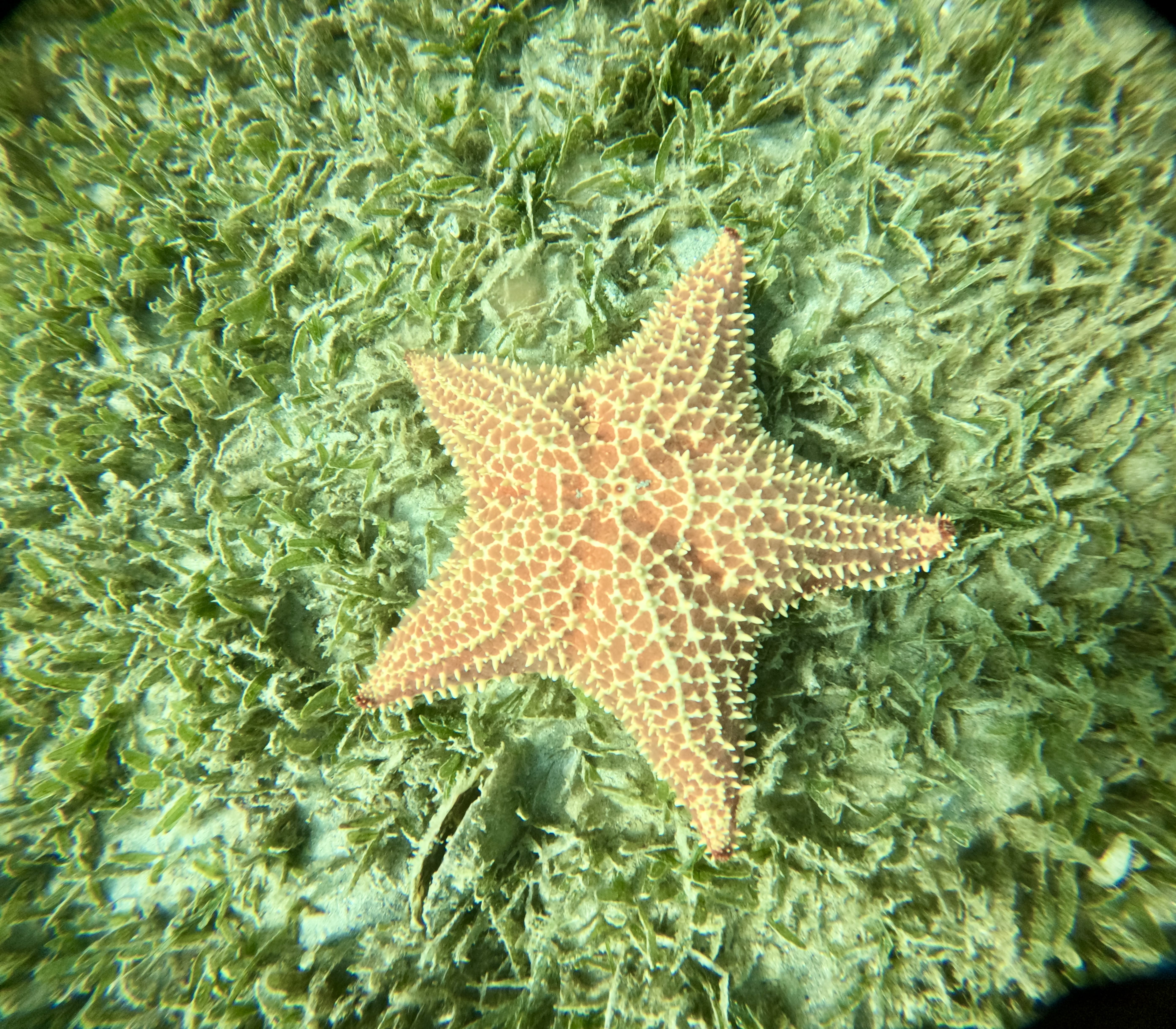
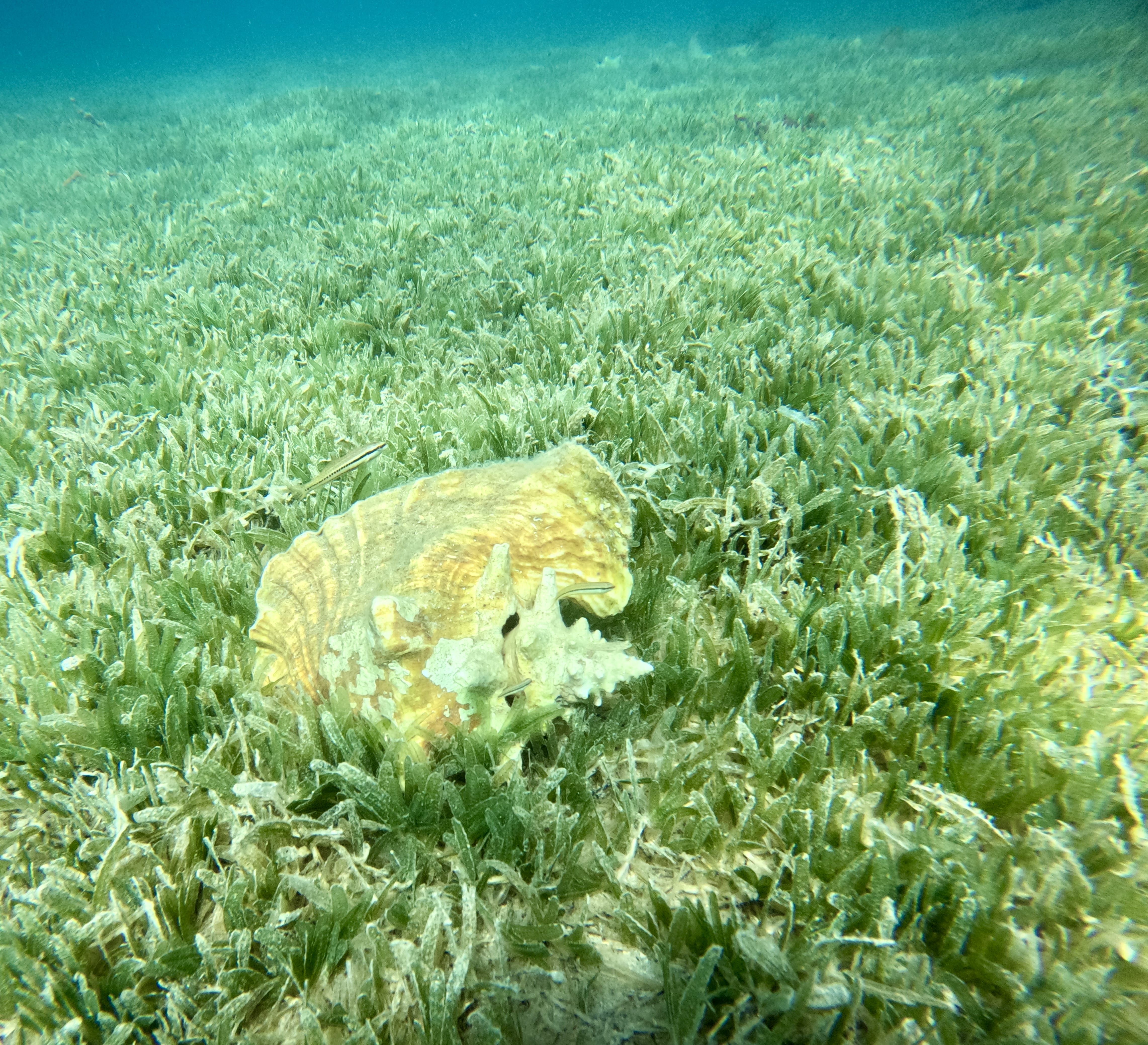
It looked serious, but Kamil noticed that both cylinders were working evenly, which ruled out a ring failure, and the engine still started very easily, indicating it held compression. Since there wasn't much time before sunset, we decided to spend the afternoon diving on the wreck and doing some much-needed laundry, with a detailed engine diagnosis to start the next day. The wrecks turned out to be a huge disappointment - one was a small sailboat, and the other had been removed as a navigational hazard. However, we did manage to see large starfish (about 30cm in diameter).
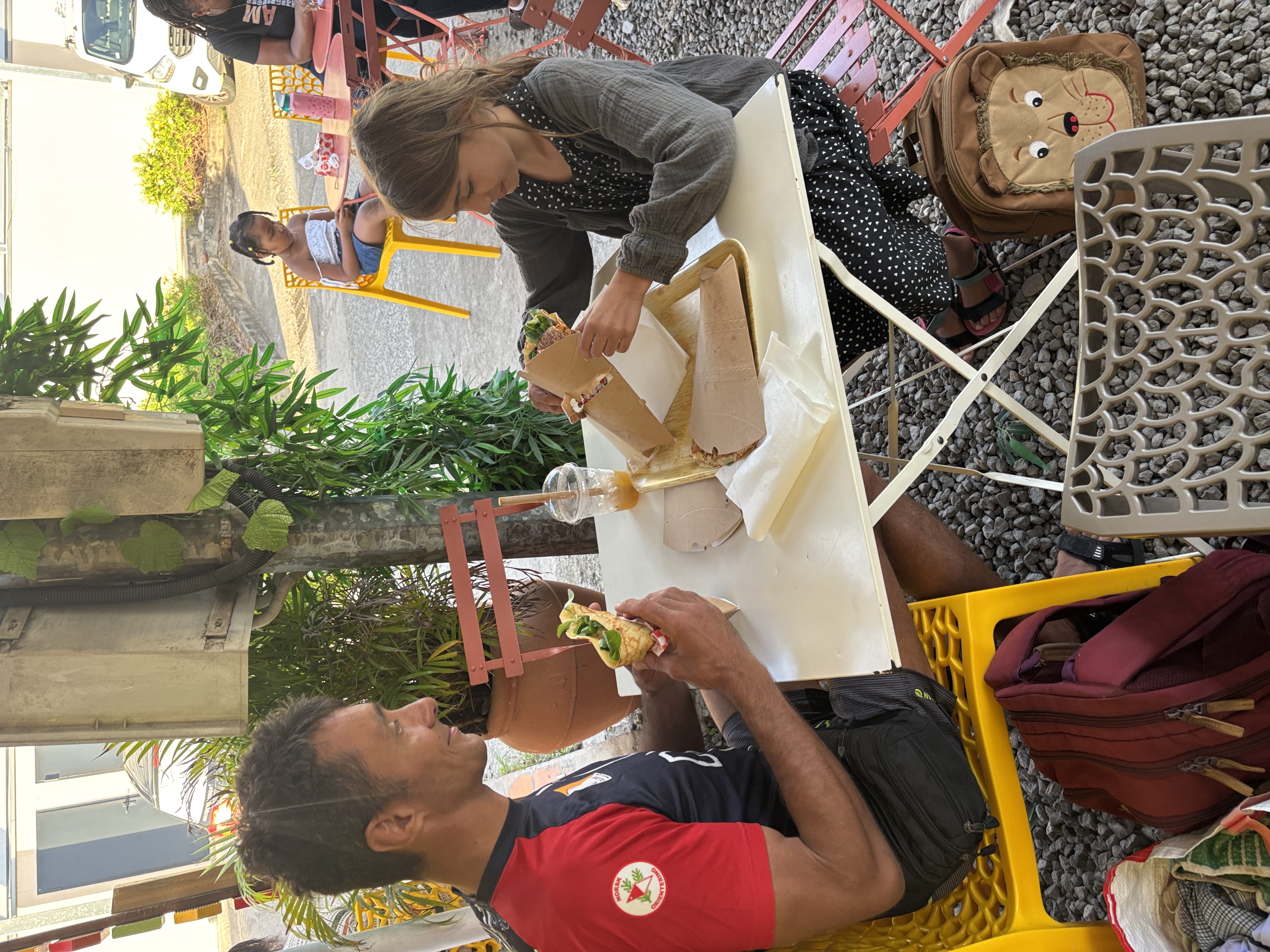
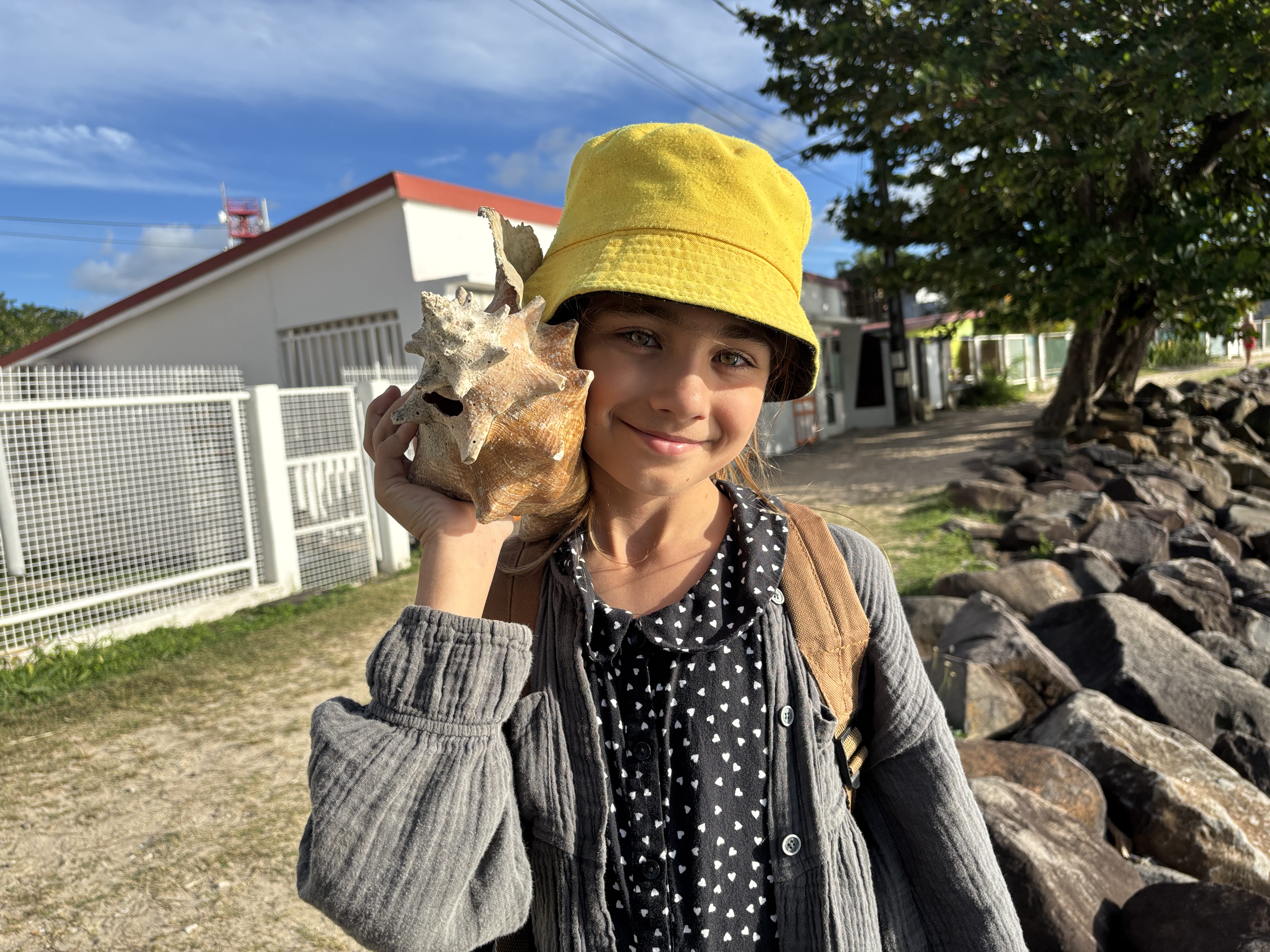
On the shore trip we discover we ended up in a very exclusive place, at this time of year full of affluent French people who spend Christmas and New Year's Eve in the tropics. In the entire town, there is one small grocery store, but there are plenty of expensive restaurants. Fortunately, on the way to the store and laundry, we manage to find a creperie where the locals eat. It wasn't cheap either, but it wasn't prohibitively expensive.
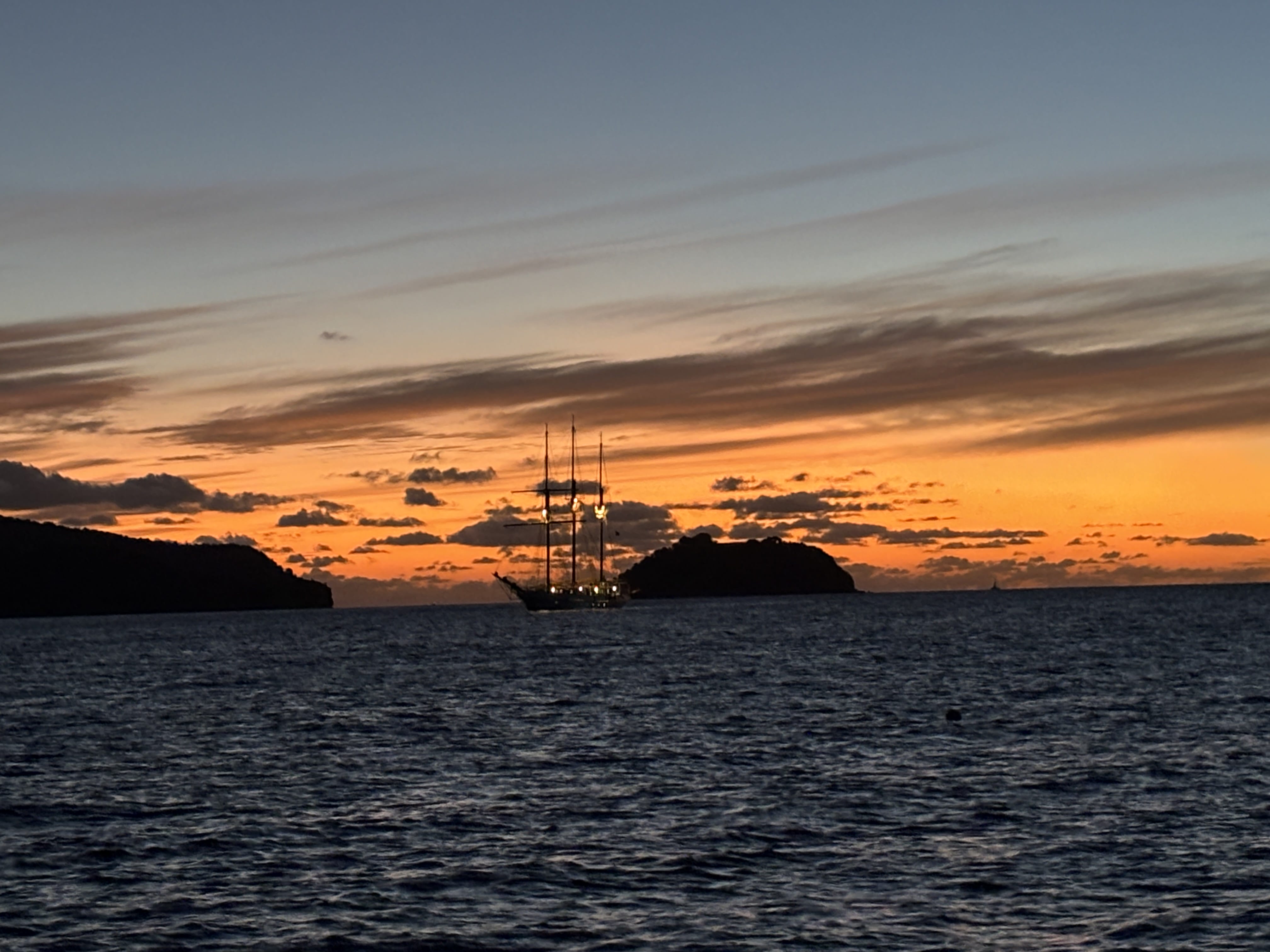
Locals advise us that at 9:00 PM it's worth looking towards the capital, Fort-de-France, because there will be fireworks. It turns out that in Martinique, traditionally, the fireworks display takes place the day before New Year's Eve. Indeed, it's long and beautiful. We are standing quite far away, but they still make an impression.
We start New Year's Eve fighting with the exhaust pipe. After long deliberations and consultations with Chat GPT, Kamil concludes that the cooling engine might have sucked up seawater into the exhaust. Detaching the exhaust pipe from the muffler and removing it is a nightmare job. The length of the muffler significantly exceeds the length of the engine compartment in Vega, and moreover, it cannot be maneuvered freely to avoid tearing any wires, cables, or pipes that surround the engine. After a few hours, we manage this feat.
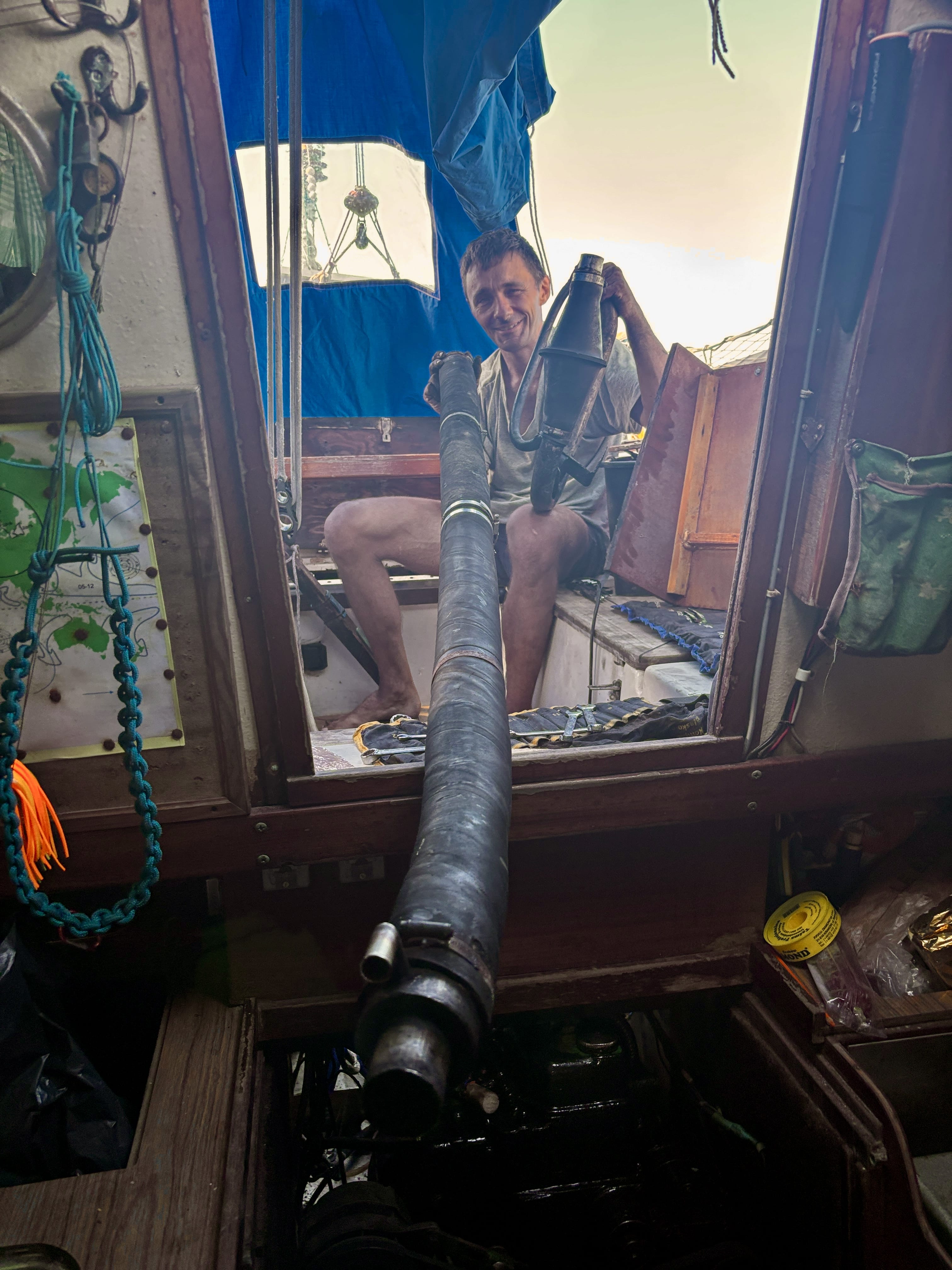
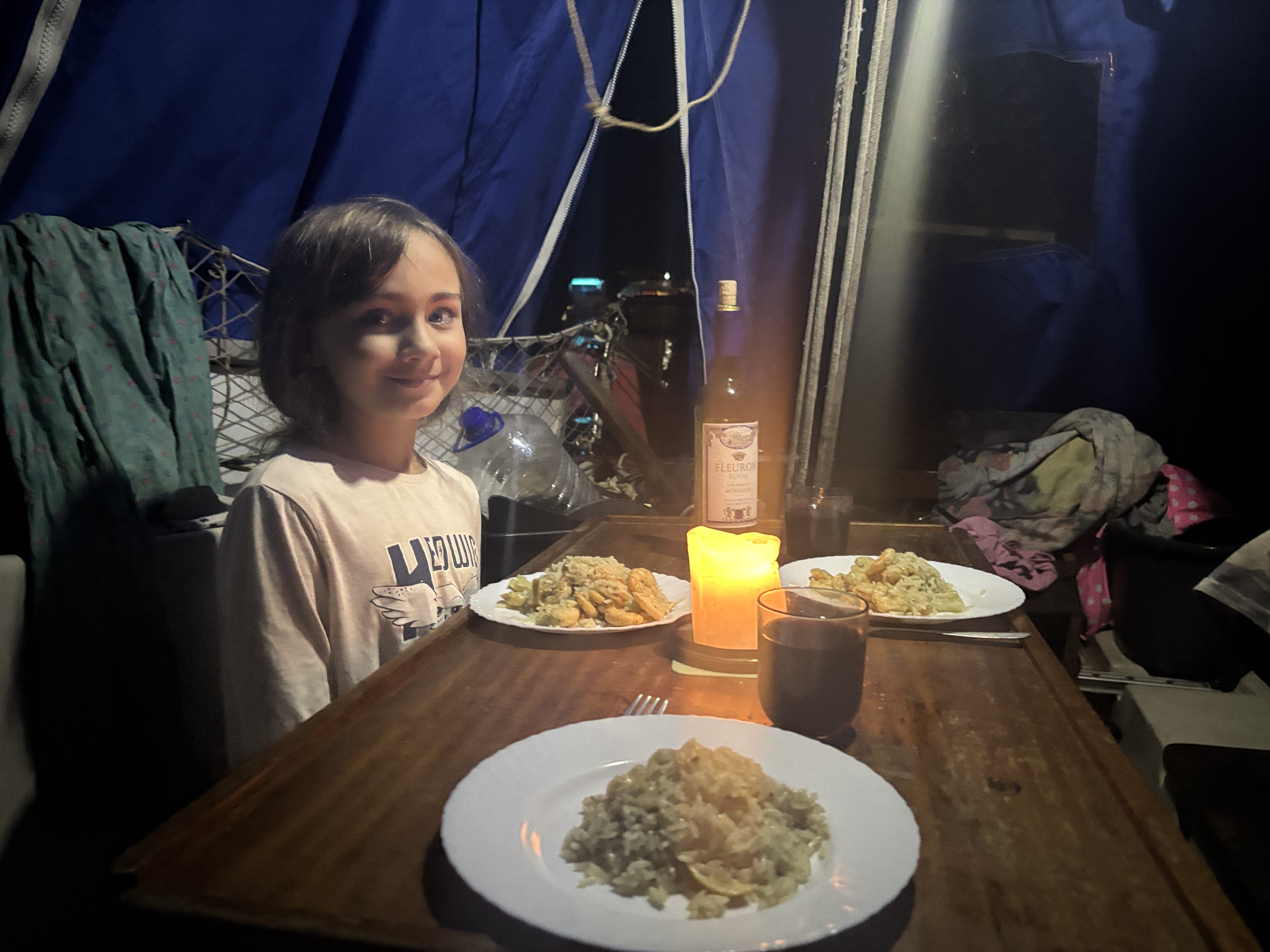
It turned out that there is indeed water in the exhaust, but draining it does not help; the problem persists. Kamil suspects that the exhaust pipe running from the engine to the stern has rusted through, and the water meant to cool the exhaust fumes is pouring into the exhaust. It was getting dark, so the repairs for the day had to be finished, and attention turned to preparing the New Year's Eve dinner. Preparing shrimp risotto we hope that the misfortunes will end with the old year and the new one will be better. The night is warm and beautiful, with the sounds of Zouk, a dance music originating from Guadeloupe but popular in the Caribbean and France, coming from the shore. We go to bed slightly comforted.
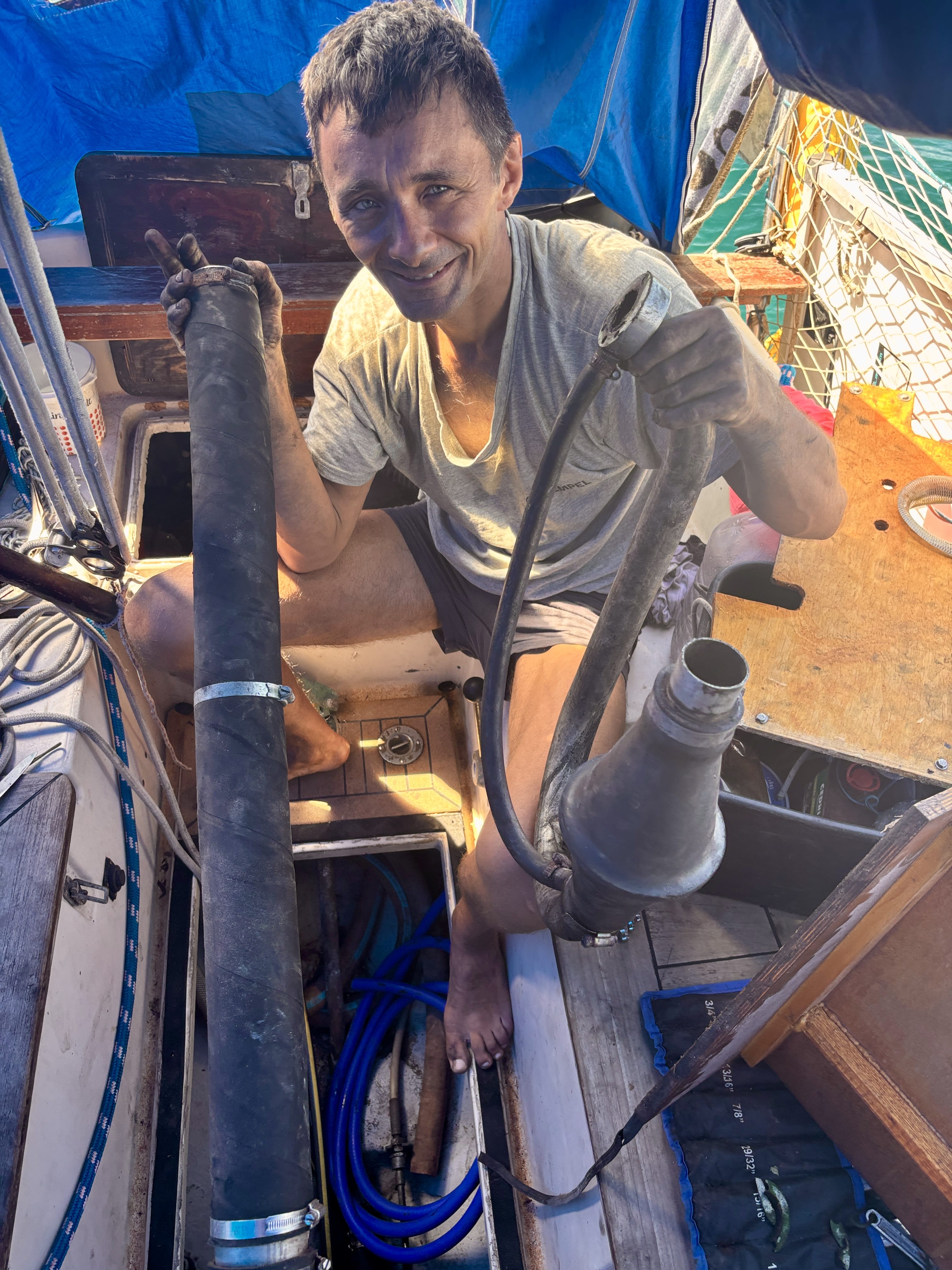
The Year 2026 begins with further work on the Engine. It turns out that Kamil's diagnosis from yesterday was correct. After removing the water jacket, we discover holes in the muffler pipe. It's hard to say whether the old rust could have been pierced by pressure from overheating or if it's a coincidence. We wipe the pipe from the mud that must have gotten there during the journey on the Suriname River. Kamil secures it to prevent anything from catching fire (there's no way to put the water jacket on in this condition), reassembles everything, and starts the engine To our great relief engine works. However, we have a strong resolution to use it very carefully and as little as possible. During the continued journey, it is used almost normally and everything works as it should.
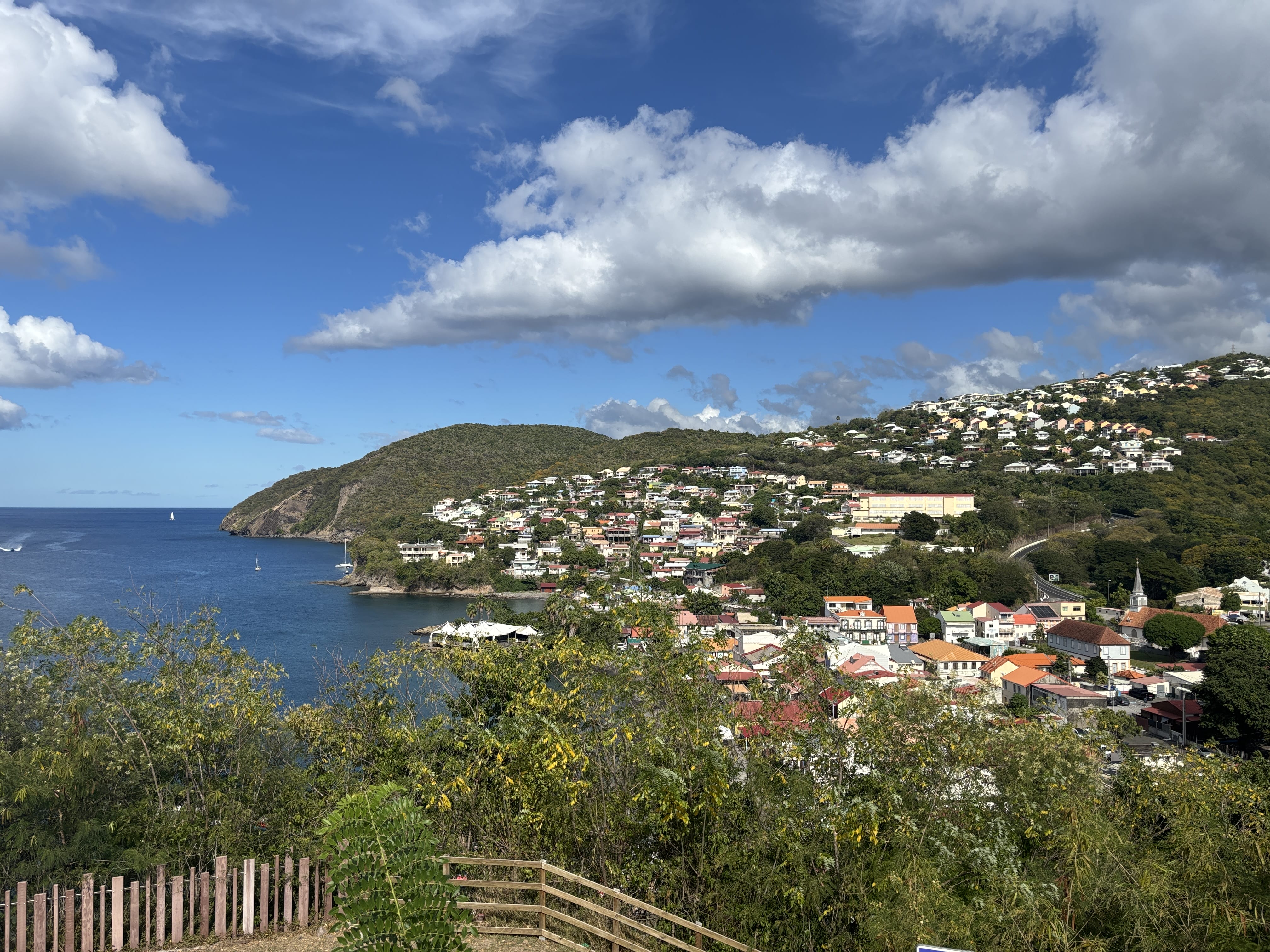
Since it is quite early, we move to the anchorage near the fishing village Case-Pilote. The place looks nice, and there is also a Carrefour in the village.
The next day, we set out for shopping. It turns out that the store is nearby, but it's a steep uphill, so the walk is quite intense.
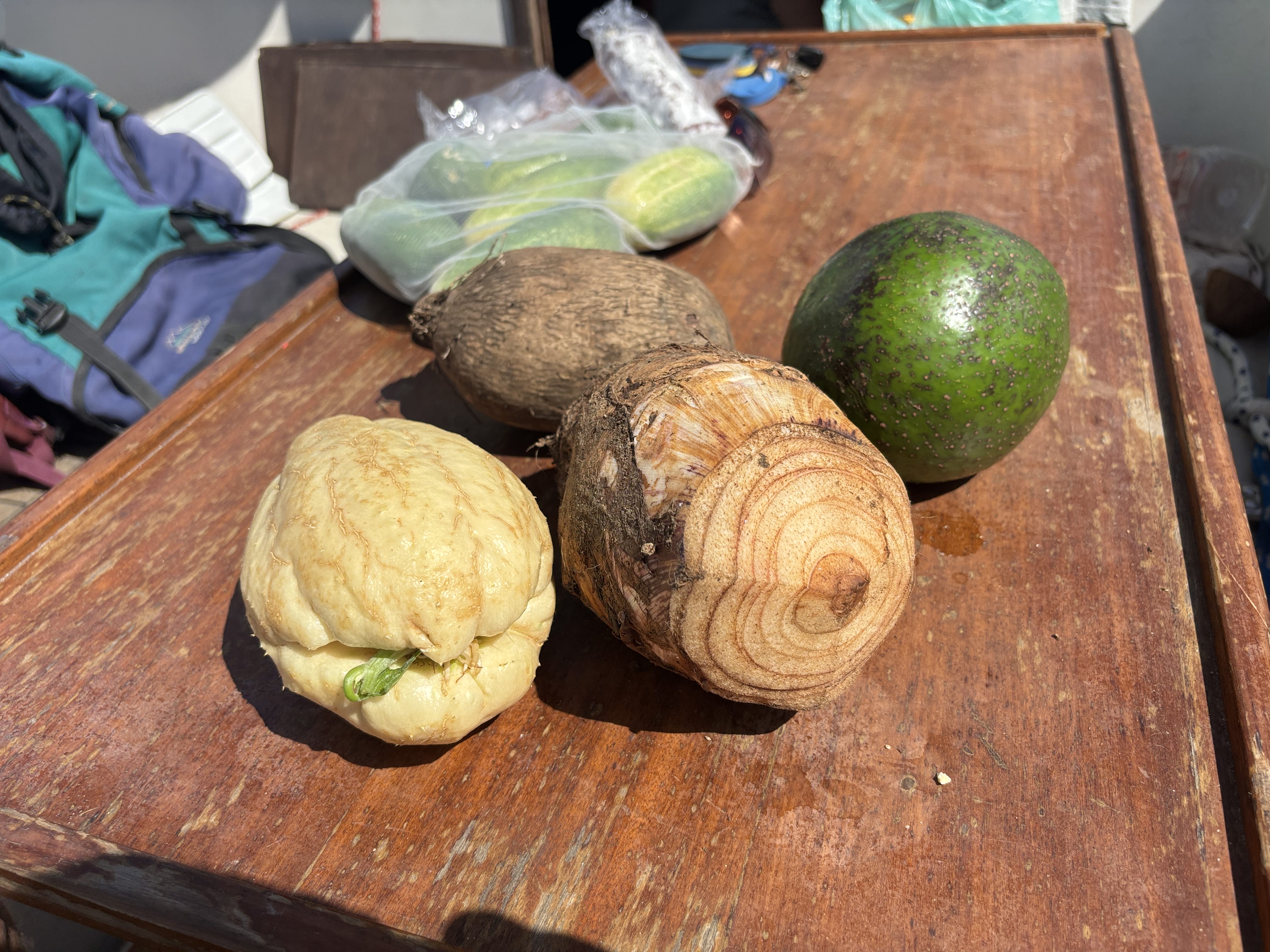
We take advantage of the fact that we are at the supermarket and do a lot of shopping. We spend a lot of time in the vegetable section, where Zuza uses Google to determine which label matches which vegetable and how to eat it. From the items we are unfamiliar with, we buy taro, yam, and christophene. The first two are used like potatoes, and the last one can be eaten cooked or raw.
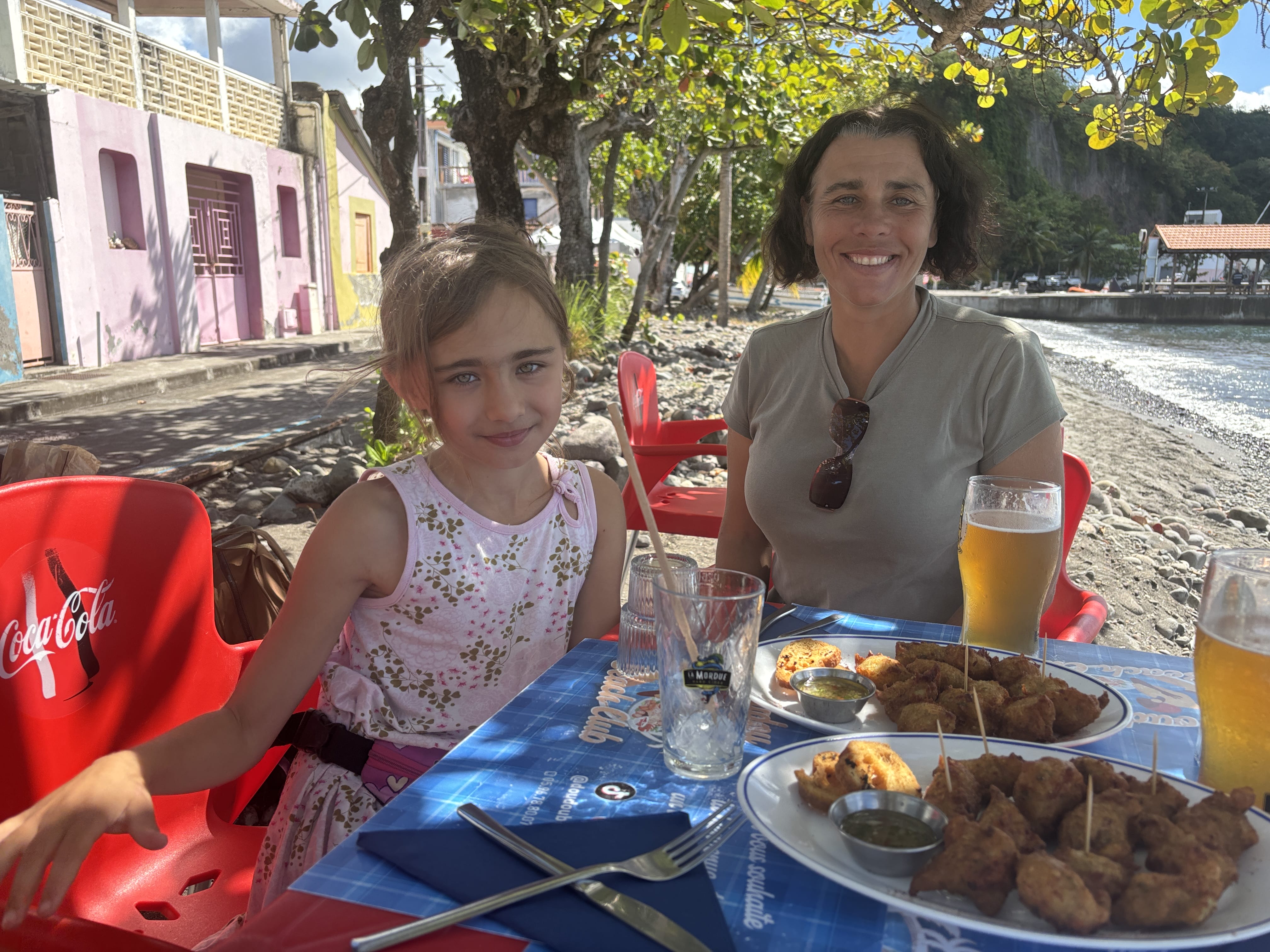
When we return from shopping, the waterfront is filled with the sounds of reggae. Bar owners make cleaning up after New Year's Eve more enjoyable with music. A friendly guy apologizes to us that he is closed today but directs us to a spot serving typical Creole cuisine. There, we try a traditional dish - accras (fritters made from fish and dough fried in deep oil). It was for a reason that Kamil had been looking forward to them for several days; they turn out to be indeed very tasty.
The next day, we move to the anchorage near Saint Pierre. At the beginning of the 20th century, this was the island's capital. Everything changed with the eruption of the Mont Pelee volcano. On May 8, 1902, the eruption engulfed the town in a single minute. All but one resident perished. A man named Antoine Ciparis was imprisoned in an underground cell awaiting death for murder. Although severely burned, he survived.
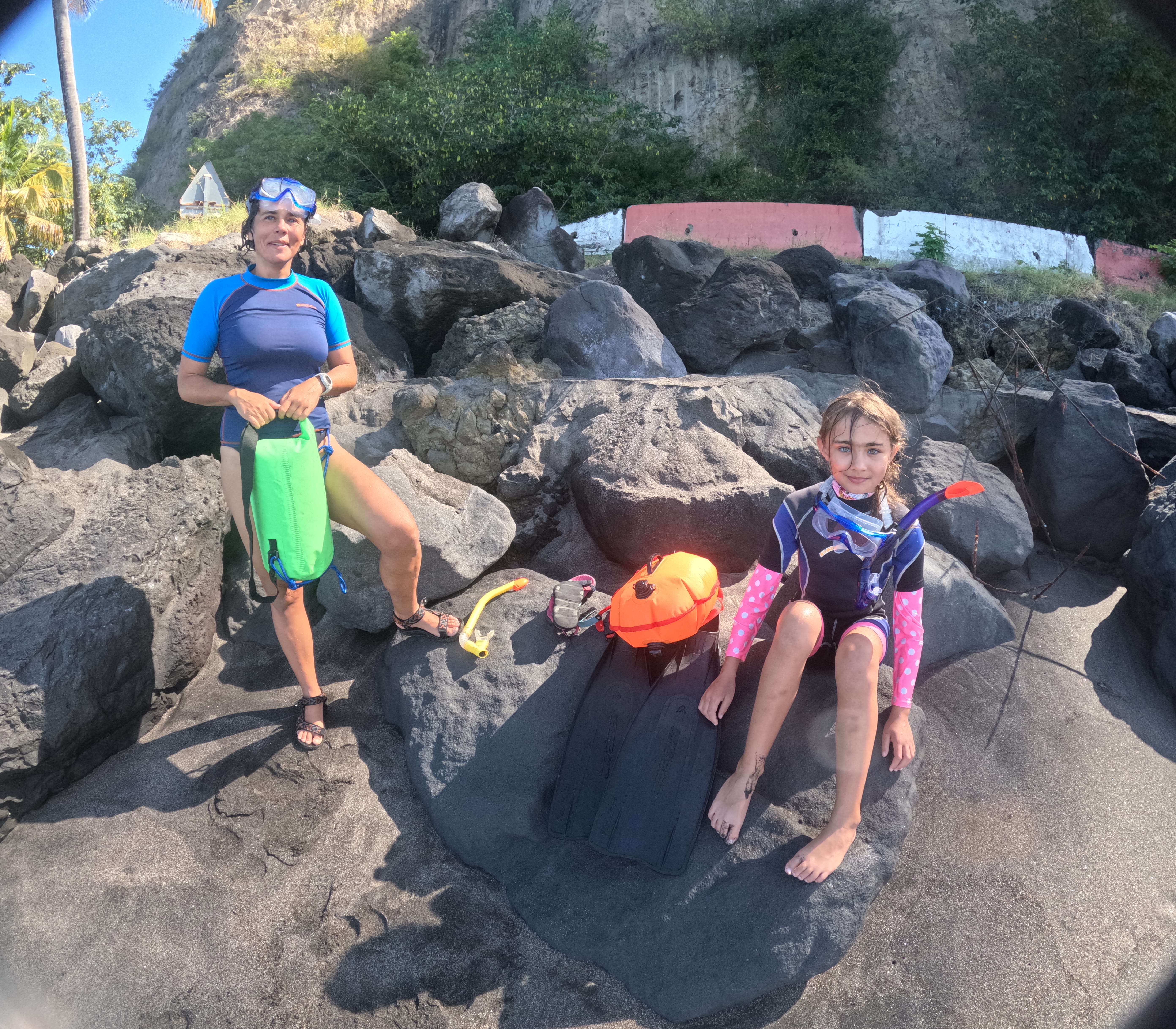
The anchorage is located about 2 km from the town, so we pack documents and essential items into a waterproof buoy, swim to the shore, walk to Saint Pierre, and only then get back into the water.
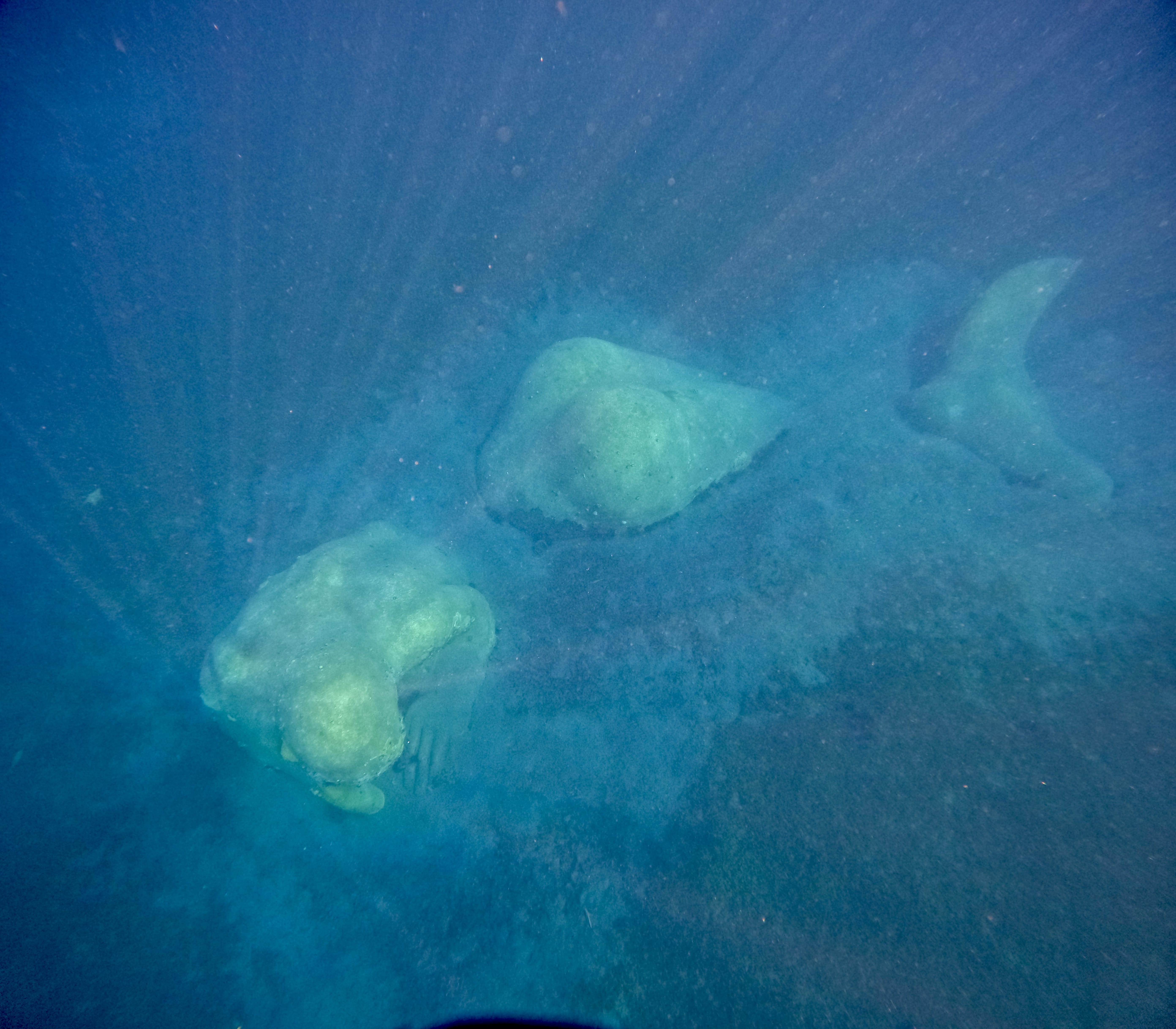
As part of an artistic project, two sculptures were submerged near the beach: a mermaid and a mask. They are now a tourist attraction.
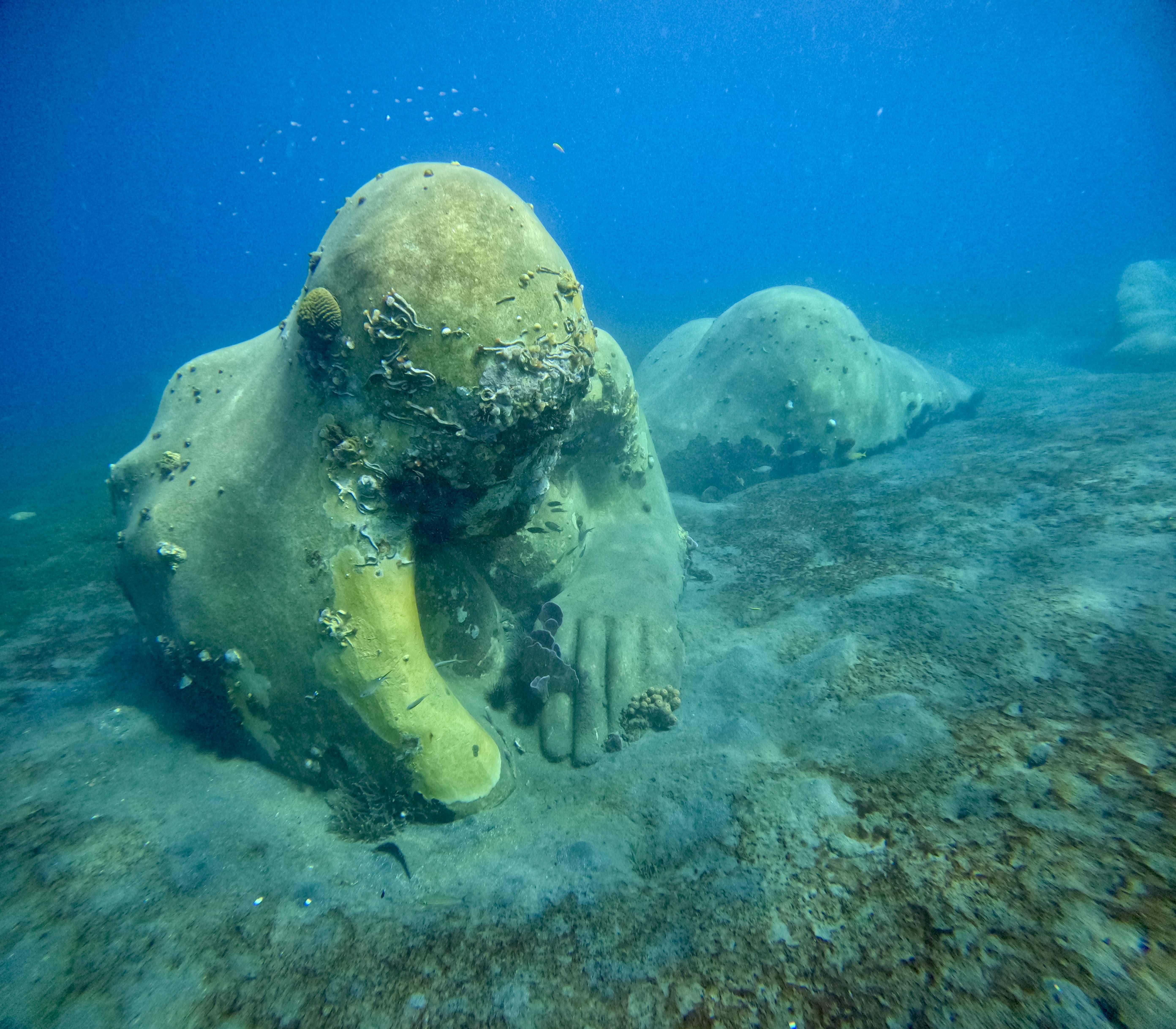
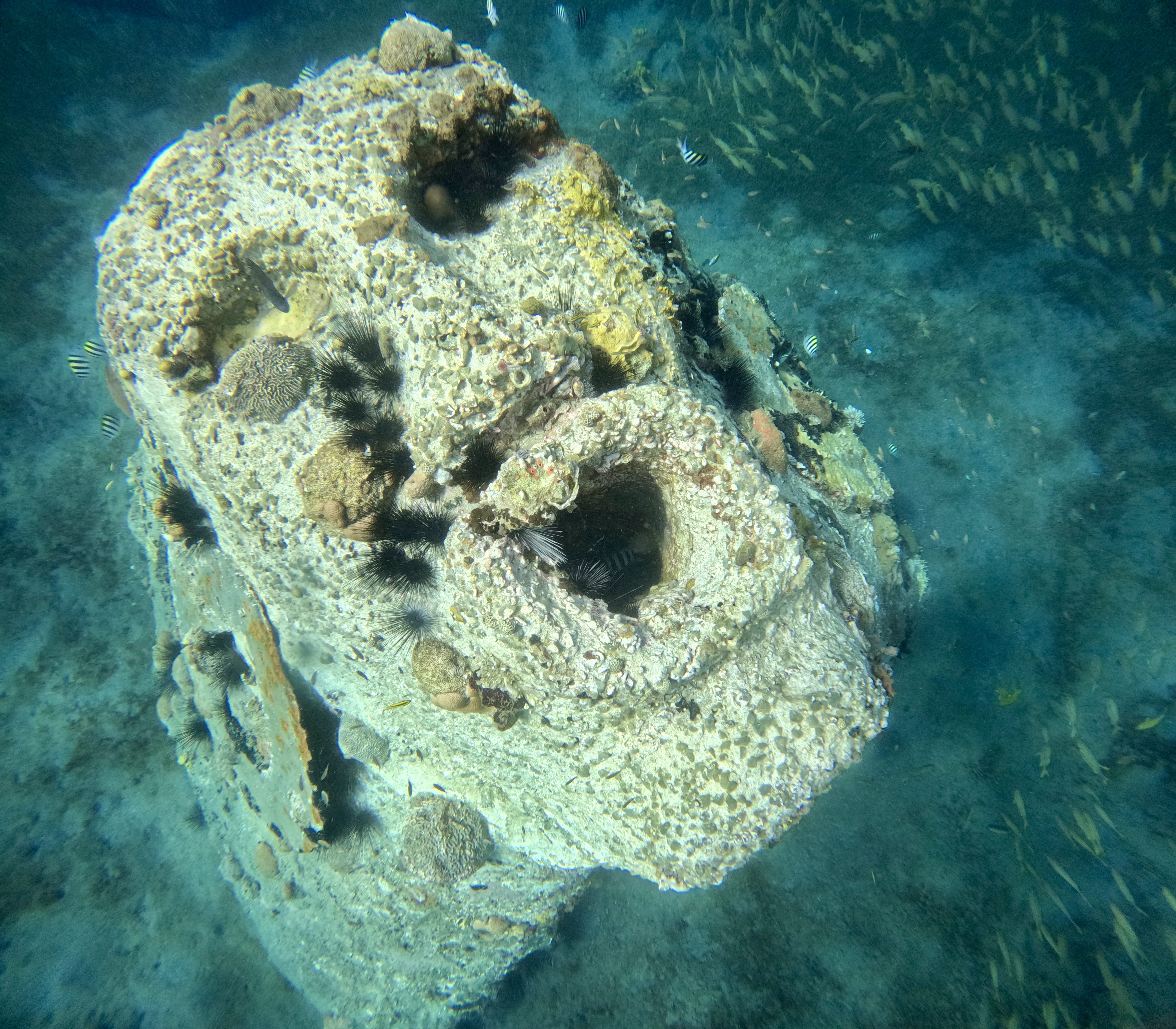
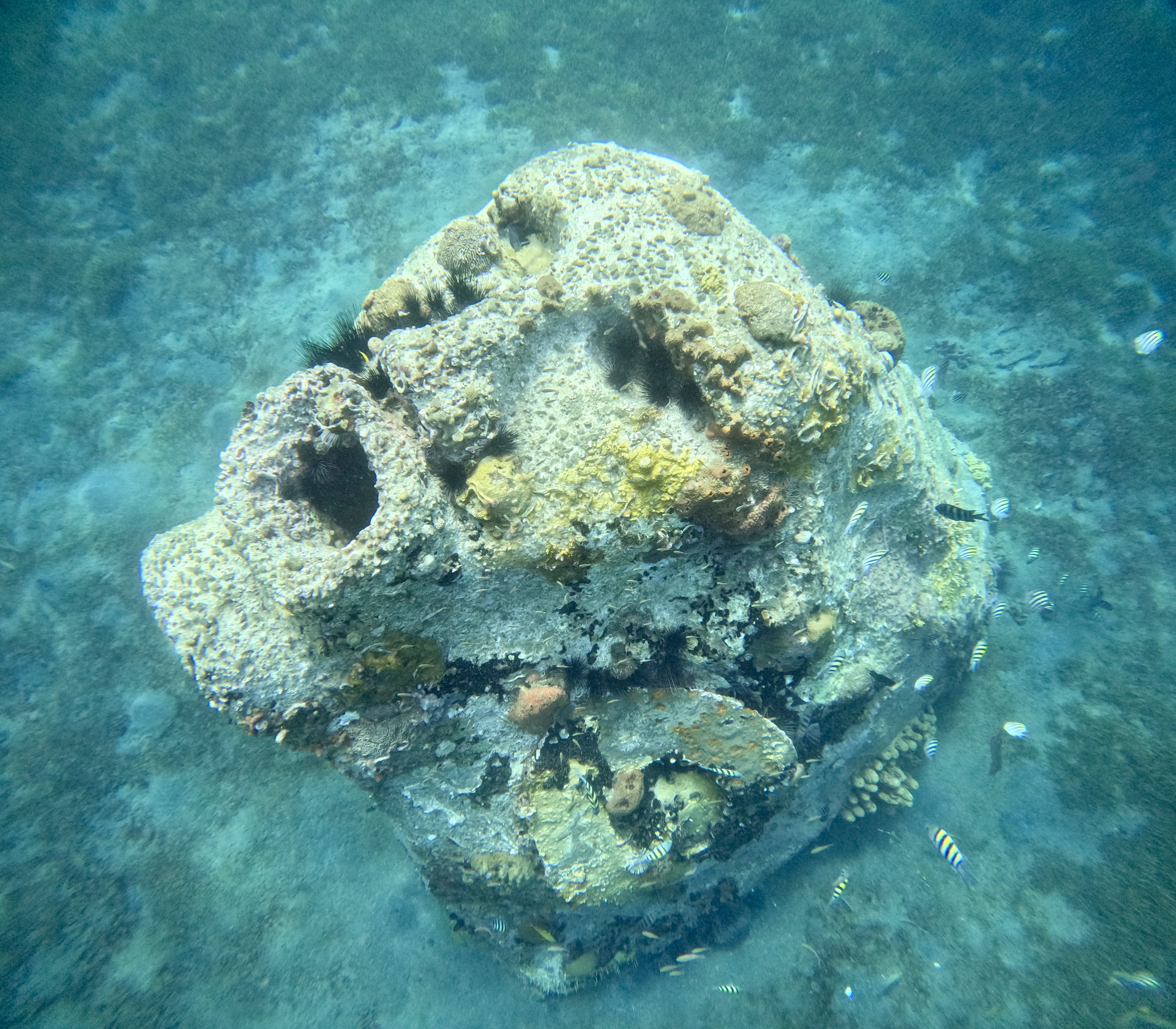
Kamil becomes quite proficient at equalizing ear pressure while diving - whether it's due to anatomical structure or practice, he can quickly descend to 10-15 meters, position himself to take a picture, and return to the surface (keeping an eye on how much air is left for the return). Unfortunately, the Garmin Instinct Solar Surf falls victim to diving. The watch is designed for snorkeling but not for scuba diving. Evidently, the manufacturer didn't anticipate that someone would dive on a single breath to a depth of several meters. It turns out this is consistent with the watch's "up to 100m" waterproof rating, and the manual should have been read. The girls stay closer to the water's surface.
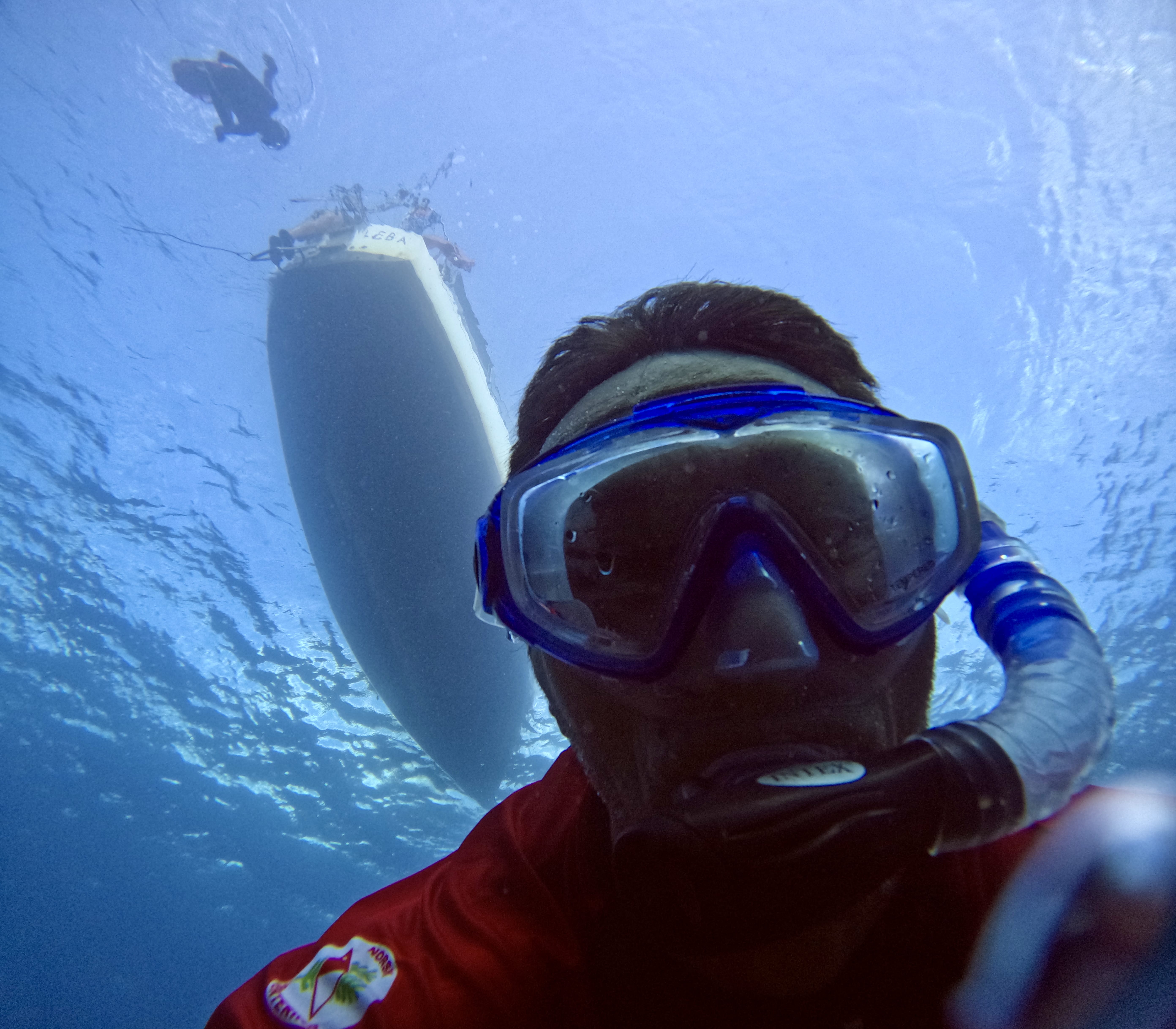
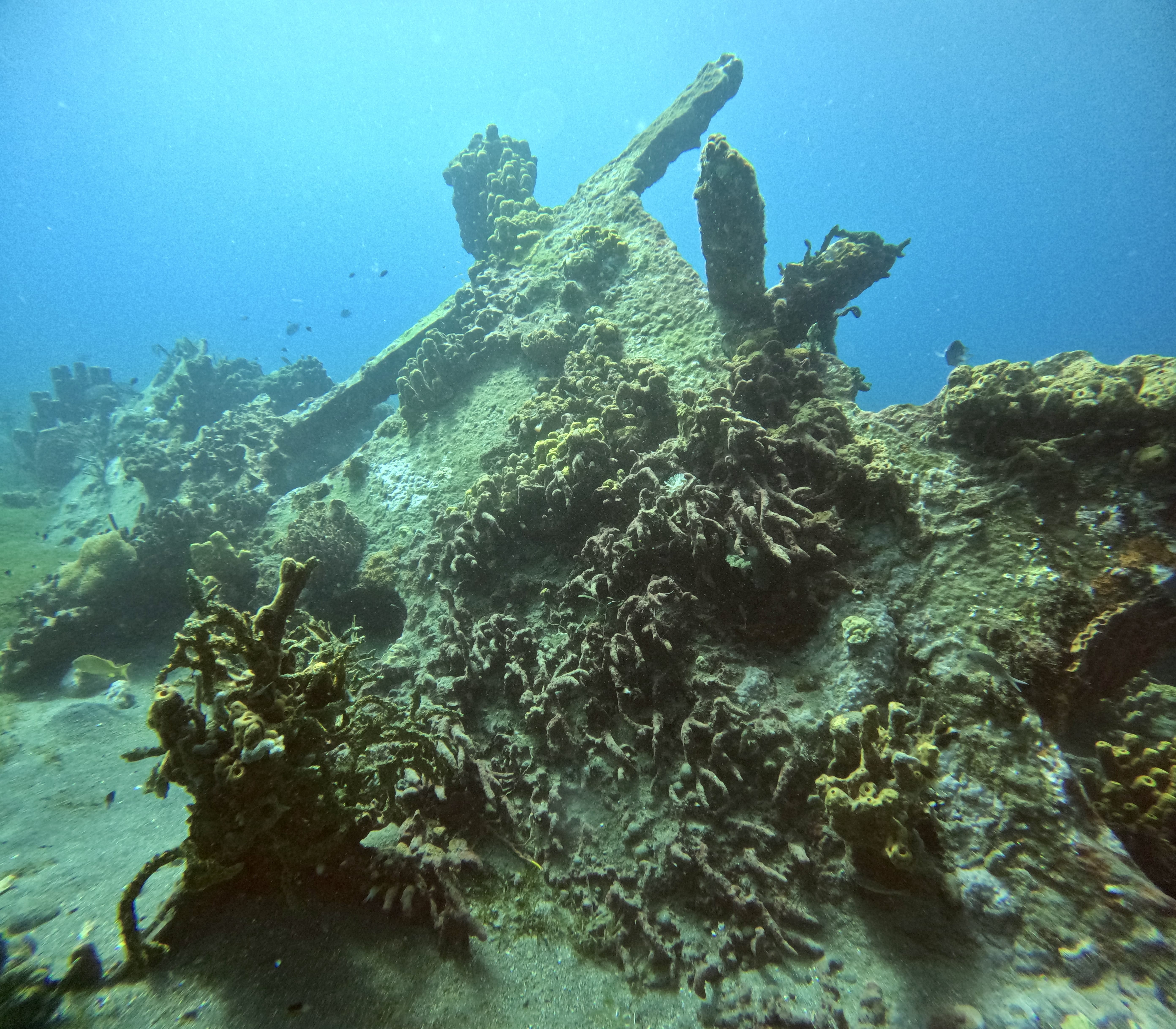
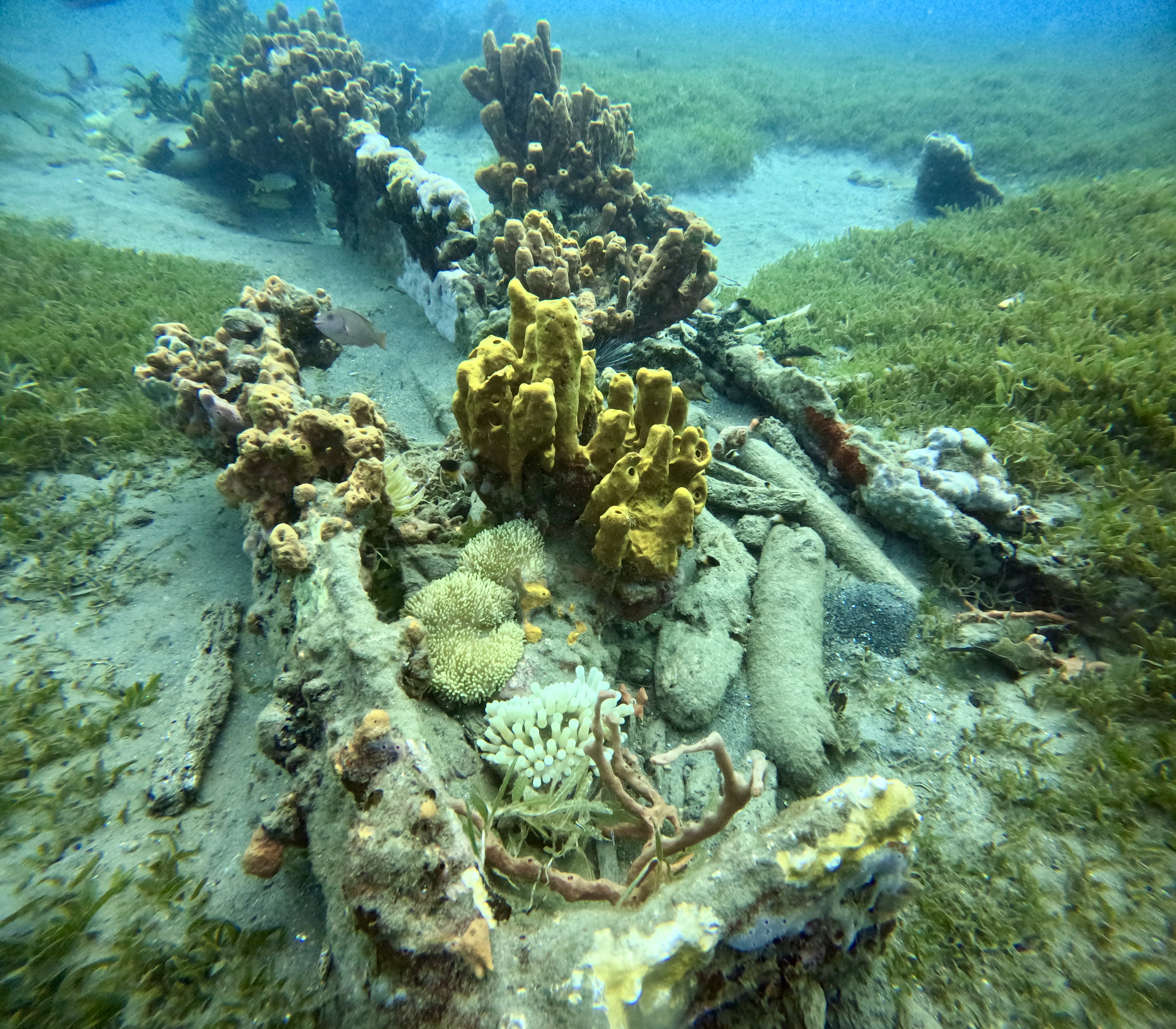
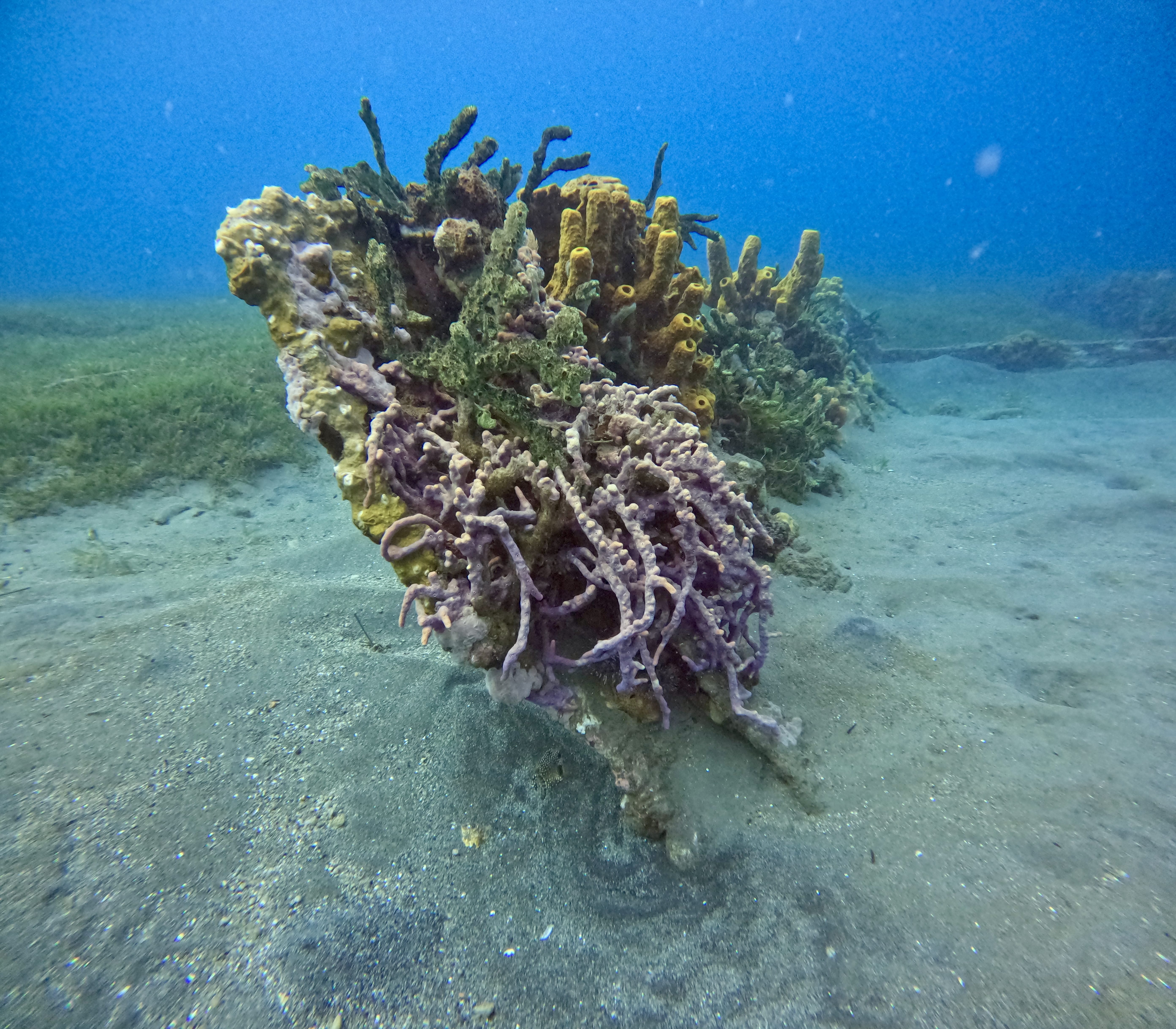
On the way back, we sail around a 120-year-old wreck. Not much of it is left, but it provides a good base for corals.
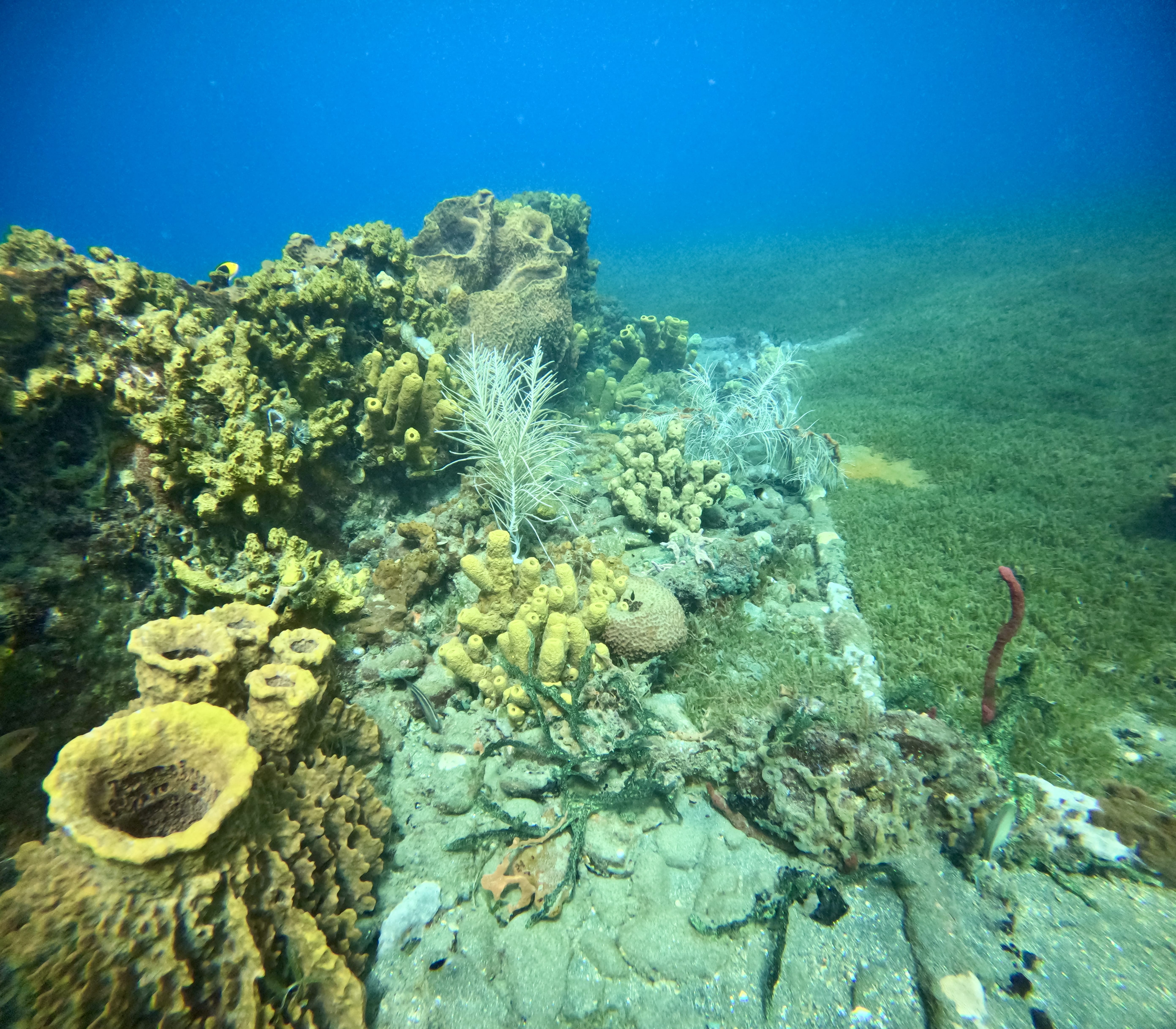
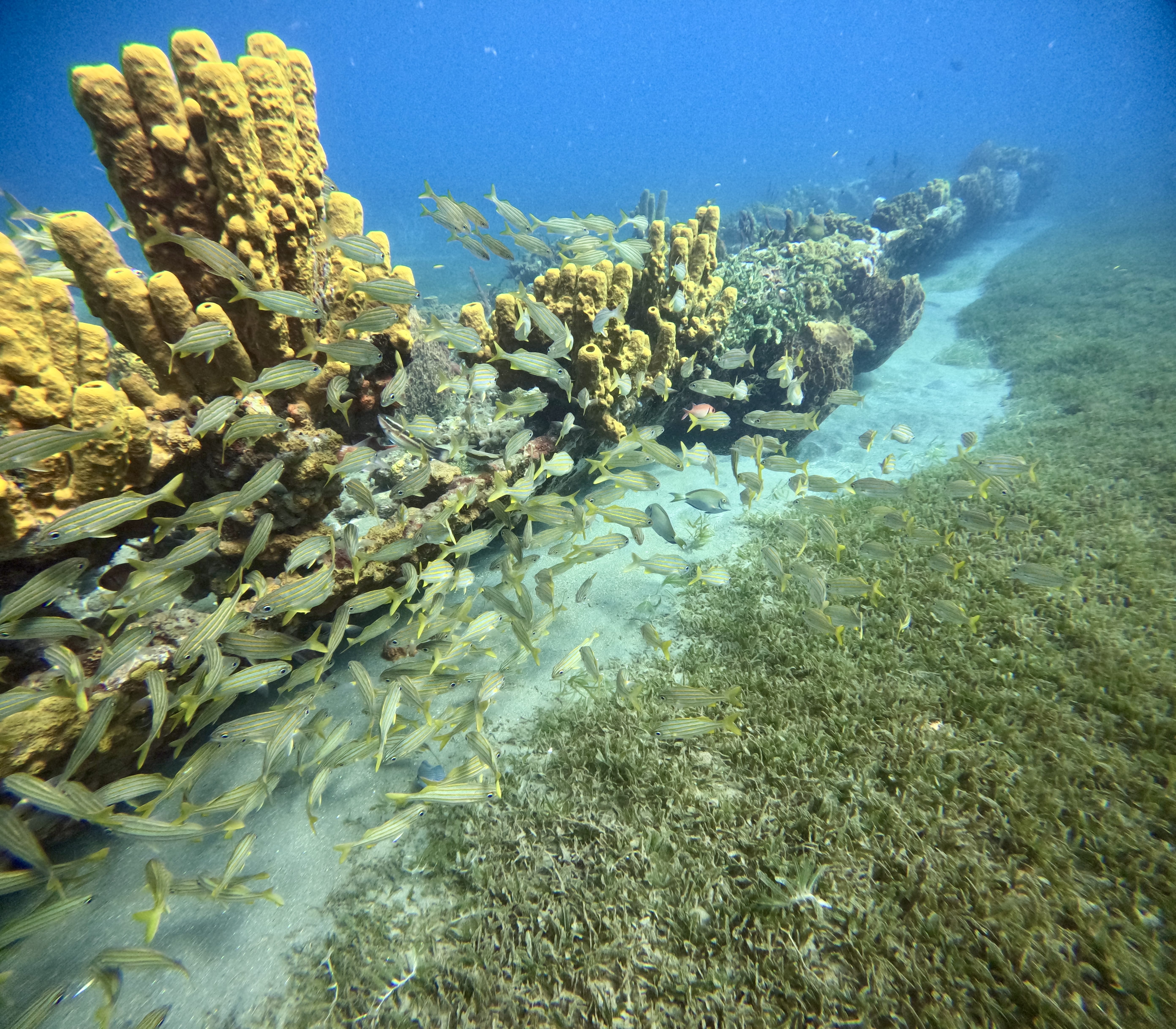
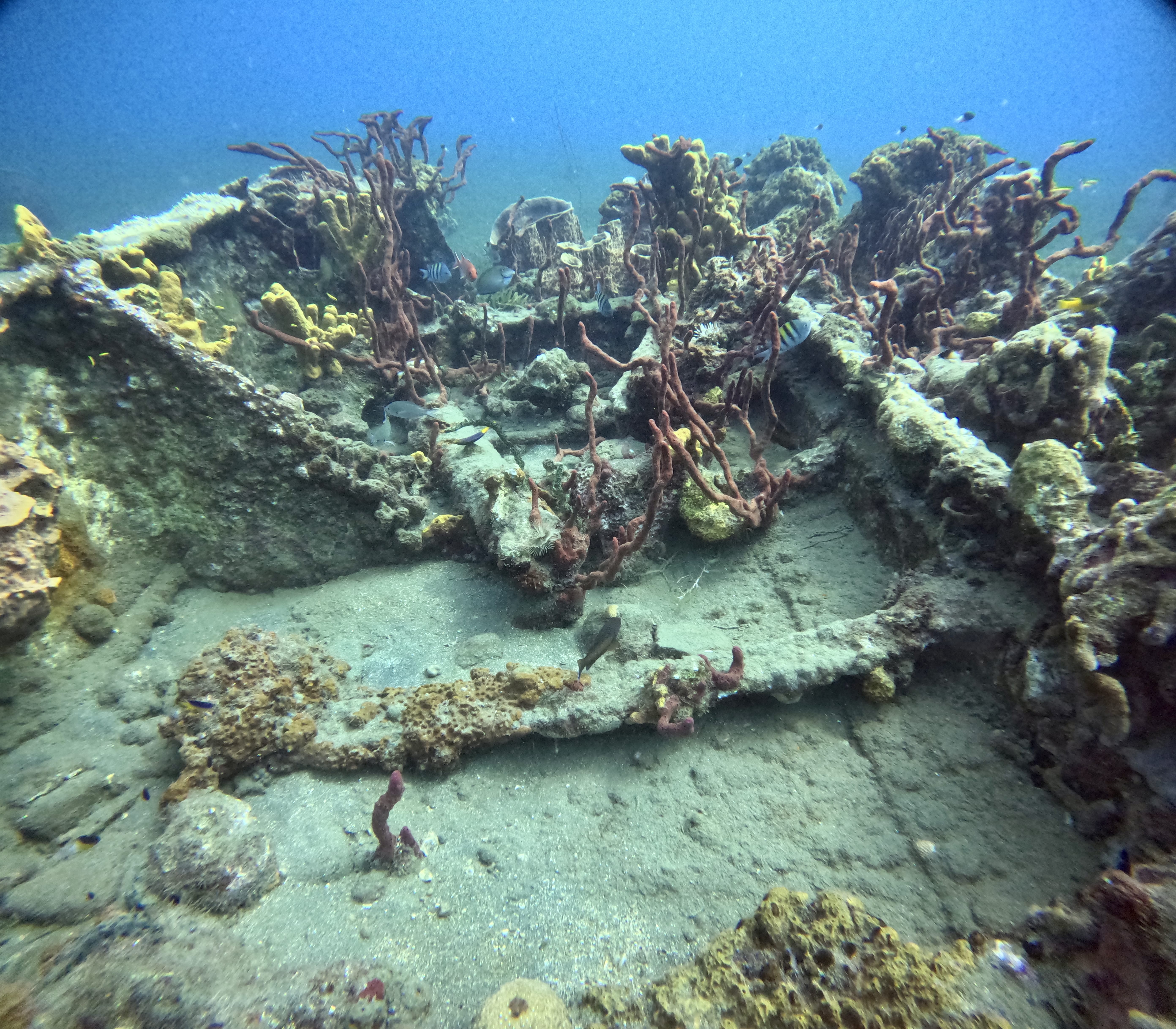
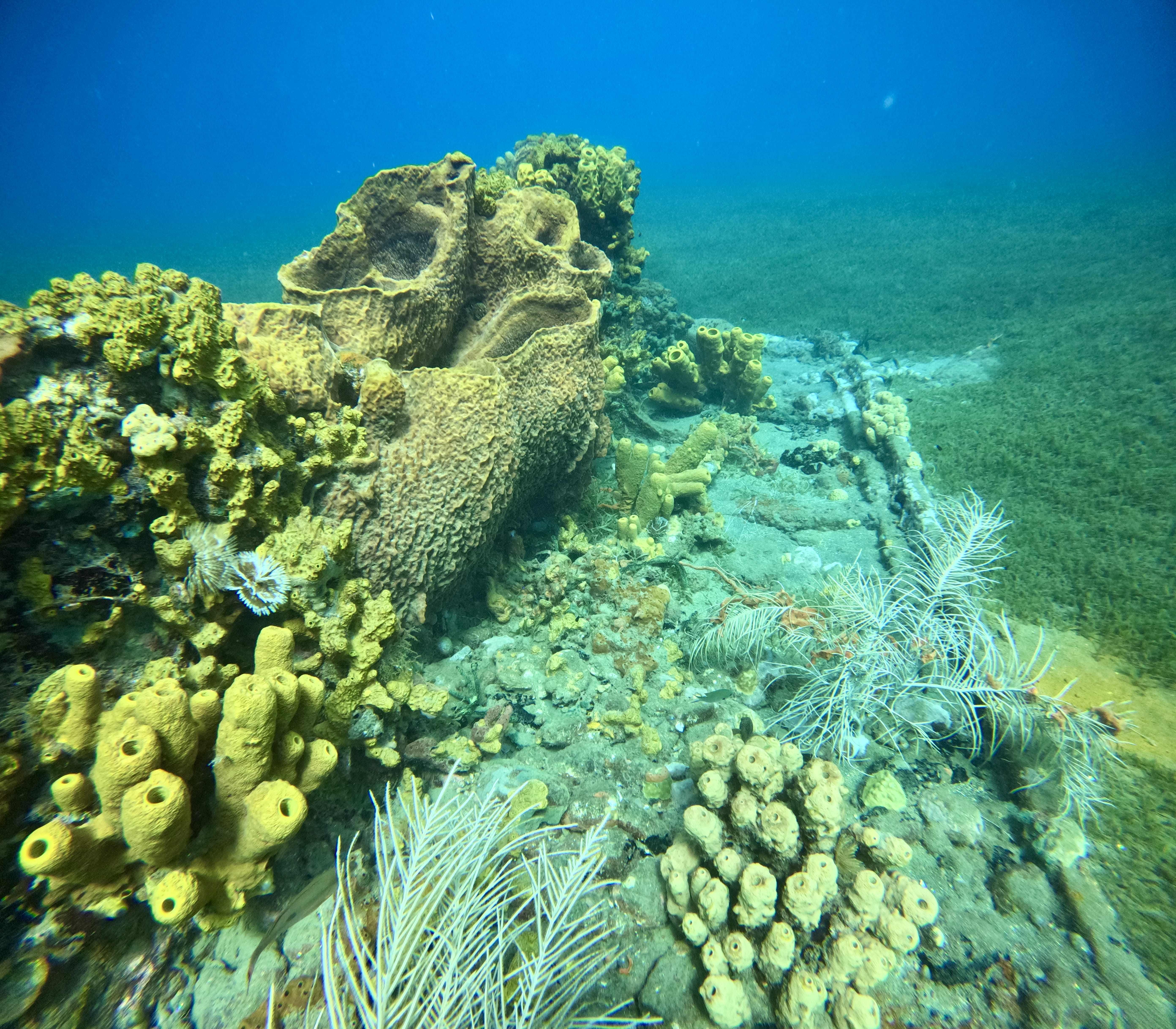
The next day we set off for Dominica. On the way, Kamil, as usual, tries to catch a fish. This time the hook is swallowed by a barracuda.
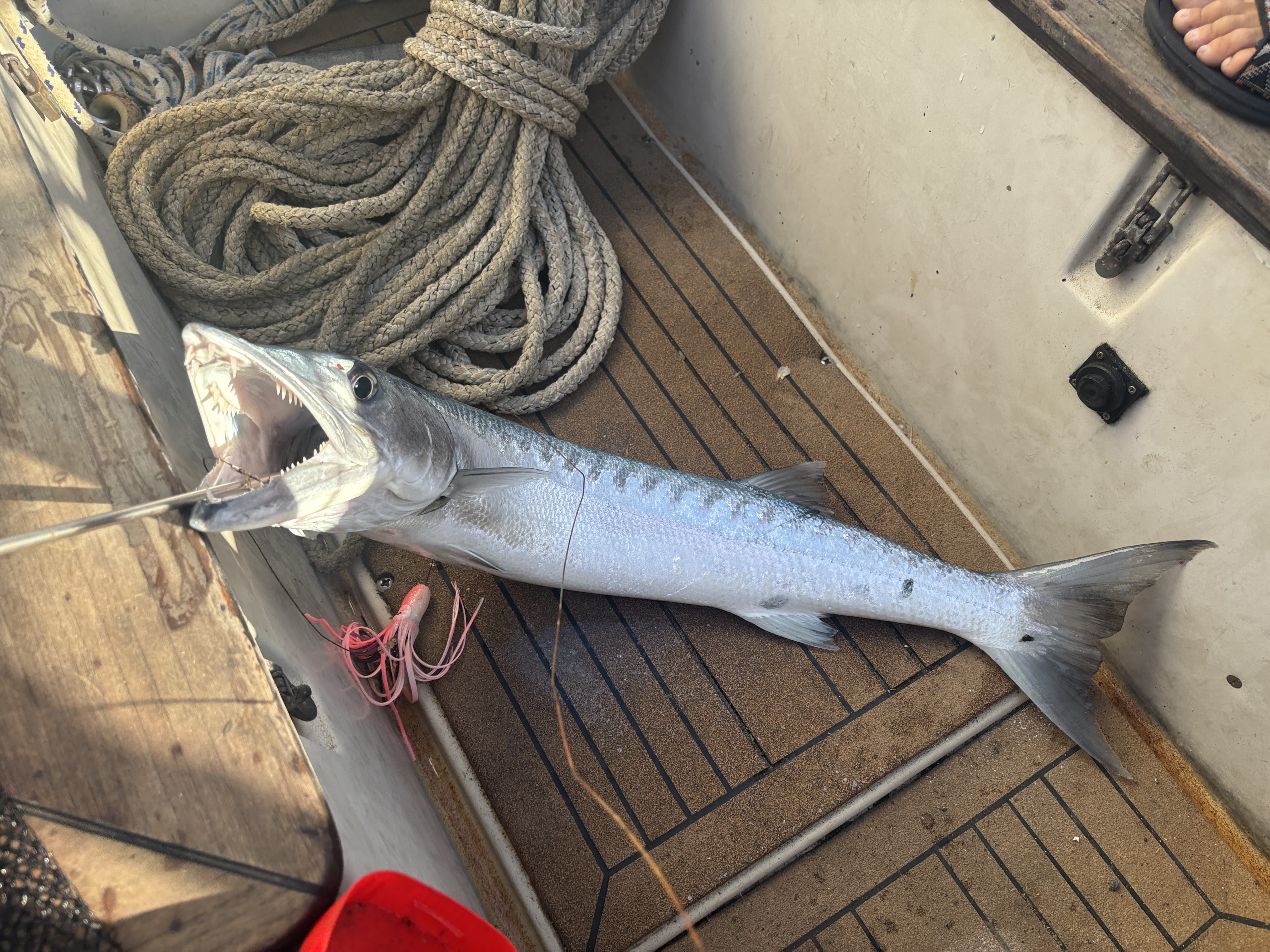 Generally, this fish is edible, but in the Caribbean it's illegal to sell and is discouraged to eat due to ciguatera food poisoning. Fishermen say, "barracuda is not a fish to eat here." Barracuda prey on herbivores, which consume the microscopic, poisonous algae found around the reef. Smaller fish, even other predators, have a much shorter lifespan, and the toxins don't accumulate in their bodies in significant quantities. Barracuda can become seriously toxic during their lifetime. Symptoms of the disease are neurological and long-lasting. Typically, person affected confuse hot and cold, which leads to severe burns. In addition, they experience dizziness, etc. We don't need this on a cruise. Unfortunately, the fish swallows the hook deeply; the hook is on a steel line, and its sharp, snapping teeth make it difficult to remove it from the fish’s throat. Cutting the hook and line would likely exhaust it anyway. So Kamil has to kill it and throw it away. We feel very sorry for the senseless slaughter of this animal. Our only consolation is that Caribbean fishermen recommend killing barracudas because they are a significant detriment to fisheries and have no natural predator.
Dominica
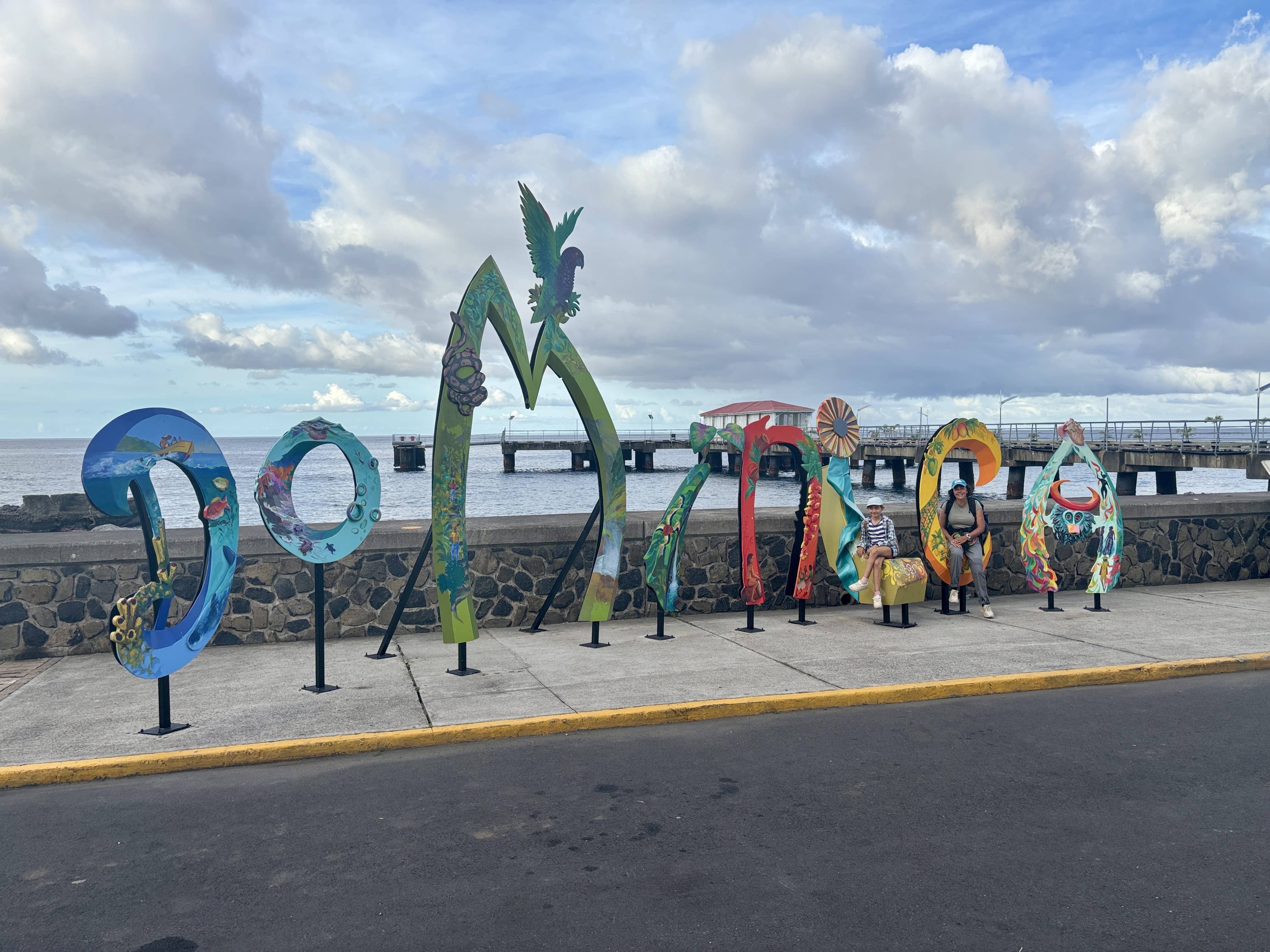
In the afternoon, we arrive at a mooring near Roseau, the capital of Dominica. It's Sunday, so we don't expect to accomplish much, but we want to withdraw money and find the customs office. It's immediately noticeable that Dominica is much poorer than its neighbors, Martinique and Guadeloupe. Nevertheless, the people make a very good impression on us - they are friendly, but not intrusive.
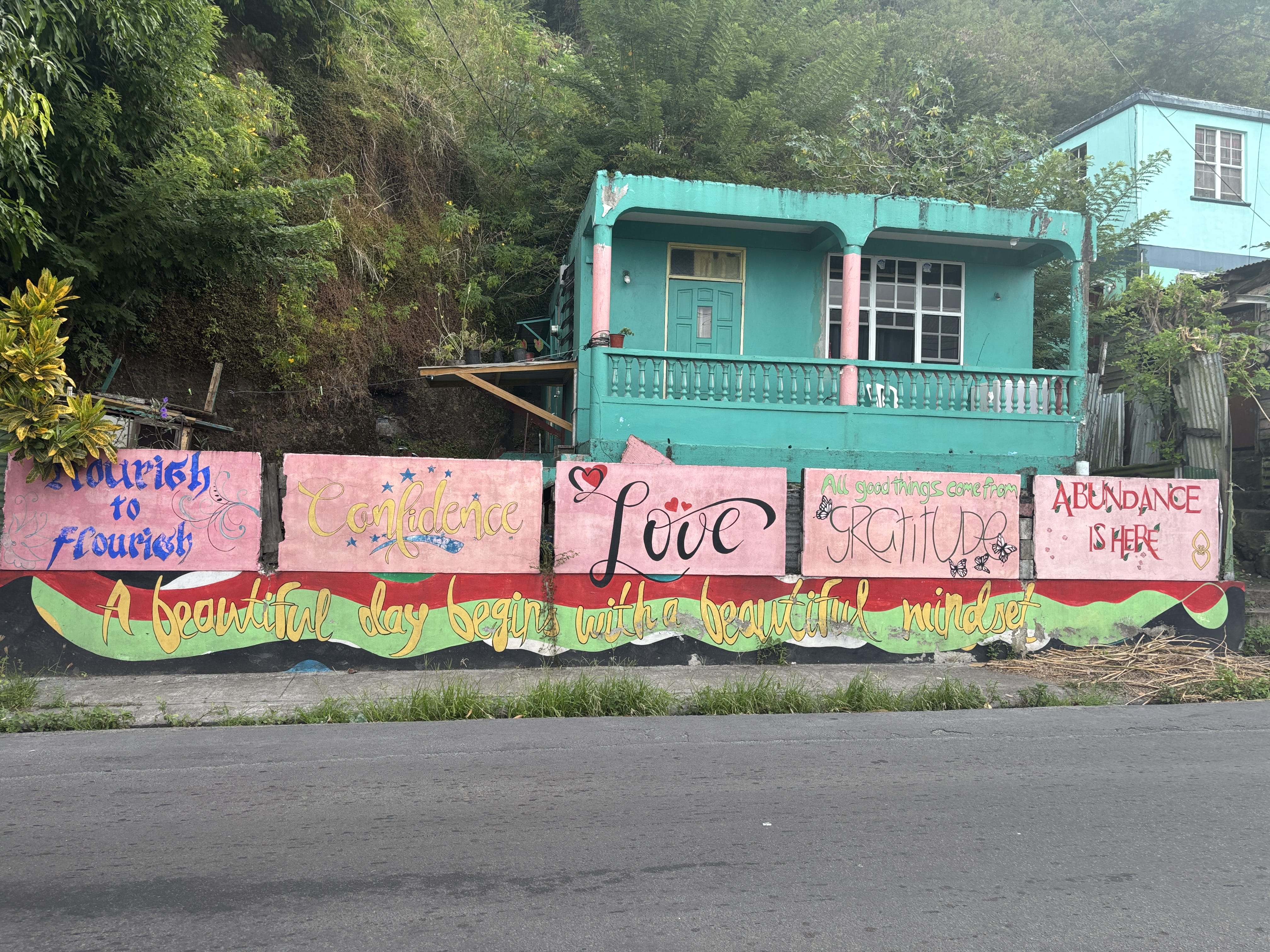
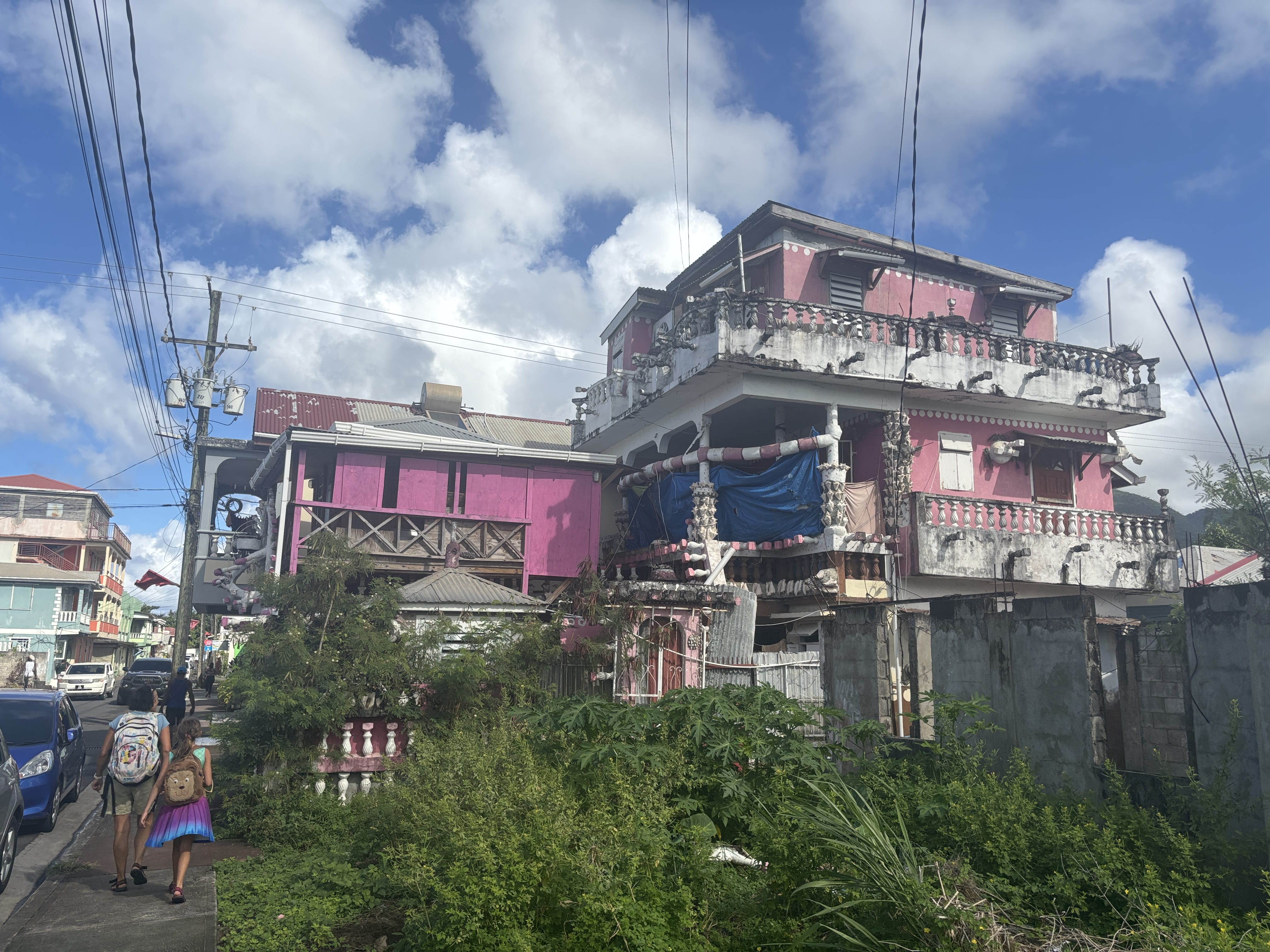
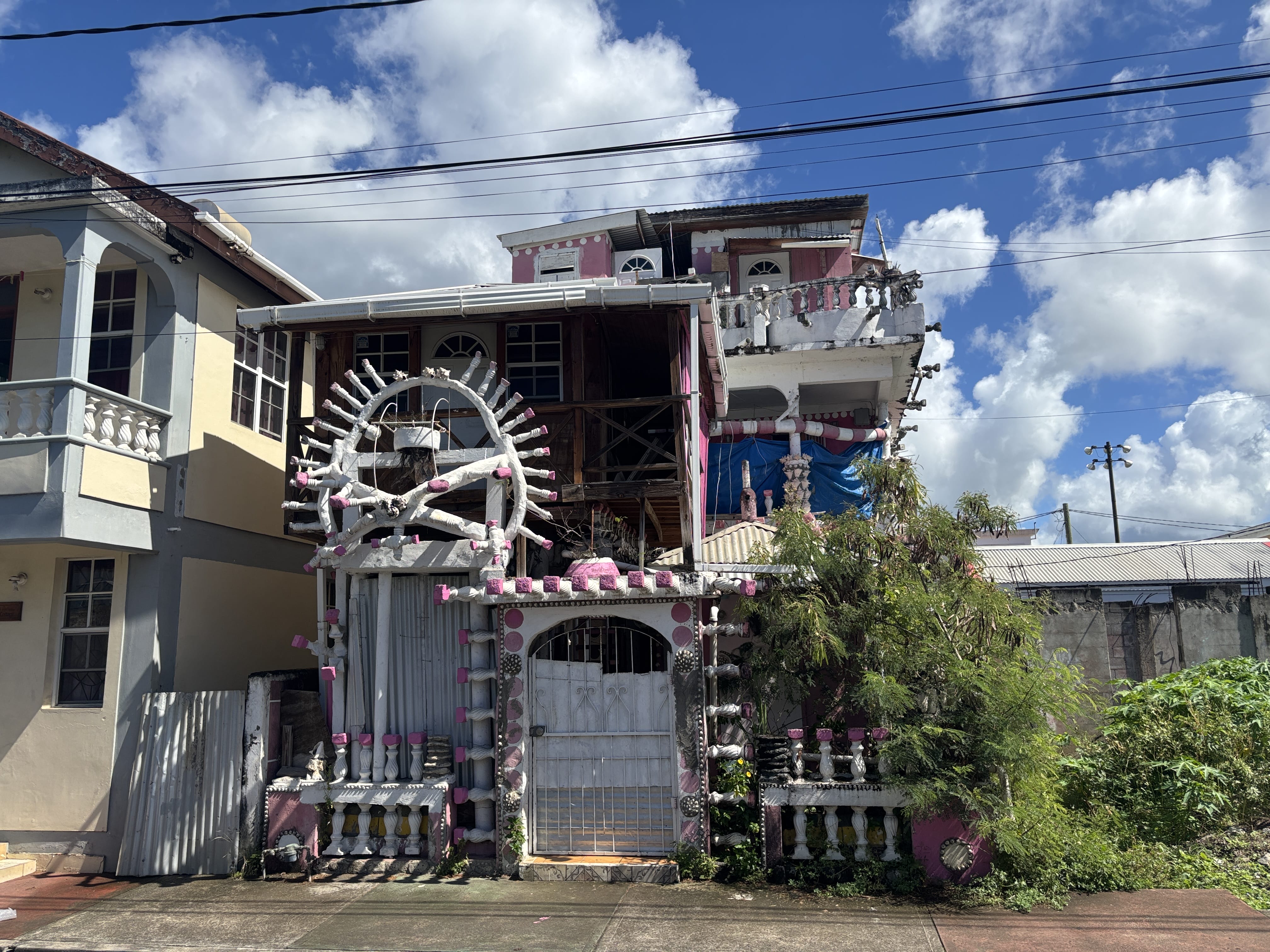
At some point, an inebriated elderly man starts shouting something behind us - we realize he's advising us to walk in a row. And he's absolutely right - there is no sidewalk in this particular spot, and cars can drive quite fast (we later find out that there is no alcohol limit that a driver can legally consume).
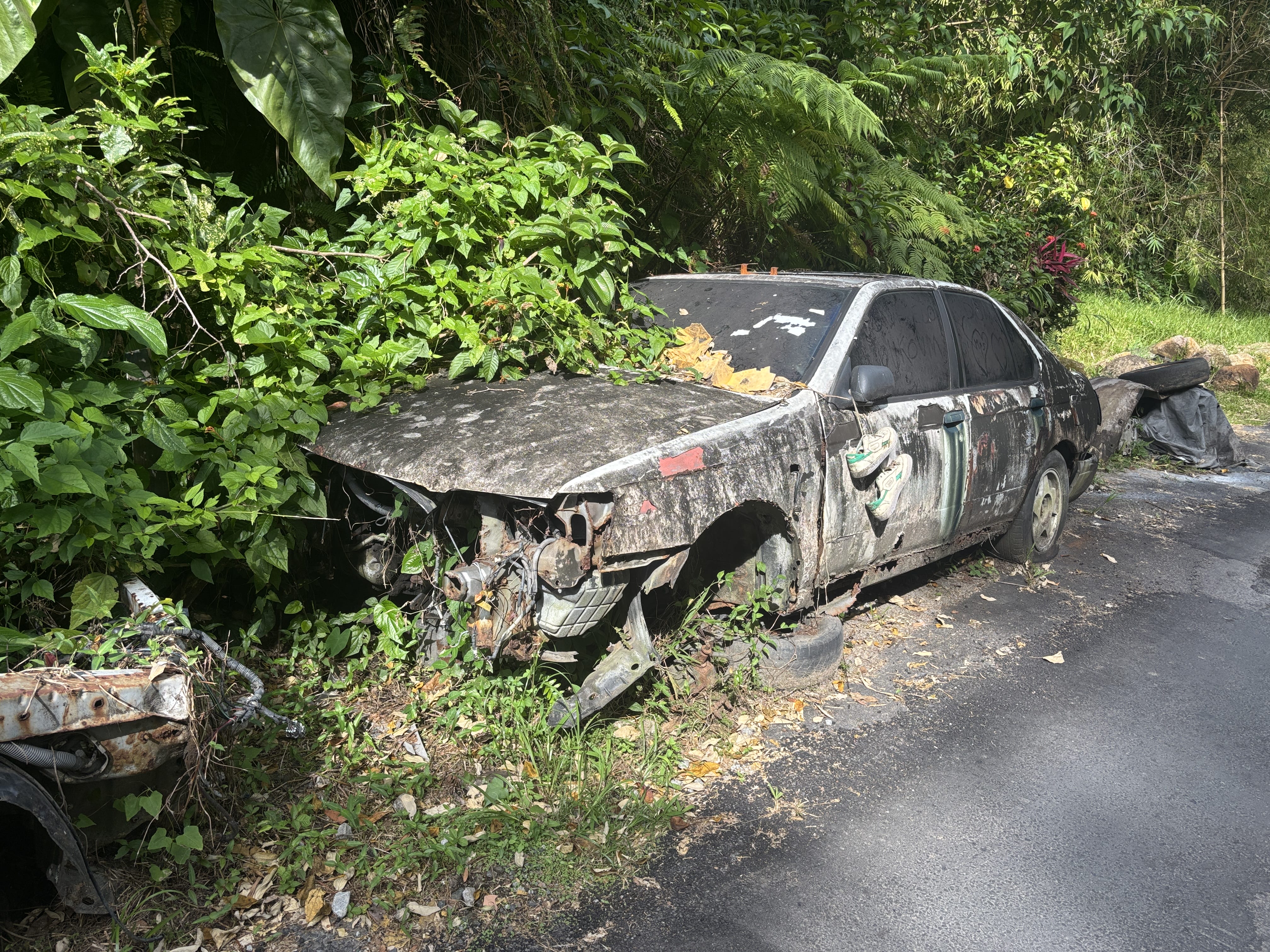
After some troubles, we manage to withdraw the local currency from an ATM – the Eastern Caribbean dollar. The customs office is closed, and a ferry company employee informs us that someone might still come, but it's Sunday, 5:00 PM, and there’s a carnival celebration happening in the city, so it is be uncertain. We return to the boat.
The next morning, we arrive fifteen minutes before the official working hours of the office, but the customs officer is already there and invites us in. It is said that Dominica has the easiest entry procedures in the entire Caribbean, and that might be true – after 10 minutes, we are officially registered on the island, with no need for a second visit when checking out.
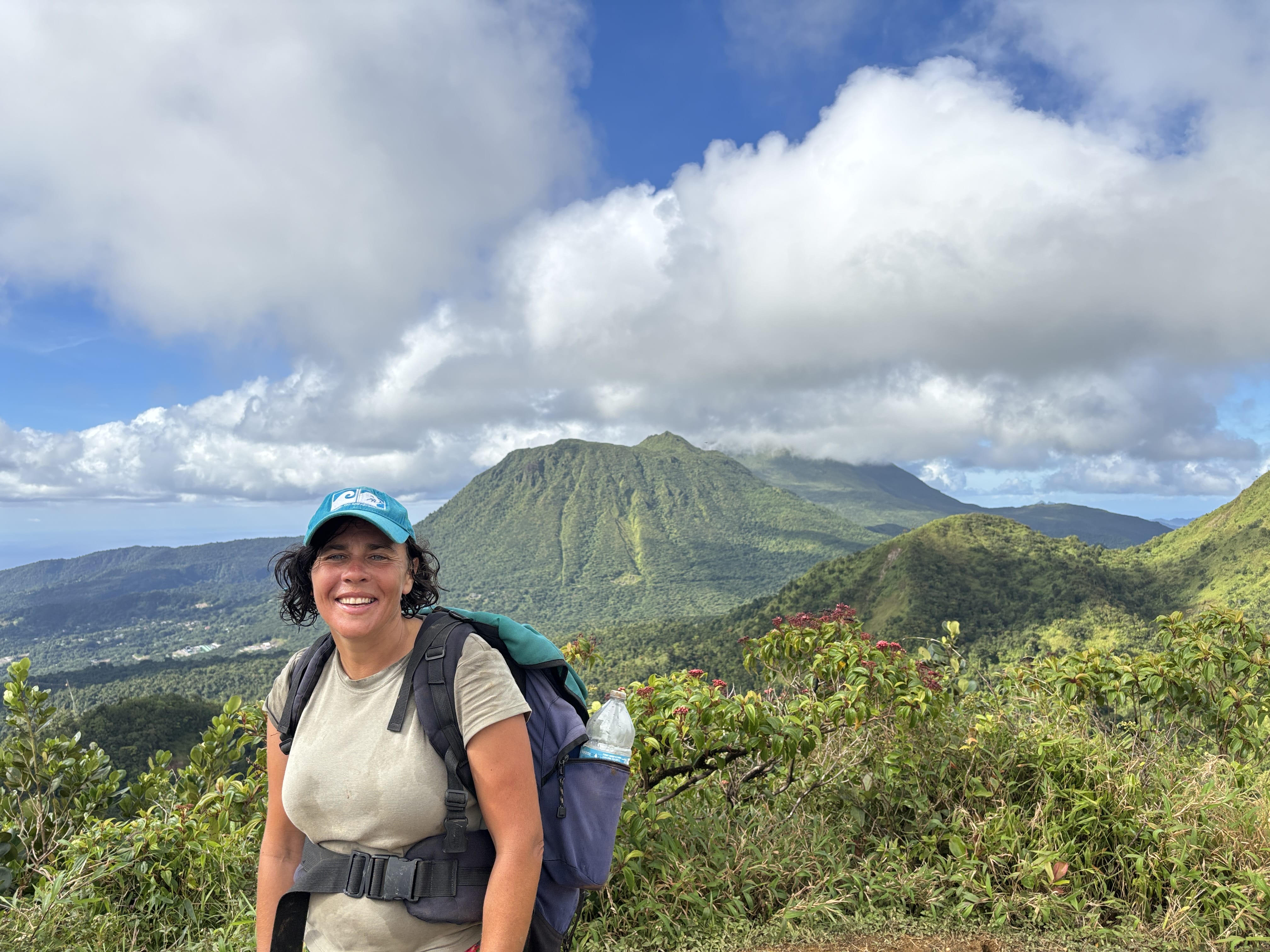
We have ambitious plans for today – we want to follow the trail to the Valley of Desolation and Boiling Lake – after talking with Chat GPT, we assume we will probably only do part of the trail and look at them from above. The full trail leads to the volcano summit, then down a narrow and steep path into the crater. The return is along the same route. Chat claims it's like Babia Góra in the rain x2, slippery, and simultaneously hot and humid air. Hiring a guide is highly recommended, and they do not agree to take children under 12 or even 15 years old.
A minibus takes us to the national park. Although it’s not its regular route, the driver decides to drop us off as it’s empty. He usually takes tourists by taxi, so he tells us some interesting facts about Dominica. Due to the island's mountainous nature, not many sugar cane plantations were established – not only was cultivation difficult, but most slaves escaped to inaccessible mountain valleys and joined forces with the Caribs, the original inhabitants of the island. The warlike Caribs also caused trouble for the white colonists. Since they had a reputation as cannibals (a claim contemporary Caribs strongly deny), no one rushed to establish permanent settlements here. Only in the 19th century did sugar cane and coffee plantations start here. Citrus groves were also planted. Vitamin C-rich limes from Dominica were turned into syrup, which was supplied to British navy ships. Sailors drank it to prevent scurvy. However, plant diseases, poor market conditions, and tropical hurricanes destroyed large-scale agriculture. Thanks to this, Dominica is covered over 60% by original rainforest, and a significant part of the island is a UNESCO reserve.
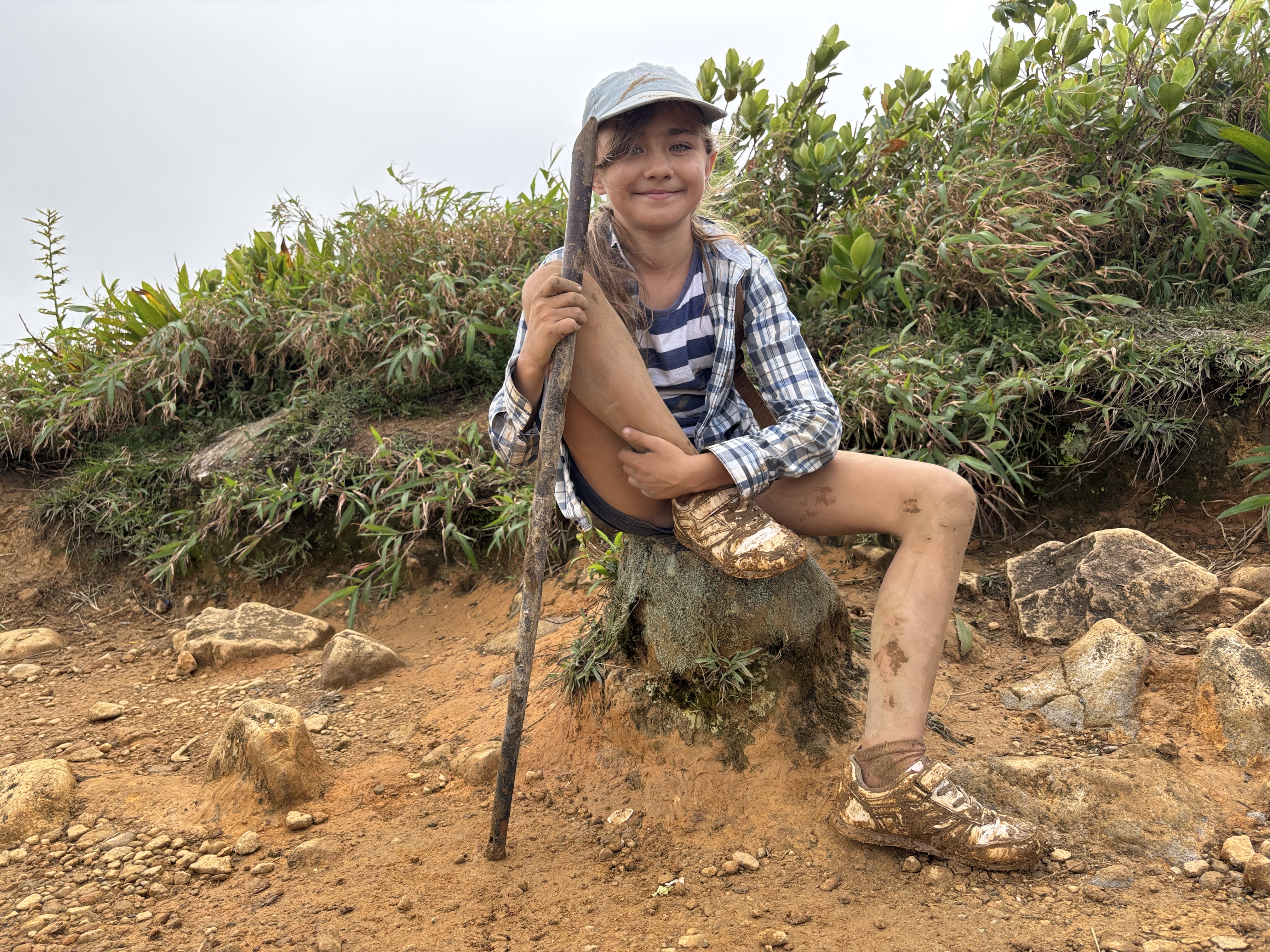
At the entrance to the national park, we encounter two surprises. The bad one is that starting December 1, 2025, entering the park without a guide is not allowed. The good one is that our guide, Ali, sees no problem with Kama completing the trail all the way to the valley, and if we have the time and strength, to the lake (assuming we sensibly turn back if necessary). The guide's fee is hefty, but we decide it’s worth it – the trail is described as an incredible experience and Dominica’s main attraction.
We set out in the rain, but once we enter the trees, jackets are no longer needed – we're as sweaty as we are wet on the outside.
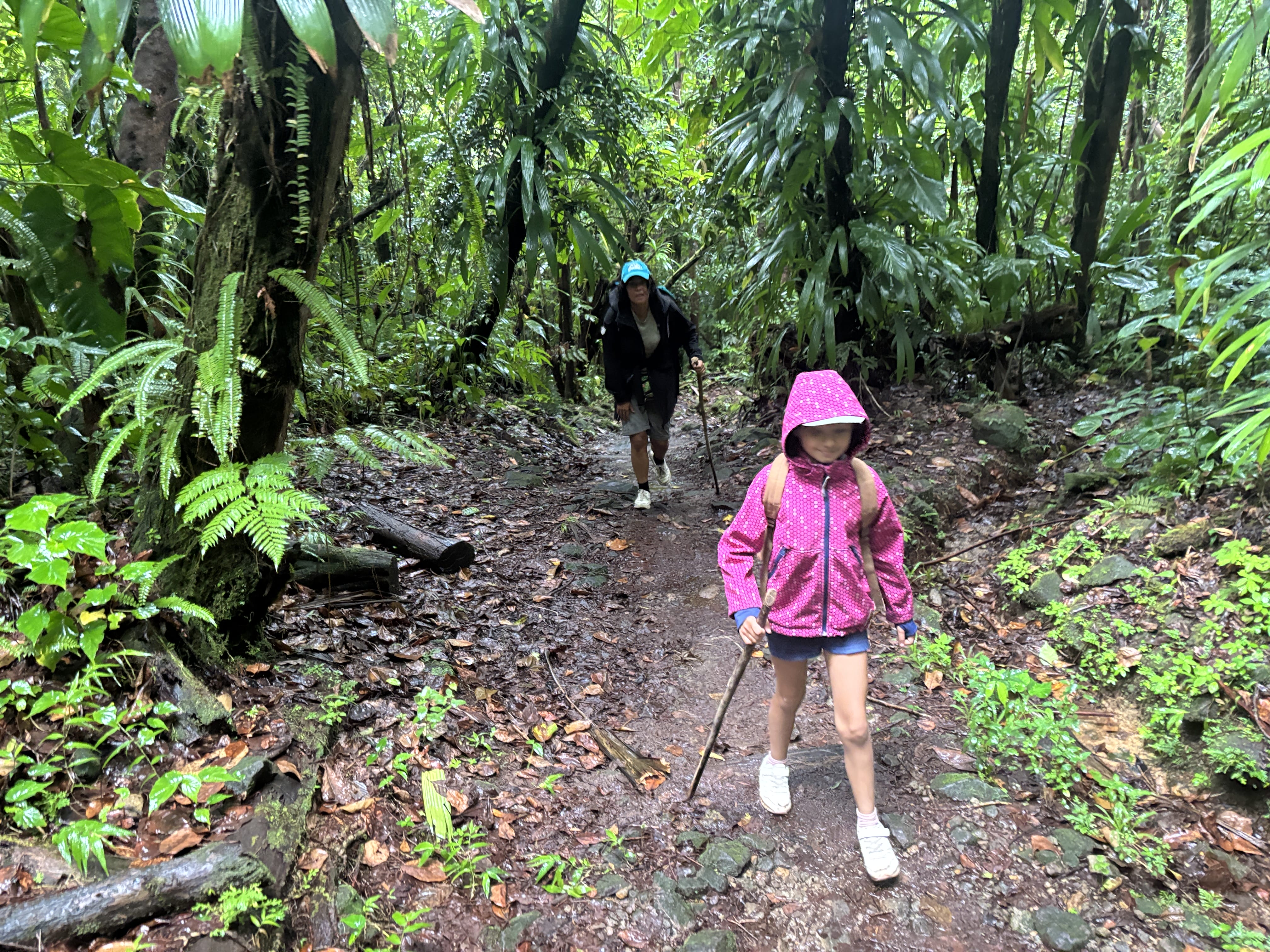
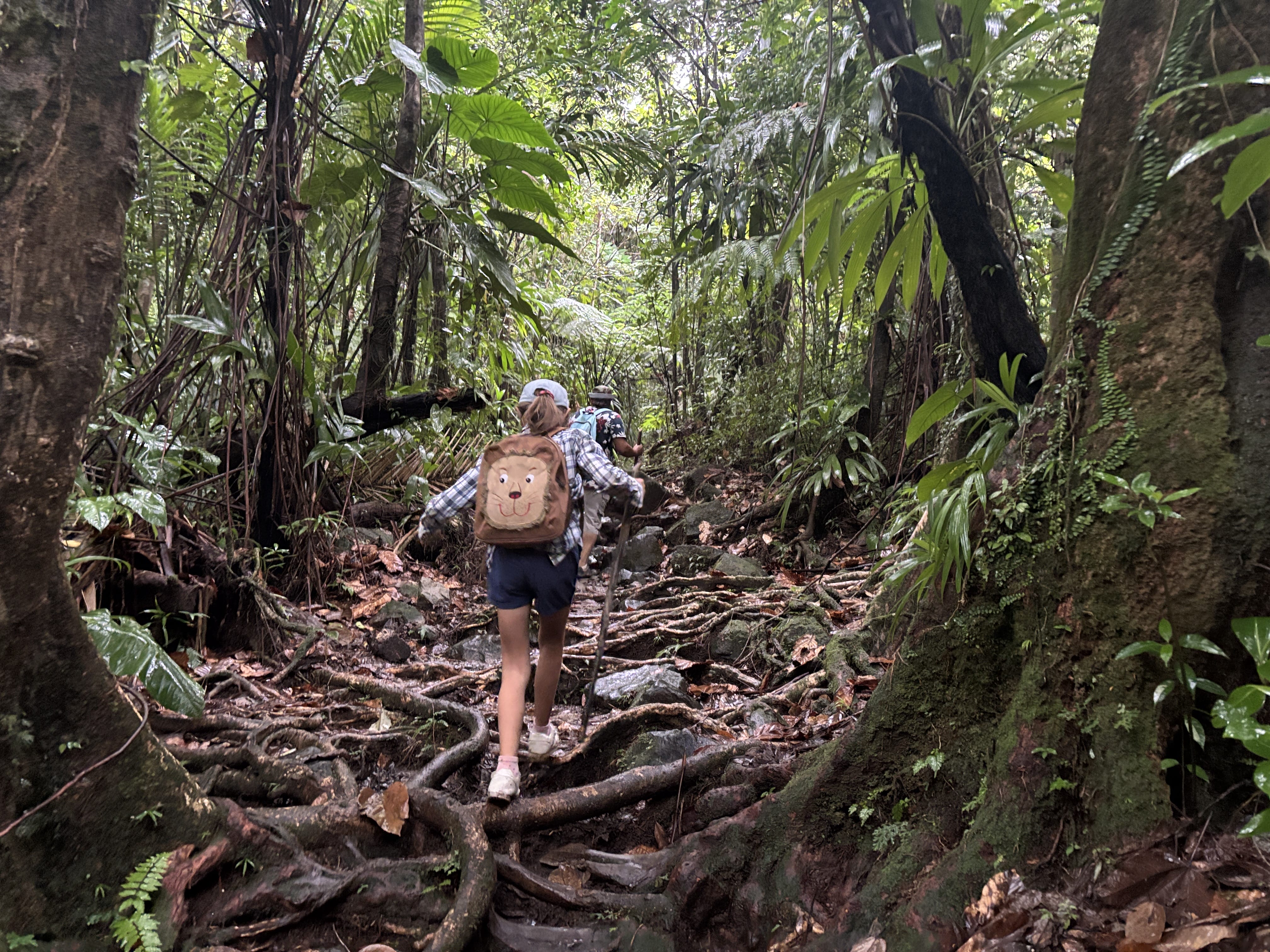
Our guide is a local Amerindian, specializing in botanical and ornithological tours. He throws around Latin names of plants while explaining which ones his family uses daily as medicines.
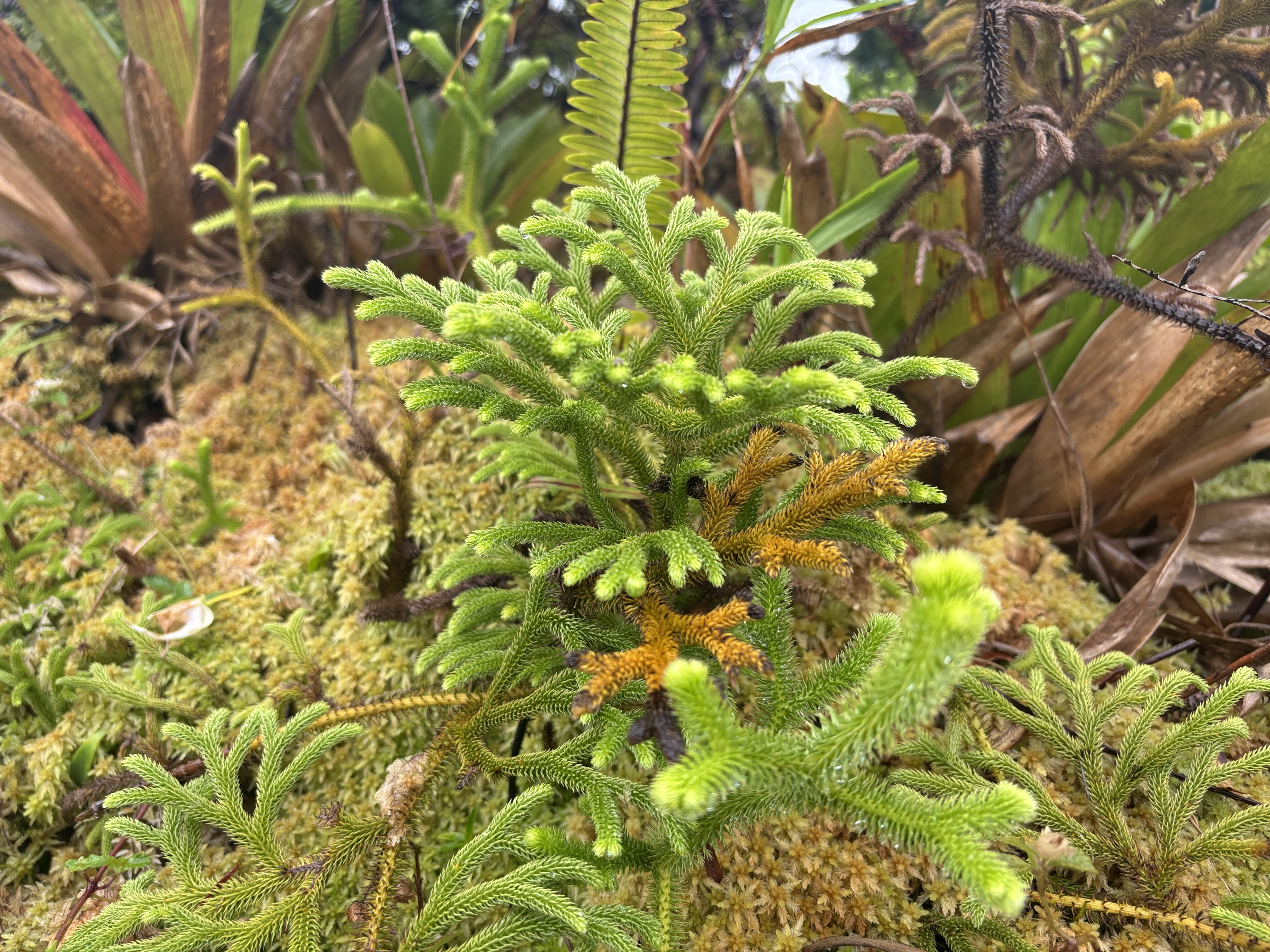
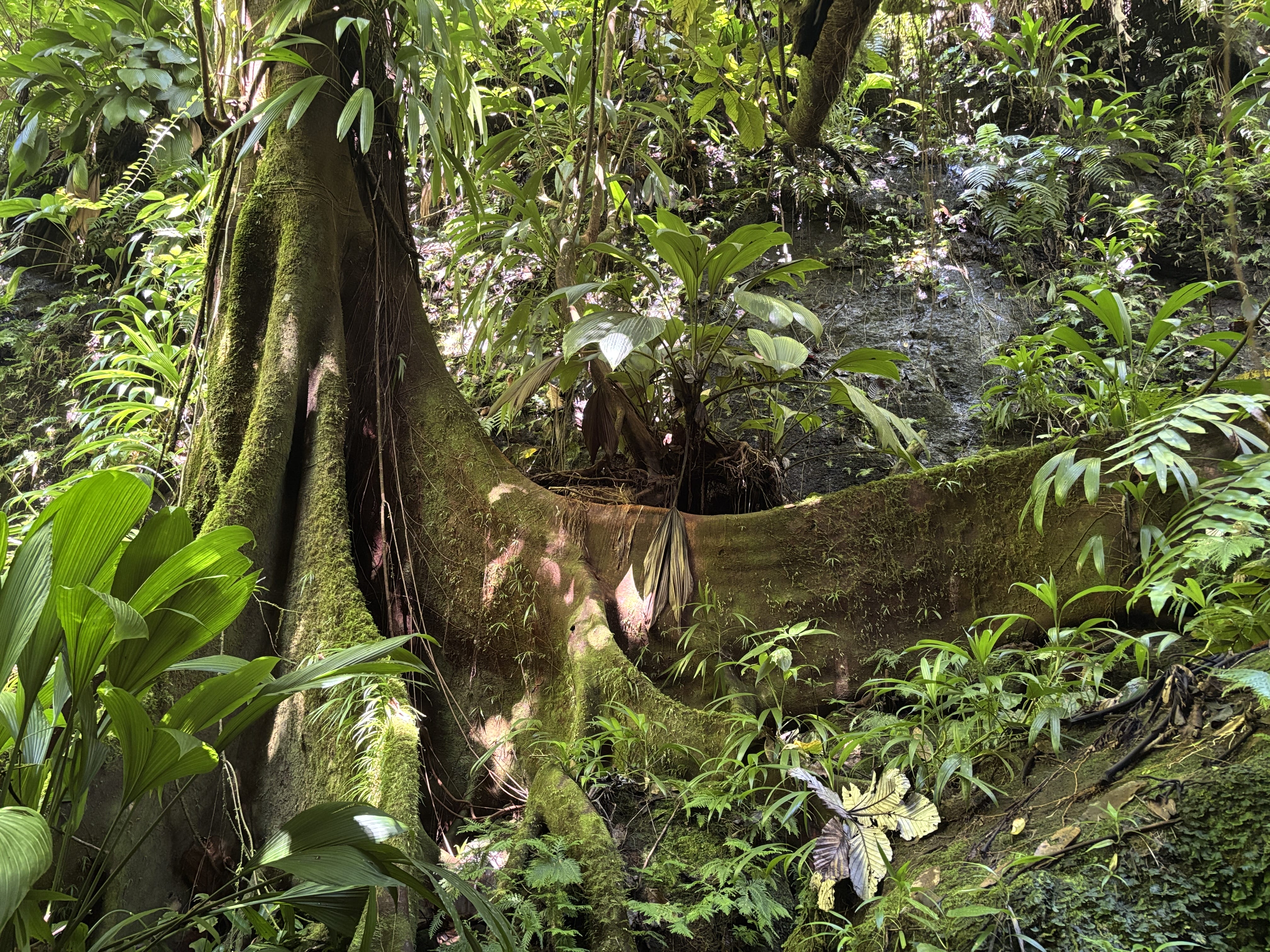
We listen to him with great pleasure and interest, although the information is overwhelming. We learn that the fragment of the forest we are walking through is barely 50 years old - Hurricane David, which passed through the island in 1979, broke most of the trees, with only few surviving.
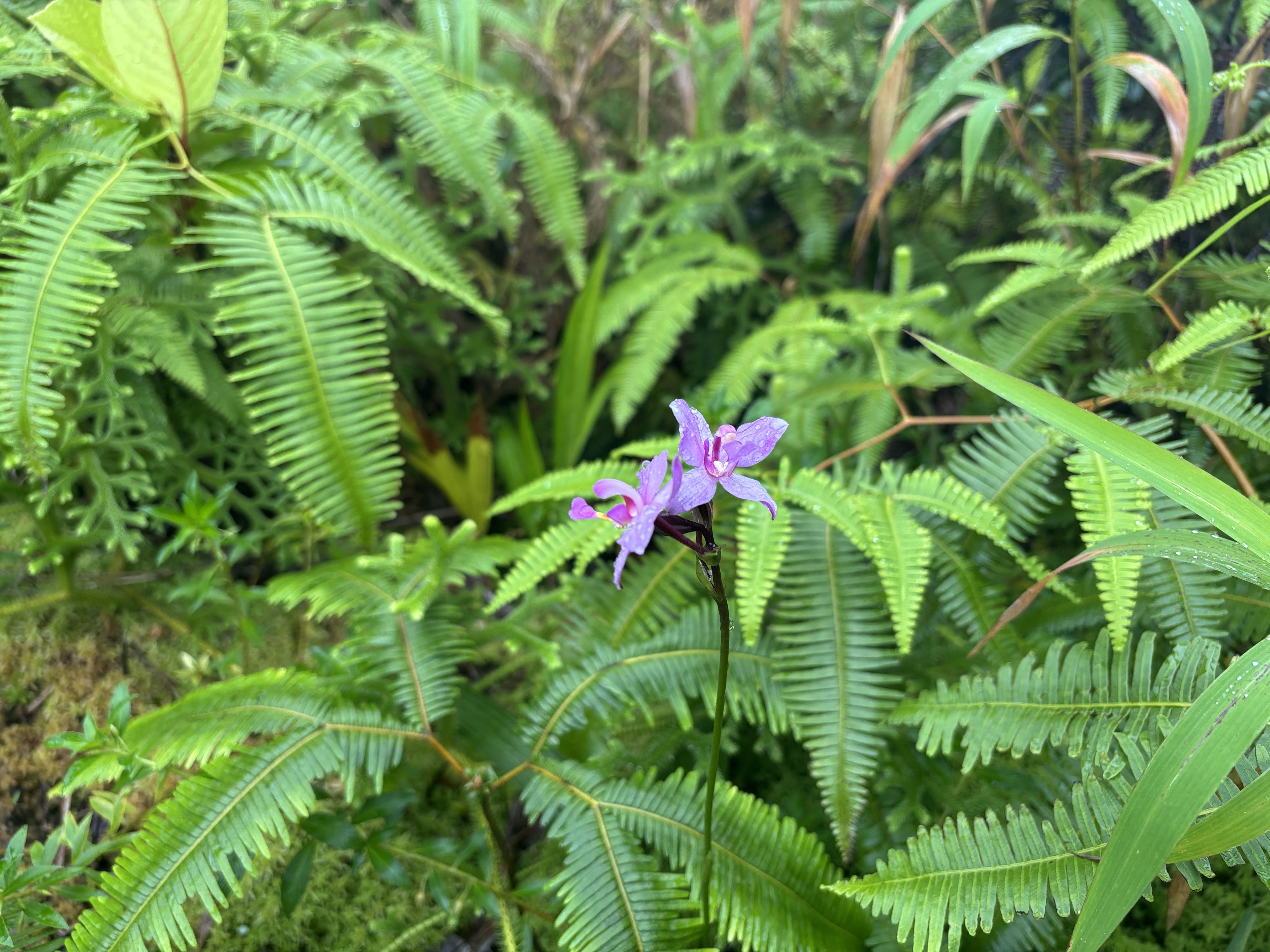
Orchid, known by locals as "David's orchid," appeared in Dominica only after Hurricane David - its seeds were blown over from other islands.
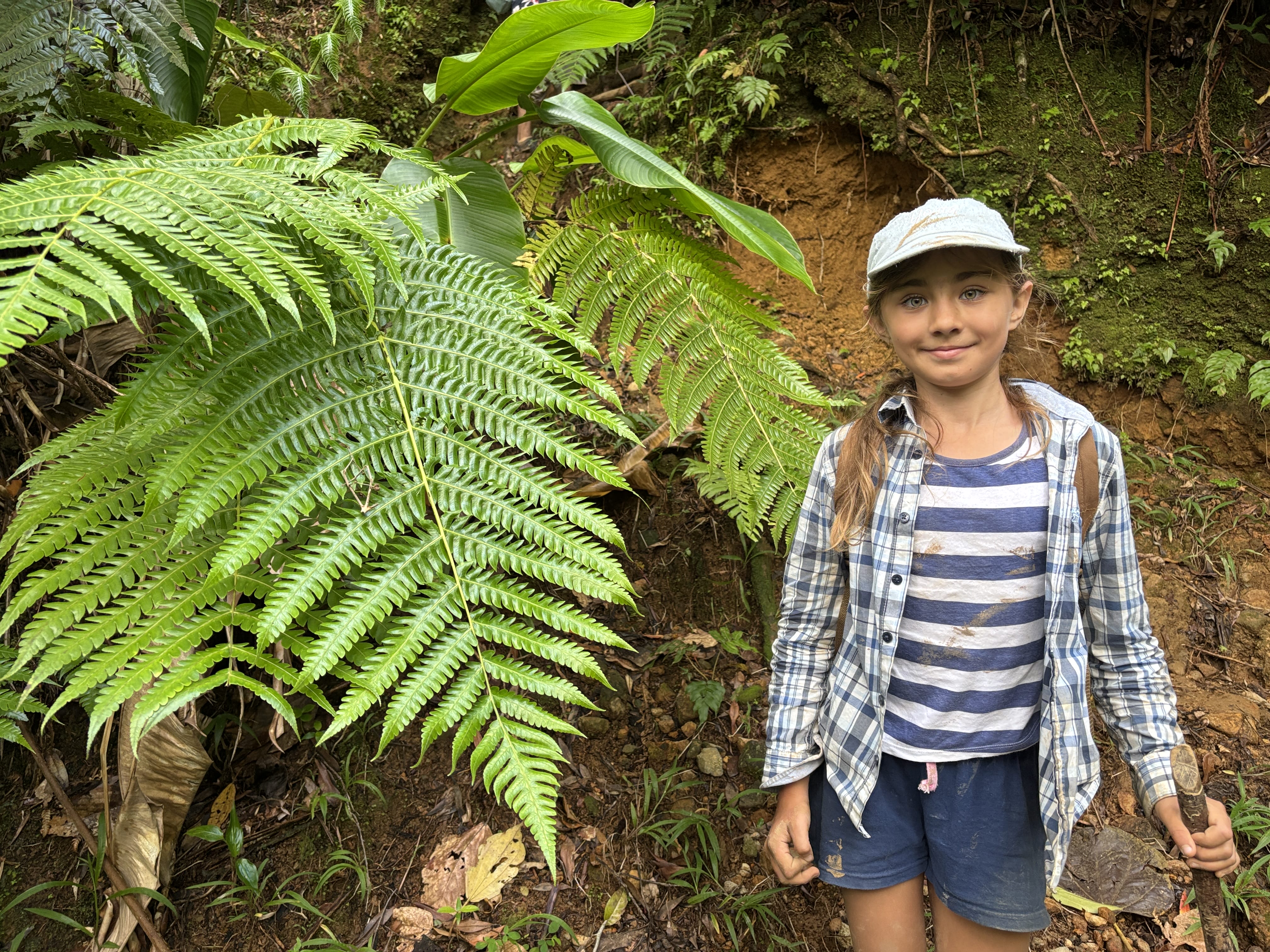
The rainforest is full of various ferns - some are tiny, while others are a few meters tall and look like small palm trees.
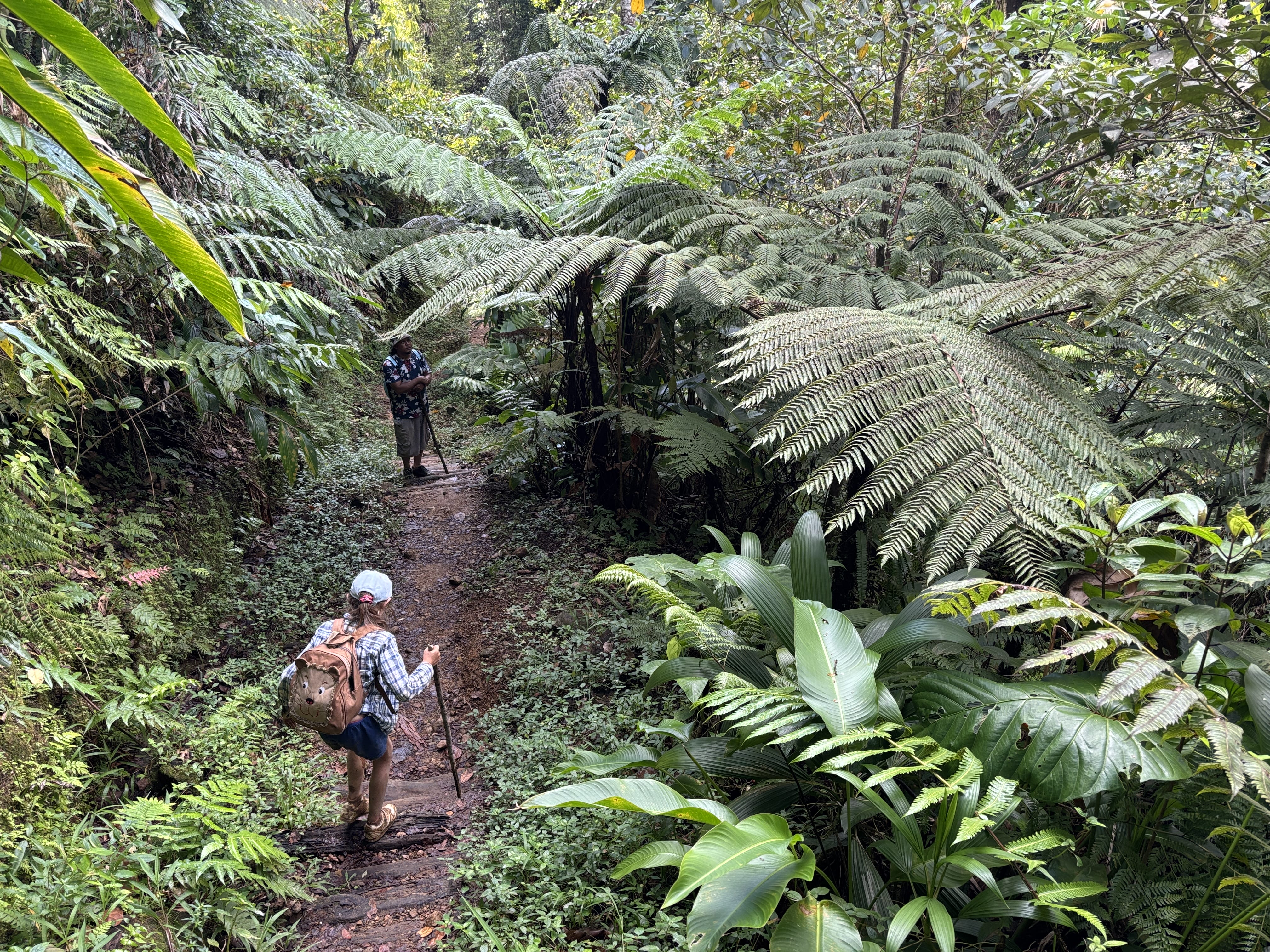
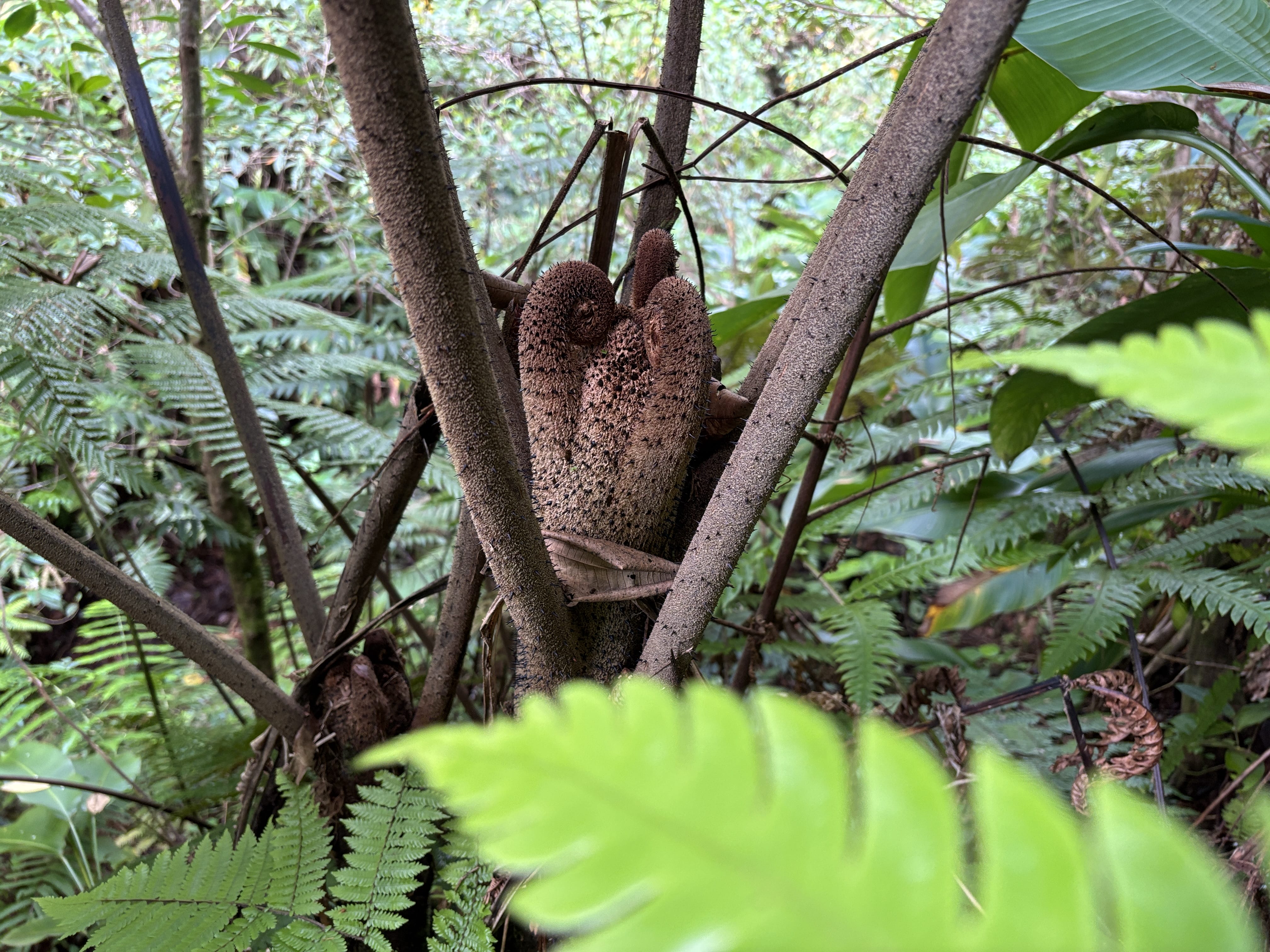
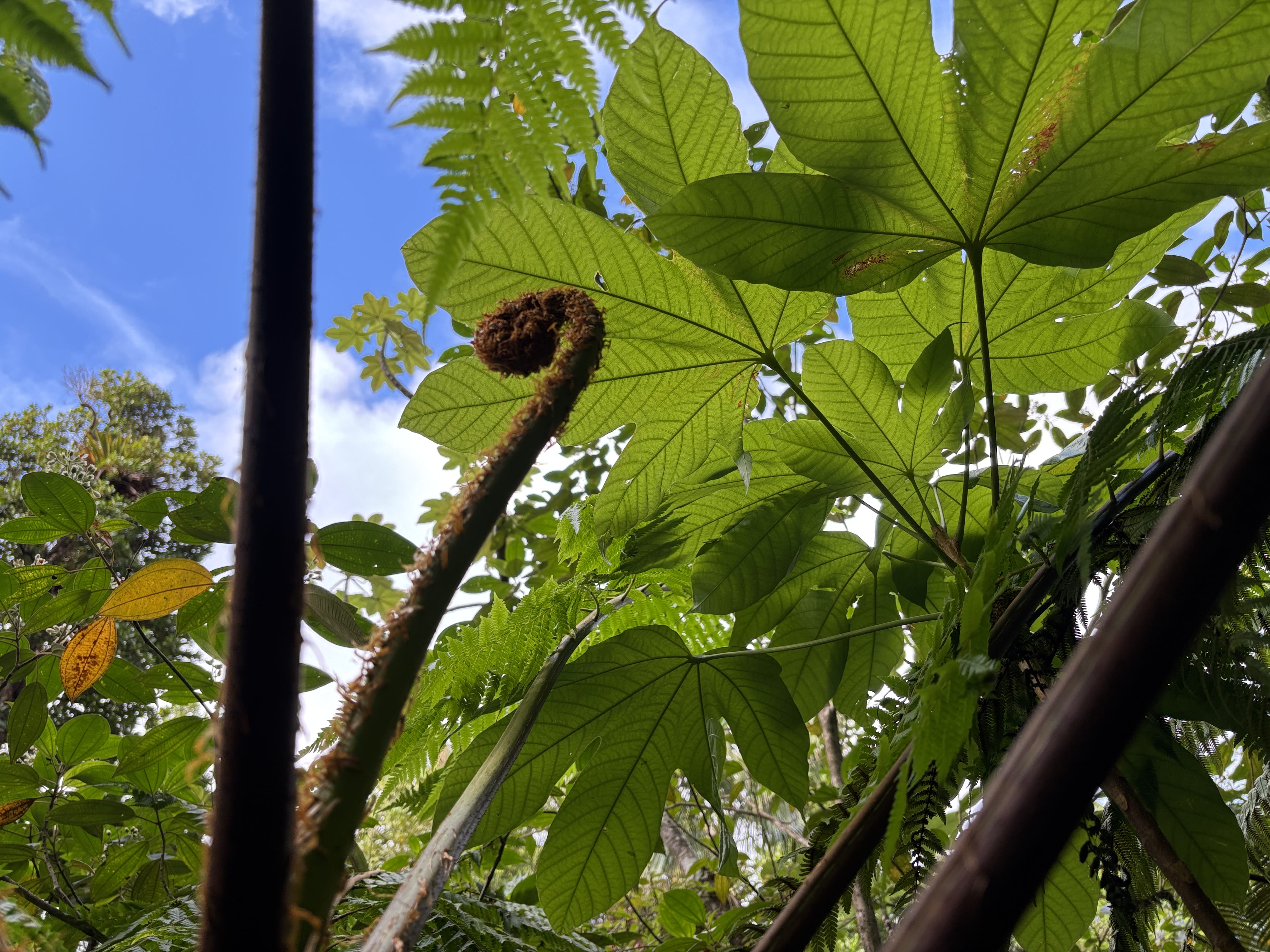
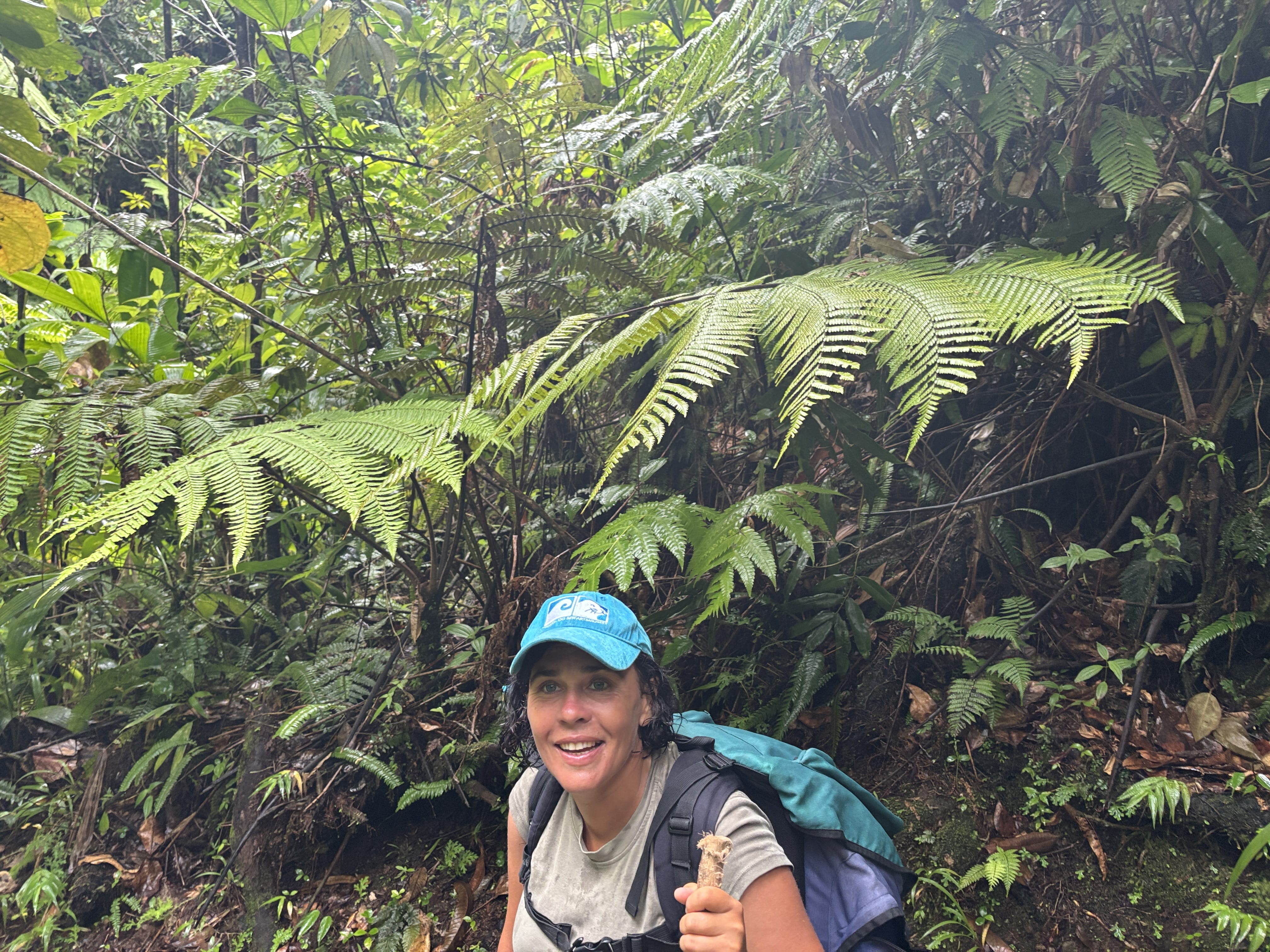
There are many endemic plants, birds, and reptiles here, but relatively few mammals. Perhaps the largest living creature in this jungle is the agouti—a guinea pig on steroids. There are also snakes, but they're not venomous. It seems the worst thing that can happen to a person from the local fauna is a mosquito bite.
After an hour, we reach the traditional stopping point—the Breakfast River. The water is quite low, so we easily hop across the rocks to the other side. Ali explains that during heavy rainfall, the water can rise by about 2 meters in a few hours.
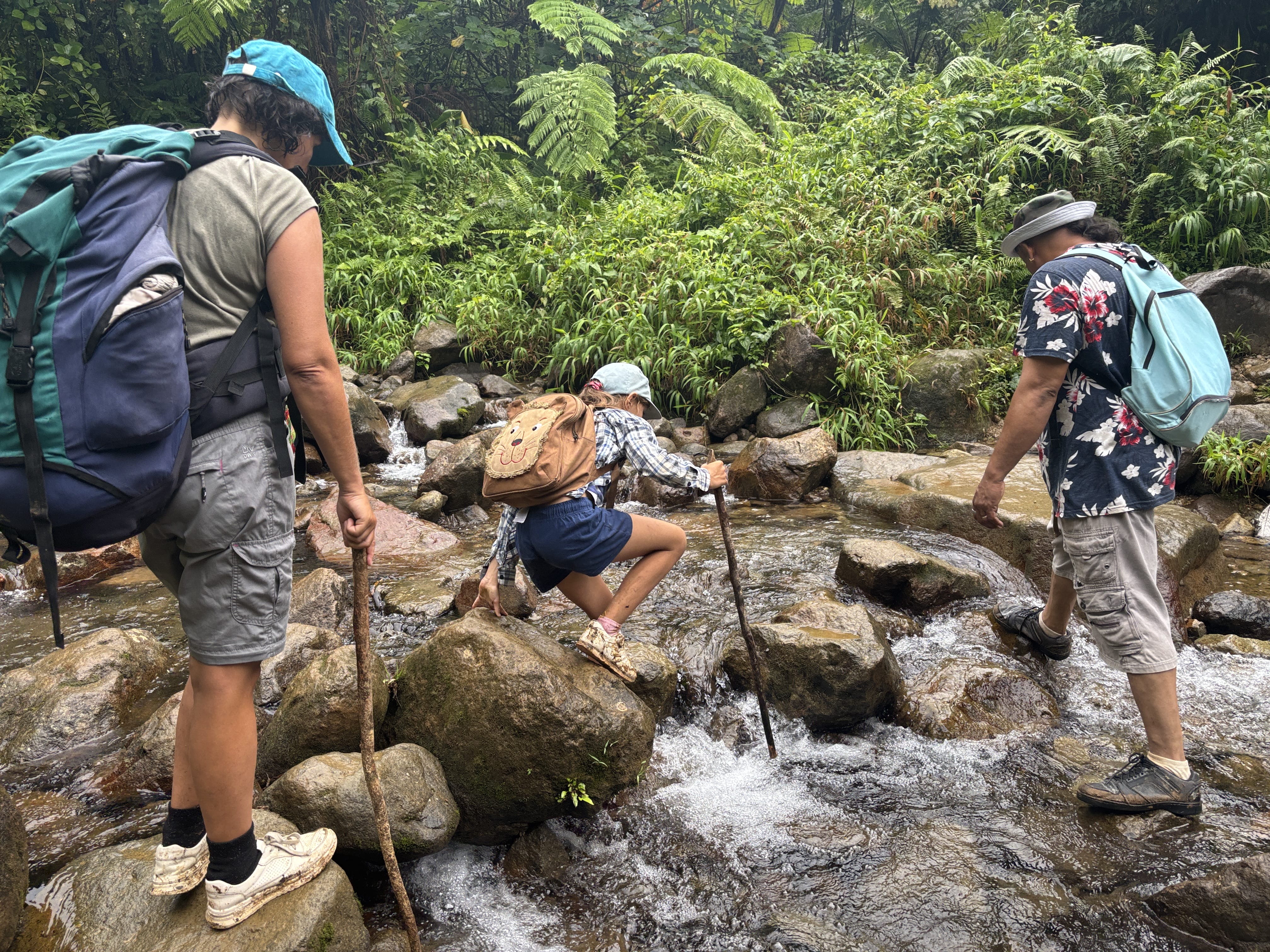
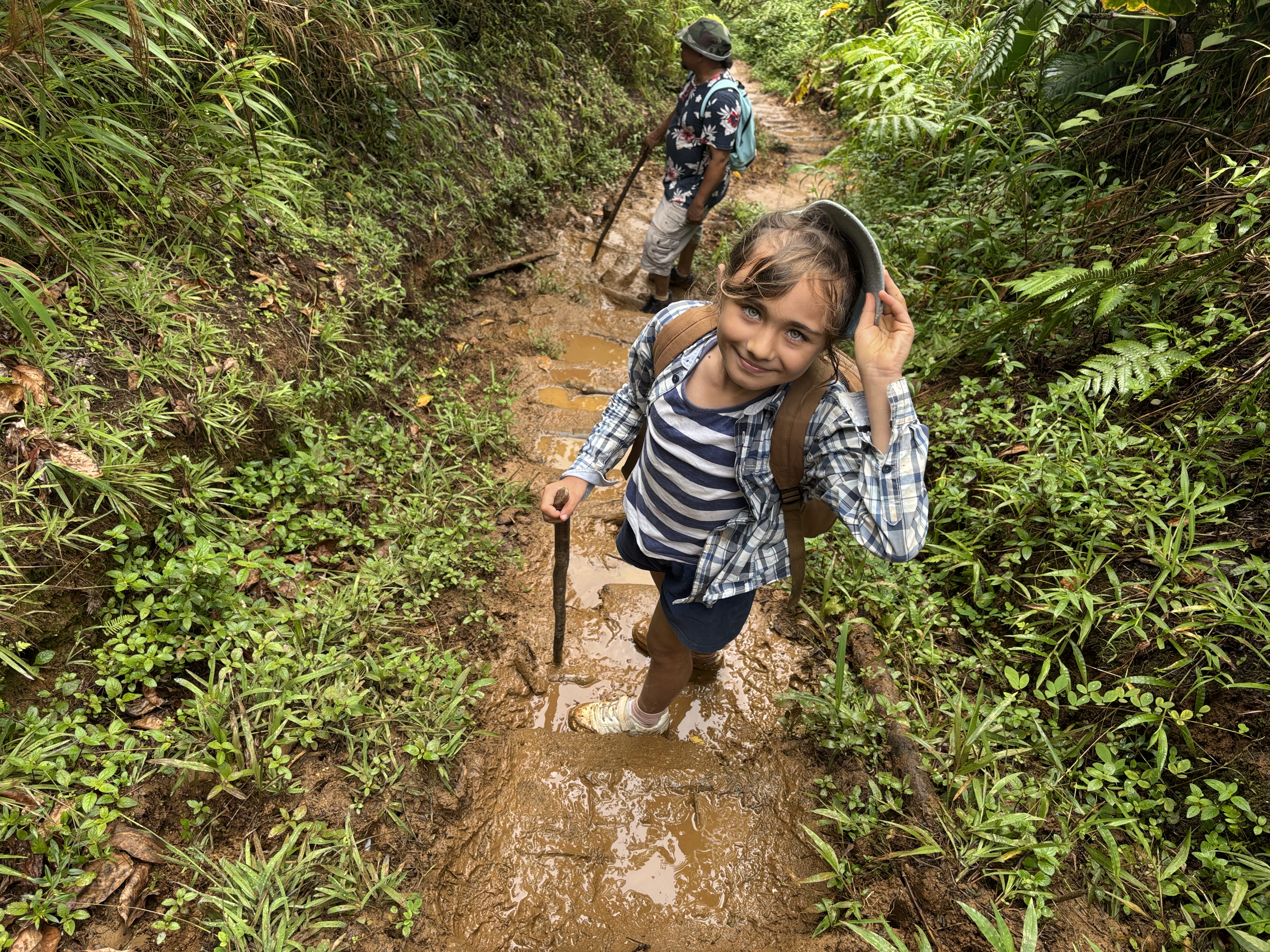
In the early 2000s, the government of Dominica invested in this route - railings and stairs were installed in many places, and bypasses were created for the most dangerous sections. In the past, tours had to start at dawn and had their first meal by the river. Now the trail is still demanding, but not as deadly.
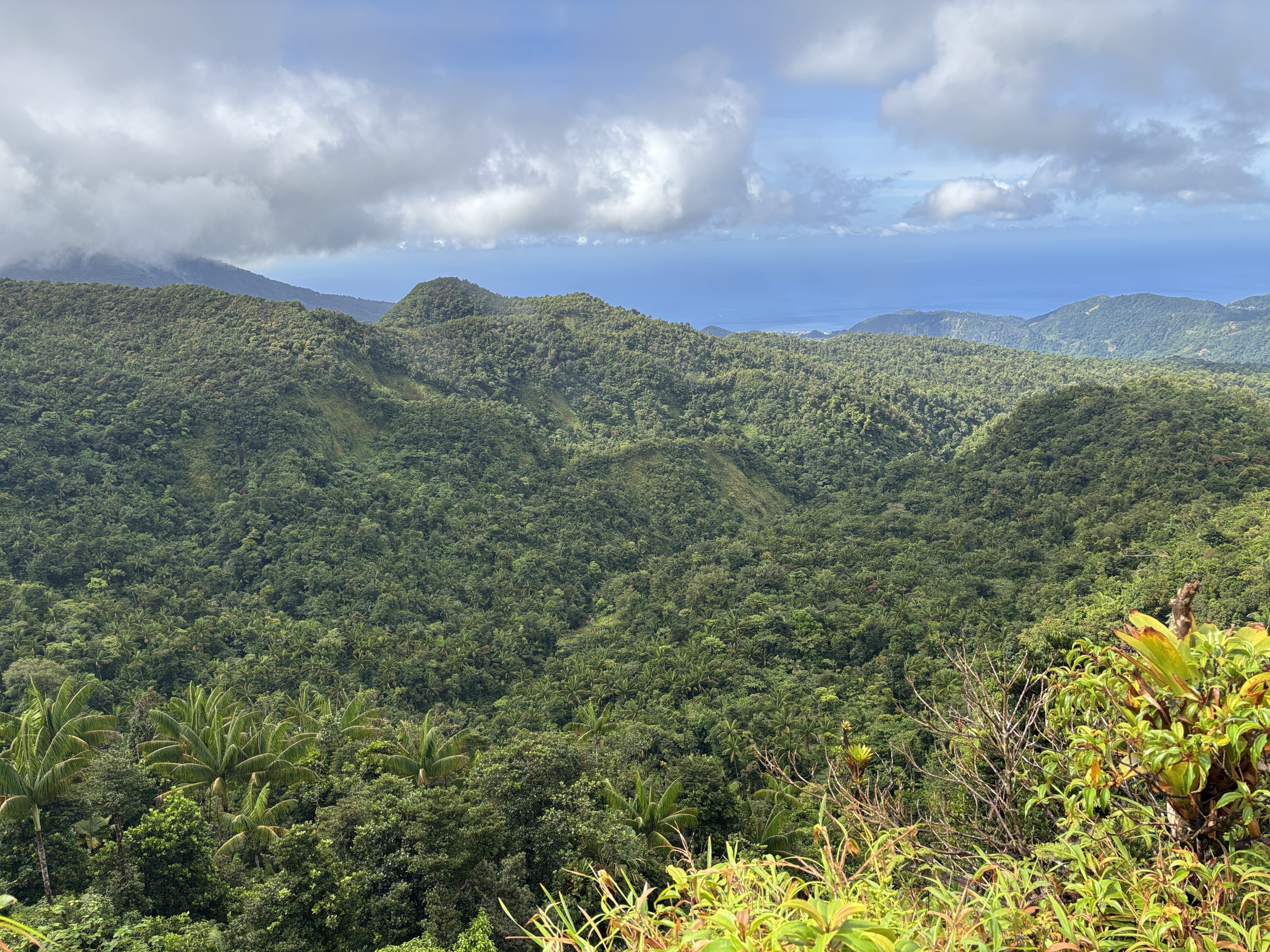
We reach the summit of the volcano. We are quite lucky with the weather. When we left the high tree forest, the rain stopped, it is somewhat cloudy but not too hot. We are at the edge of the crater - the highest point of the route. We can already smell sulfur and see fumes over the Valley of Destruction. Since we have good timing and feel strong, we proceed to the interior of the crater.
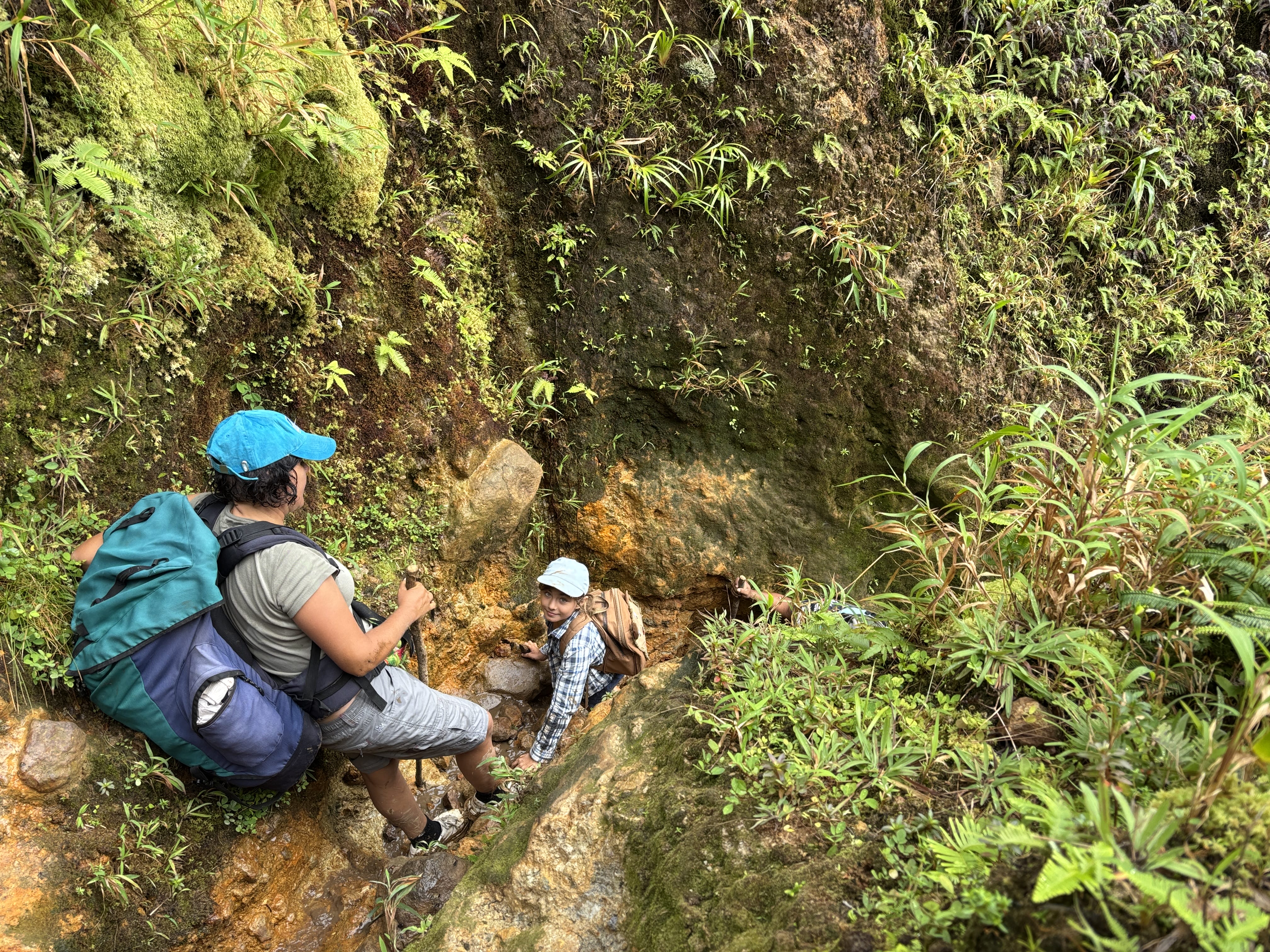
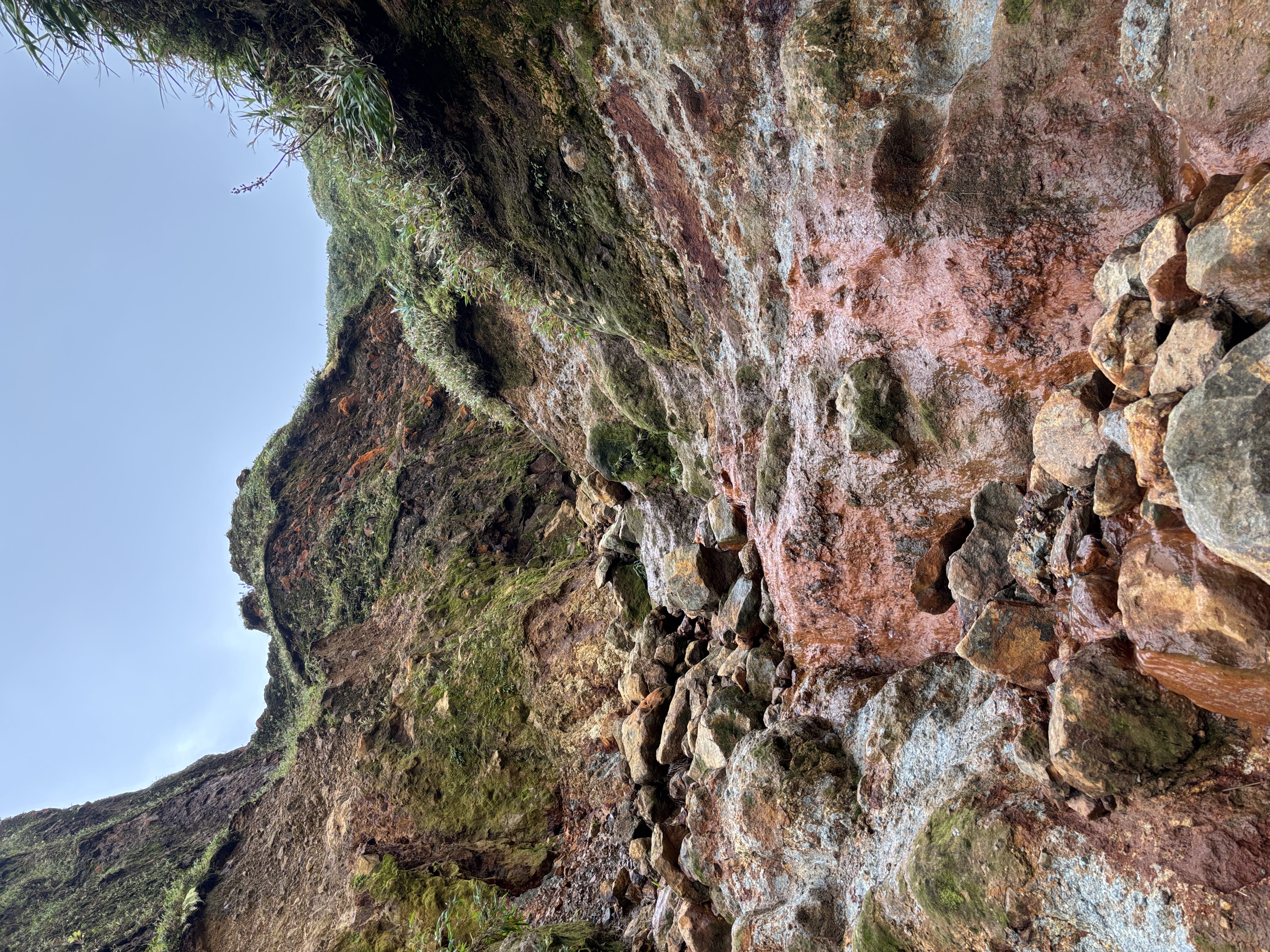
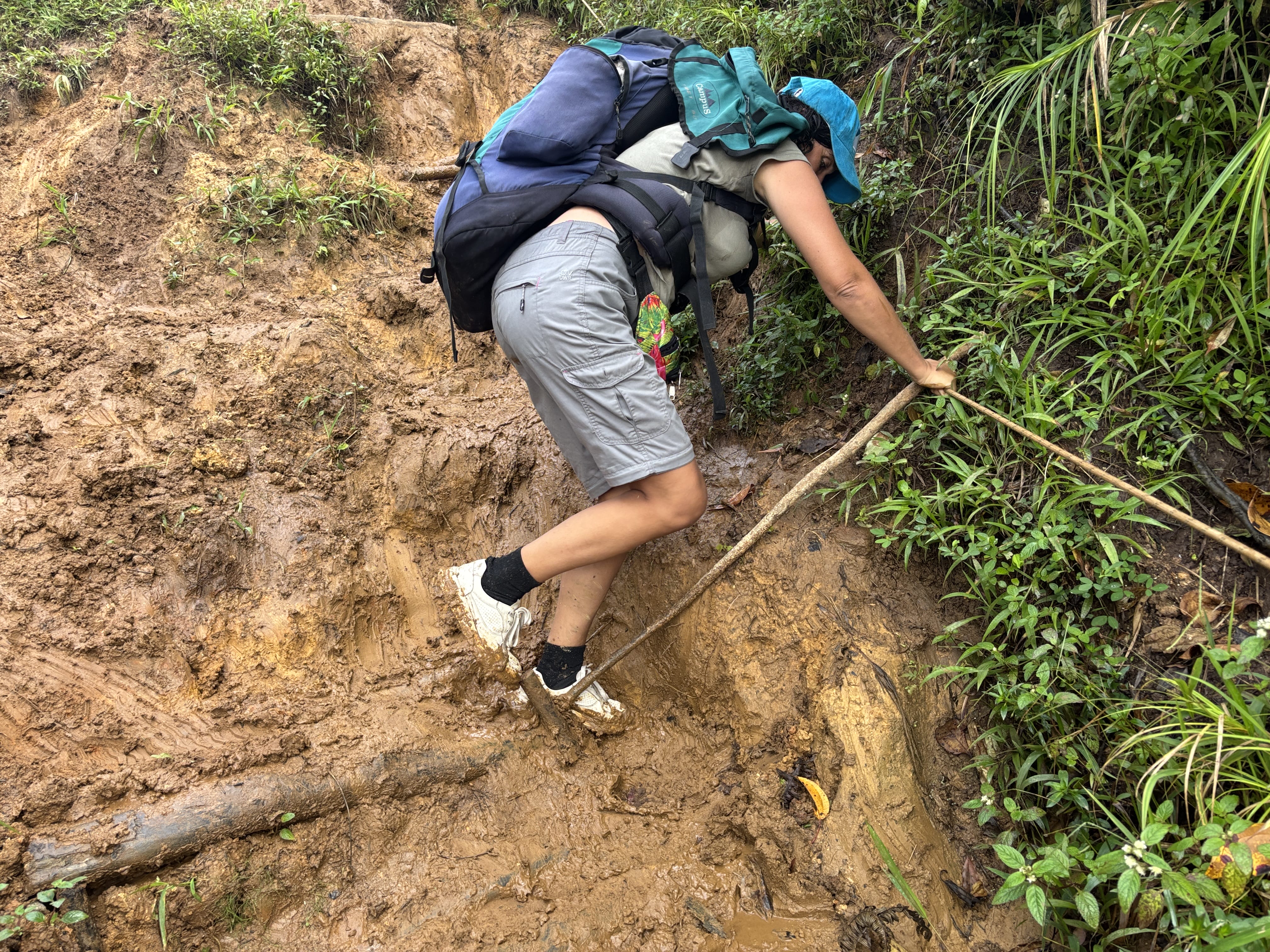
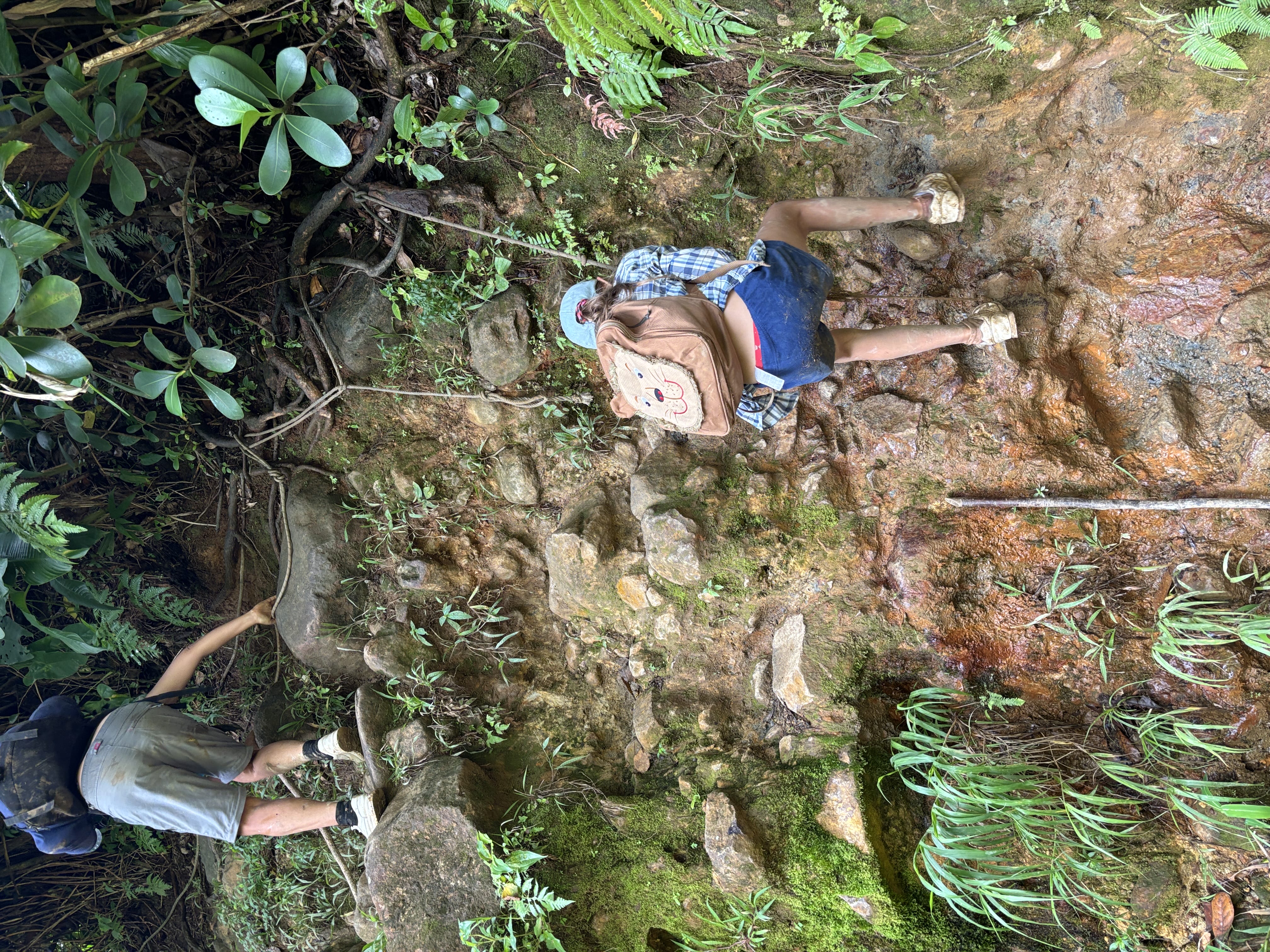
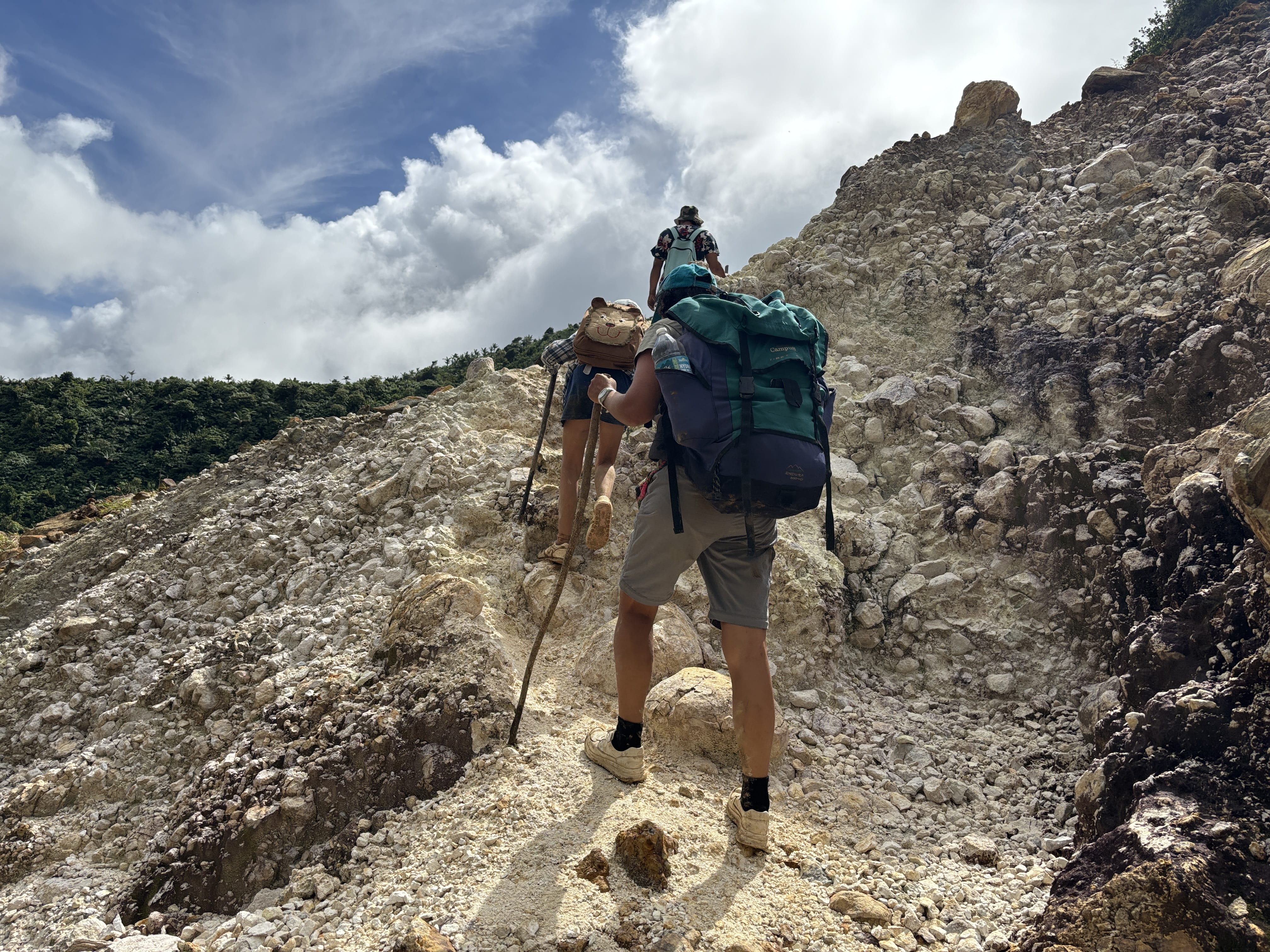
The path is really steep and very slippery - the guide shows us step by step where to place our feet. Whew, later we'll have to climb up here.
The valley looks like the gates to hell.
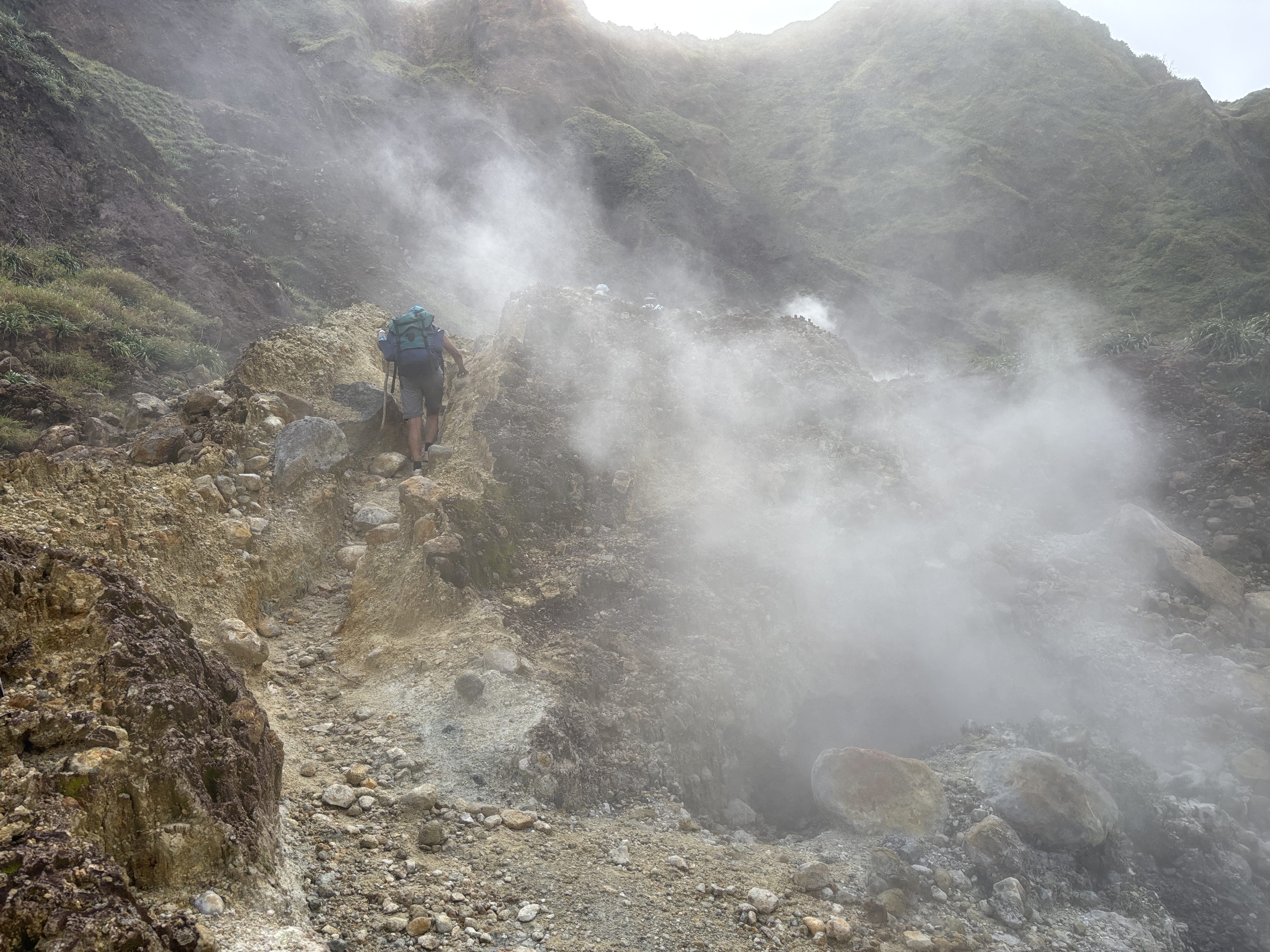
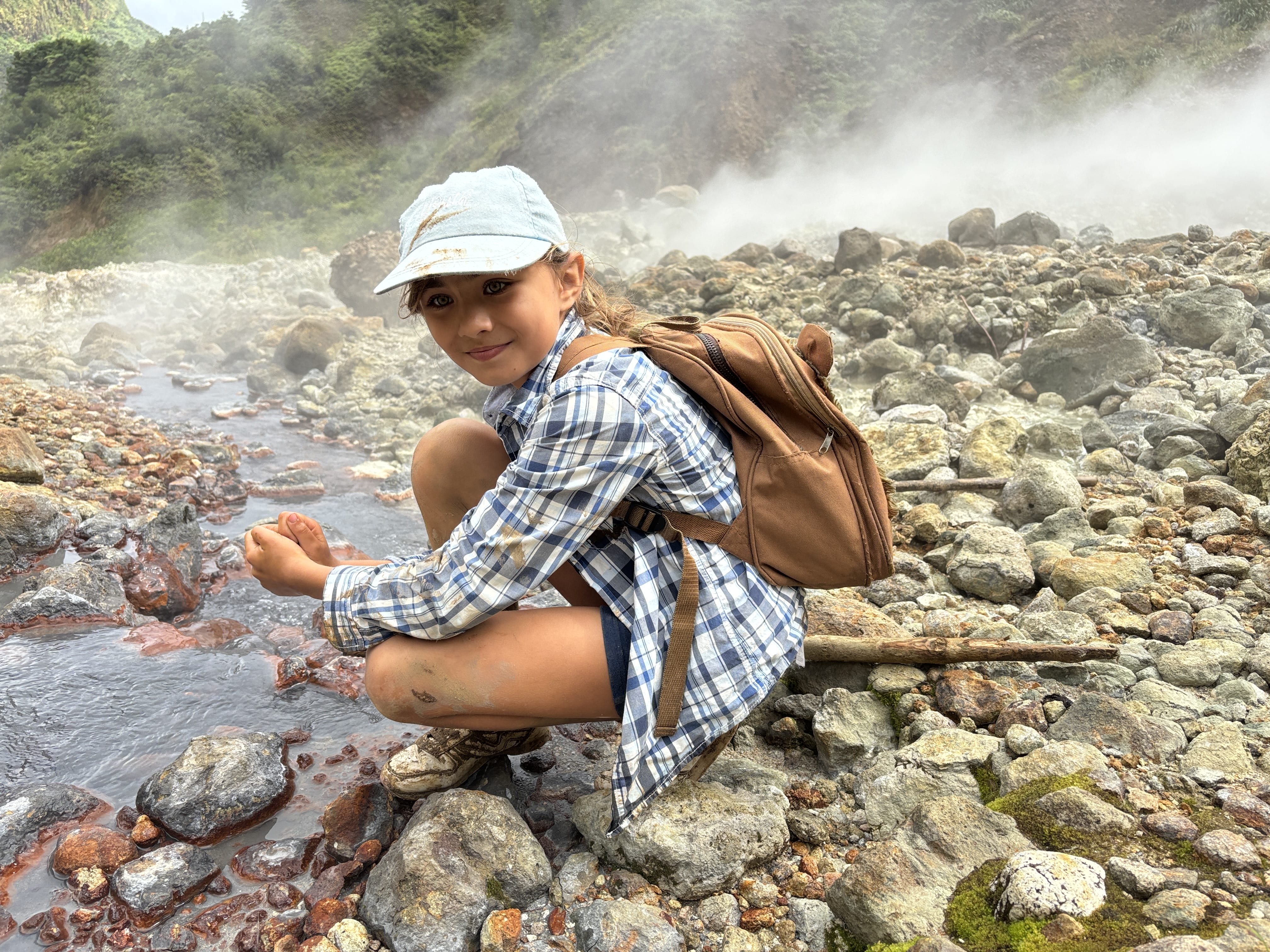
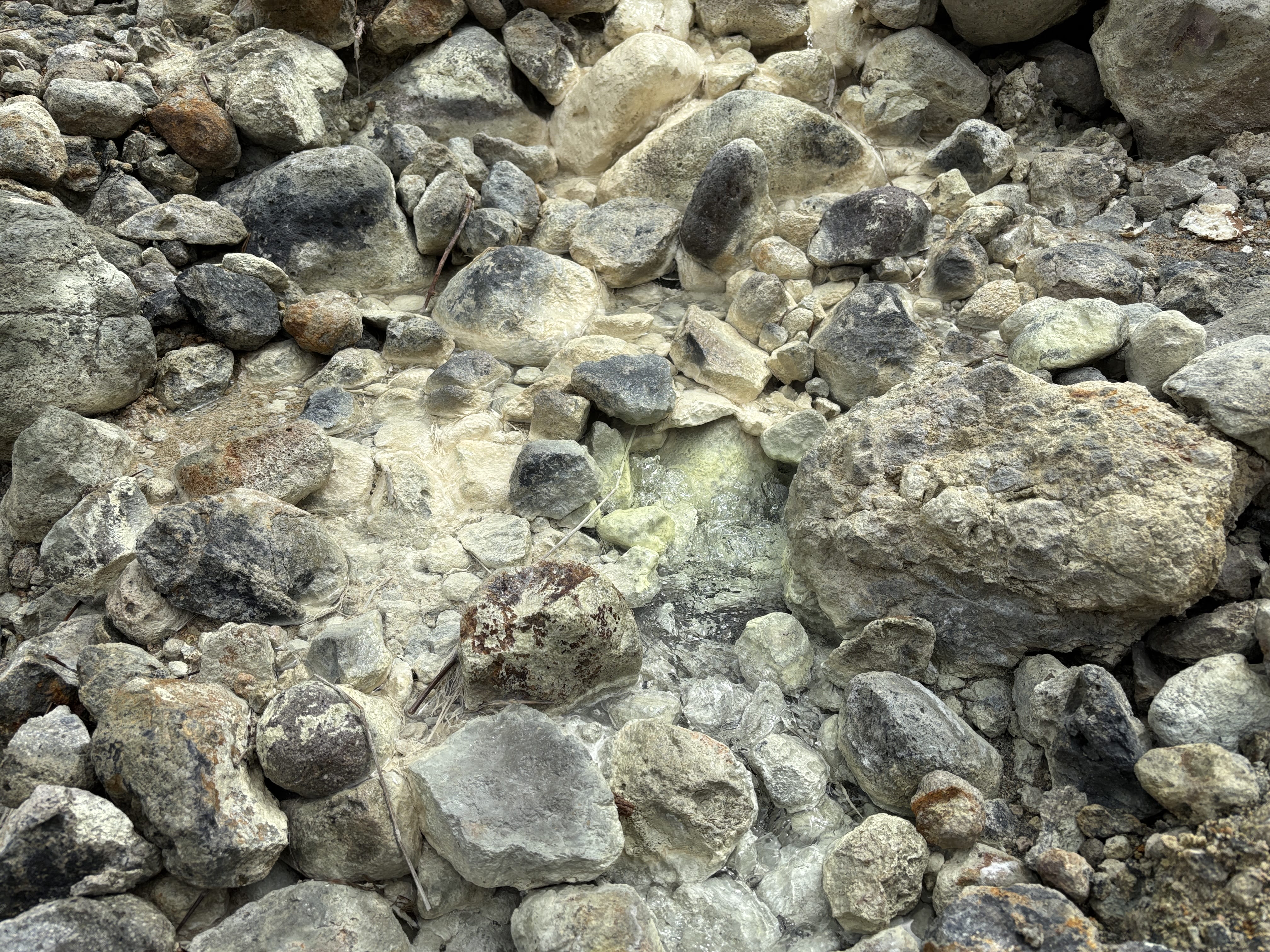
We are 8 km above magma - on a geological scale, it's almost nothing. The smell of sulfur and water vapor is everywhere. In many places, the stones are covered with sulfur and its compounds. Some tourists apply local clays to their faces - they are supposedly beneficial for the skin. Ali warns us to walk behind him and ask before putting our hands in the stream - some are pleasantly warm as they mix with rain streams, others reach several dozen degrees. Guides often demonstrate the water temperature by placing an egg in it - it cooks without any problem.
It is also important to watch where you stand. In some places, the ground is so hot that the soles of shoes can melt and stick to the feet—an accident that happened to a twelve-year-old boy, which was one of the key arguments for forbidding unaccompanied individual tourist excursions. Additionally, there is no mobile network coverage inside the crater. Guides present at the accident had to carry the child out of the crater on their backs, and it was only from there that they managed to call a rescue team. Dominica does not have state rescue services nor a helicopter—private teams exist, and for very serious incidents, a helicopter is summoned from Martinique. Both options are very costly.
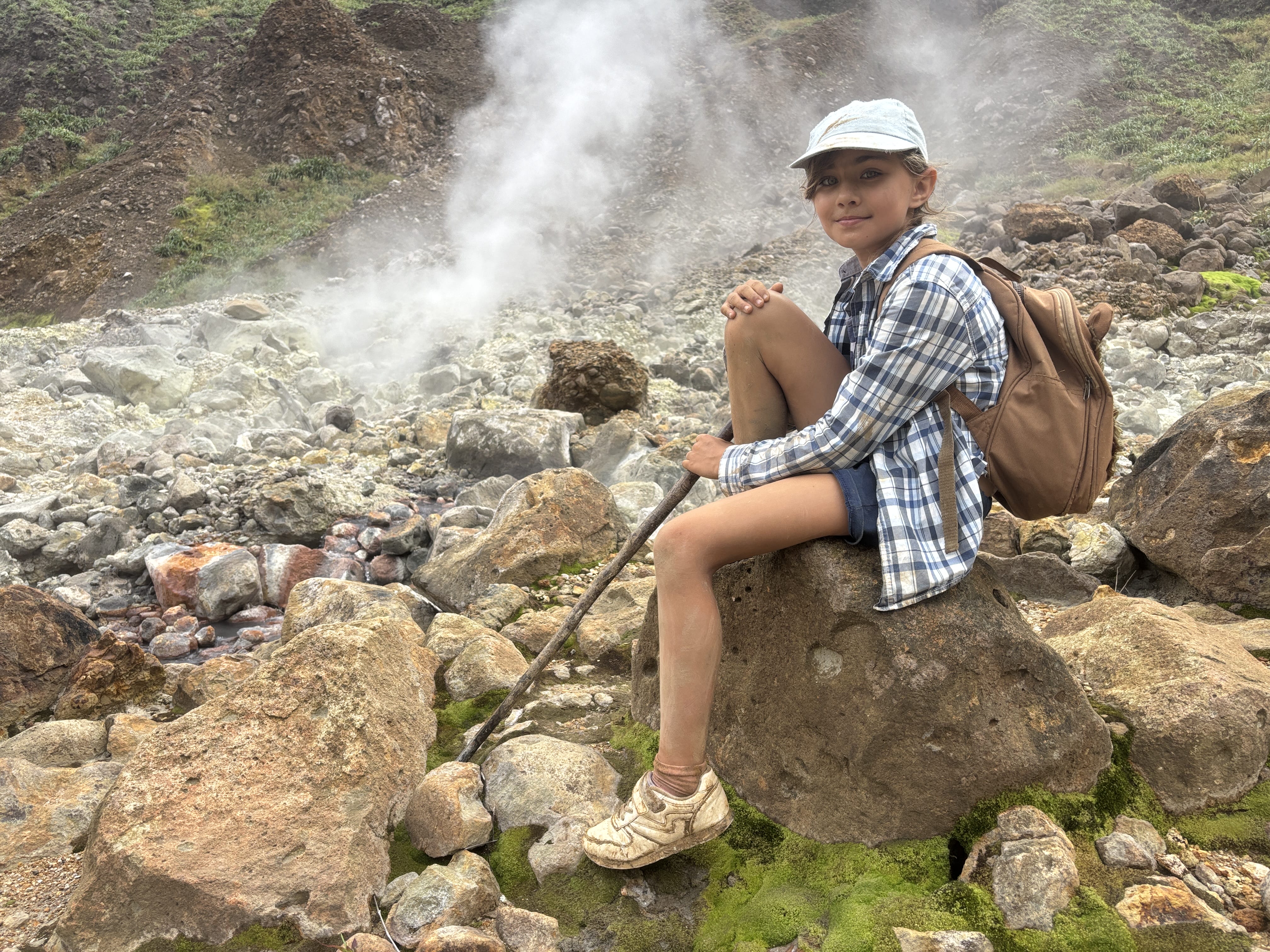
We decide to go to Boiling Lake itself. Chat GPT claimed that this stretch of the route is easier. However, we must be quite tired because it doesn't seem particularly easy to us.
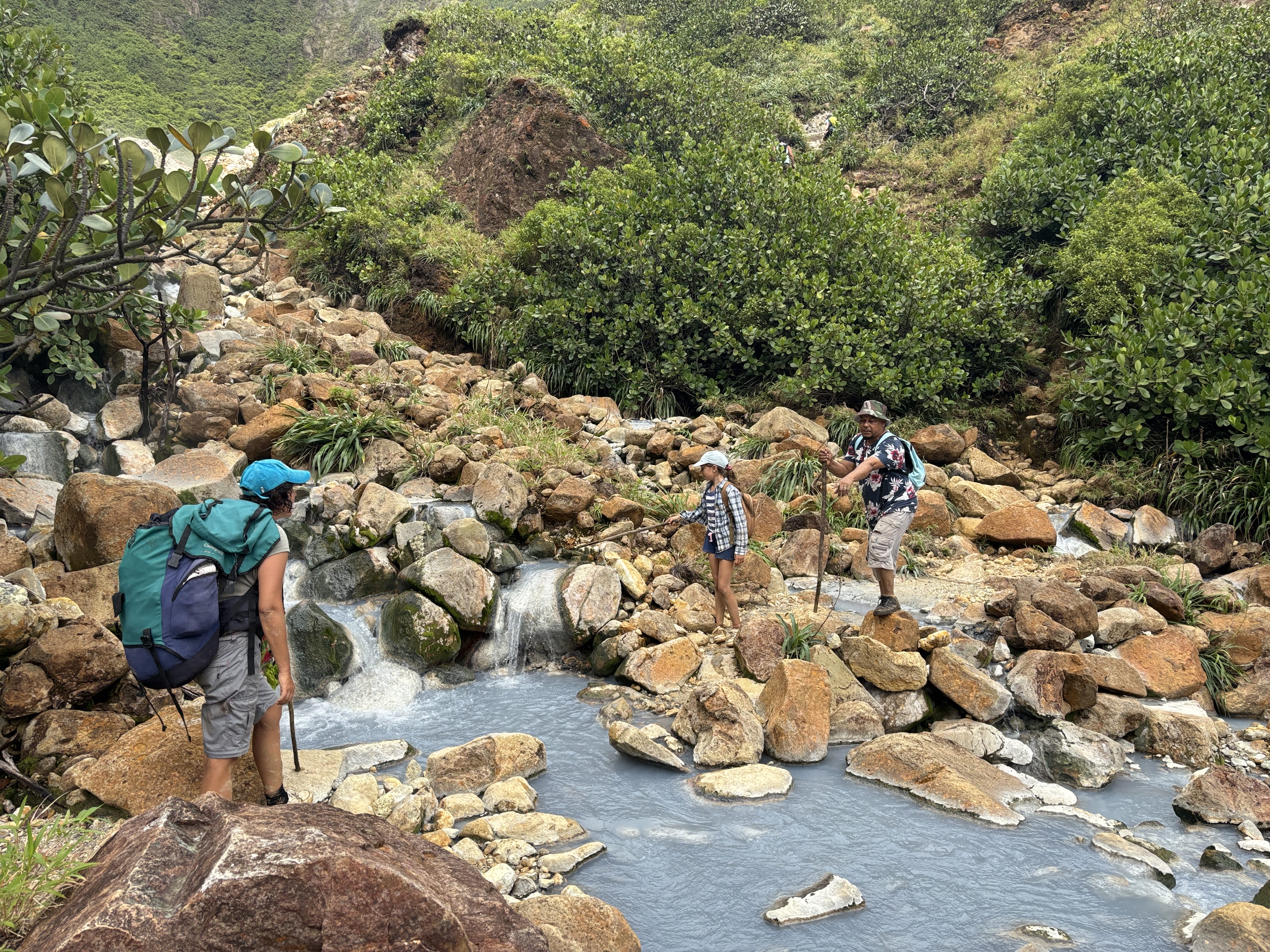
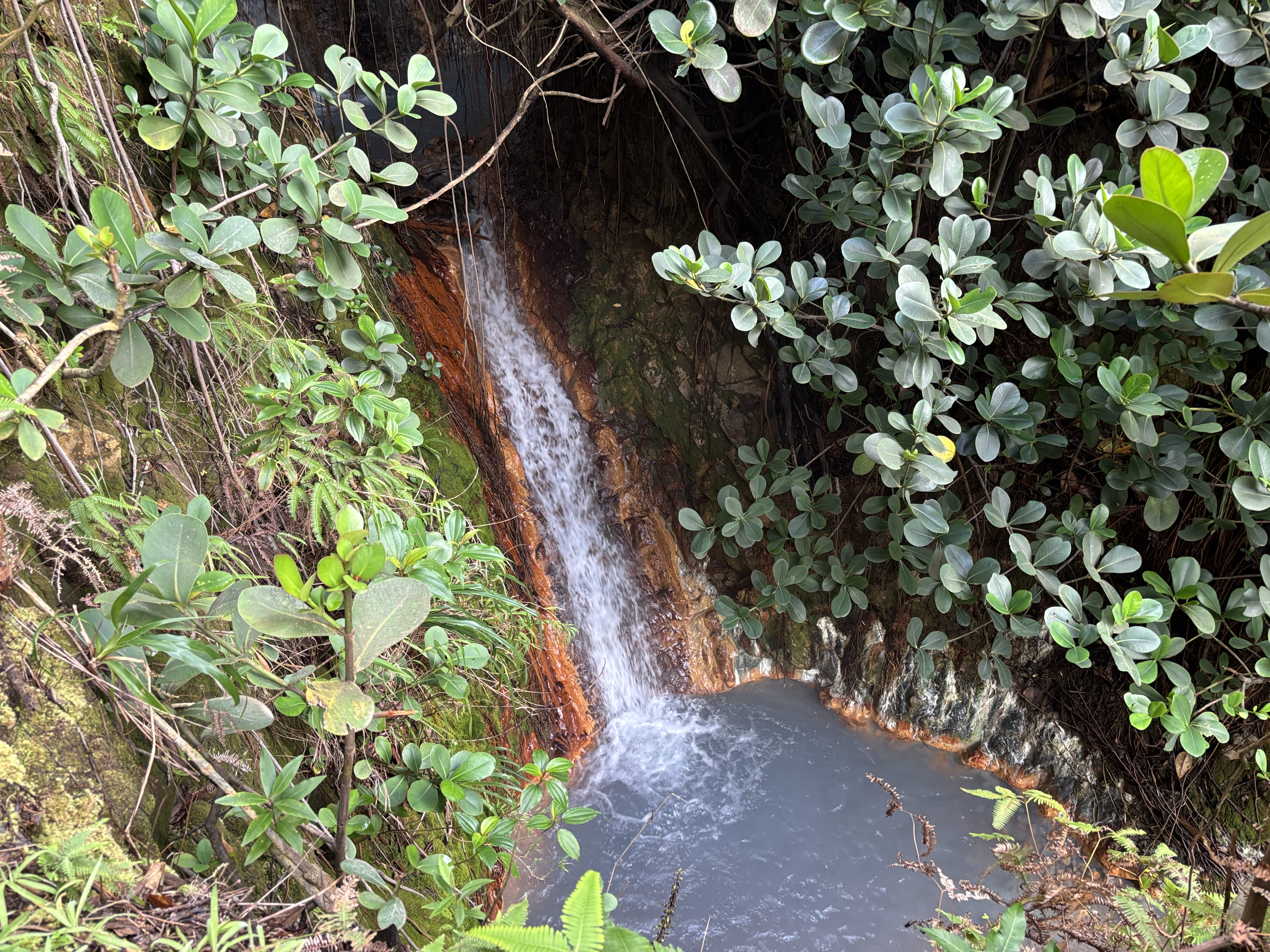
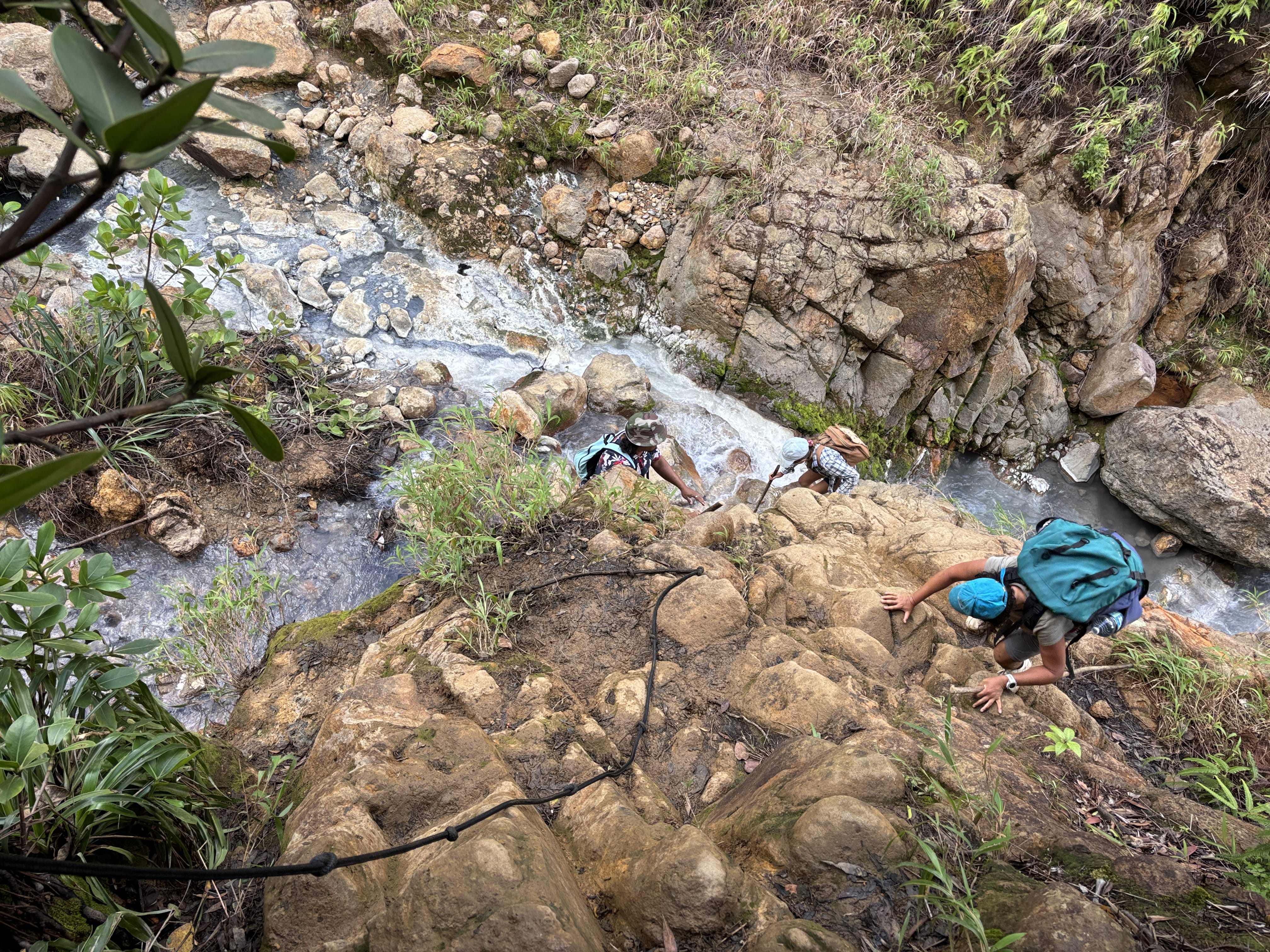
After almost an hour, we reach the lake. It is the second largest body of water of this type in the world. The water is nearly 100 degrees, bubbles appear on the surface, and a cloud of steam rises over the whole valley. One gets the impression of standing over a gigantic cauldron.
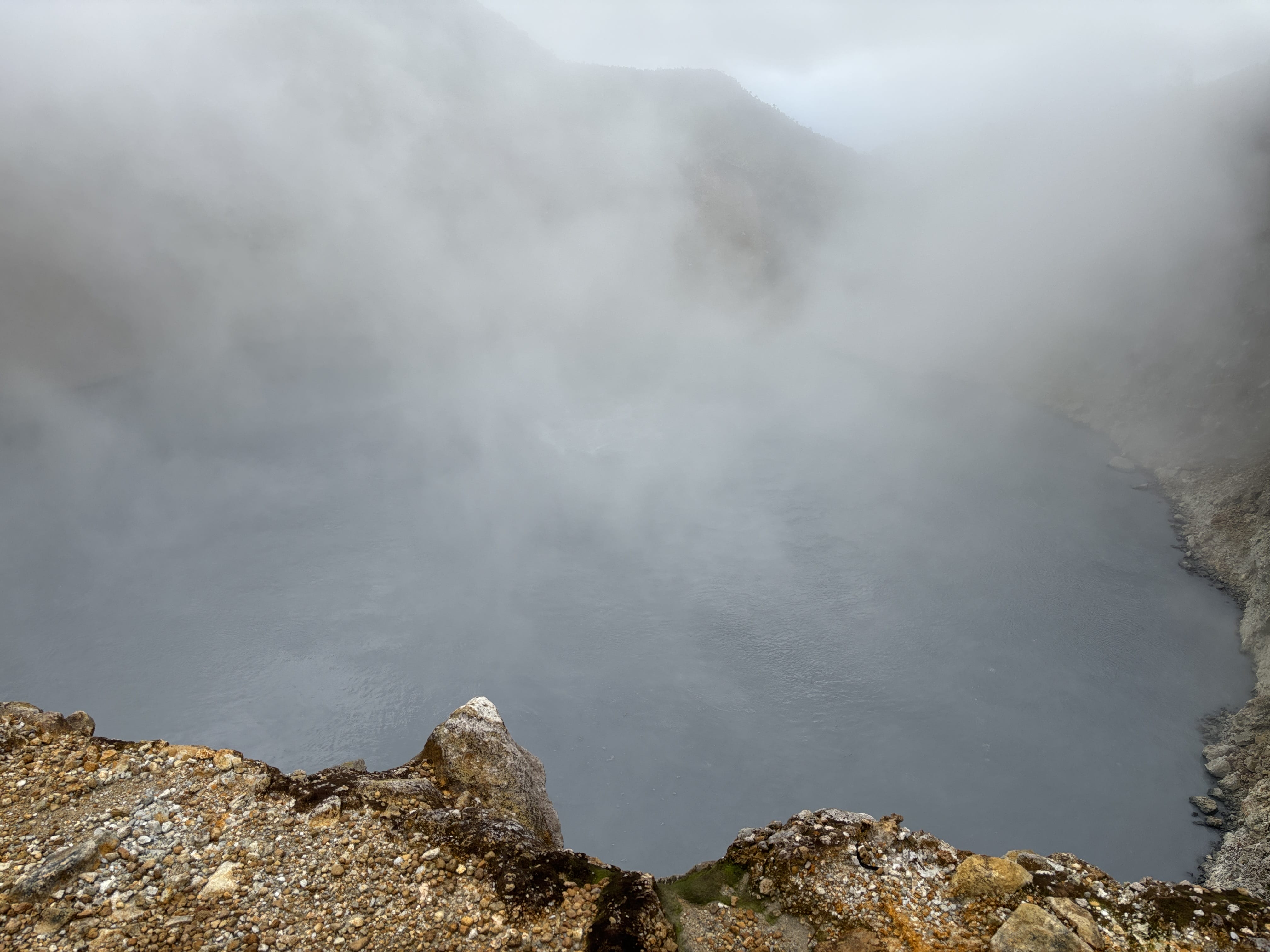
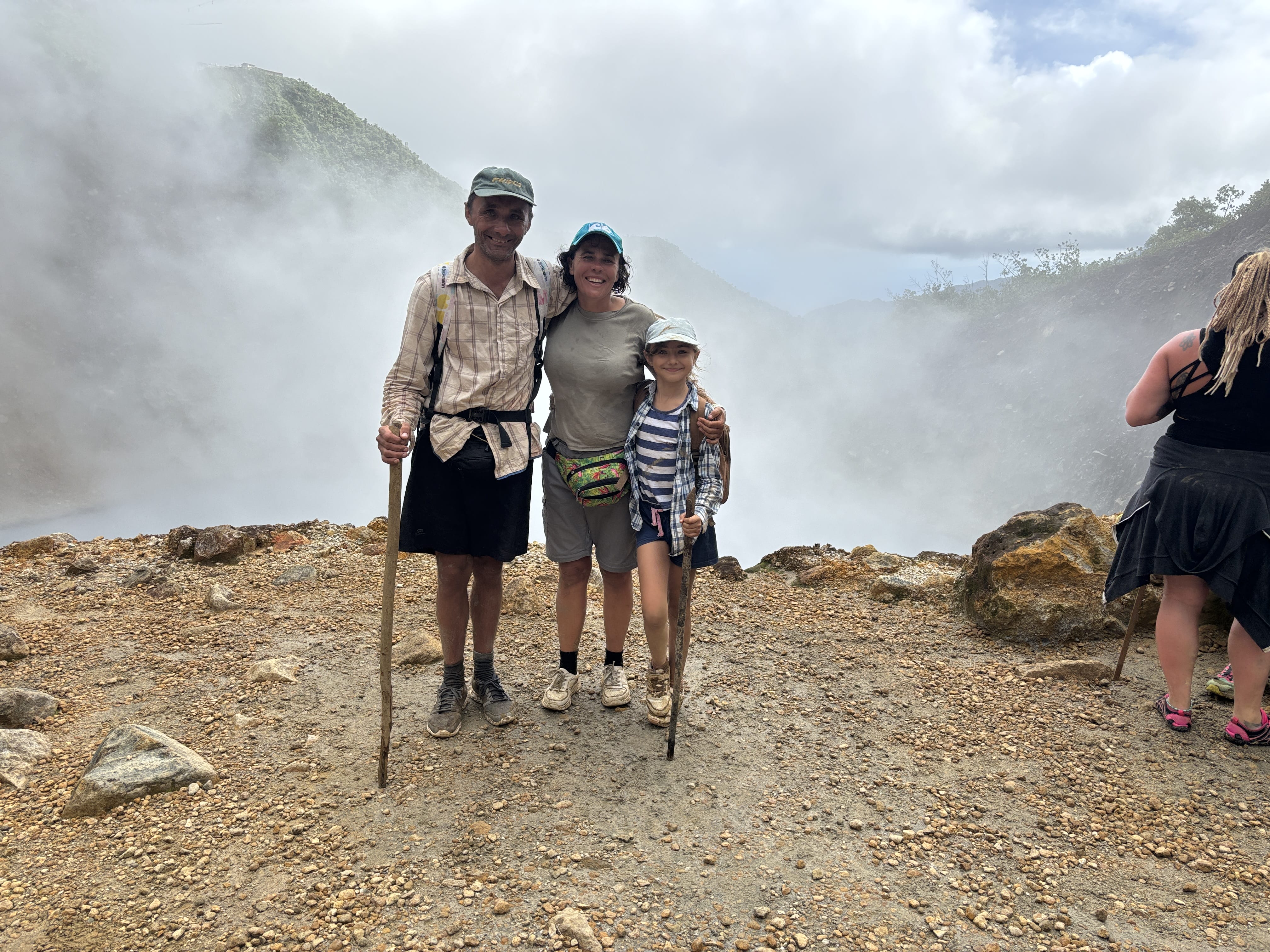
We have enough time until sunset, but not an excess of it, so after about a twenty-minute rest and eating coconut-nutmeg buns, we begin the return. Kama, who had been talking almost non-stop until now, falls silent. We all focus on the road.
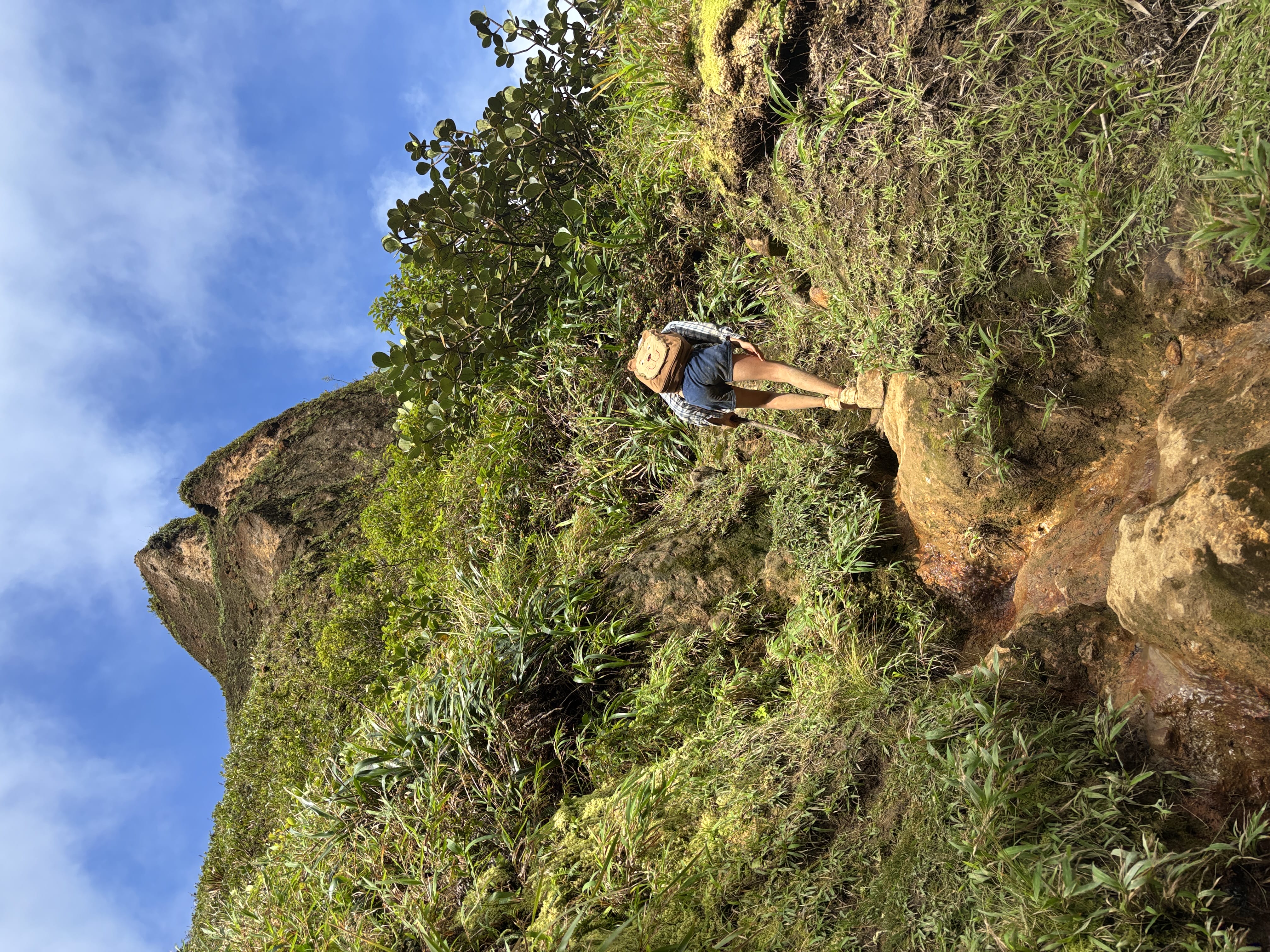
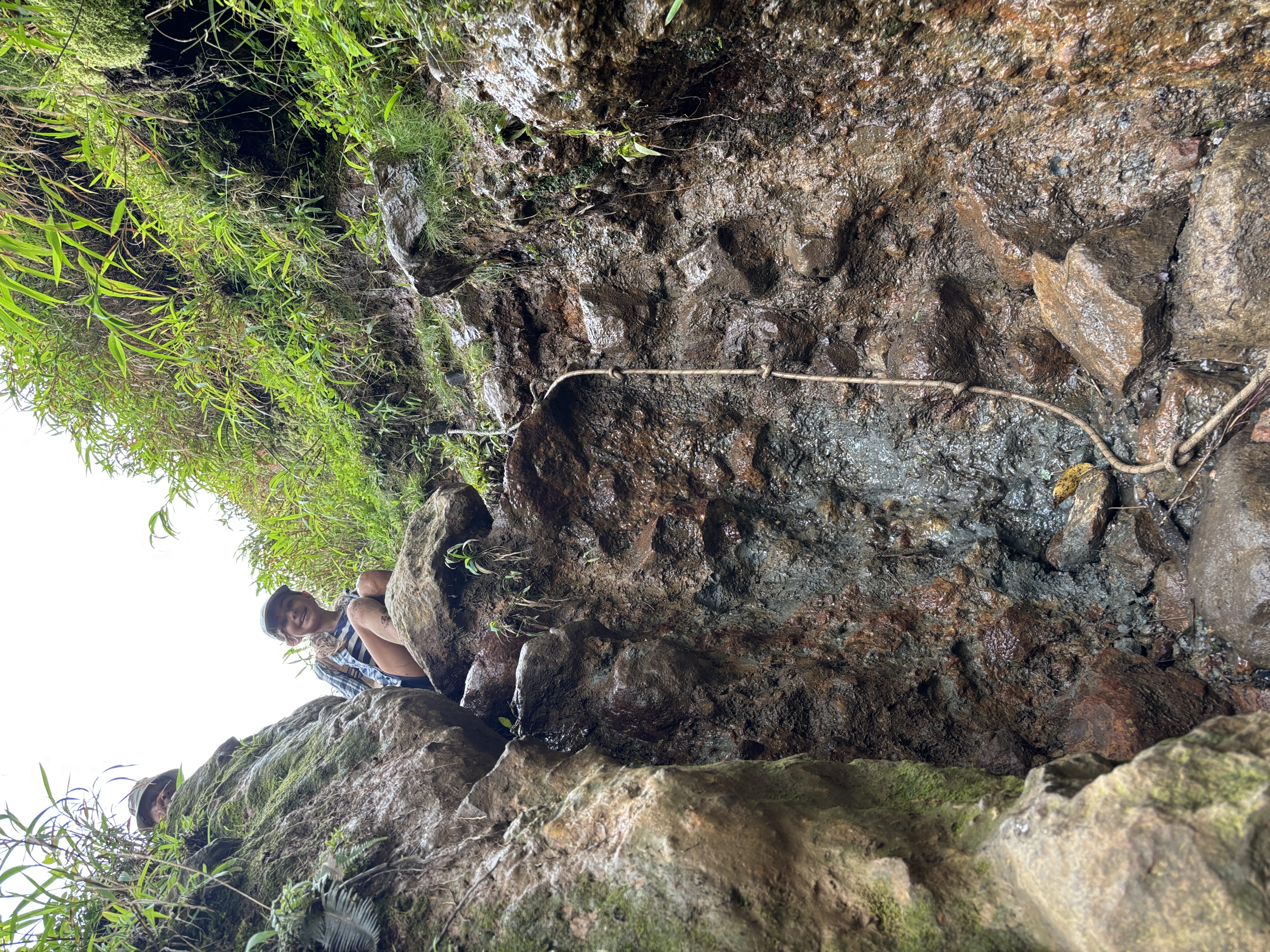
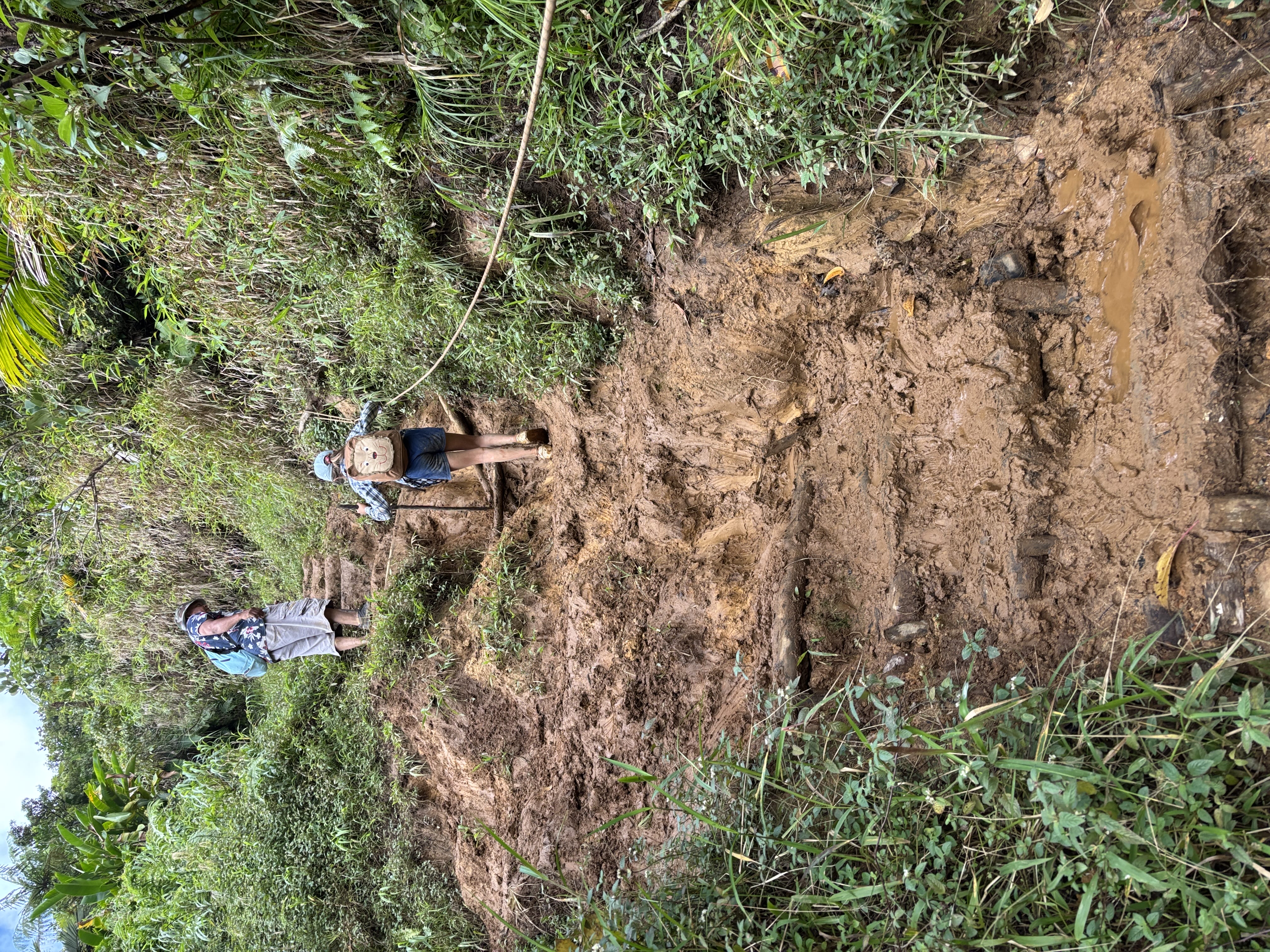
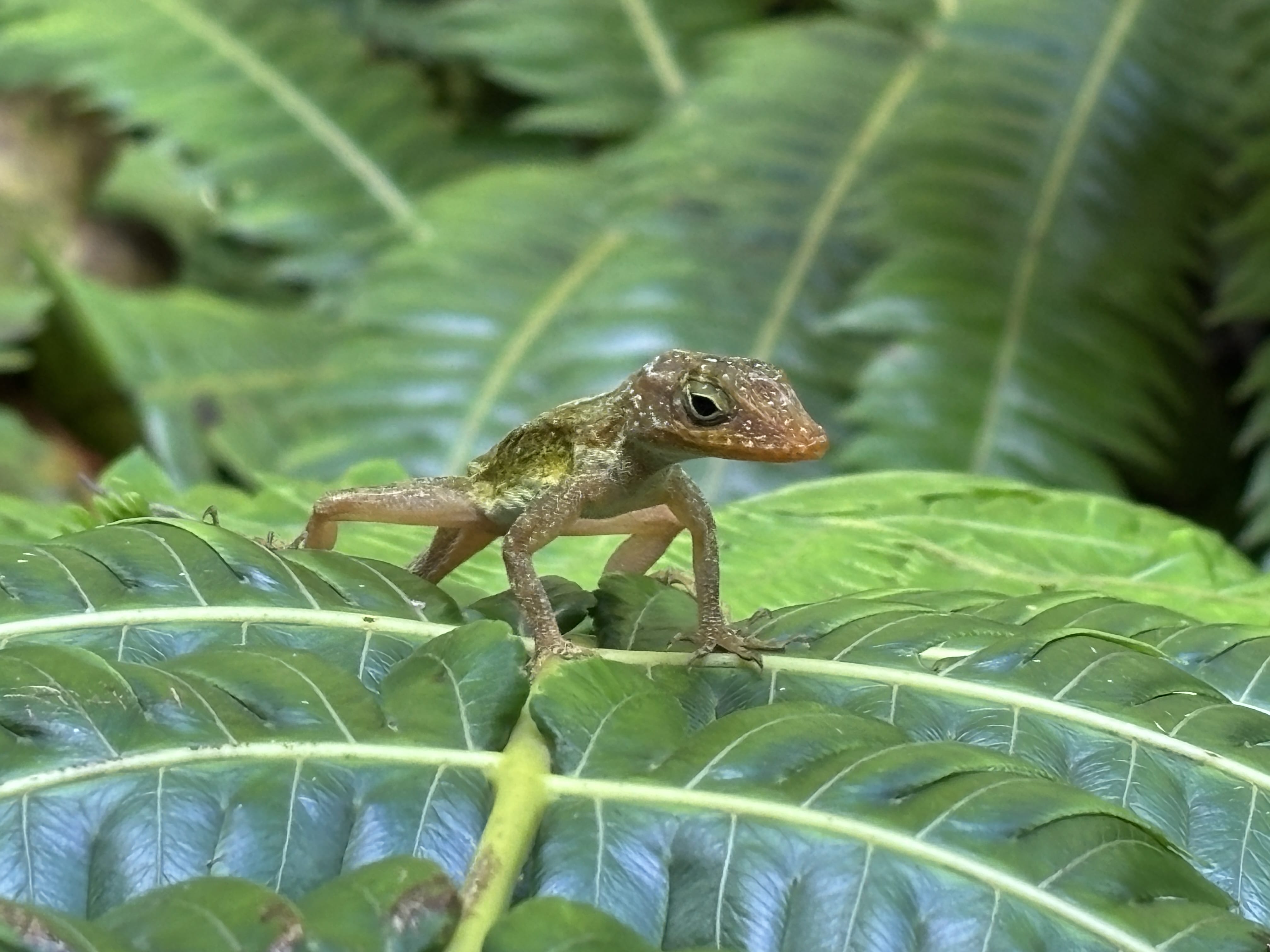
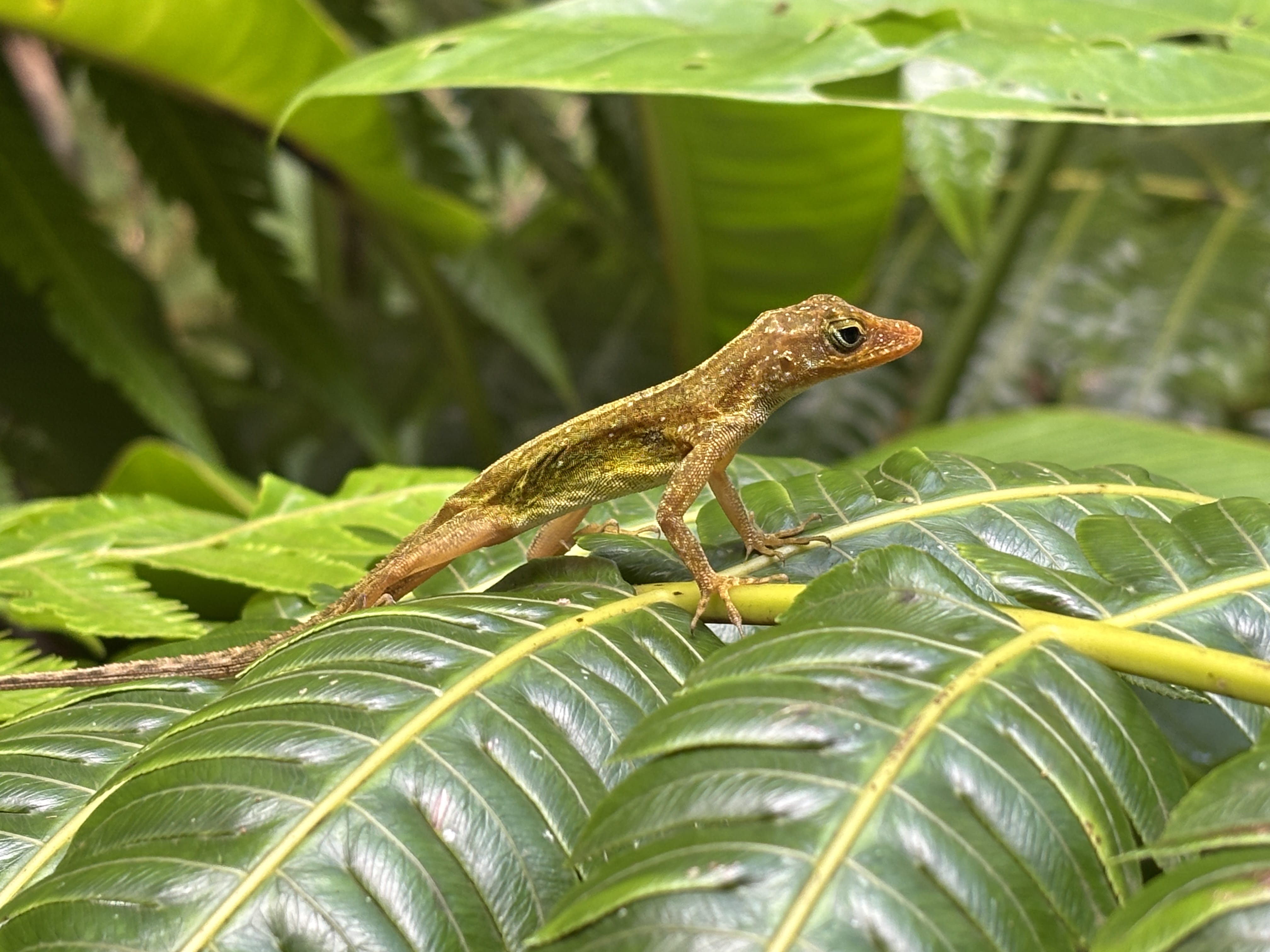
In the forested part of the trail, the endemic blue-headed hummingbird of Dominica flies past us – we are told we are lucky because it is shy and not easy to spot. By the way, our guide advises that if we want to go bird watching in the jungle, we should dress in red - this color attracts jungle birds. We also encounter a lizard that is only found on this island. It is not shy at all and willingly poses for photos.
Another group catches up with us on the descent. They are having a heated discussion about the cable car. Probably in mid-2026, the longest cable car in the world will start operating, transporting tourists over the rainforest to the summit near Boiling Lake. A young American predicts that people will stop using the trail we're currently on, as they will prefer to take the cable car. The guide insists that there will always be those who prefer climbing. We agree with him - if we hadn't walked through the rainforest, we wouldn't have had the chance to see all the interesting plants and animals.
At the very entrance to the National Park, there is the Titou River canyon. Anyone willing can put on a life jacket and swim through the cool, murmuring stream among the vertical rock walls. A perfect ending to a beautiful, yet very tiring day.
Our guide realizes that there are no taxis available and offers to drive us for half price directly to the boat. We are very grateful to him.
The next day is spent relaxing. We stroll around the city. We brought along shoes that Kama has outgrown. They are in good condition and it would be a shame to throw them away, so maybe we'll find someone who could use them. We choose a wandering cobbler - we show him the shoes and ask if he would take them. The old man quiets us a bit, looks seriously at Kama, and asks if she is sure she wants to give them away. When Kamila nods, he beams and says he knows a little girl who would be very happy with such shoes. We all feel very pleased.
We spend the next day relaxing and strolling around the city. We brought along shoes that Kama has outgrown. They are in good condition and it would be a shame to throw them away, so maybe we'll find someone who could use them. We choose a wandering cobbler - we show him the shoes and ask if he would take them. The old man quiets us a bit, looks seriously at Kama, and asks if she is sure she wants to give them away. When Kamila nods, he beams and says he knows a little girl who would be very happy with such shoes. We all feel very pleased.
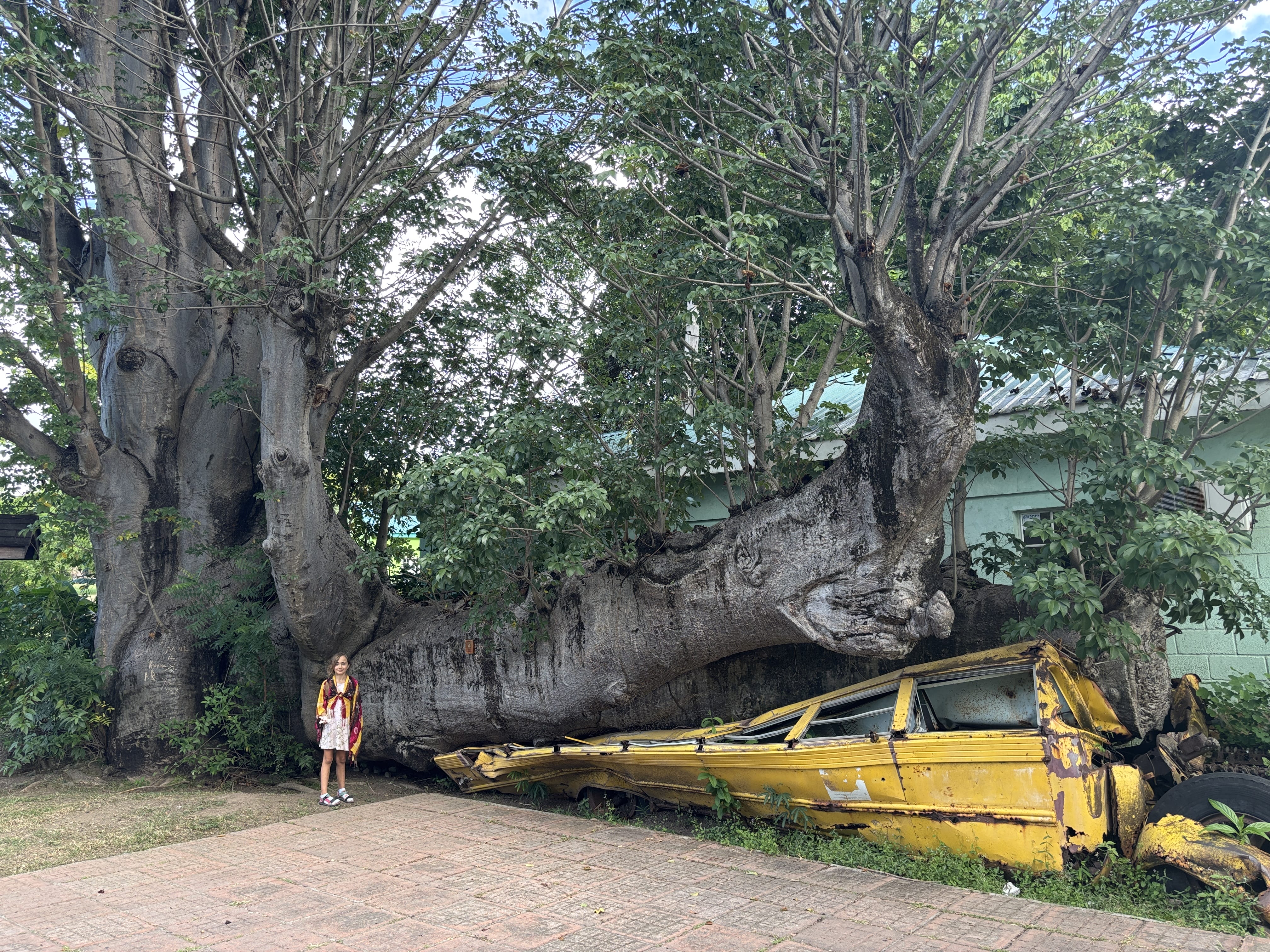
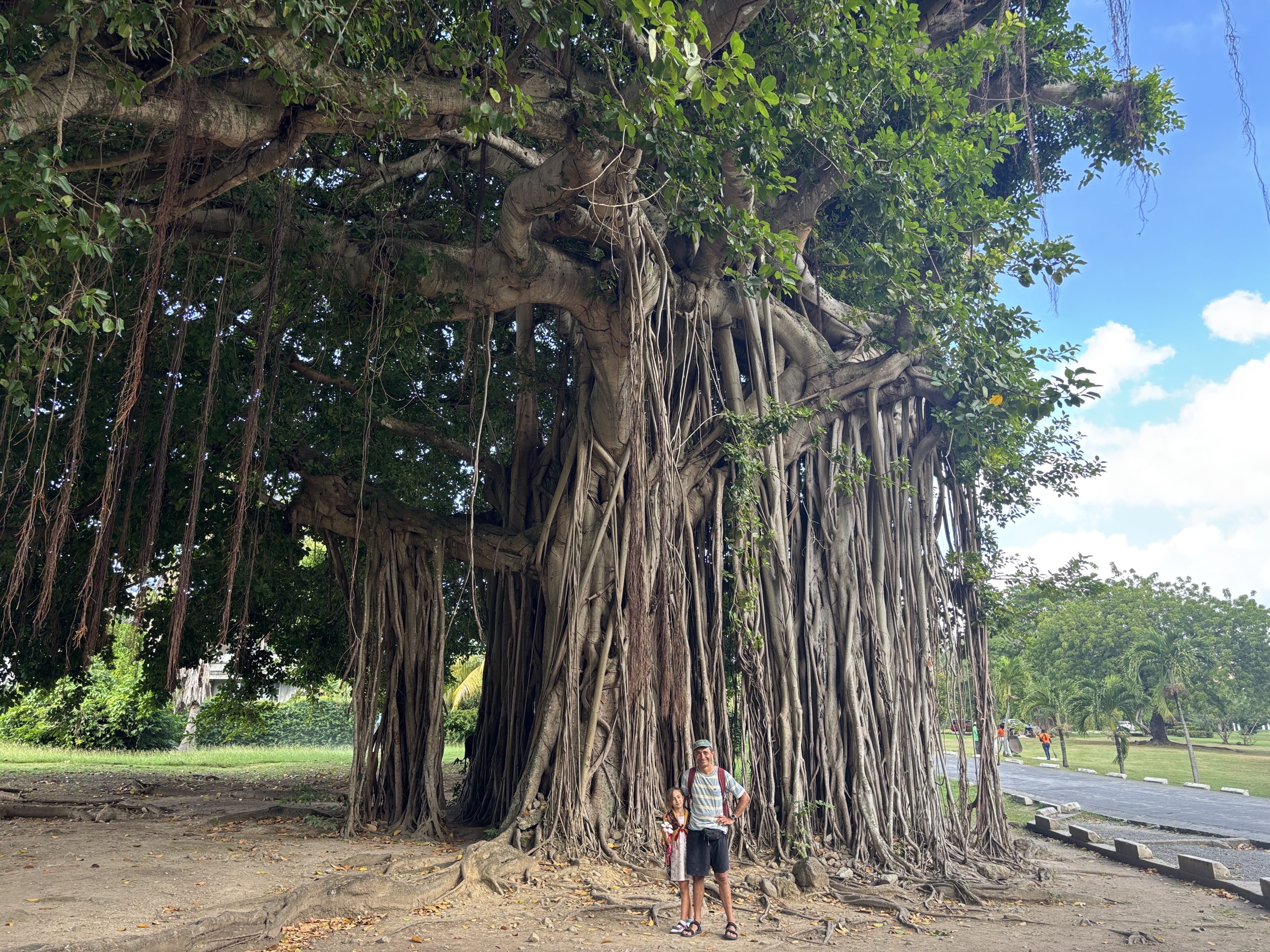
We visit the botanical garden. As a memento of one of the hurricanes, a bus crushed by an African baobab has been left there.
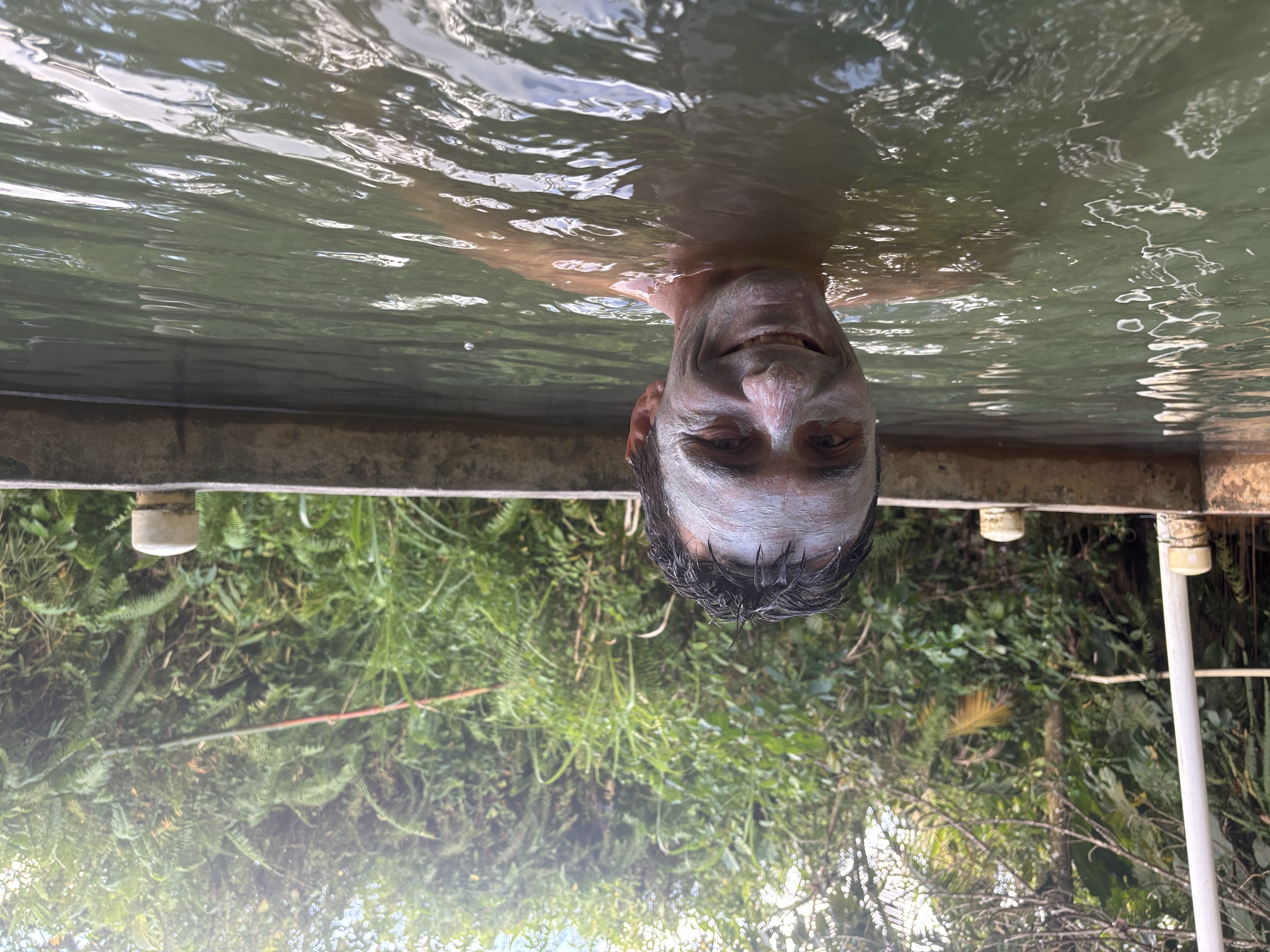
Our guide Ali told us yesterday about the sulfur water pools in the village of Wotten Waven. We find a bus that goes near the village, and the driver himself offers to take us to the place for a small additional fee. It turns out that there are plenty of companies offering thermal baths there. A guide who is leading another group recommends to us the baths a bit off the beaten path. It turns out to be a good choice. There are probably about 10 pools, and you pay by the hour for soaking. Apart from us, there is also a Czech couple and two young Americans, so everyone can have a pool just for themselves. By mixing sulfur springs with stream water, each pool has a different temperature and different microelement content. We enjoy immersing ourselves in the fresh warm water. We also apply a sulfur mask - those interested can buy a jar to take home, but a single application is enough for us.
Relaxed, we return home and go to bed early because tomorrow another attraction awaits us - canyoning.
Kamil did some rock climbing in his youth. Last summer, we started modest climbing trials, but we considered a course so that Kama and Zuza could learn the basics under the supervision of professionals. Canyoning includes many climbing elements, and the girls would have a chance to see how much they enjoy such a sport. It turns out there's a nice canyon near Roseau, so Kamil finds two companies and arranges a guide who can take us on a trip the next day via WhatsApp. In the morning, a petite Frenchwoman, seemingly a fervent hippie in her sixties picks us up. She is accompanied by her is her assistant, a Dominican girl about 20 years old. At the parking lot, we receive wetsuits, harnesses, helmets, and figure-eight descenders and then head towards the canyon.
Kamil and Kamilka are generally not afraid of heights, but Zuza sometimes is. Meanwhile, just after stepping onto a rock ledge, Nathalie ties Zuza to a rope in such a way that Zuza controls the speed of descent, but the guide provides backup and can stop it at any moment.
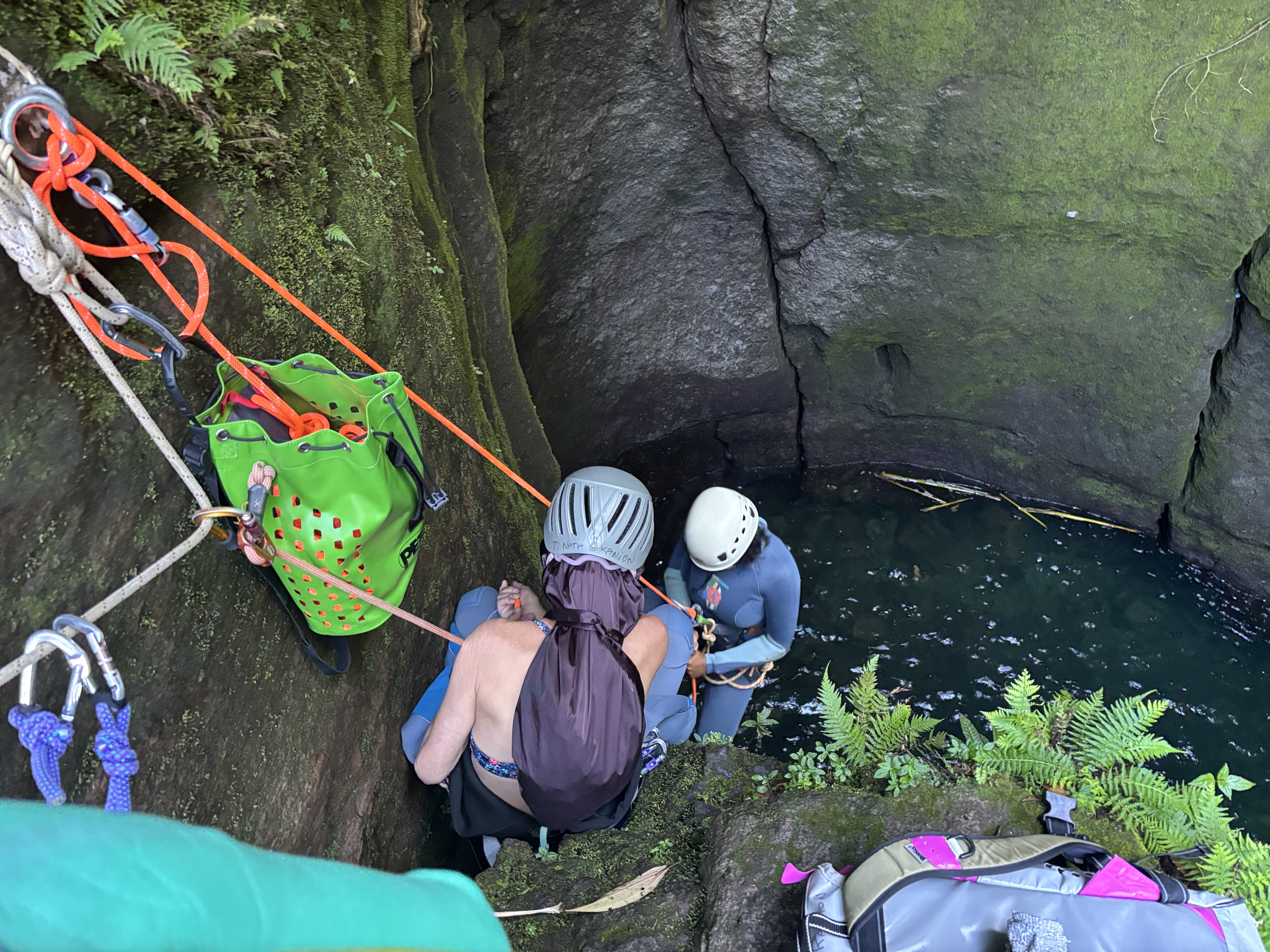
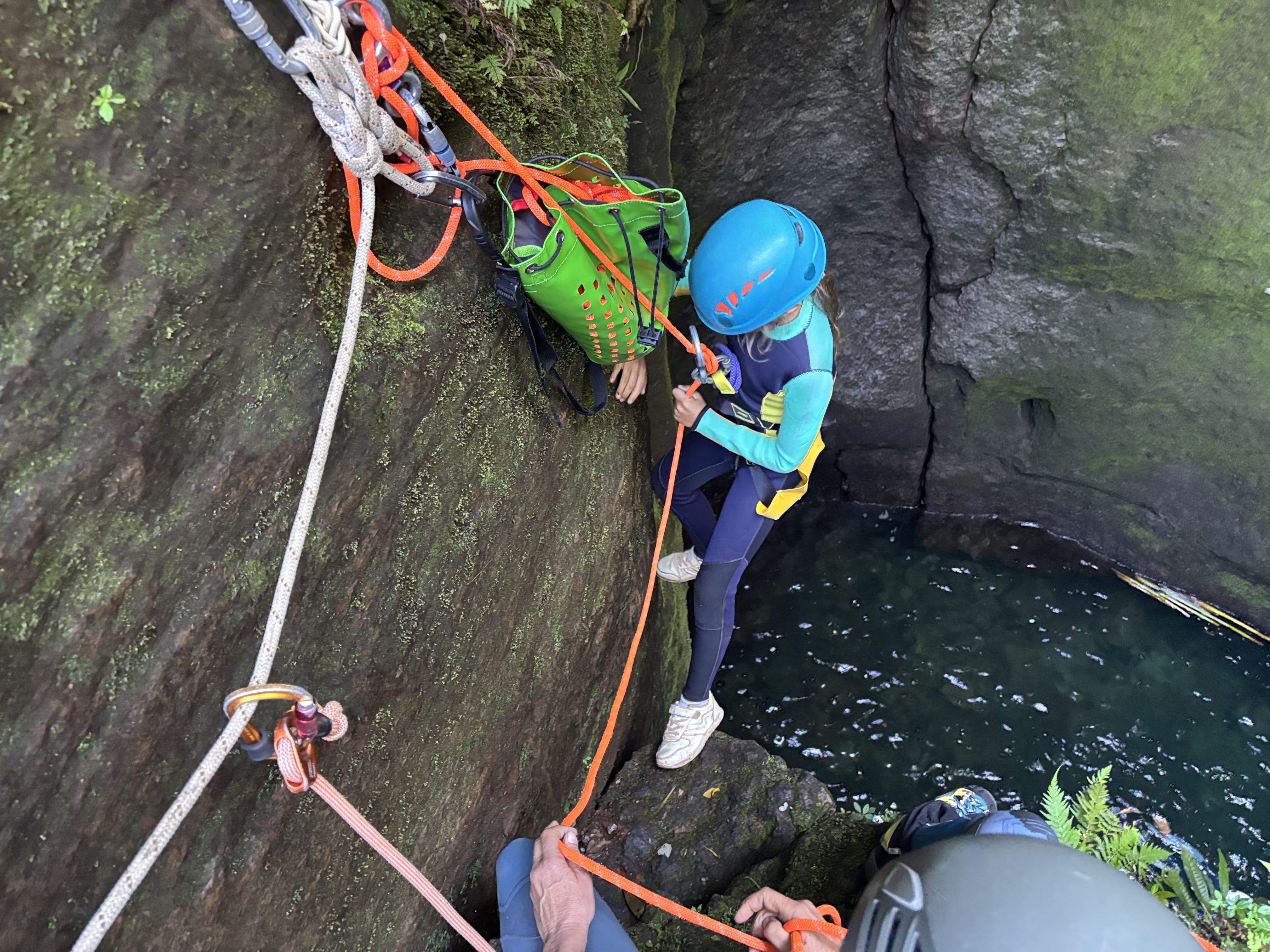
Kamil watches the knot with interest because he did not know this particular one (and the "figure eight" is his favorite belaying and descending device from his younger years).
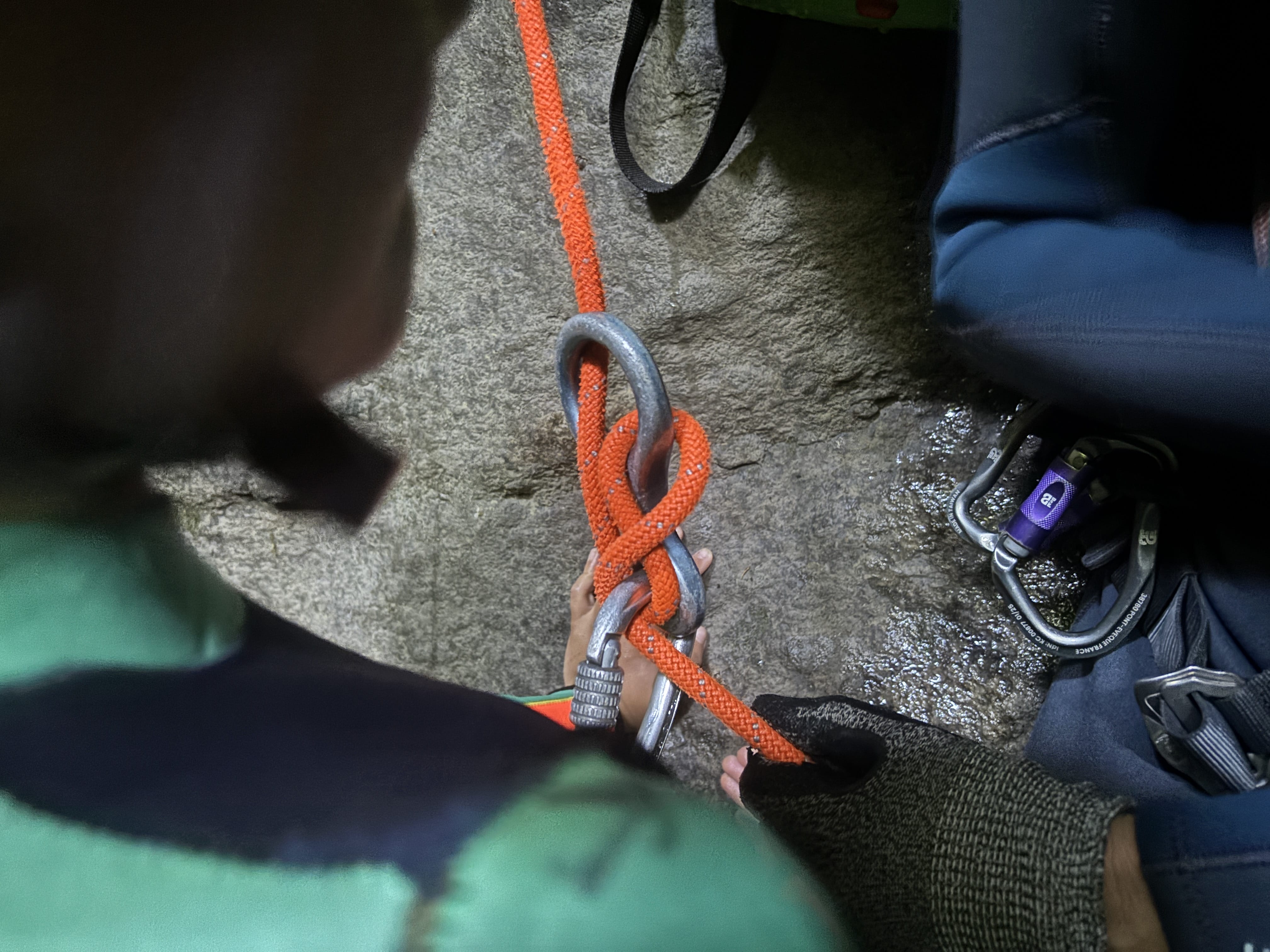
It turns out that our guide is also a certified spelunking instructor; she explains why she uses this particular knot in this situation, and what its advantages and disadvantages are. Calmly, but firmly, she tells Zuza where to place her feet in turn and when she can let go at the end of the rope to fall into the water. Before Zuza has time to panic, she is already swimming in the lake under a ten-meter wall. In a moment, a laughing Kamilka, Kamil, and both guides join her.
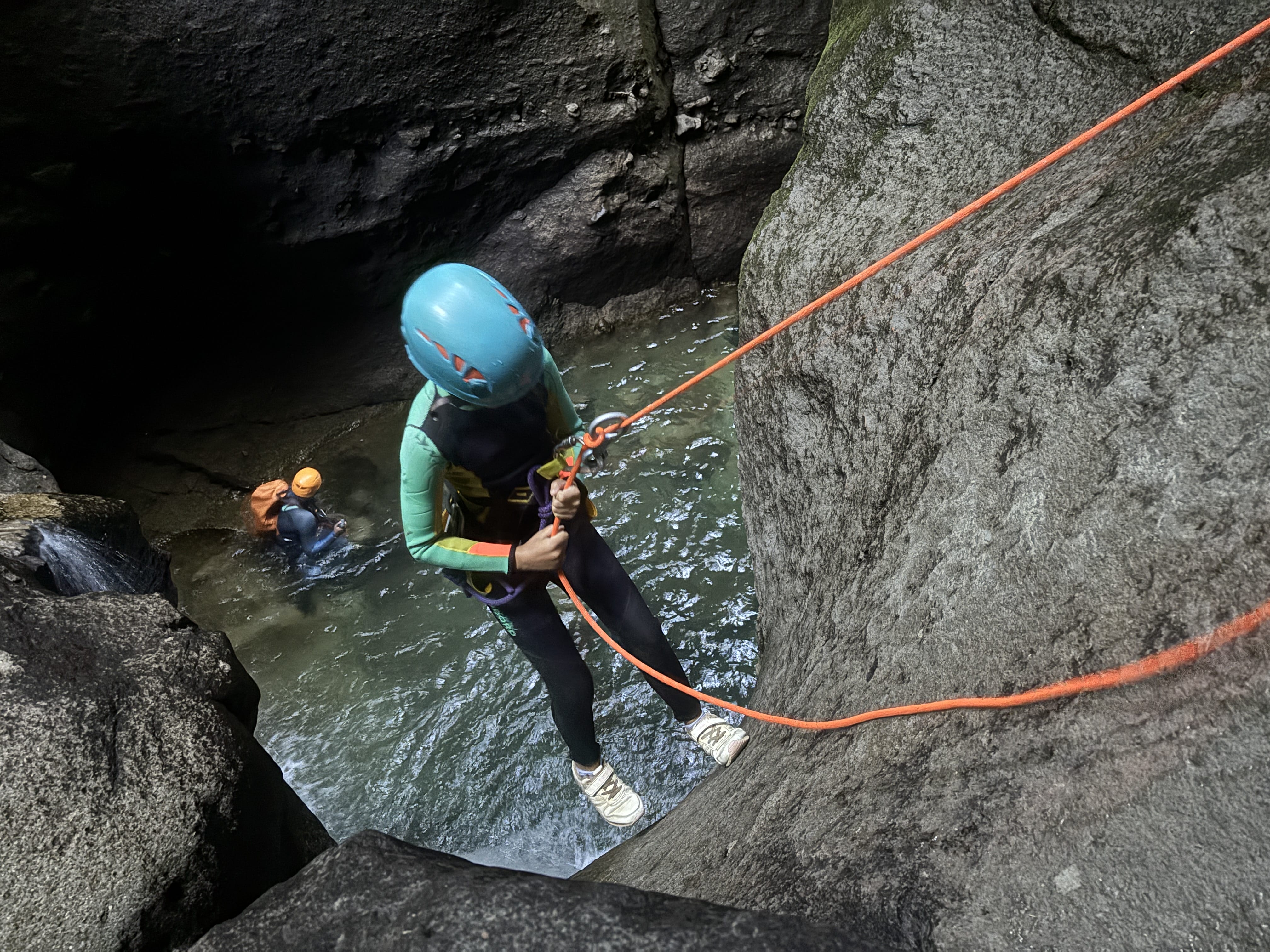
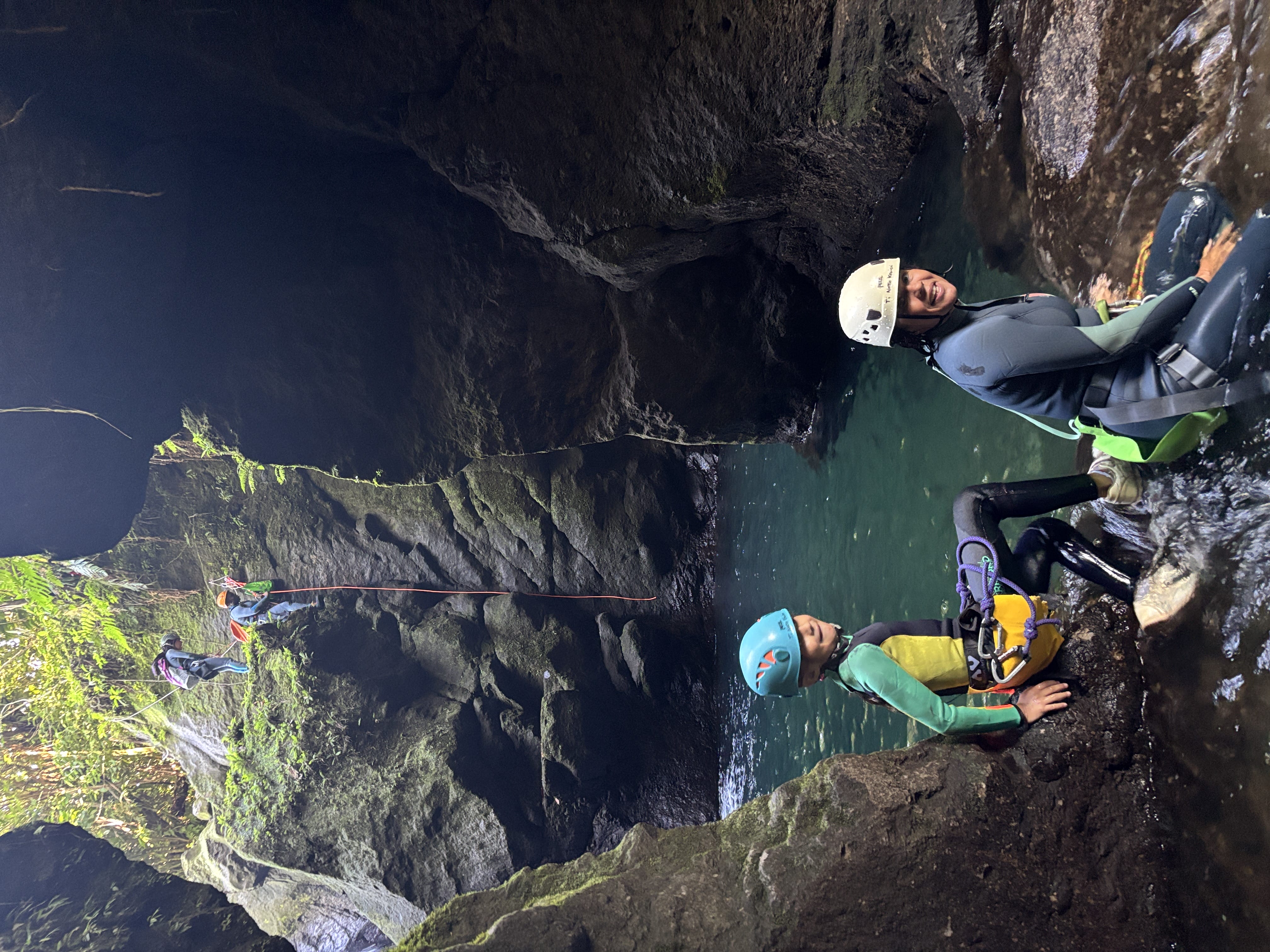
The next item on the agenda is a 3-meter jump into the water. If anyone is afraid, they can opt for a zip line, but we all choose to jump. Nathalie explains that she keeps her hand on the jumper's back, not pushing them but possibly adjusting their position mid-air. It's important to jump in such a way as to avoid hitting the rock and, on the other hand, to land in the water in a safe position (on the feet, with hands together to avoid dislocating the shoulders). The jump turns out to be super fun.
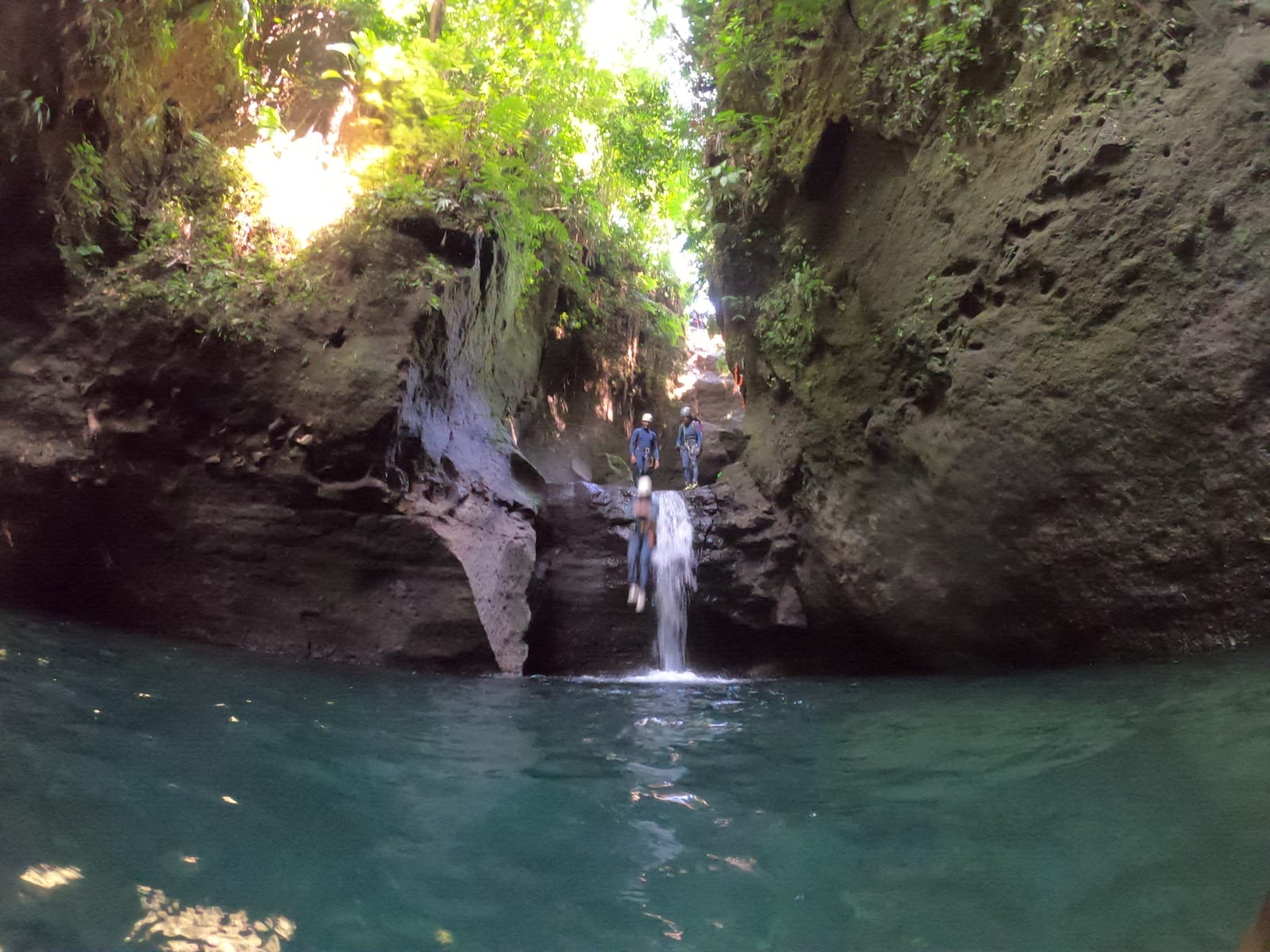
Then a jump from a slightly higher height, but if someone didn't want to, a rope can always be used. With each successive step, we are filled with increasing respect for our guides. Their motion is considerate, both move in the canyon in a calm, efficient manner. Usually, one goes ahead and prepares the site for descent, while the other dismantles previous one. We are constantly under gentle supervision.
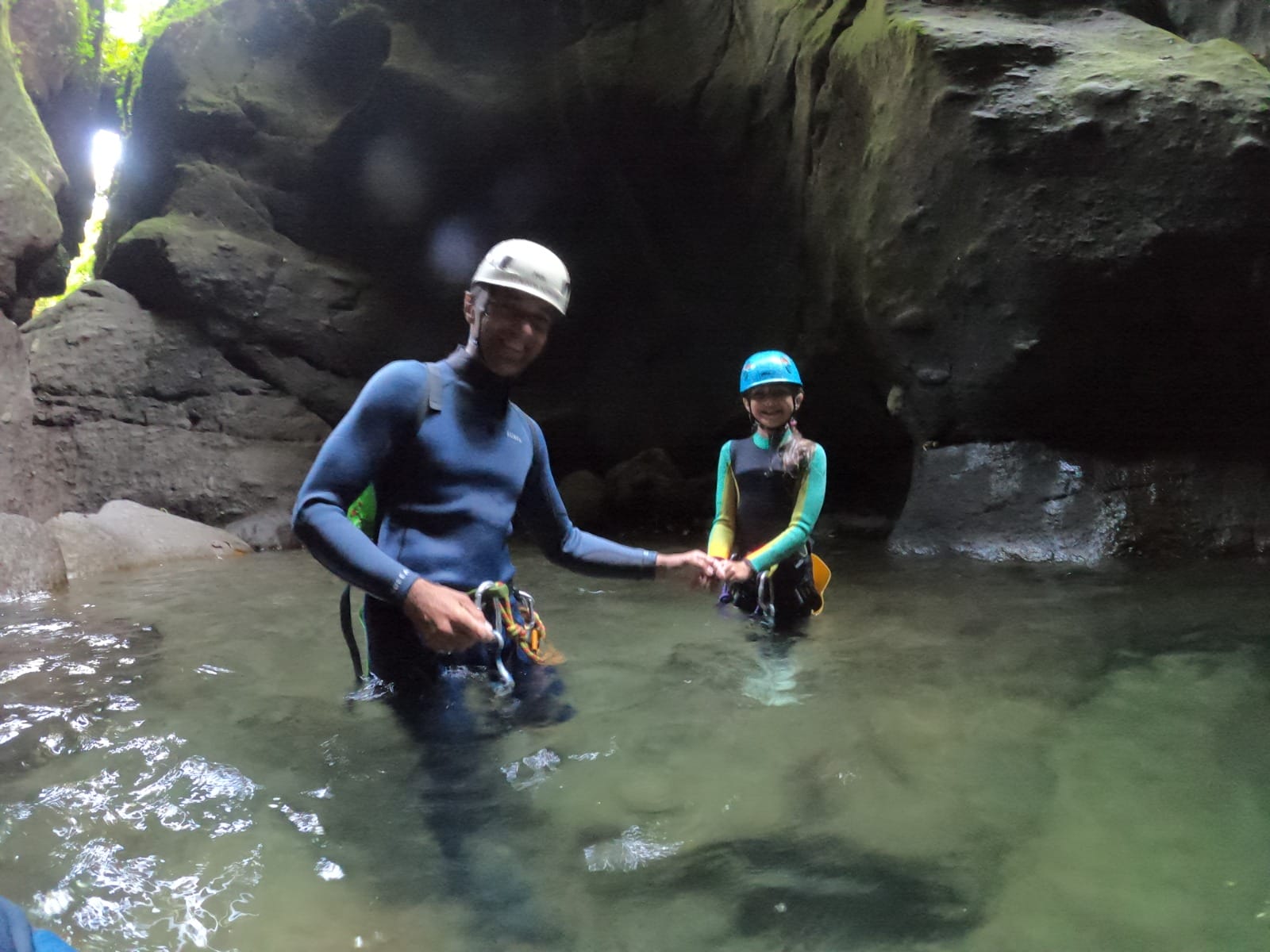
Everything, including the color of the lines (a vivid orange, clearly visible even in the semi-darkness of the canyon), is thought out to the last detail.
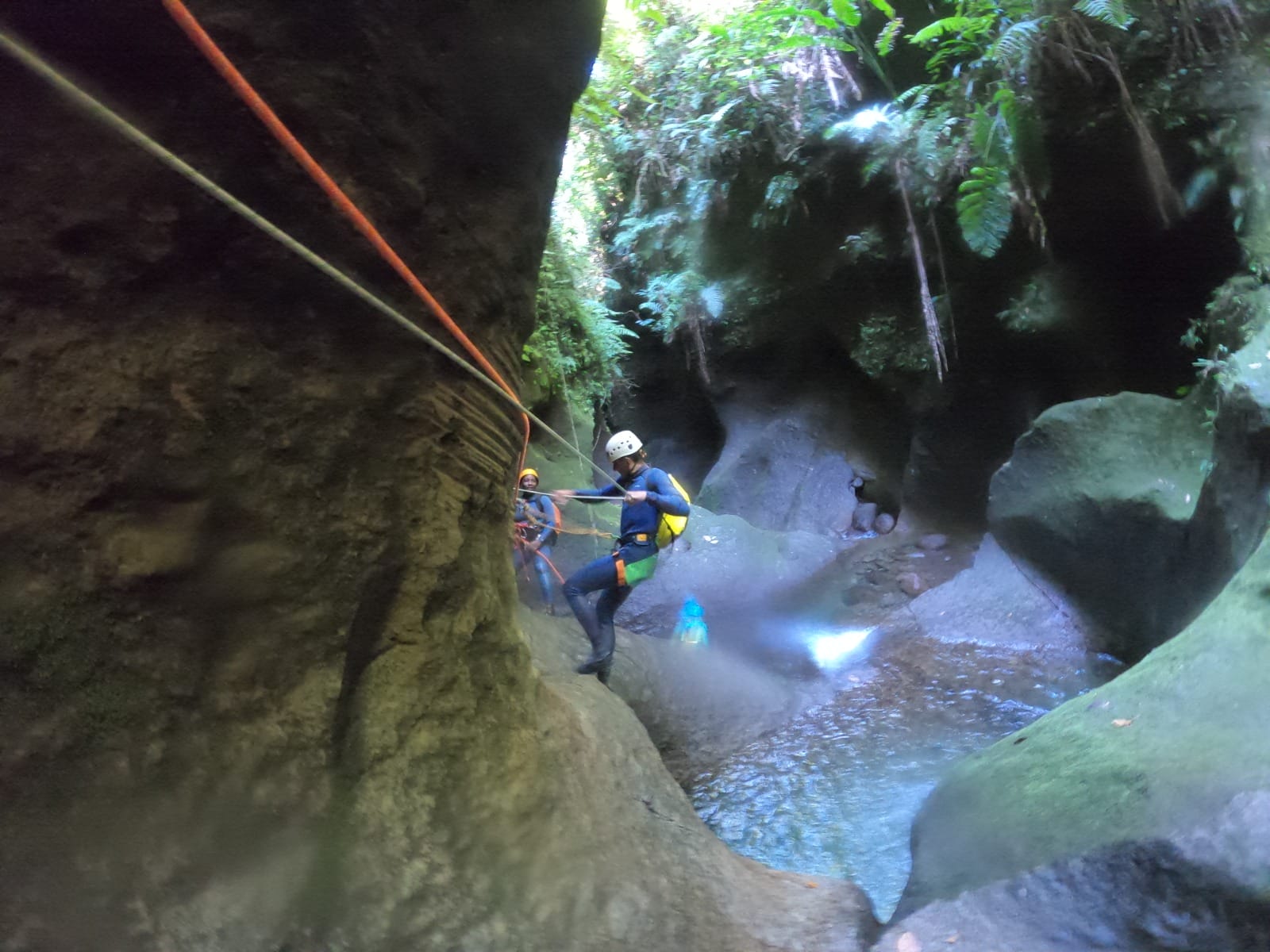
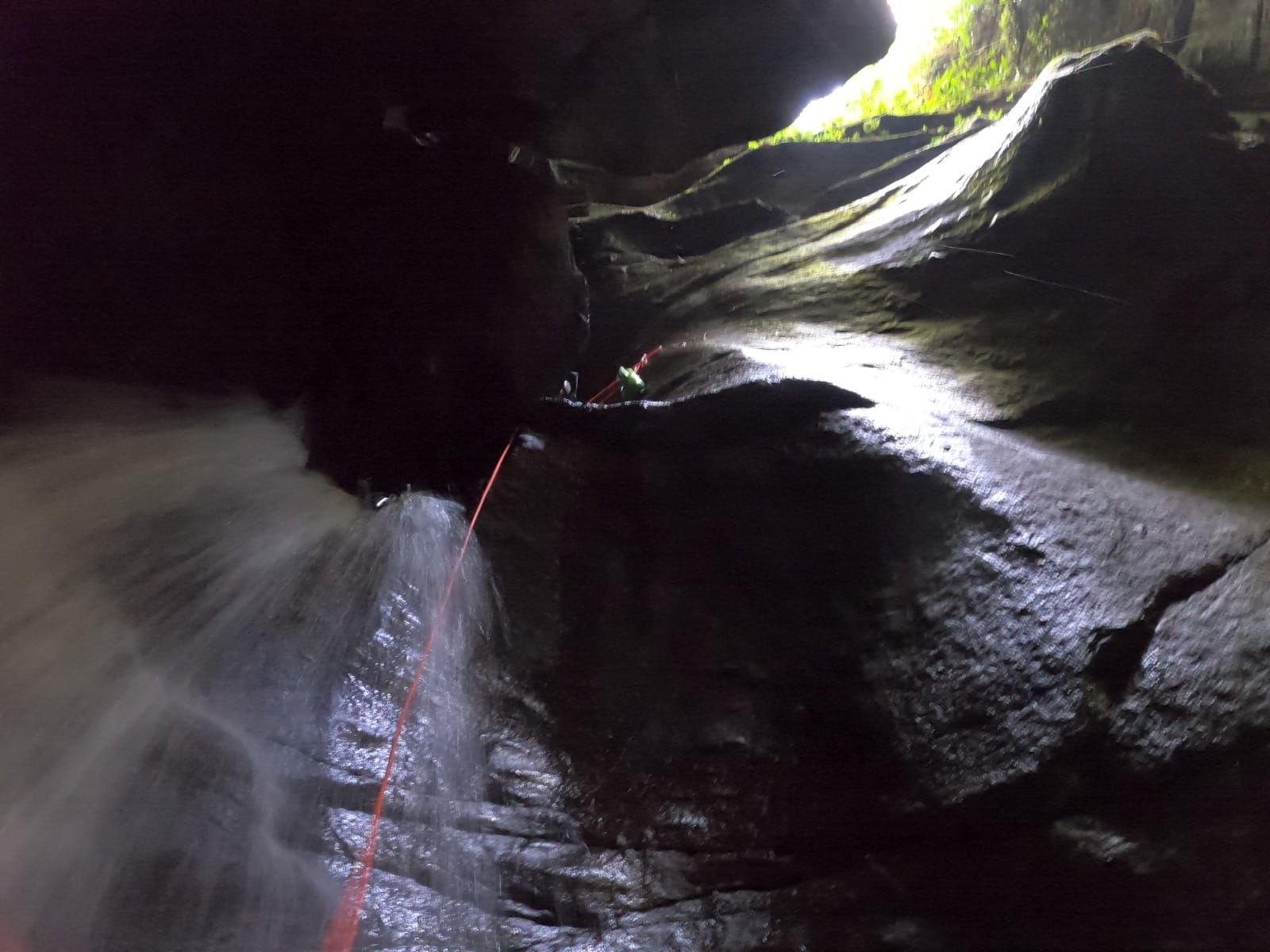
The canyon itself also makes a huge impression on us.
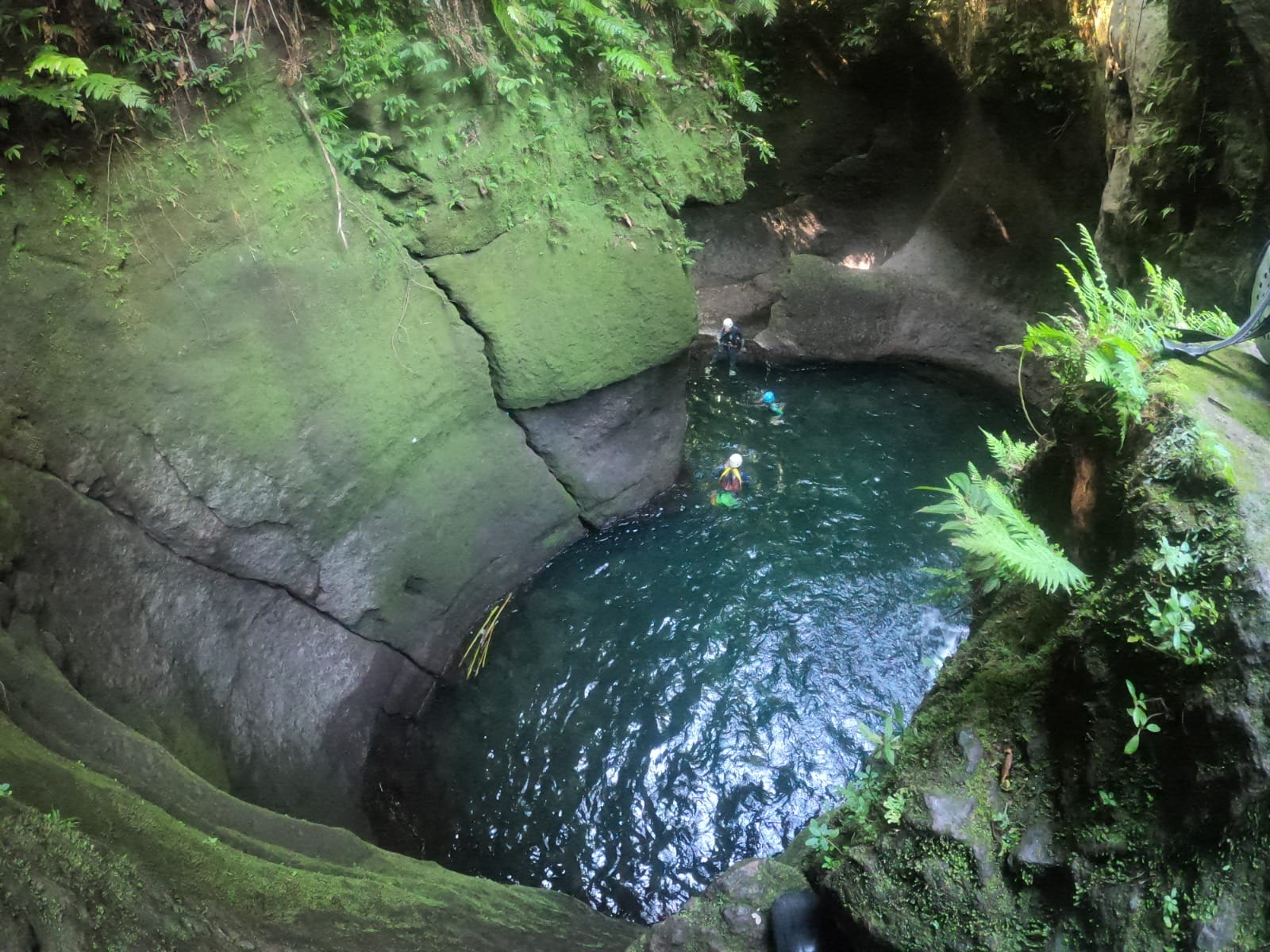
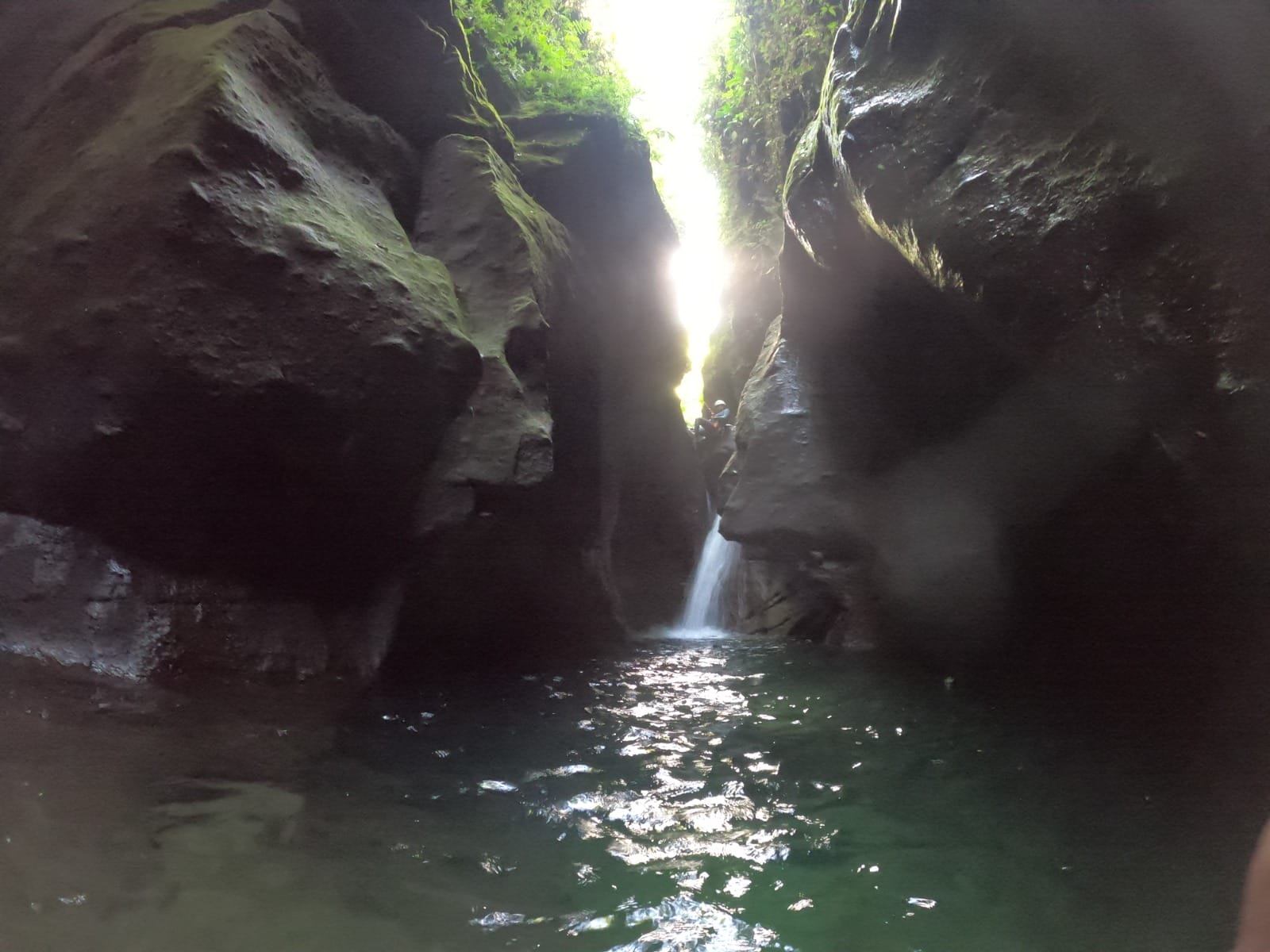
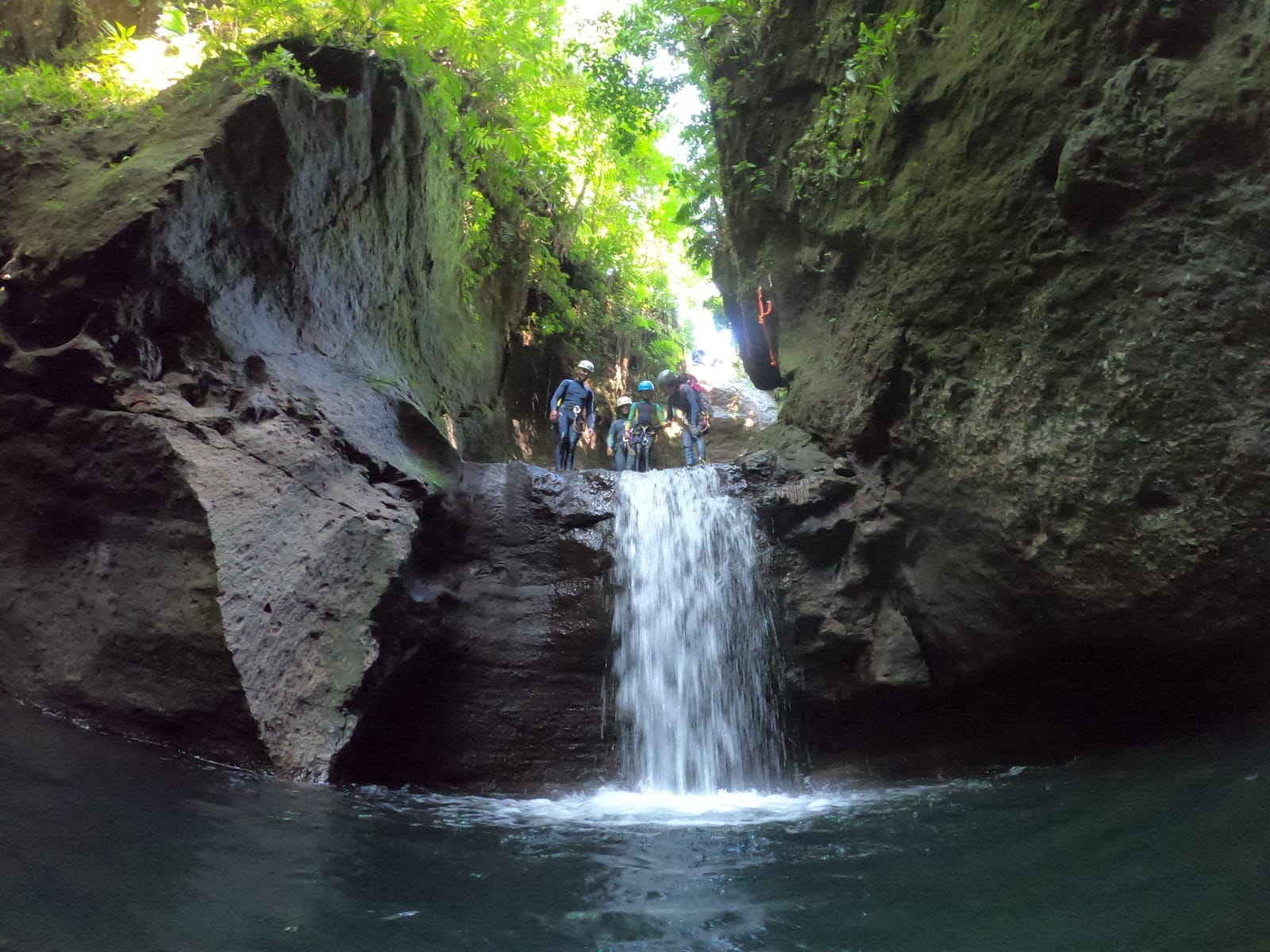
The tour lasts for 3 hours. By the end, both Kamilka and Zuza feel quite confident with the equipment and significantly improve their descent technique. At the last waterfall, we meet another group - they move faster than us, the guides simply lower them down the rope. We are very pleased that the ladies let us descend on our own, allowing us to enjoy it and learn a lot. At the end of the canyon, we are treated to freshly squeezed grapefruit juice and banana bread. A crab, which is fed in this area, boldly approaches us.
During the walk to the parking lot, Nathalie, who has lived here for 20 years, tells us about Dominica. The country has remarkable features - a rainforest, fertile lands, and an abundance of fresh water. Although plantations disappeared, many plants brought here have settled in - citrus, coffee, and mango have become natural elements of the landscape.
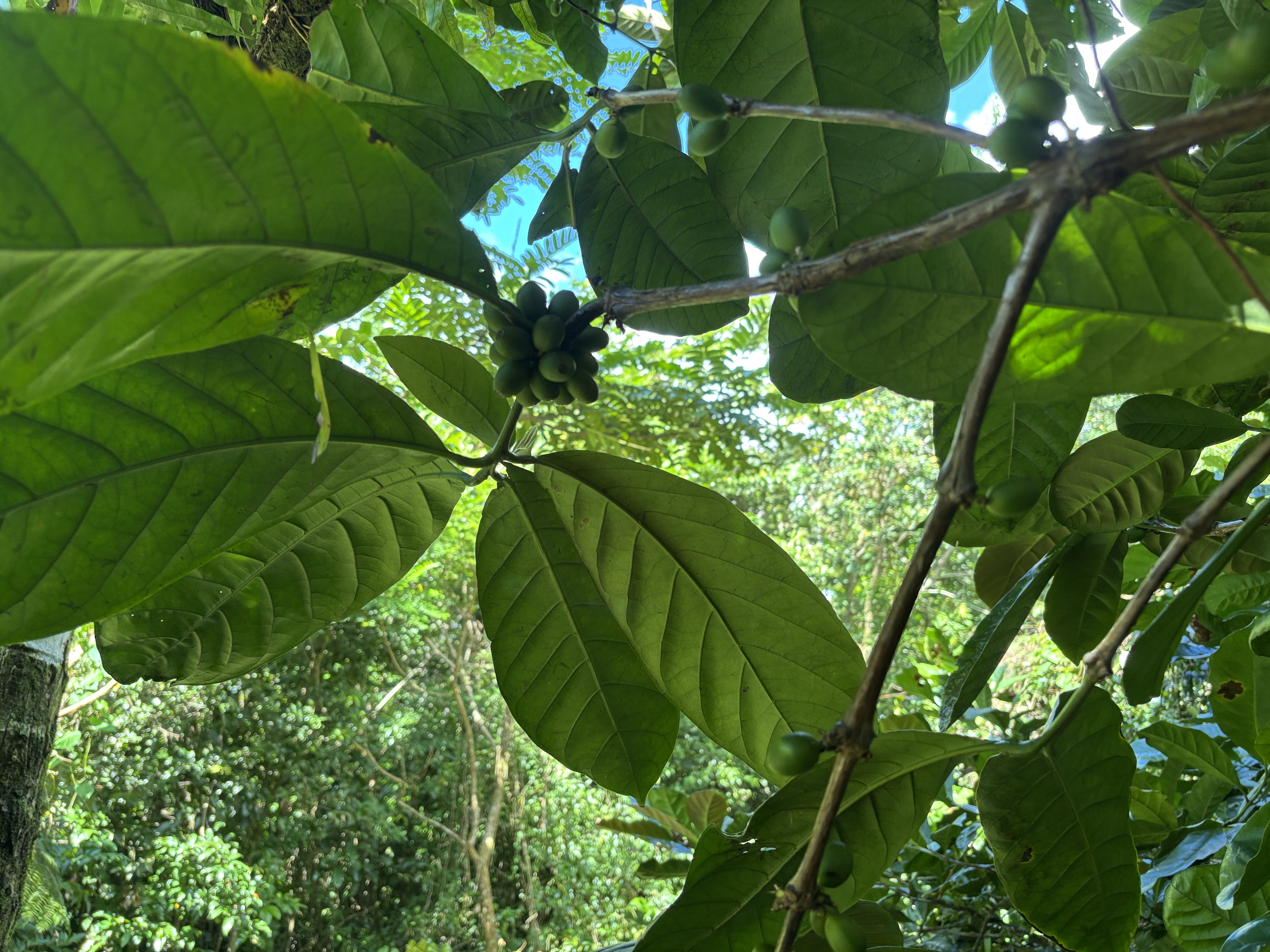
The warm sea is abundant with coral reefs. Climate change has caused that whales, who once only occasionally visited the island, now permanently inhabit the deep waters around it and serve as an attraction for divers (a very expensive one, and yet they are not always spotted). Kama cannot yet obtain her PADI certification, so we skip this attraction.
Dominica, rich in all these natural wonders, is, however, on the hurricane route. For this reason, tourism comes to a halt all summer. Even if a hurricane hits the island once every dozen years, few risk vacationing here. If disaster strikes, neighboring Martinique and Guadeloupe receive help from the European Union, while Dominica must recover on its own. The government is expanding the tourism infrastructure – for example, a hiking trail around the entire island is being created, and an international airport is planned, but this is a huge investment, and the country has many needs. Hearing this, we feel even more admiration for the Dominicans – they do not have an easy life, but still manage to maintain their cheerfulness and kindness to the world. Often, in situations where the locals are poor, and the visitors are wealthy, there is a temptation to extort tourists at every step. Here, we have no sense of being cheated – strictly tourist services are expensive, just like in all of the Caribbean, but the client is honestly informed about the price from the start. We pay for the food for the same the locals, and sometimes we are given product for free to try them.
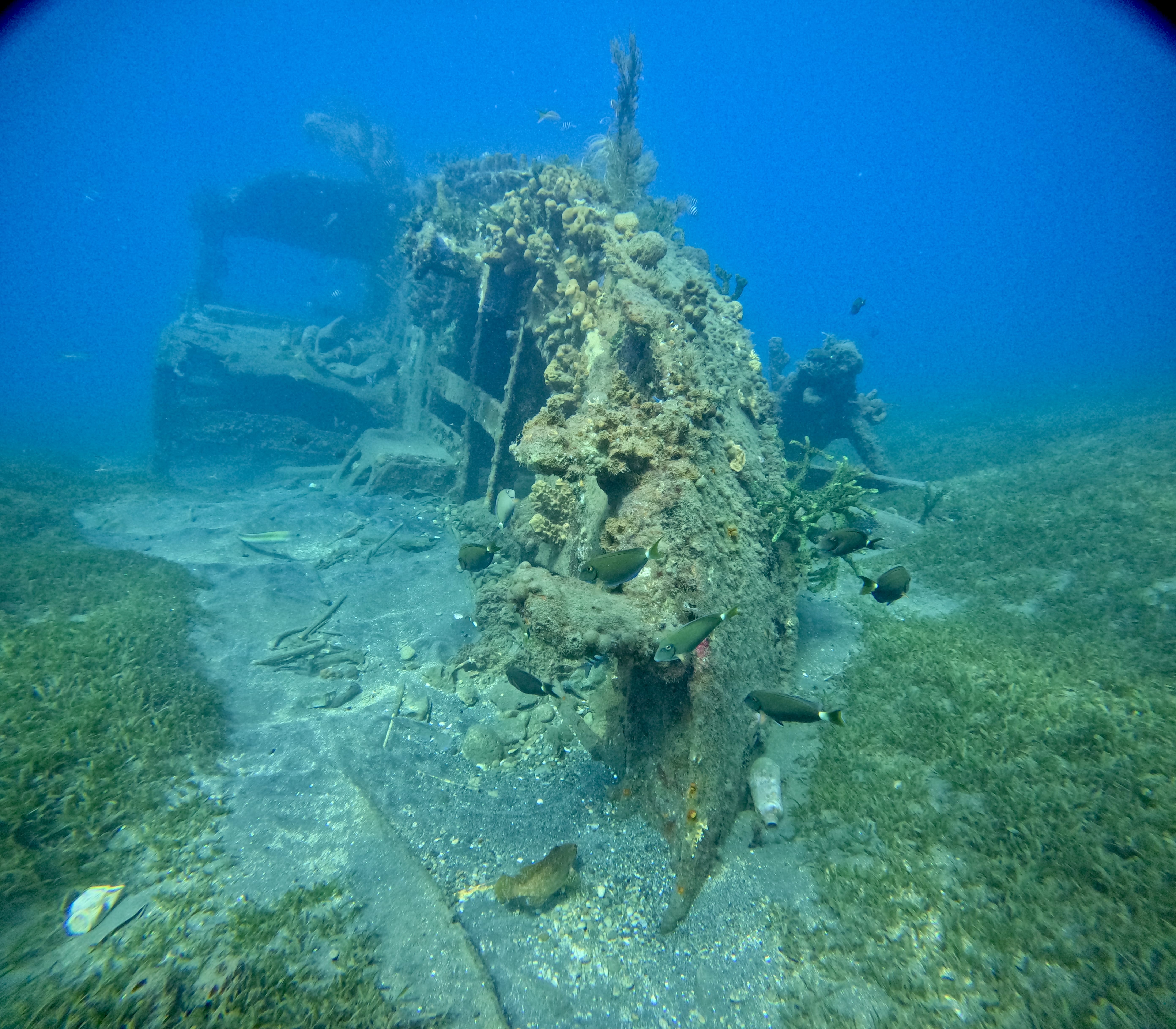
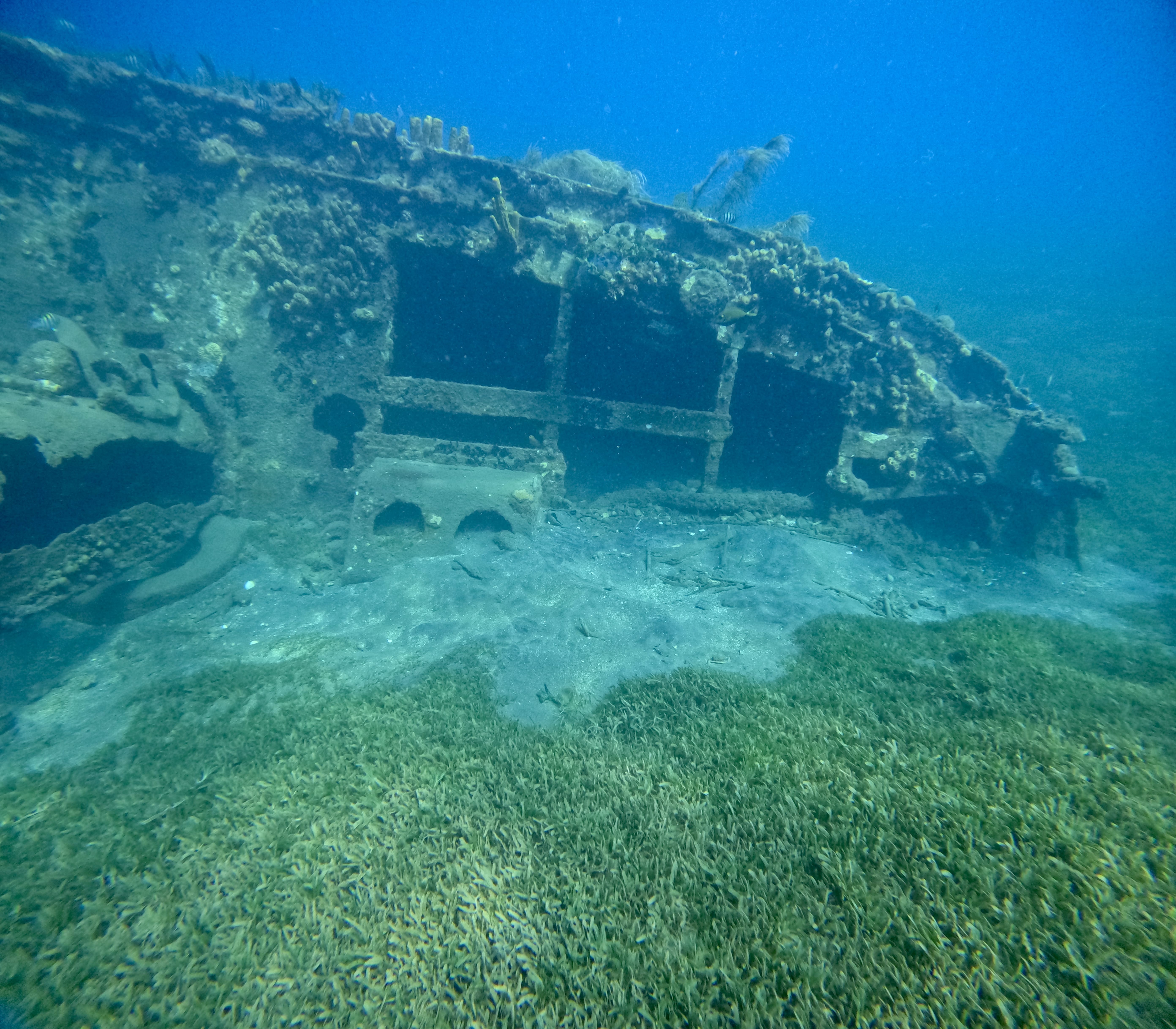
Full of impressions, the return to the boat. It is still quite early, so we decide to move to a nearby anchorage and continue the journey tomorrow. We make two calm, daytime "hops" to the northern end of the island – towards Prince Rupert Bay. We choose anchoring locations mainly for interesting diving spots. This way, we discover a wreck, and in another place we find surprisingly rich in fish artificial reef.
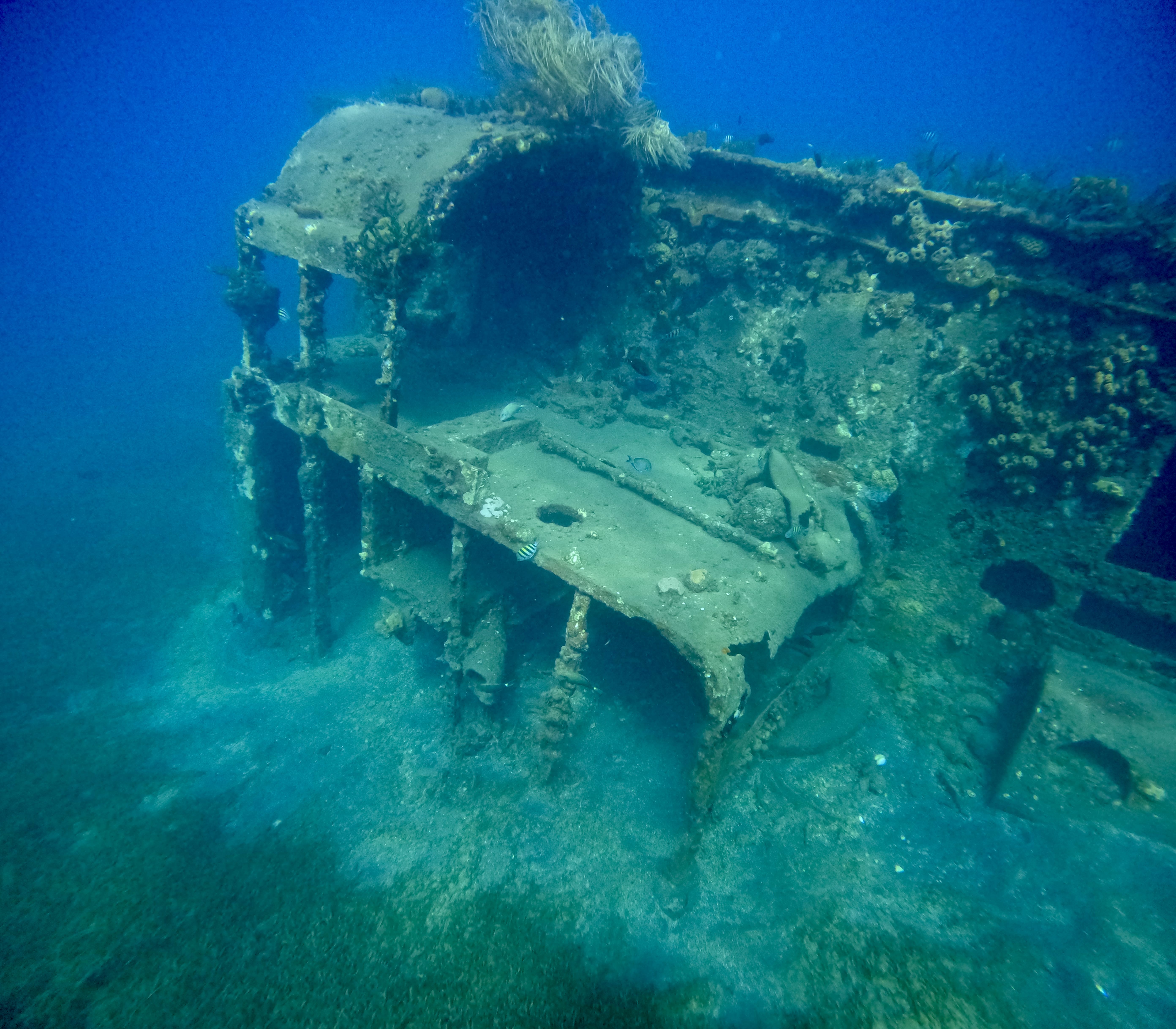
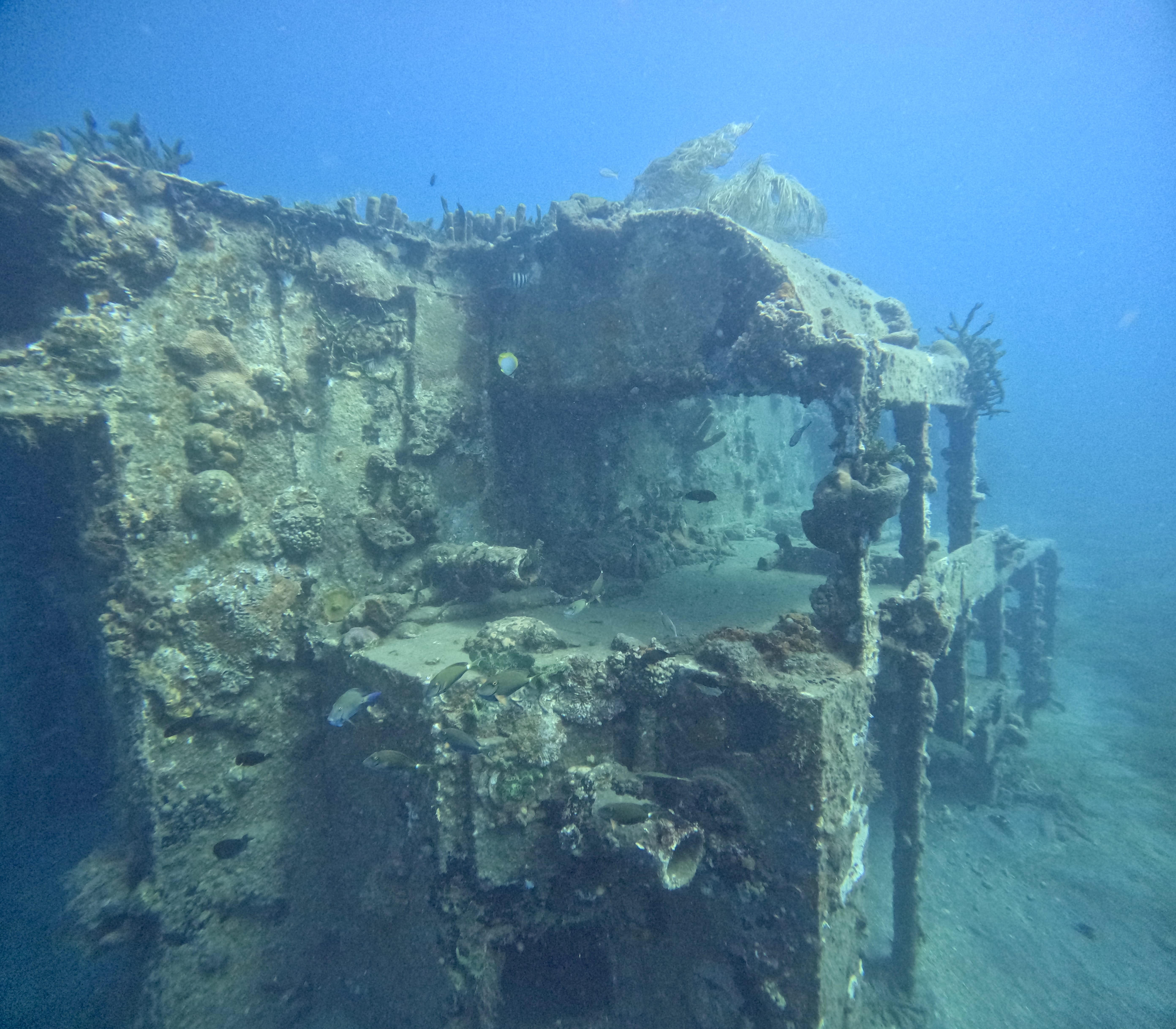
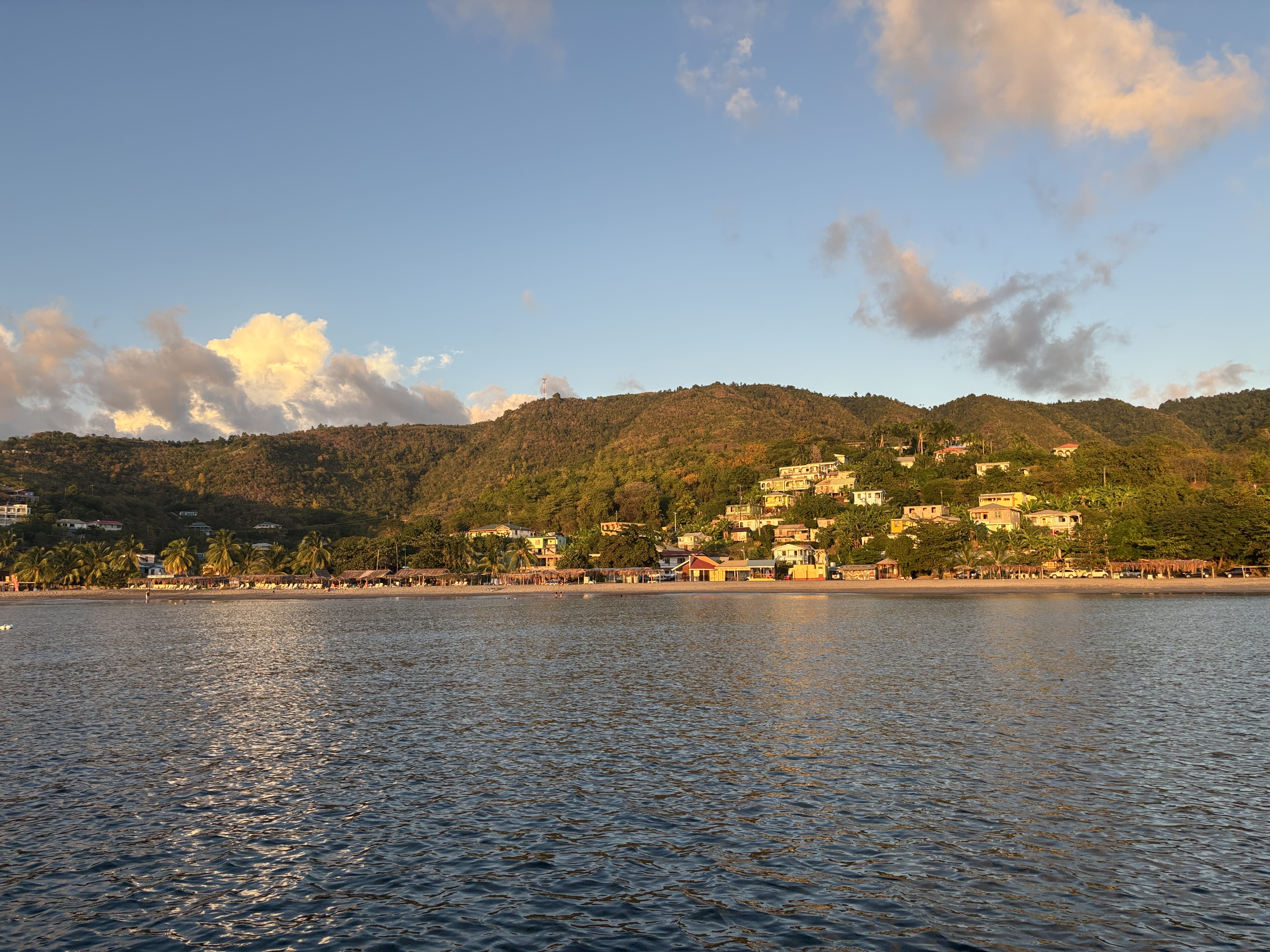
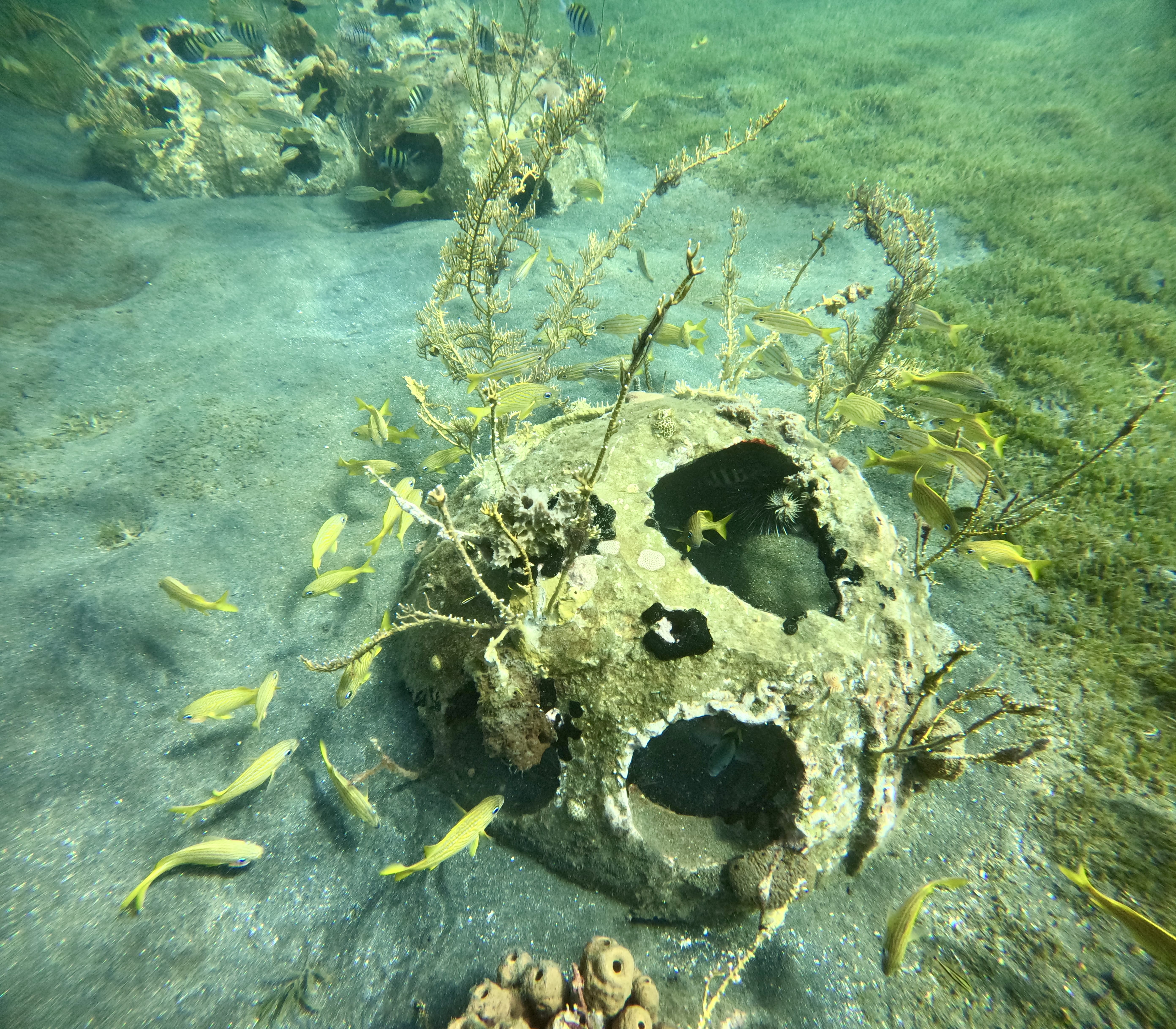
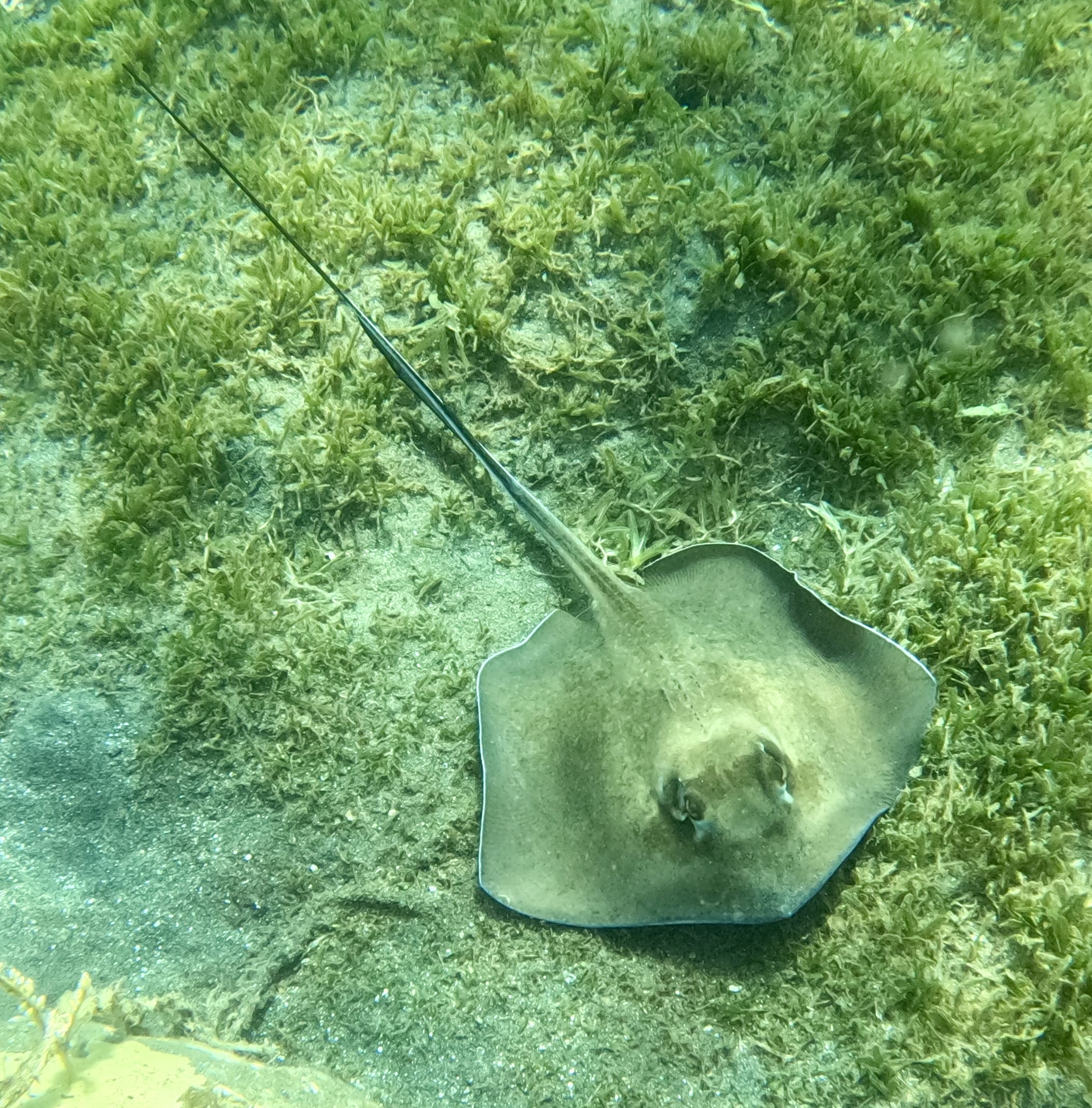
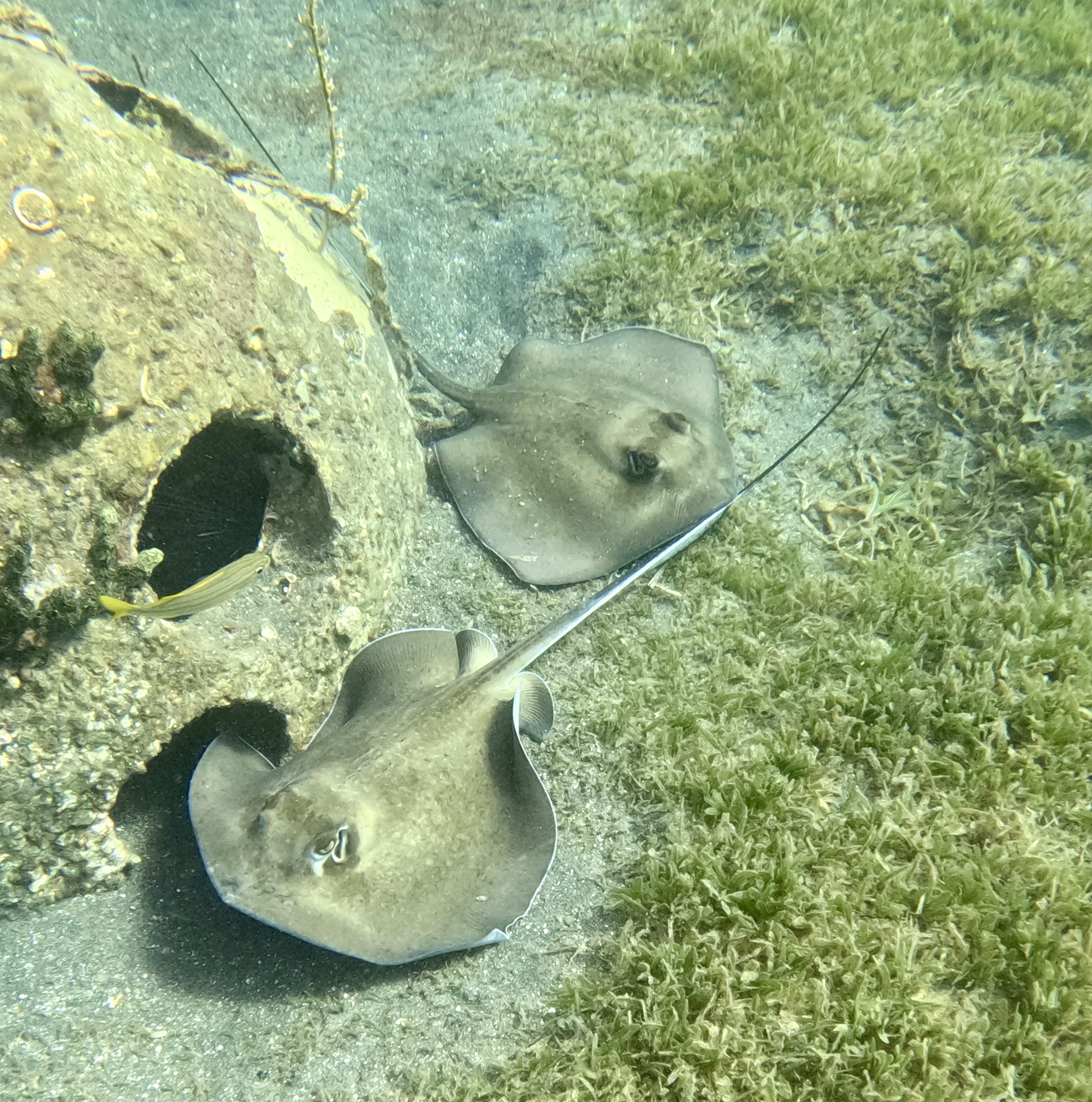
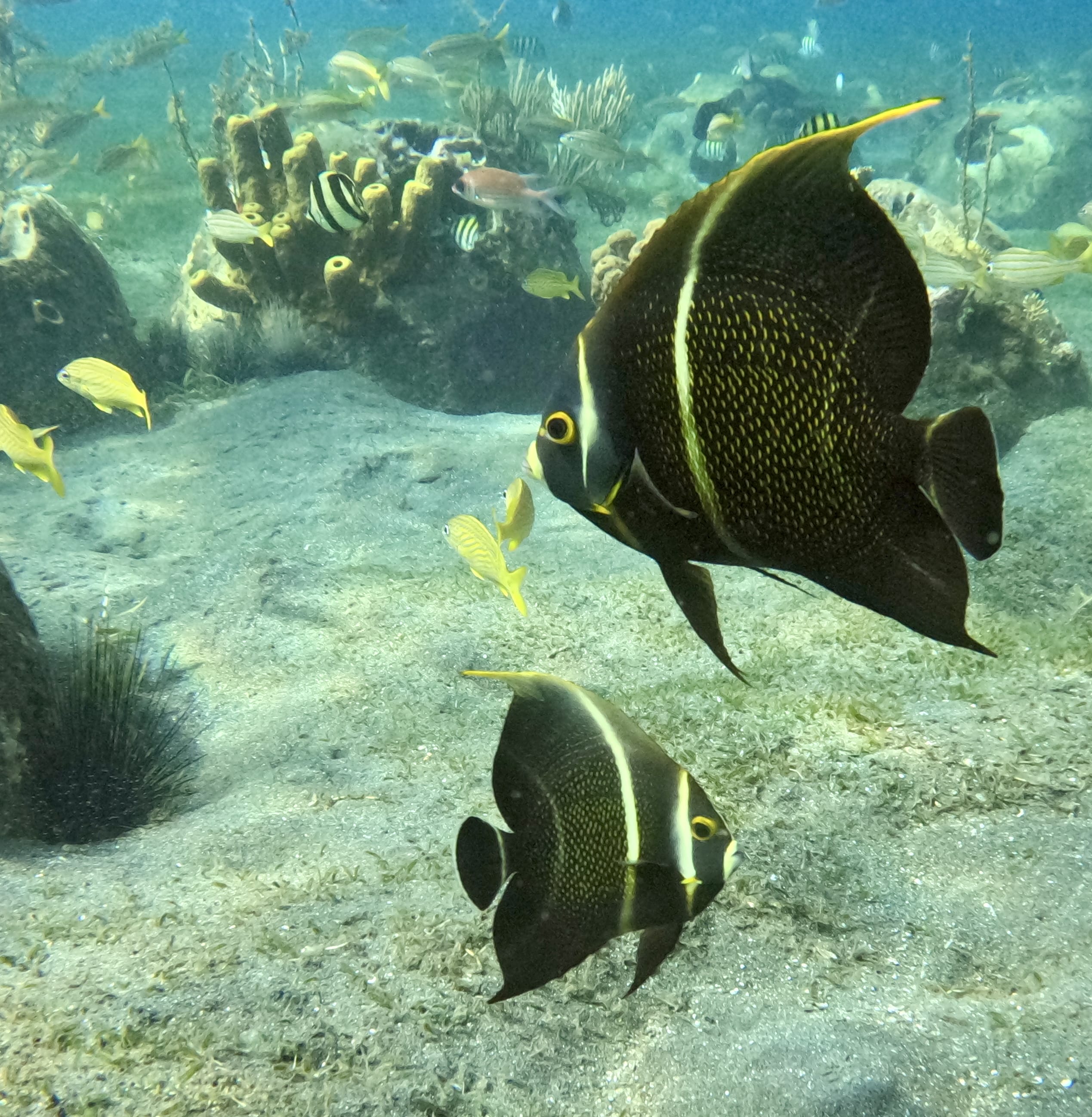
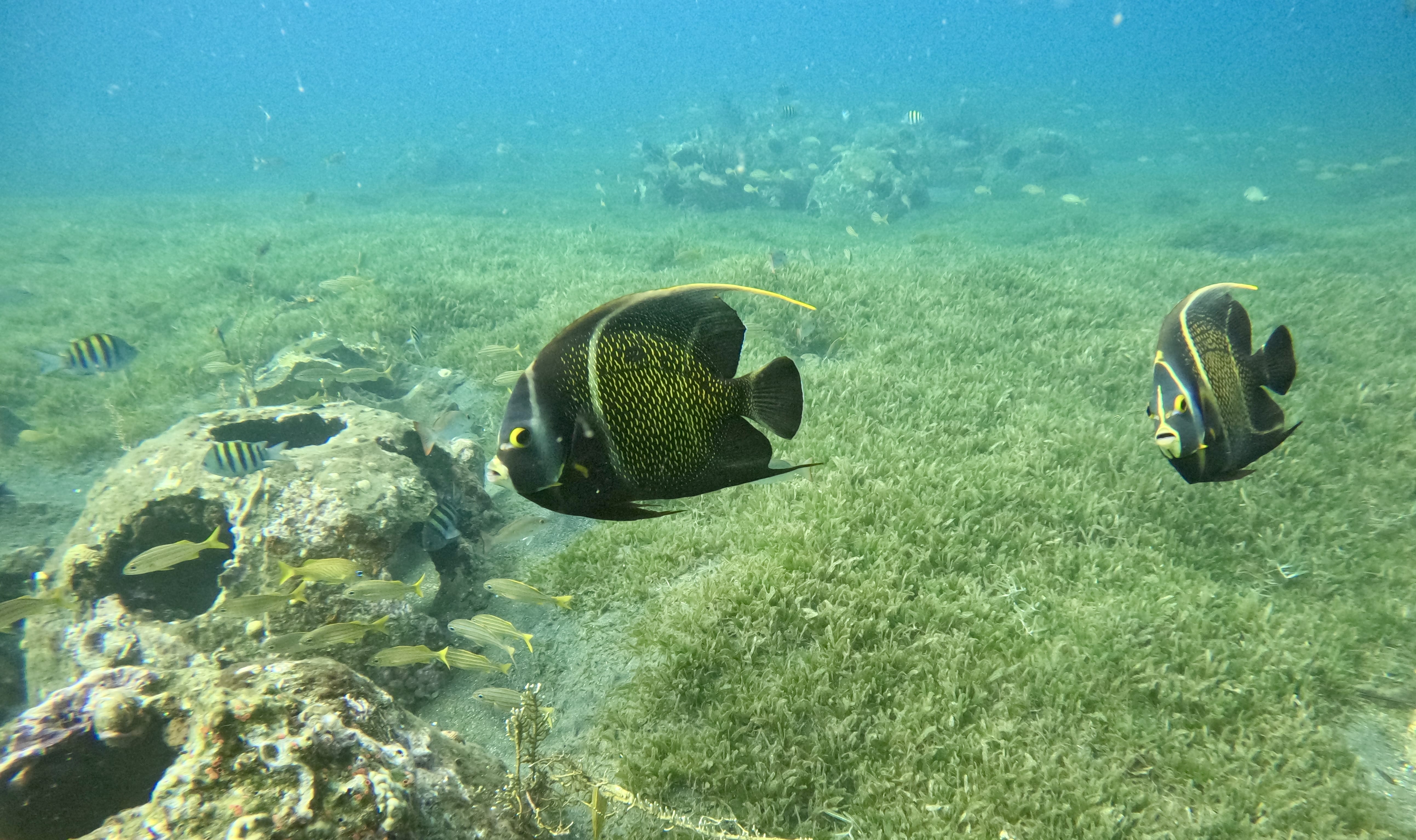
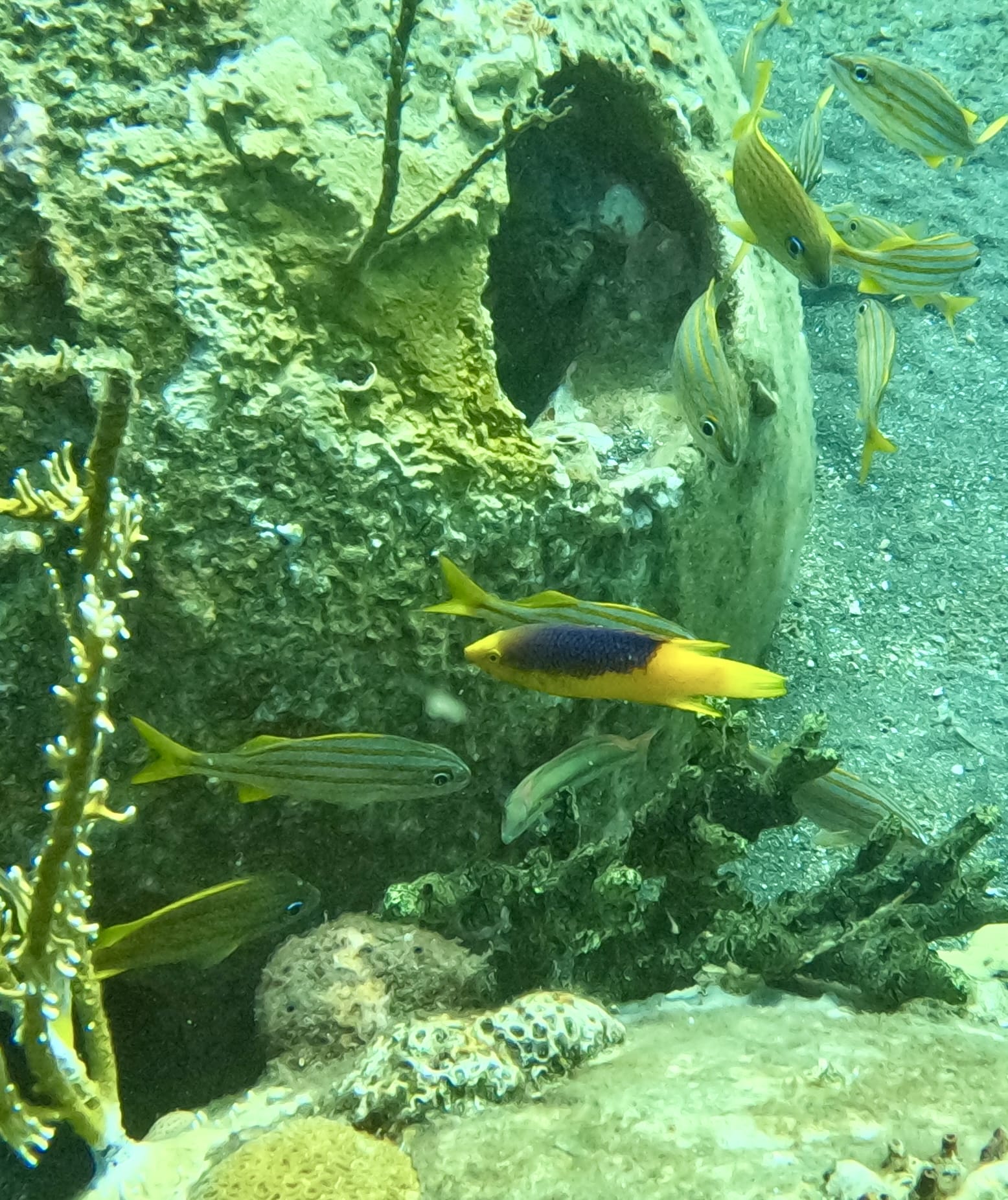
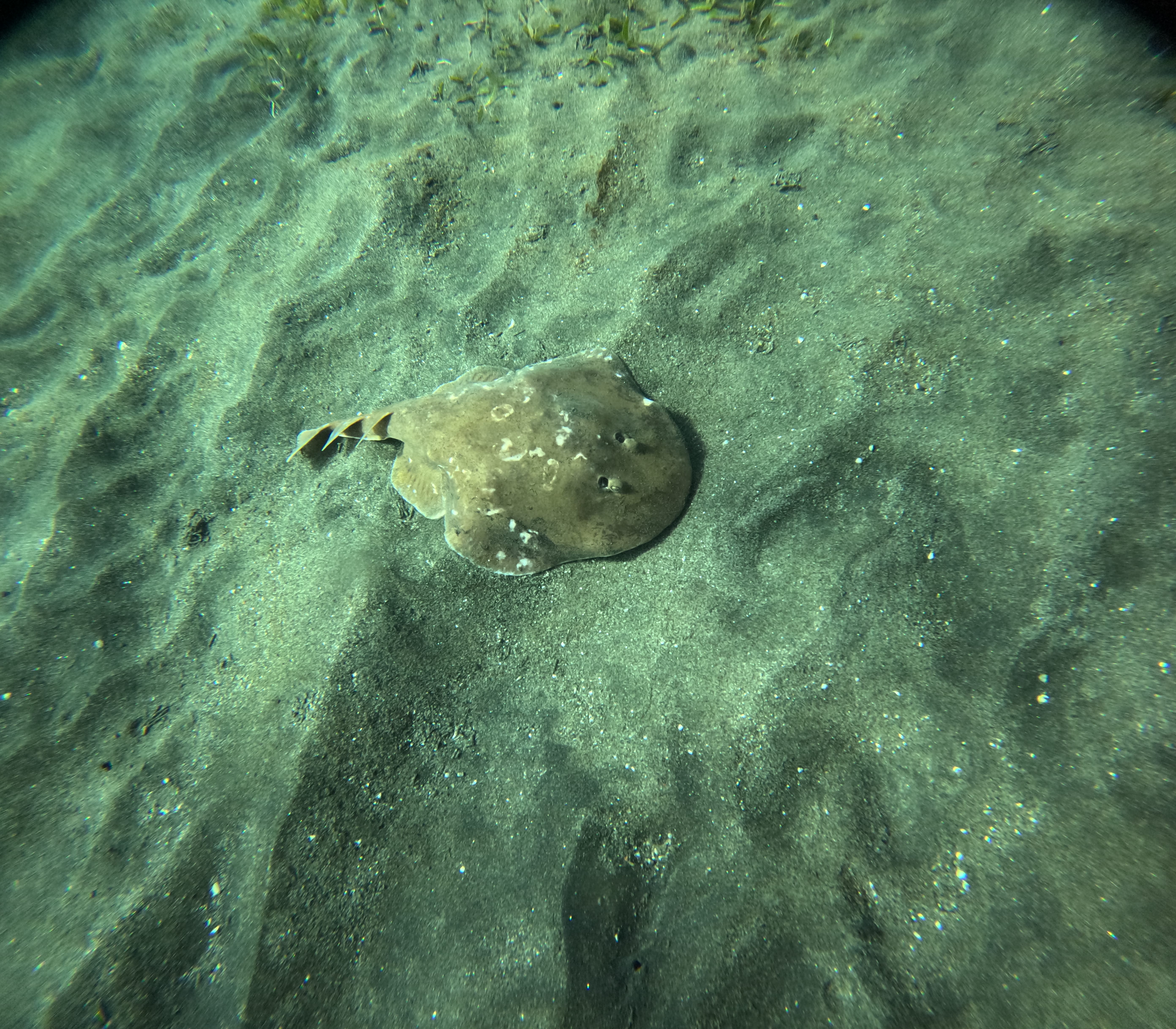
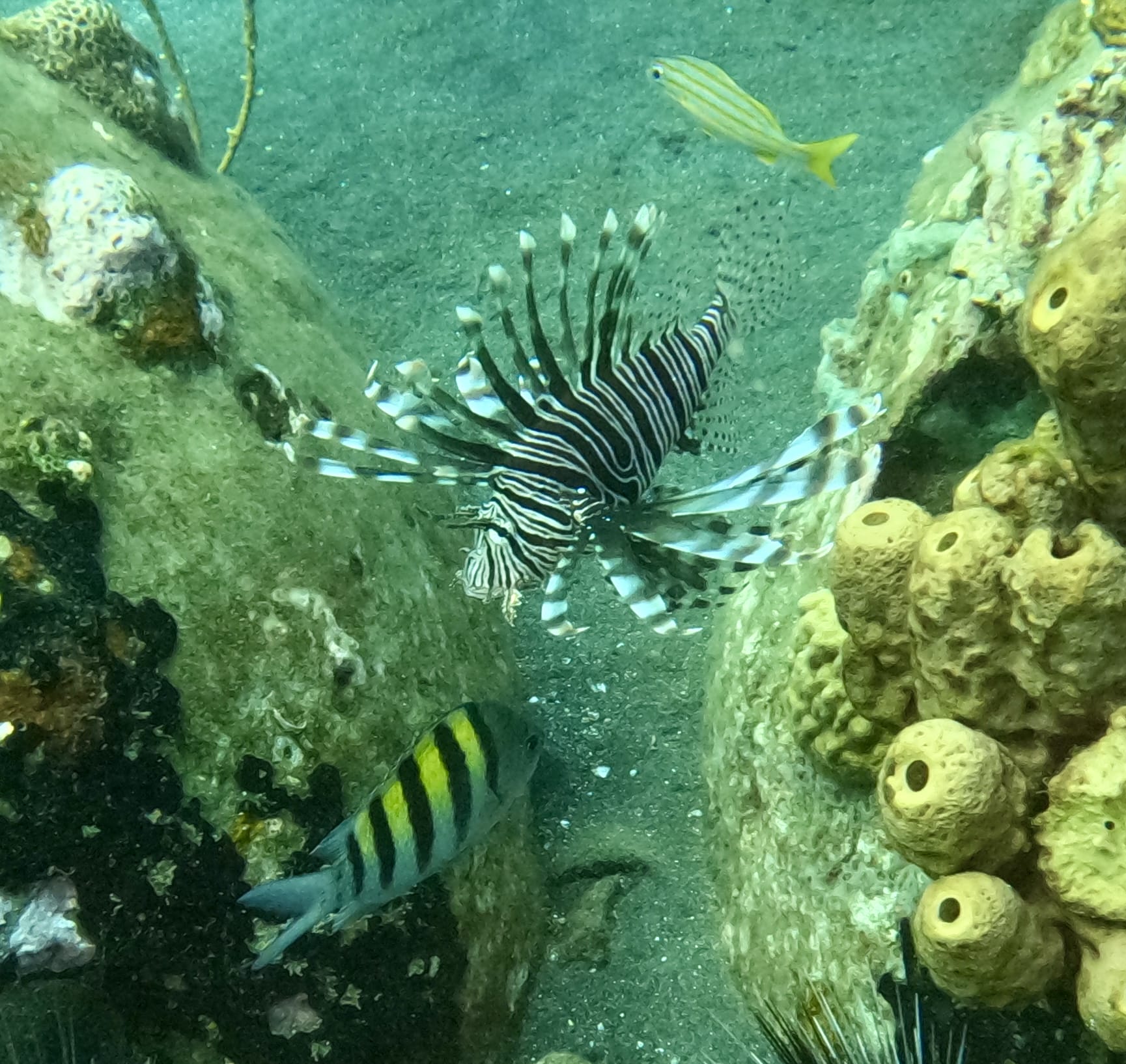
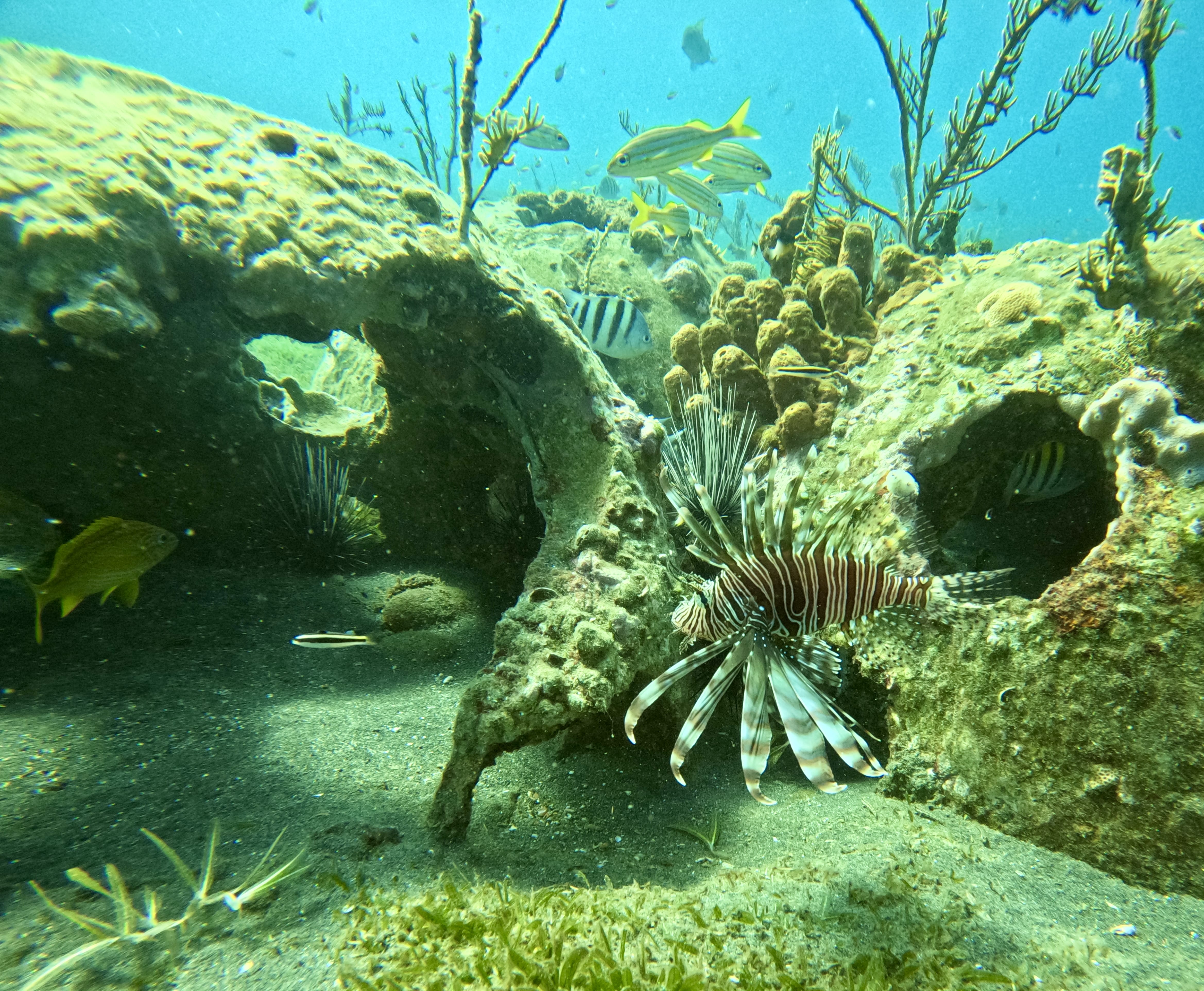
The lionfish is an invasive species in Dominica. On neighboring islands, which have a similar problem, everyone, including tourists, is invited to hunt them (that's why we swim with a spear), they are tasty, but you have to be careful of the venomous spines when gutting them. Unfortunately here hunting without permission is not allowed.
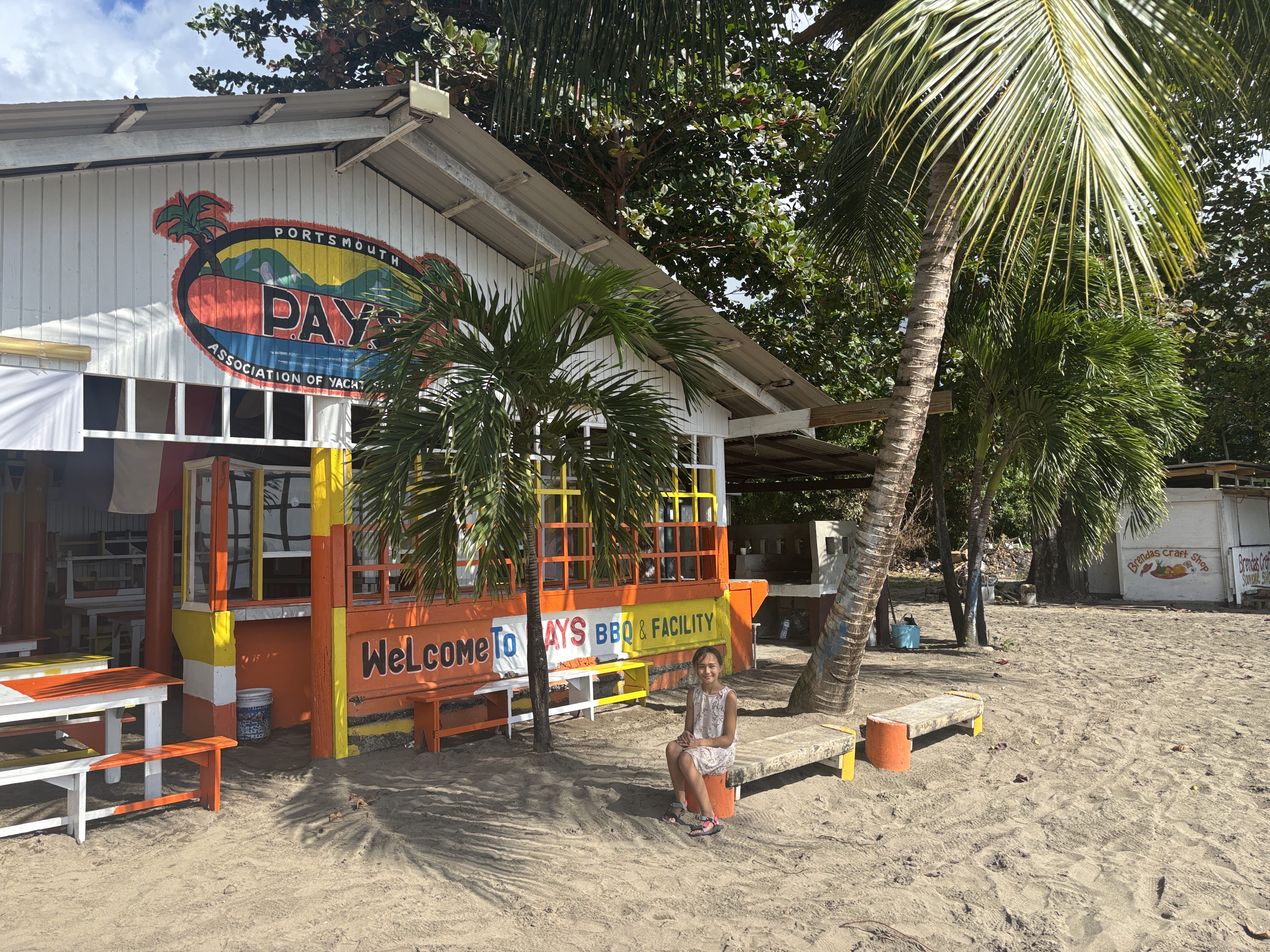
In Prince Rupert Bay, the PAYS (Portsmouth Association of Yacht Services) has been operating for twenty years. A group of local entrepreneurs organized, set up buoys, watch over boats, and twice a week they organize a beach barbecue. Guests pay about 20 USD per person (half for children) and can eat as much as they want. Those interested can take a trip on the Indian River or go bird watching.
We anchor on a buoy, walk around the area, and spend some time on the beach.
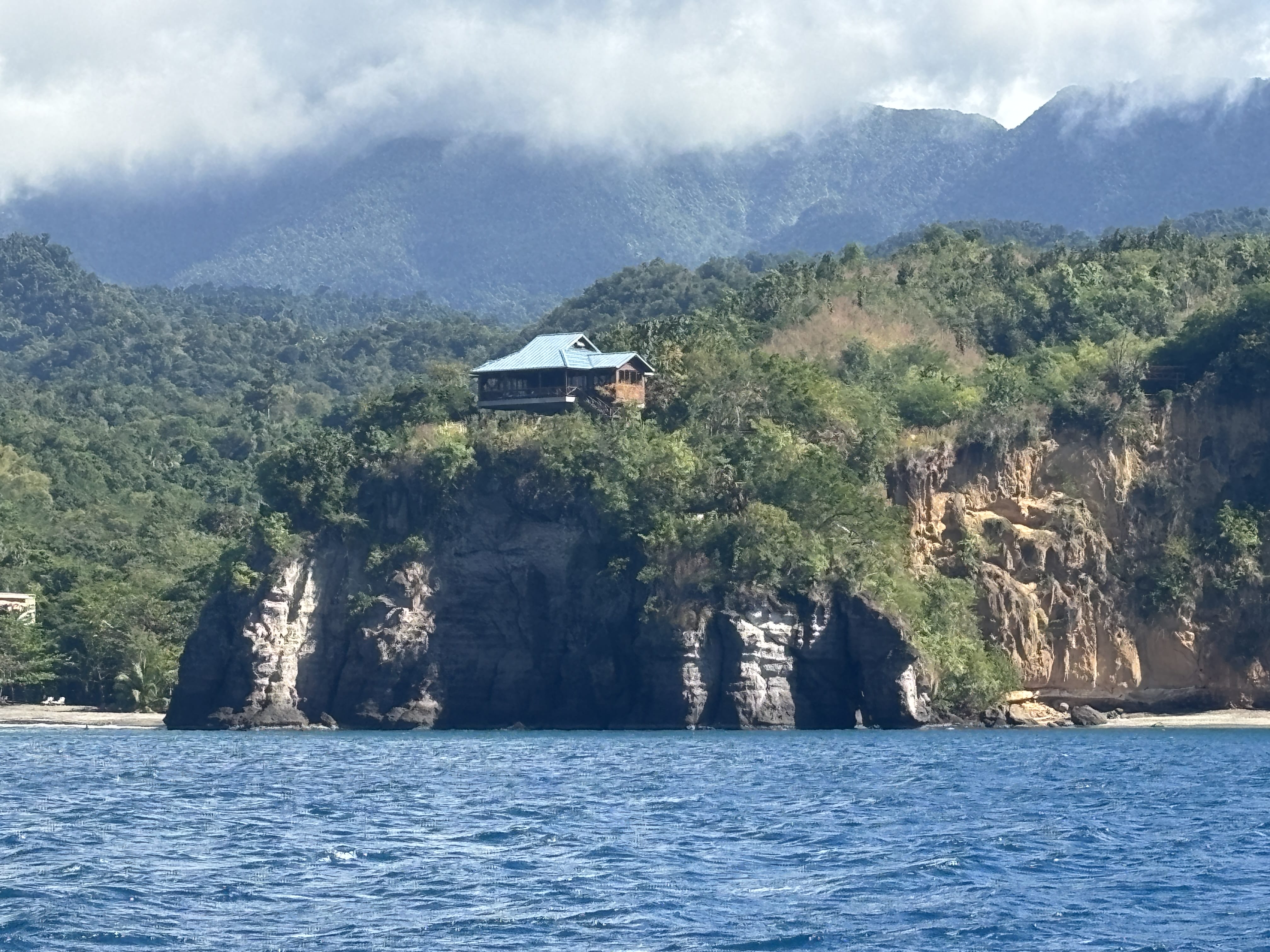
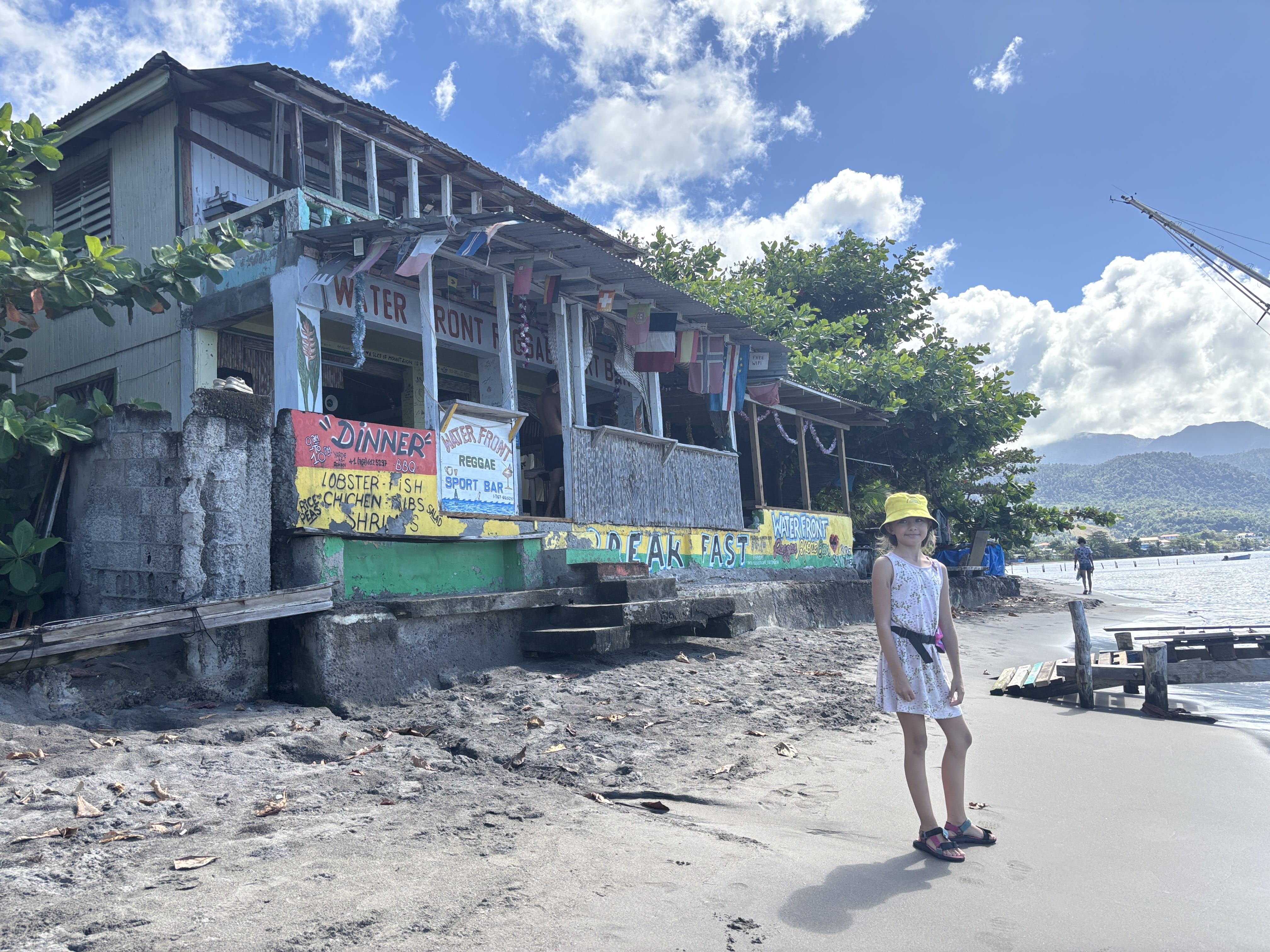
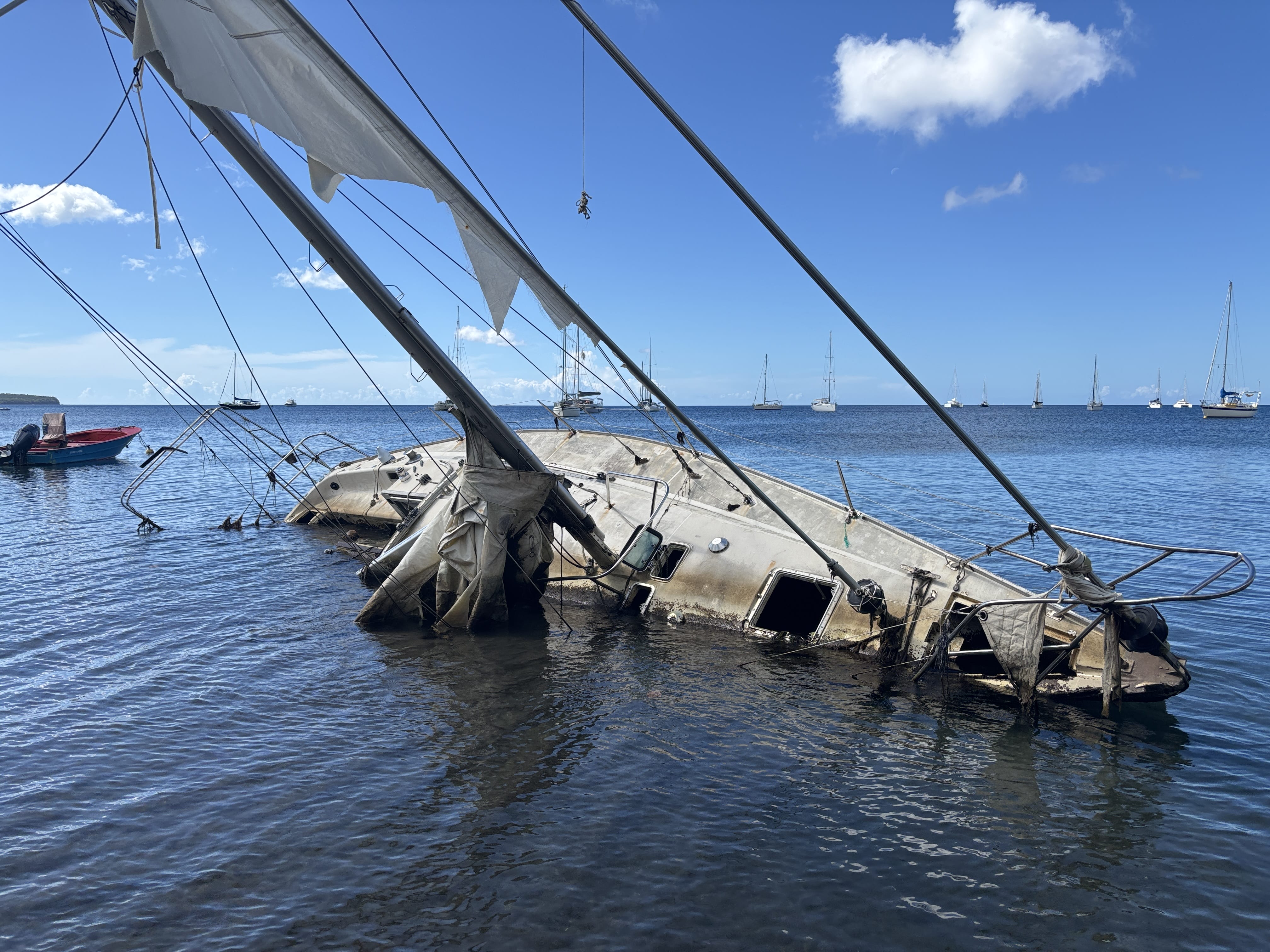
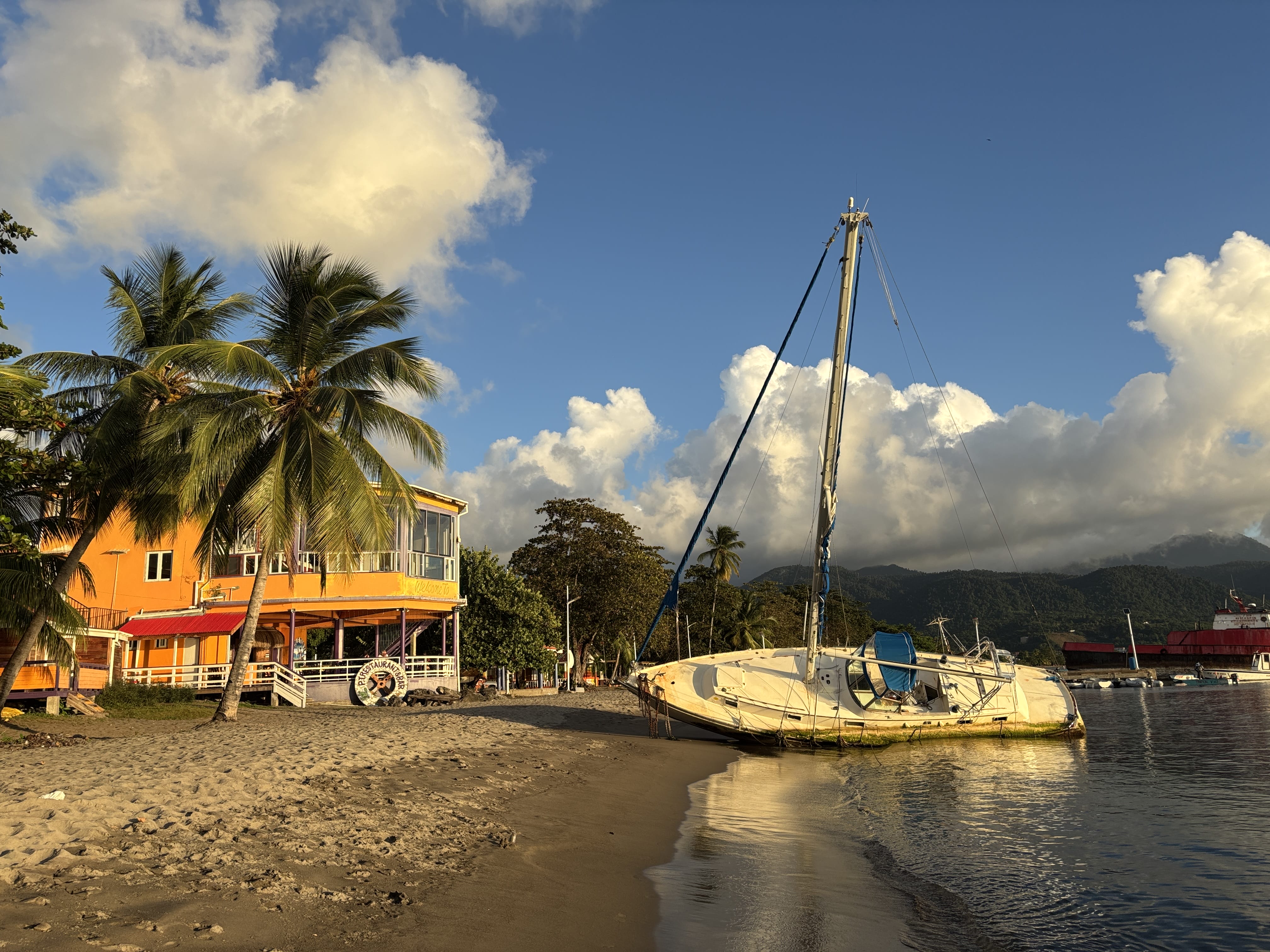
As usual in Dominica, there's a feeling that Bob Marley's spirit hovers above us. Reggae plays, and men with dreadlocks smile kindly at us. Marijuana is decriminalized in Dominica - trading it is punishable, but everyone can grow about five plants for personal use. It seems that many people take advantage of this opportunity. It seems almost everyone here engages in a bit of farming - most of the production is consumed, and owners try to sell the surplus. Probably that's why onions and potatoes can also be bought at the garden tool store.
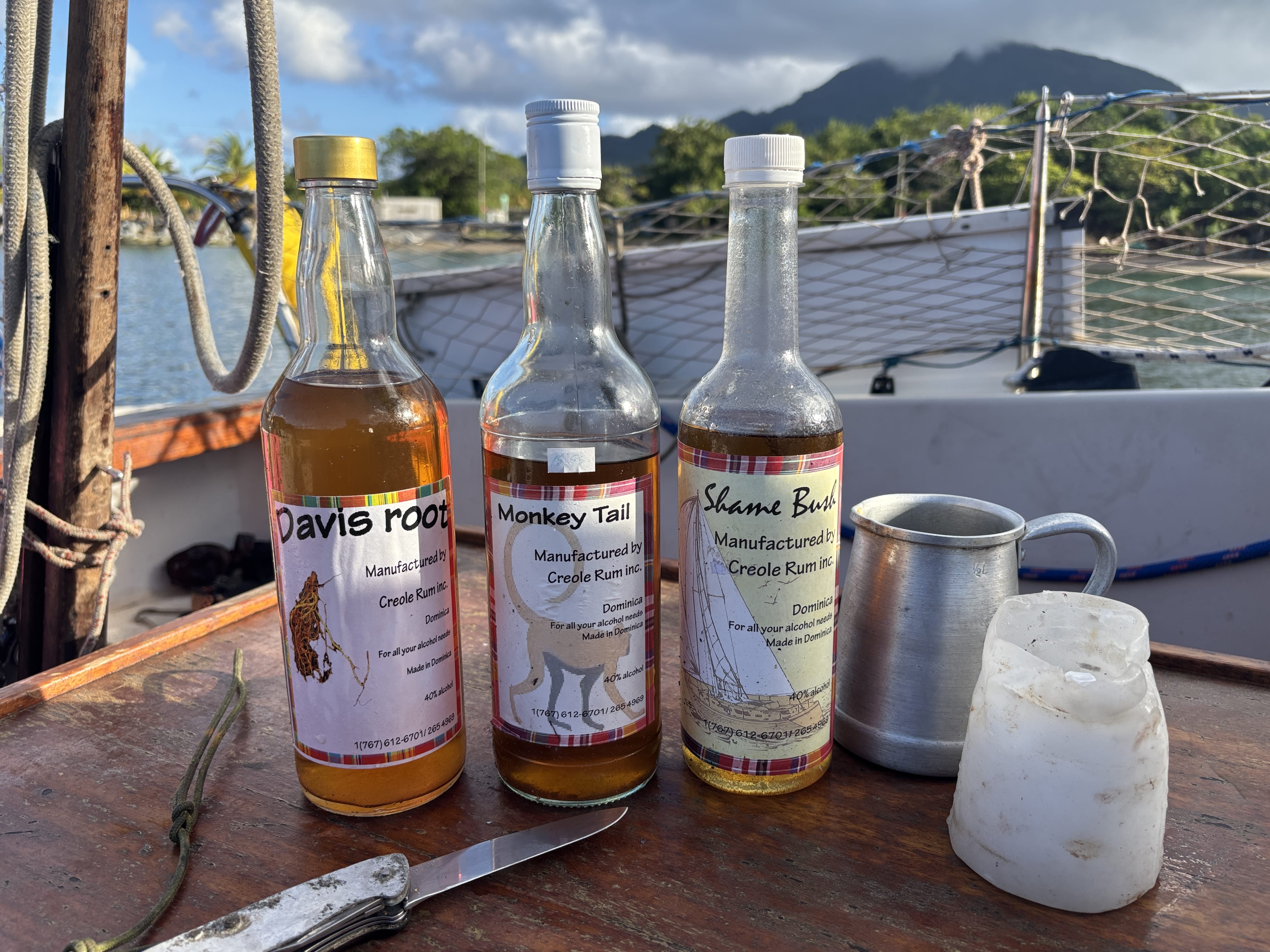
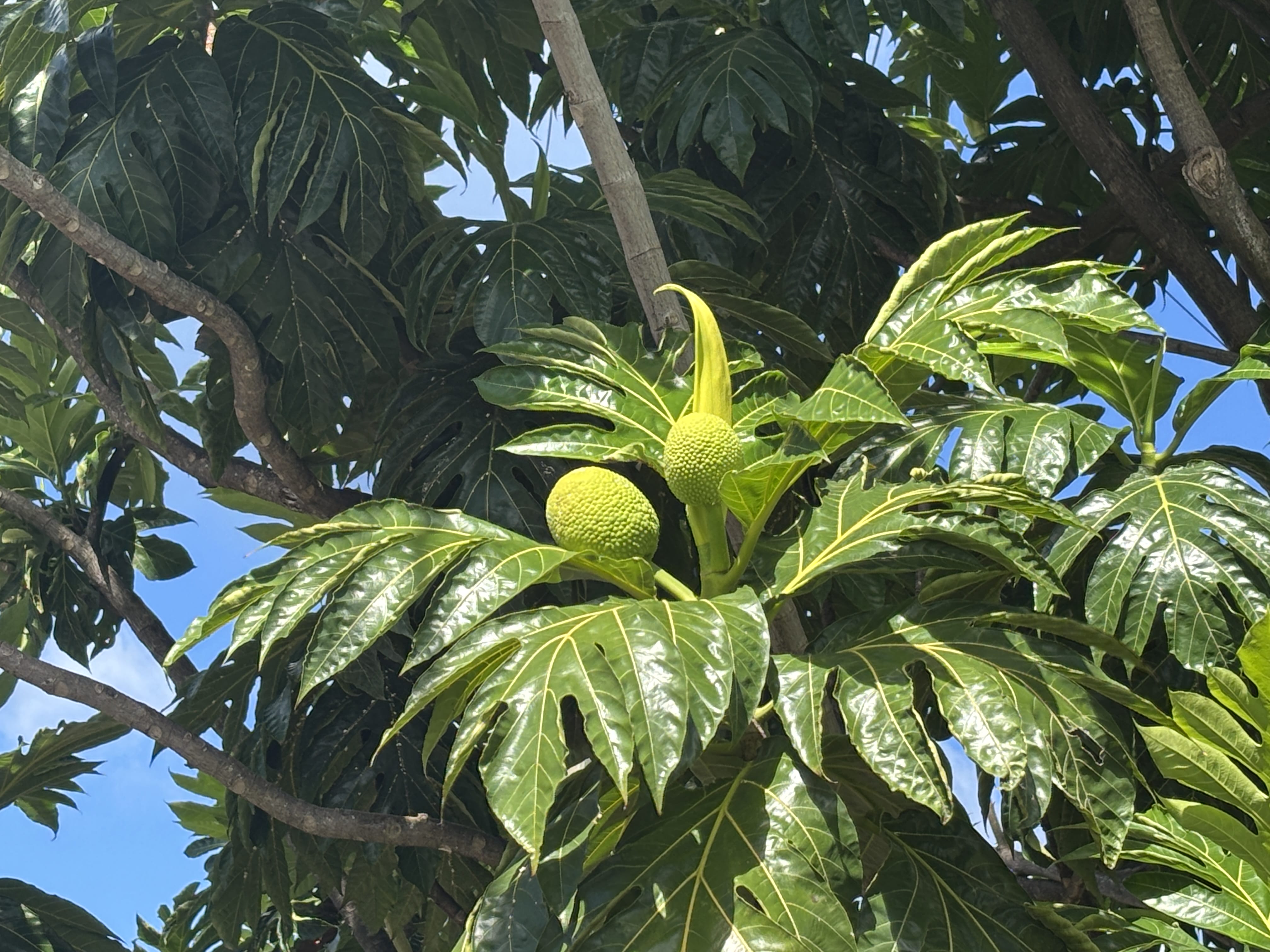
We buy a breadfruit from one of the street vendors. In French Guiana, we fried it into delicious fries and would like to repeat this dish. This time, we have a surprise. We allowed the breadfruit to sit for two days, and during this time, the fruit ripened properly (it was bought almost ripe, in Guiana we were advised to buy a firmer one for fries, and now we know why). It softened and changed its taste to a sweet, slightly banana-like flavor. The internet claims that fully ripe breadfruits can be eaten raw, but just in case, we decide to fry it. It turns out tasting like Polish fruit fritters (yummy). There are so many that we eat them for 2 days.
Sunday evening is barbecue time. The party starts at 7:00 PM, but by 6:00 PM, sailors begin to gather on the shore. There are relatively few children here, and in addition, they are at an age where boys and girls don't necessarily like each other. Kama tries to strike up a conversation with a youngster, but he runs away. Fortunately, soon after, seven-year-old Luna, half British and half French, arrives. The girls quickly find common ground, allowing the adults to chat as well. Most are seasoned sailors, and some live on boats permanently. The party, enhanced with rum punch, picks up momentum. At 8:00 PM, chefs serve fish or grilled chicken with rice and salad. Despite her best intentions, Zuza cannot manage a second helping. Kamil eats because he really wants to try both the chicken and the fish. Both are delicious. After eating, it's time for dancing. Young and old hit the dance floor, or rather the dirt. We give in before 10:00 PM, but the fun continues.
As we leave, we congratulate the hosts on a superb evening. We are truly impressed. Thanks to collaboration, the local guys managed to create a place that has been highly regarded among sailors for years. Many even consider it the best anchorage in the entire Caribbean. The hosts share responsibilities - some welcome boats and direct them to moorings, others take care of the office and shelter, and still others keep watch day and night to ensure that no dinghy thieves appear in the area. They charge for their services, but they are not greedy - they do not prohibit anchoring near their mooring field, even though they don't receive a dime from such parked yachts. "Anchored" guests can also participate in the barbecue. Thanks to the work of PAYS, local shops and laundries earn money because sailors hang around the area. While a few yachts are anchored in other bays, dozens park here.
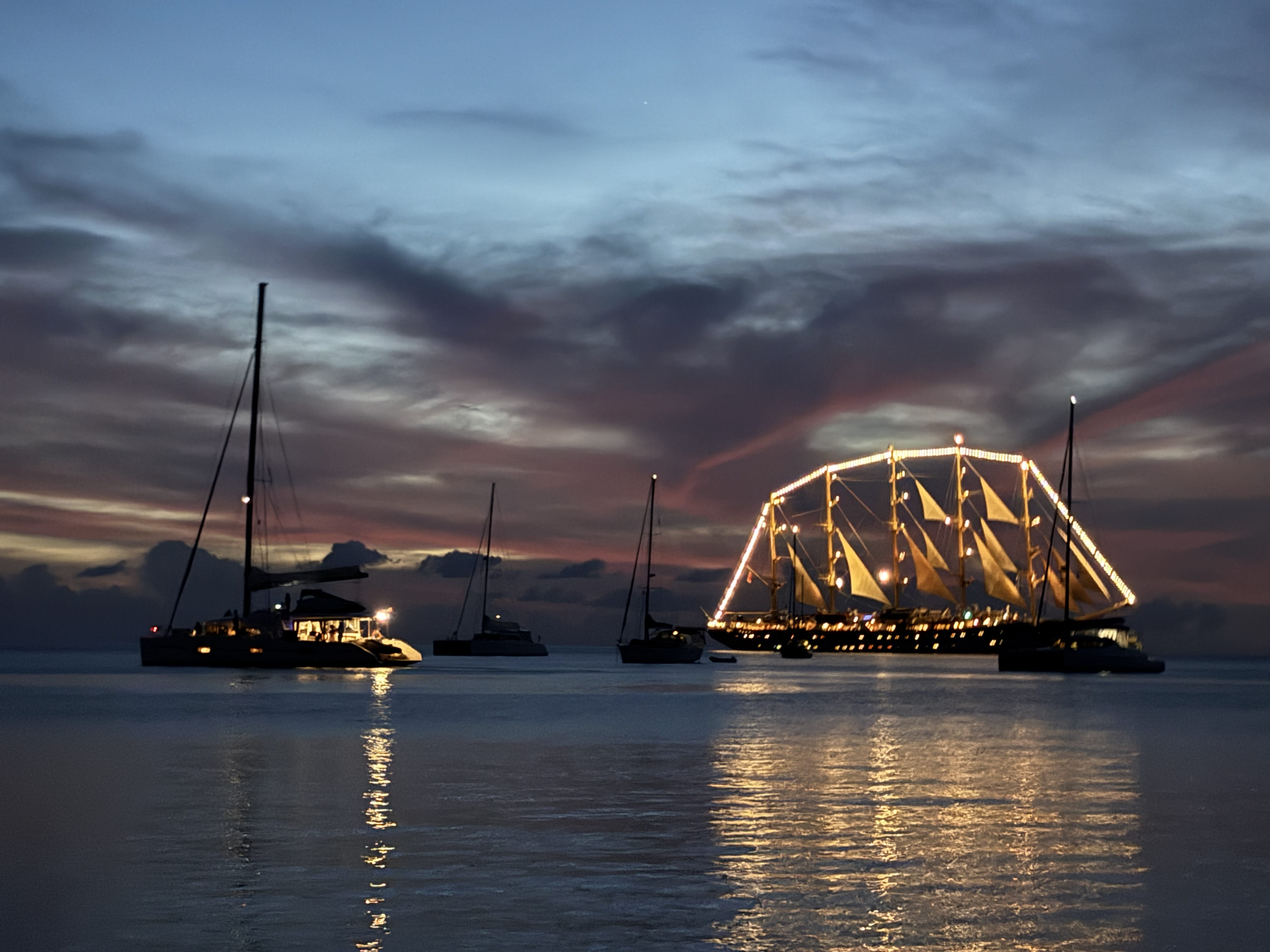
The range of boats in Prince Rupert's Bay is very wide - from small and old ones, through large ocean yachts and luxurious catamarans to cruise ships. As for flags, there are many European ones - probably the most French, and there are also Americans, Canadians, and even Australians.
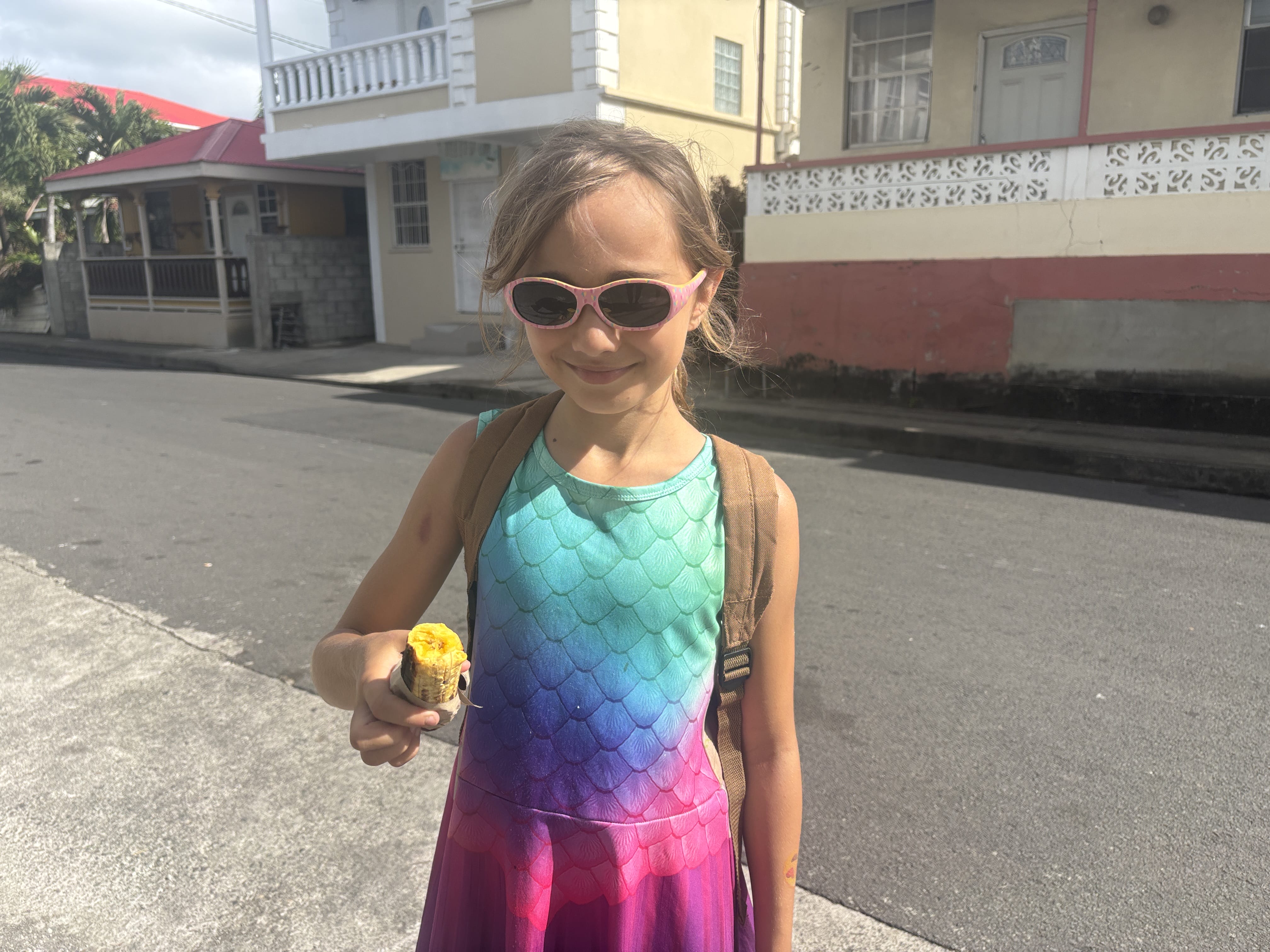
We are staying in Portsmouth until Tuesday morning specifically to visit the local market on Monday. It turns out there are about a dozen vendors offering items that are currently in season—tomatoes, bananas, taro, yam, potatoes, onions, carrots, sweet potatoes, and eggs. We decide to try grilled plantains as well. The vendor is surprised when we take one for the three of us—when we explain that we want to see if we like it, he looks on with slight disbelief and then offers Kama a whole one to savor. He refuses to accept money when we try to pay for both.
Guadeloupe
On Tuesday morning, we set off towards Guadeloupe. Before heading to the main island, we want to stop at Îles des Saintes - one of the groups of small surrounding islets. The route is not long, a little over 20 miles, so we arrive early in the afternoon. Around the better diving spots, buoys have been set up, but anchoring is prohibited. In our opinion, this decision is justified due to the fact that sometimes sailors incorrectly dropped anchors, and sometimes someone drifted, damaging the already ailing coral. The buoys cost 12 EUR per day. It turns out the diving spot is nice but not breathtaking (at least considering how much we’ve already seen before). An exciting thing is the octopus - Kama spots it and sees how it changes color to camouflage itself. Unfortunately, when our daughter tries to tell Kamil about it and lifts her head, the creature moves and camouflages so effectively that they are unable to find it again (Kamil saw the same thing in the Canaries). Unfortunately, the film crew still remains without footage of the octopus.
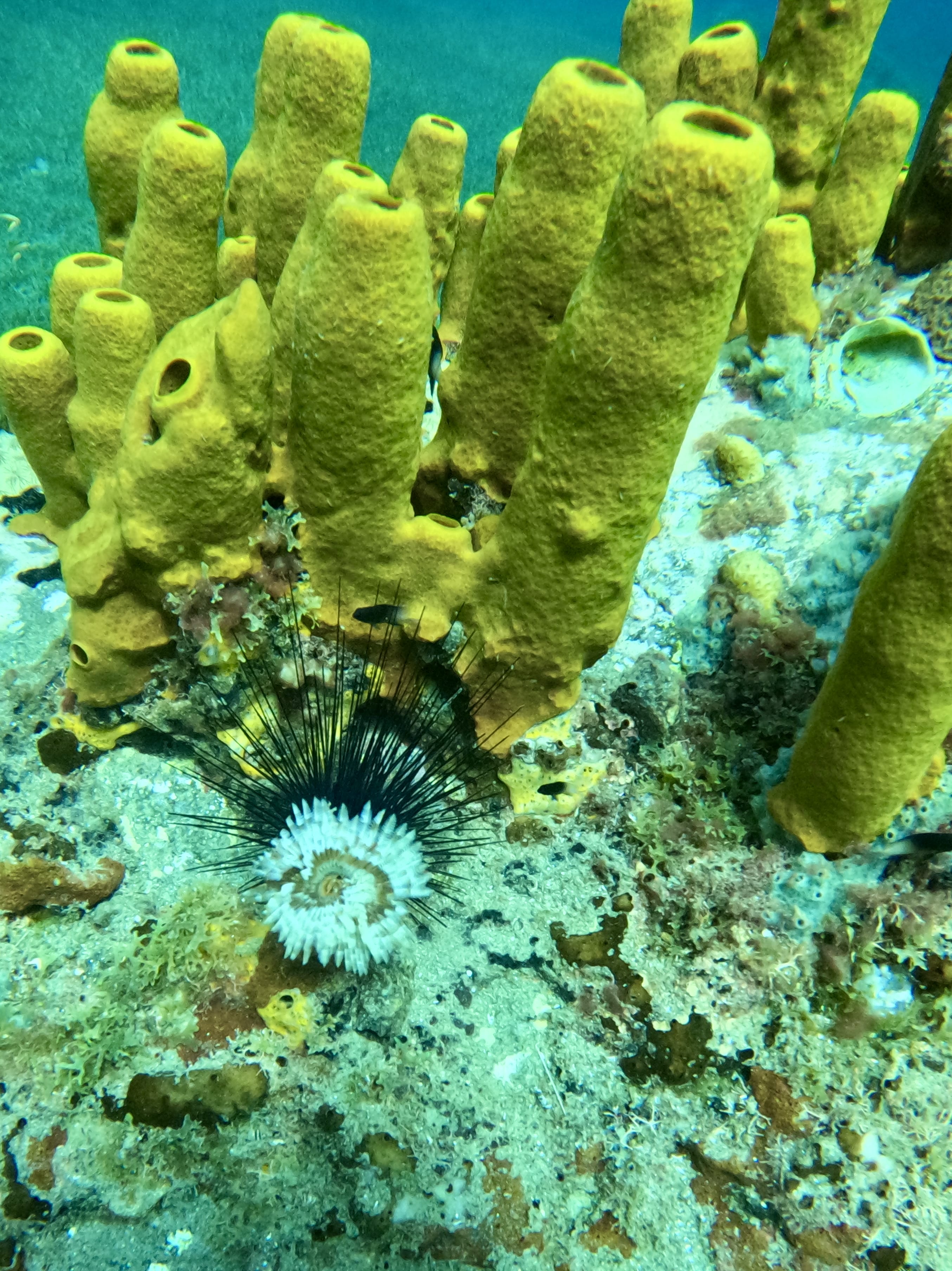
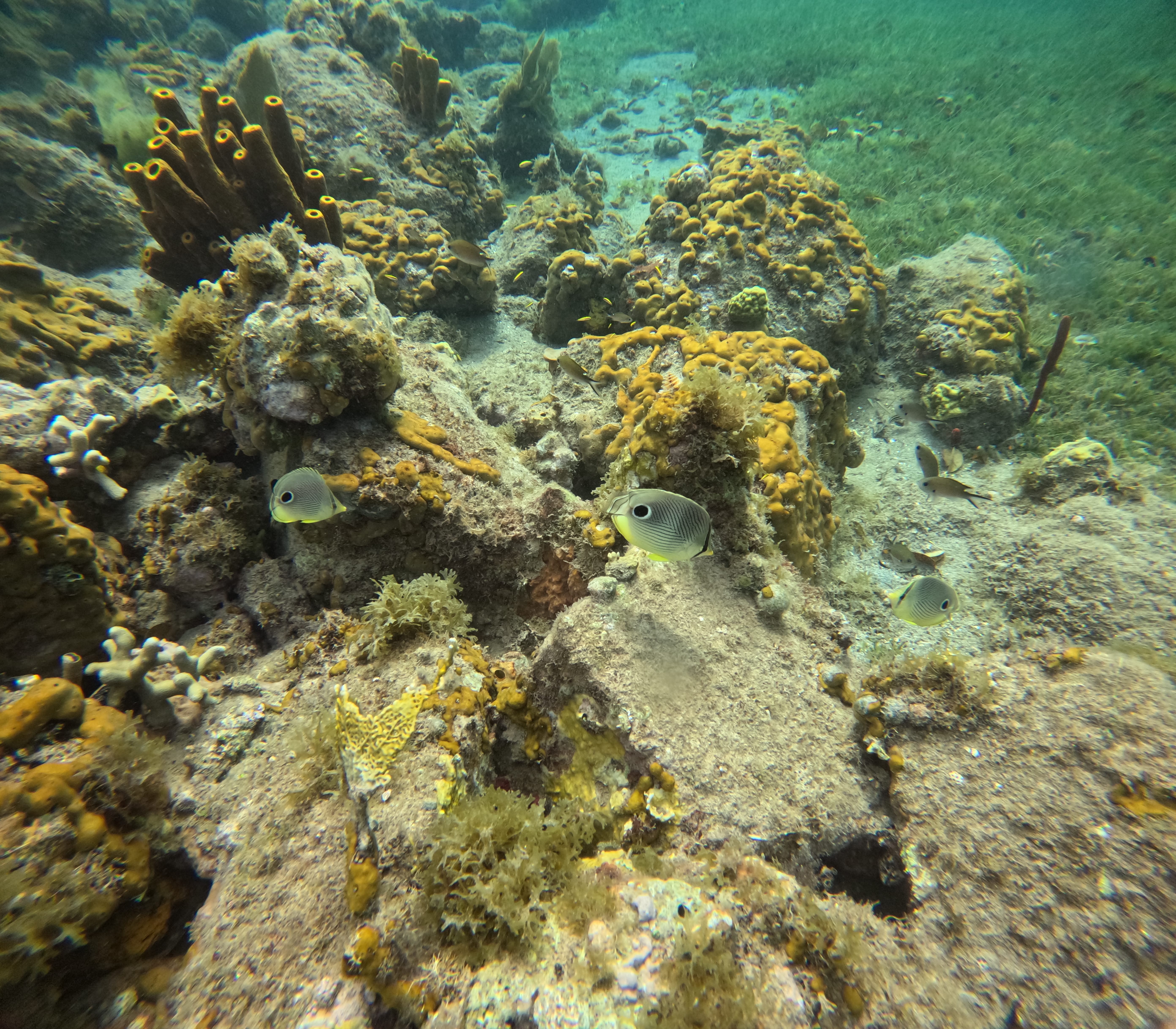
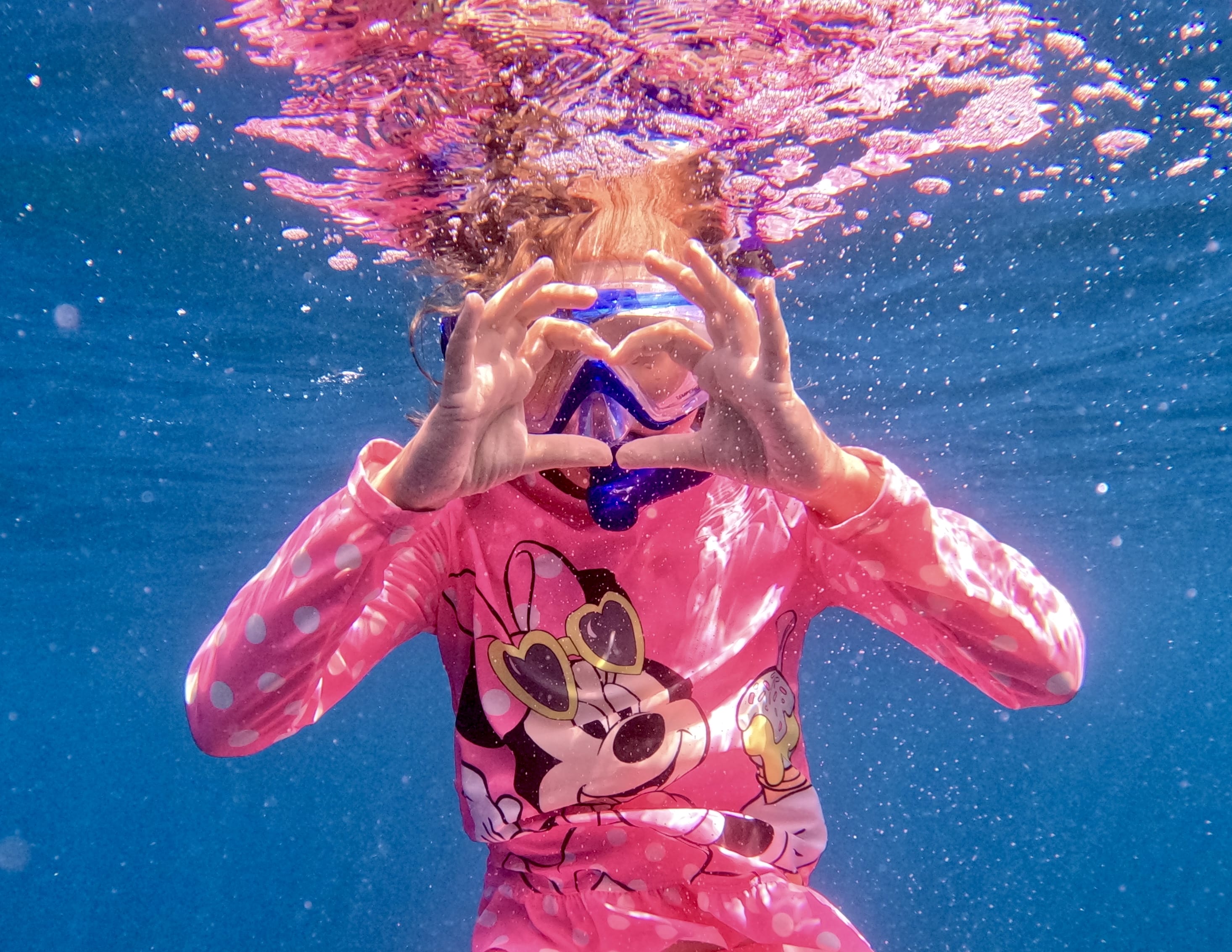
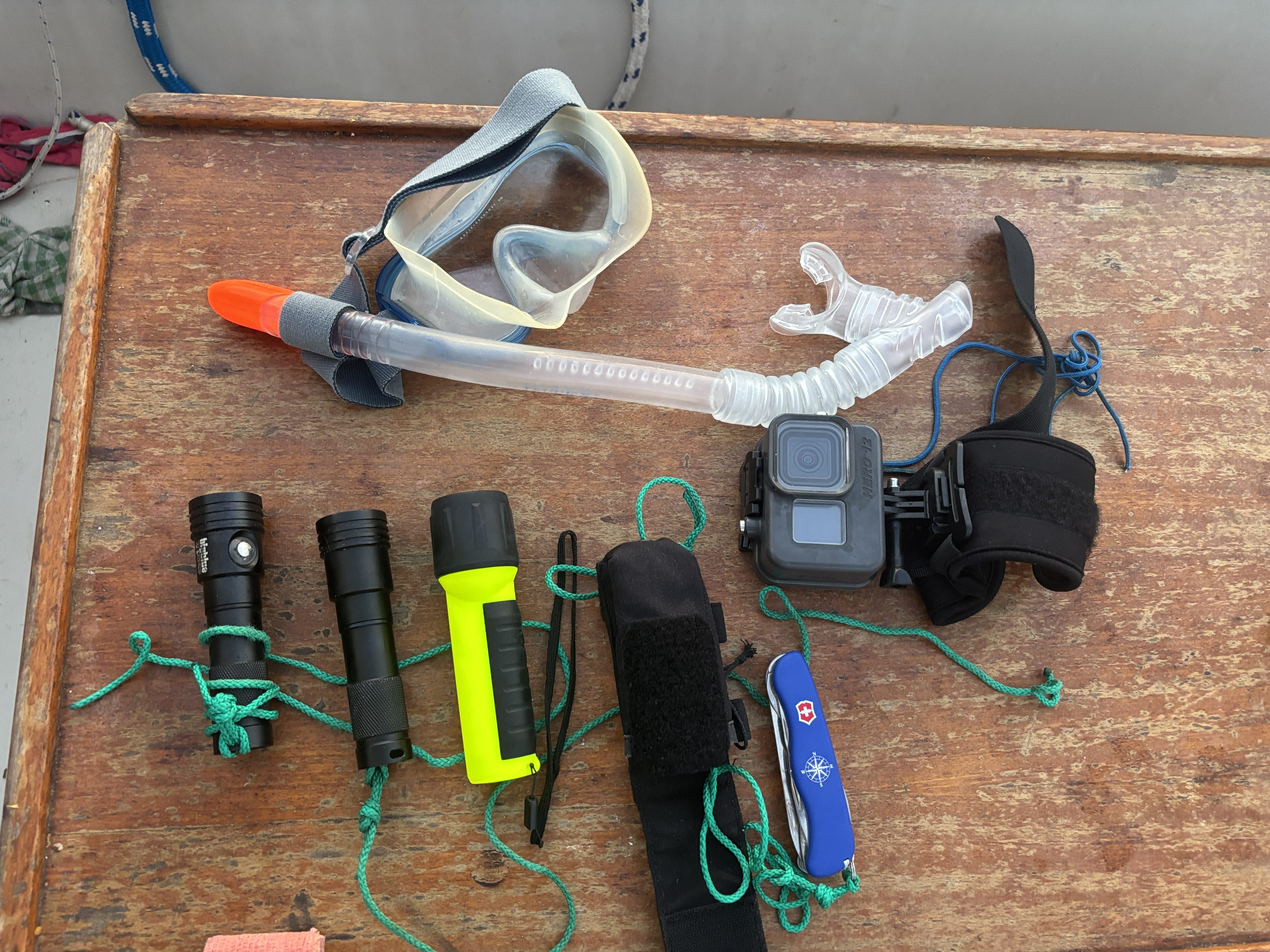
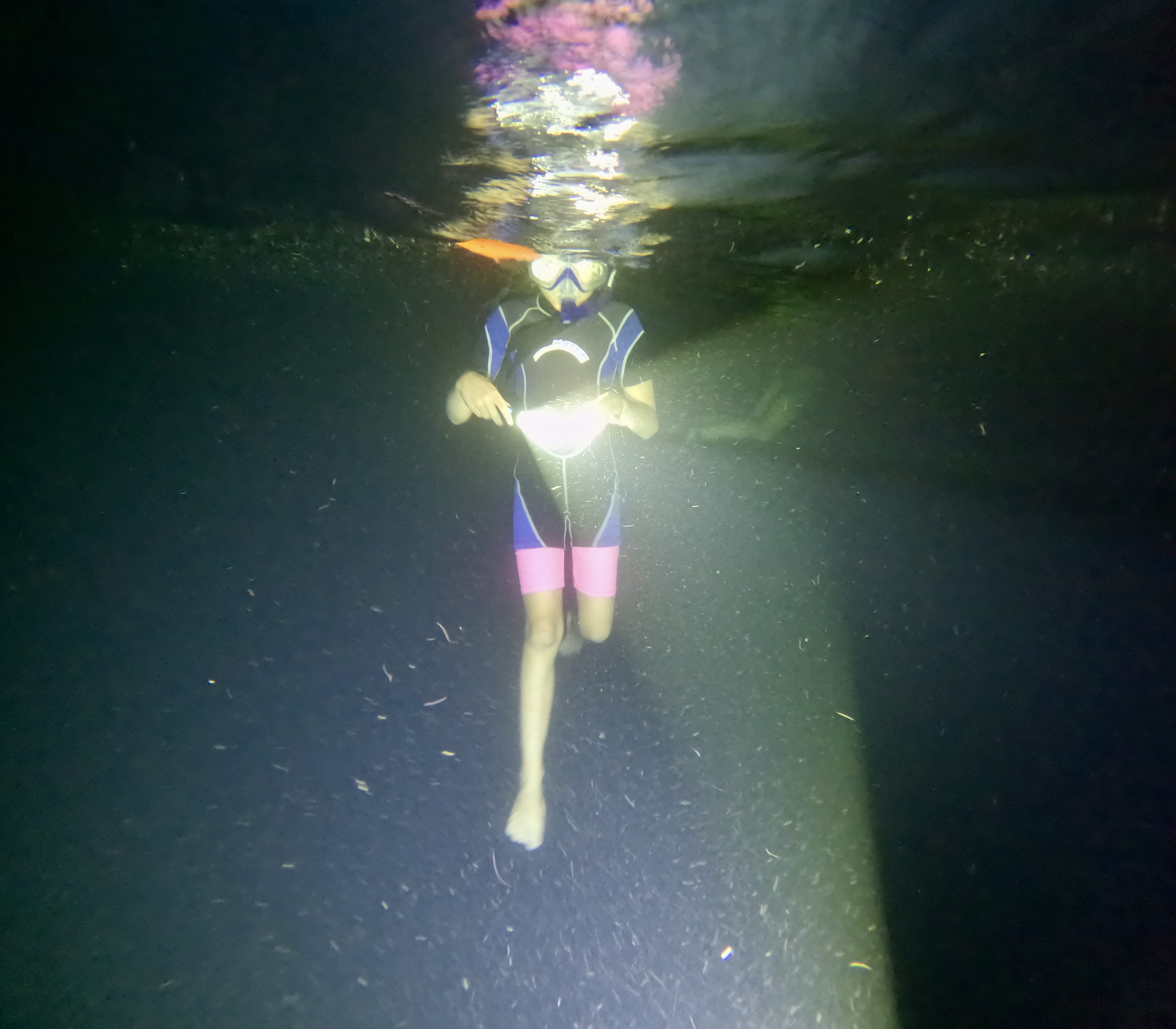
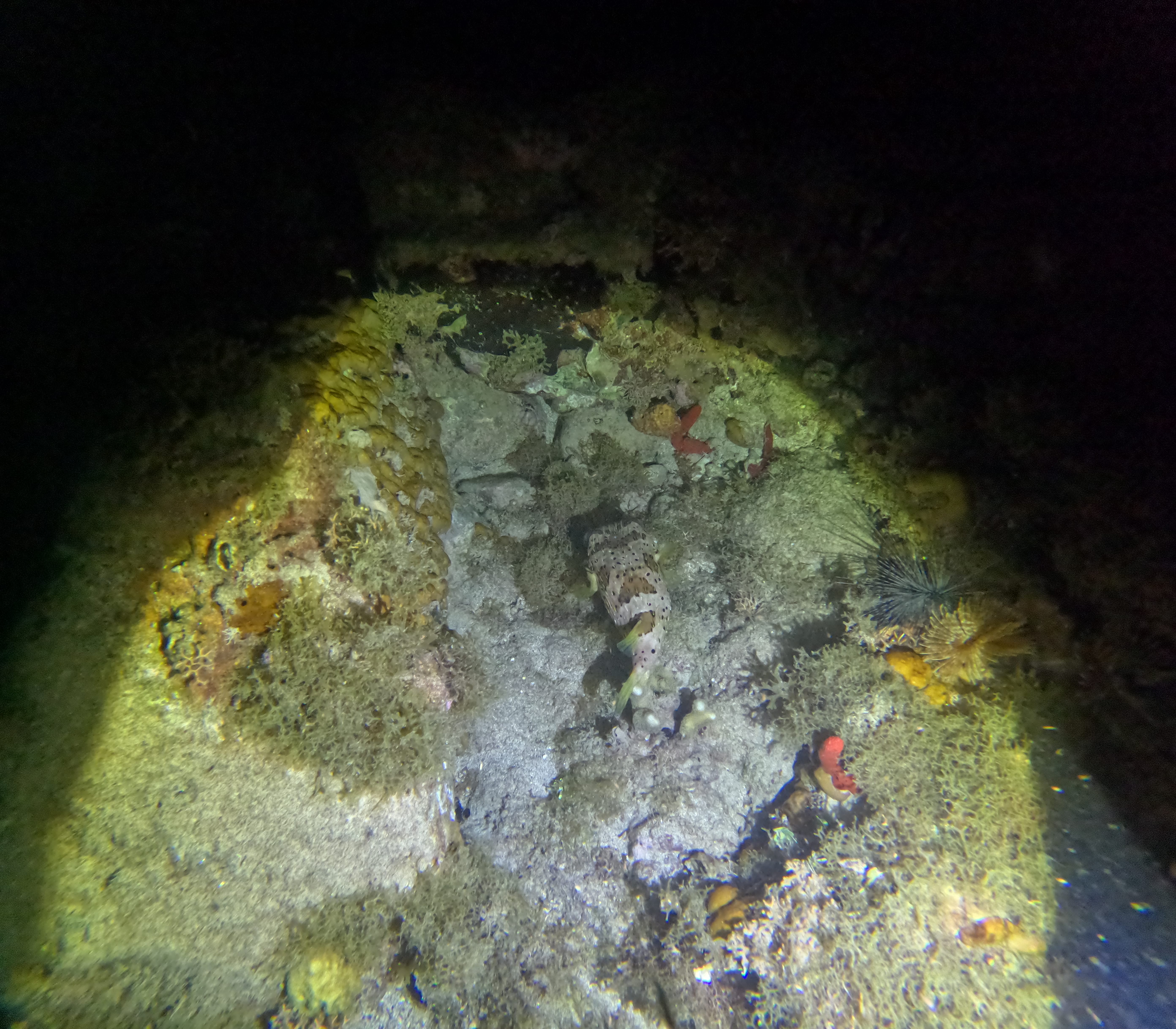
The next day, we move to another dive site - there we can park close to the reef and arrange a night dive. Just after sunset, all three of us swim to the reef. We encounter essentially the same animals as during the day, although in the light of flashlights they appear more mysterious.
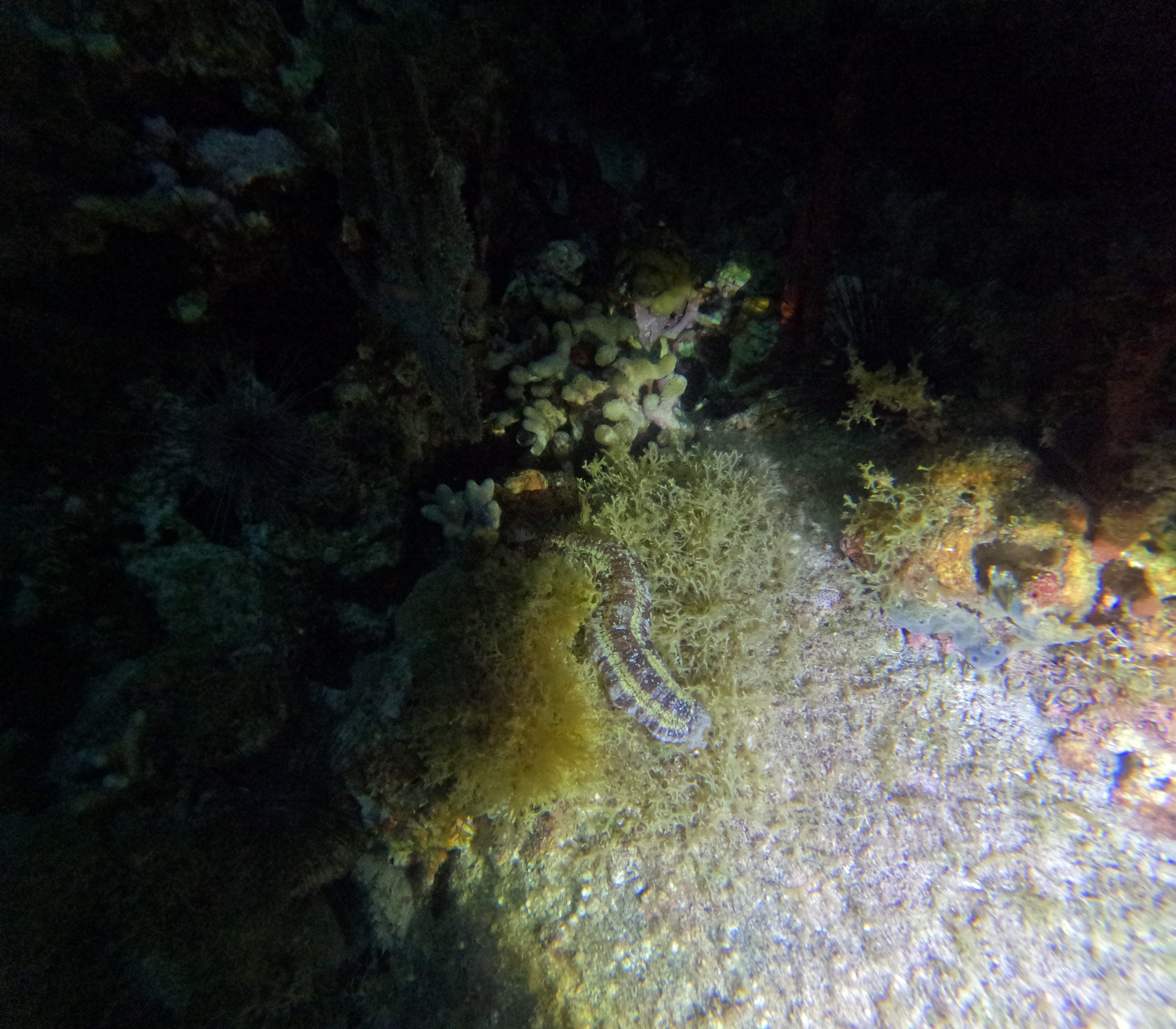
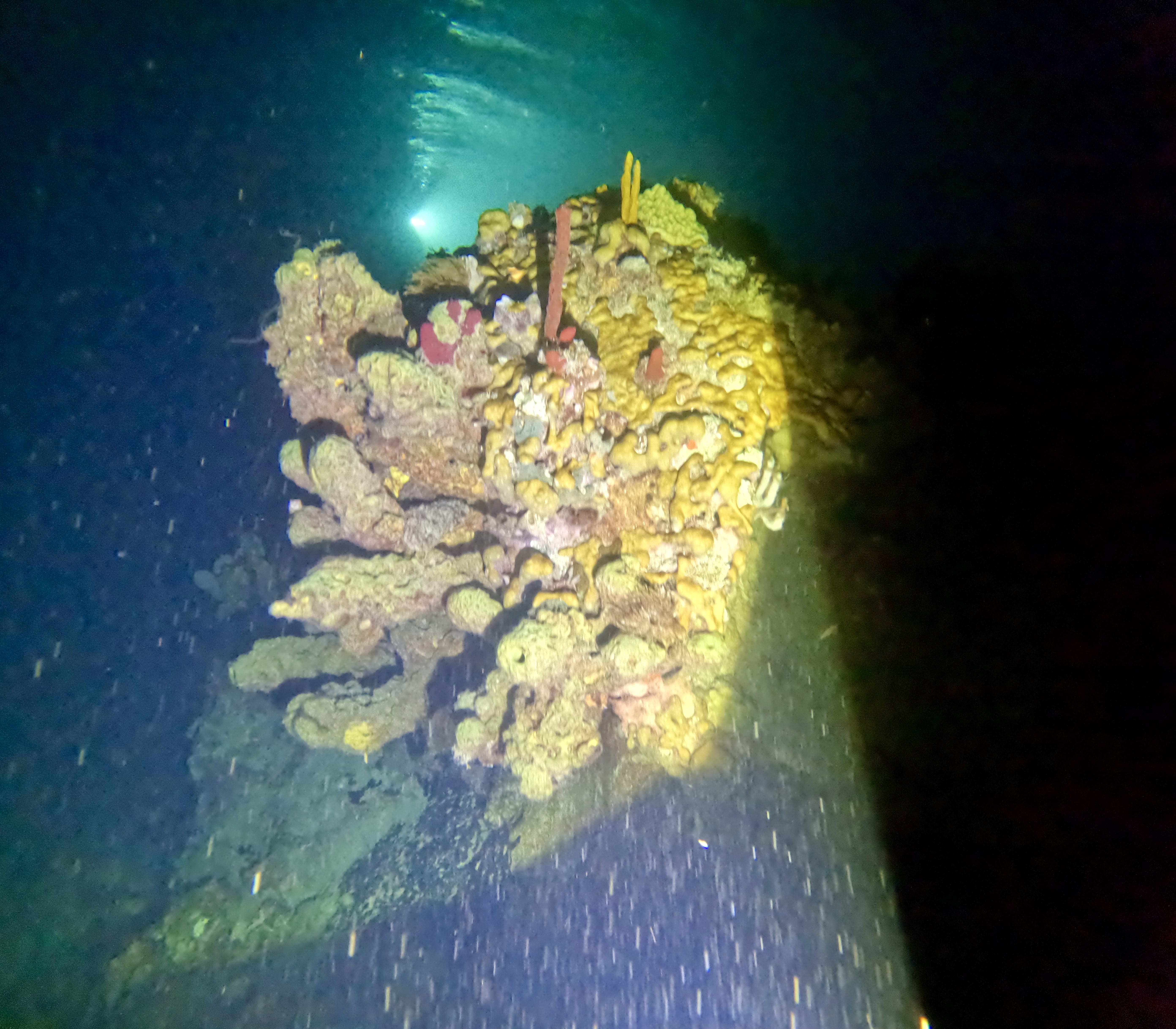
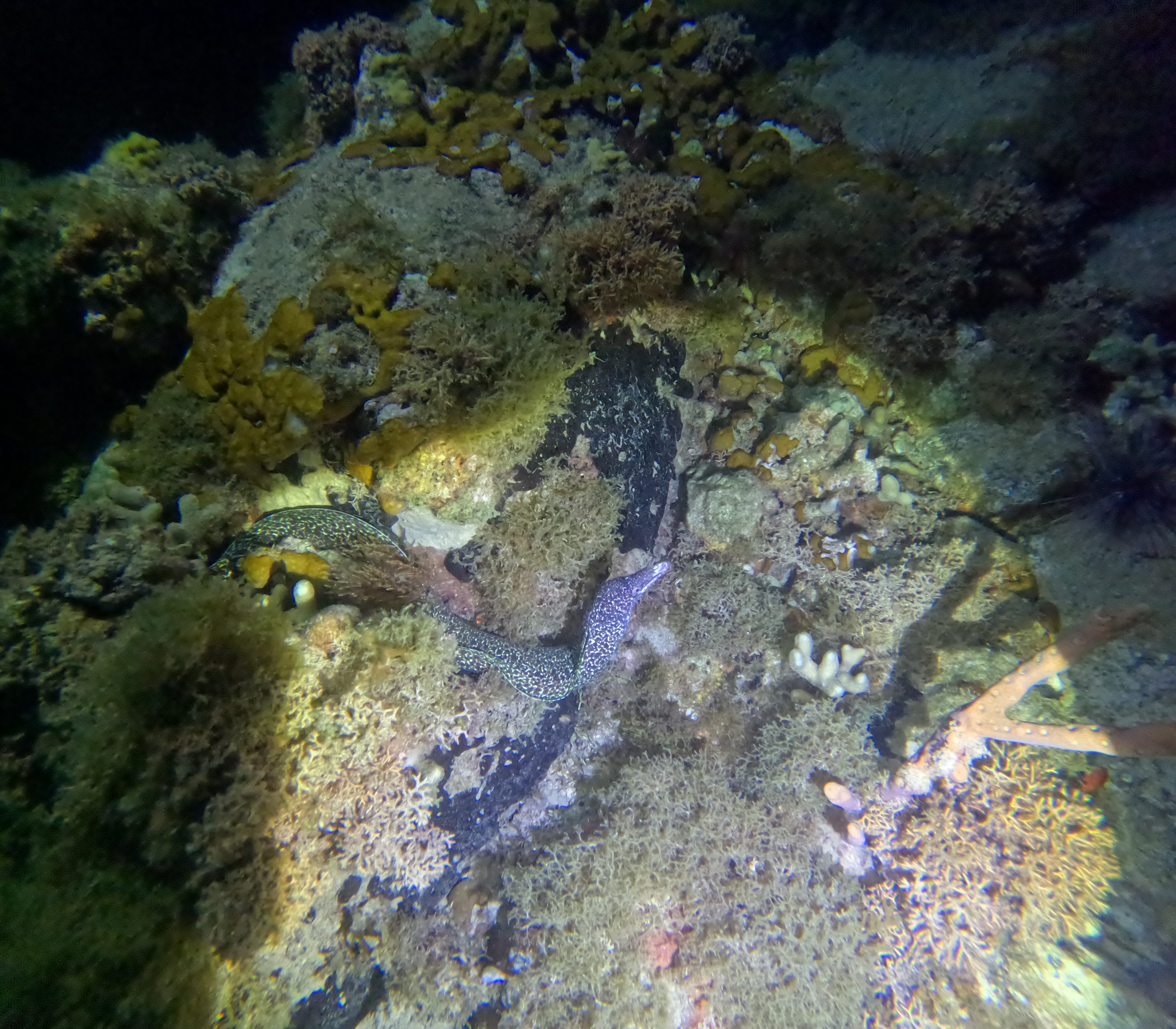
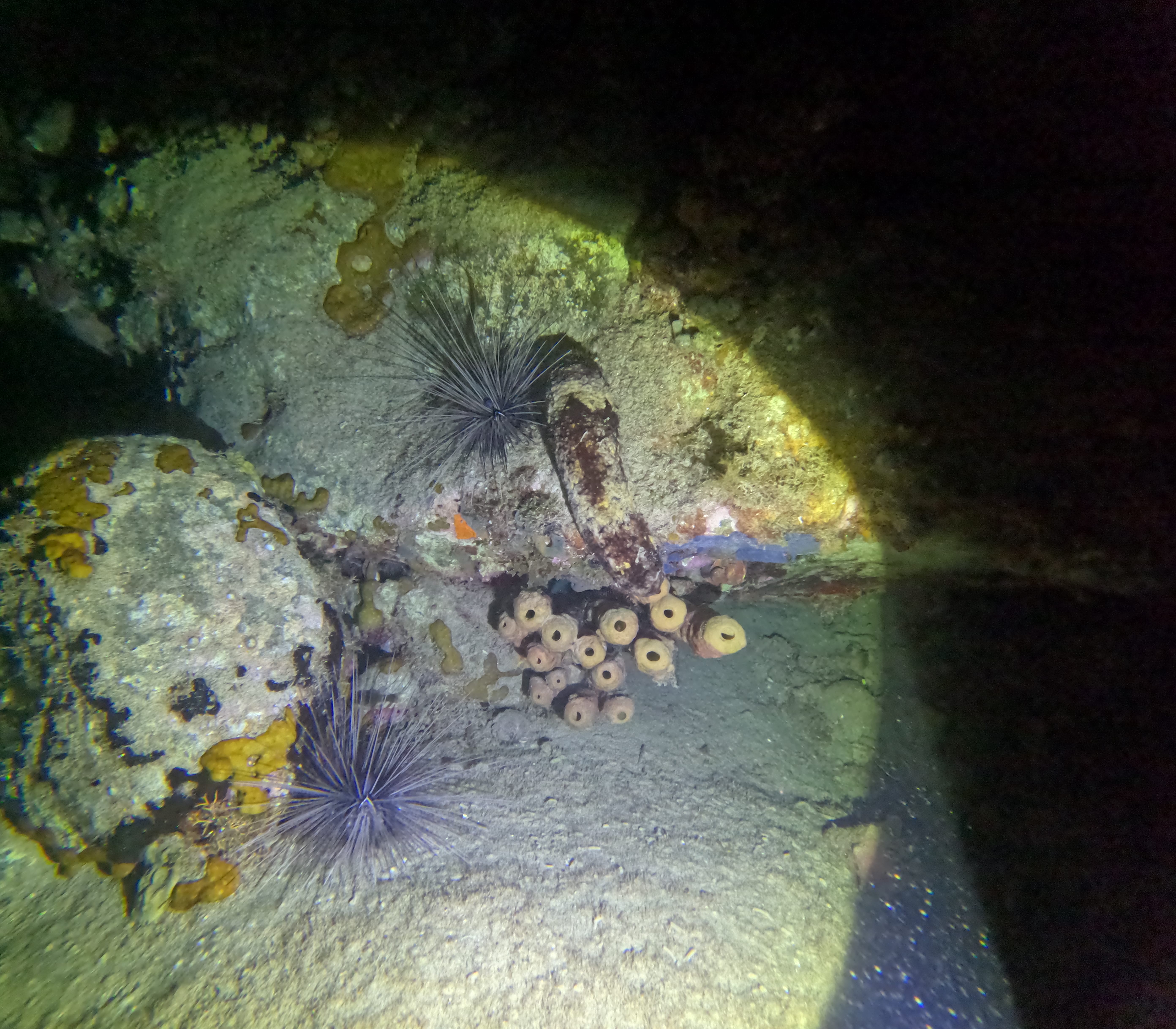
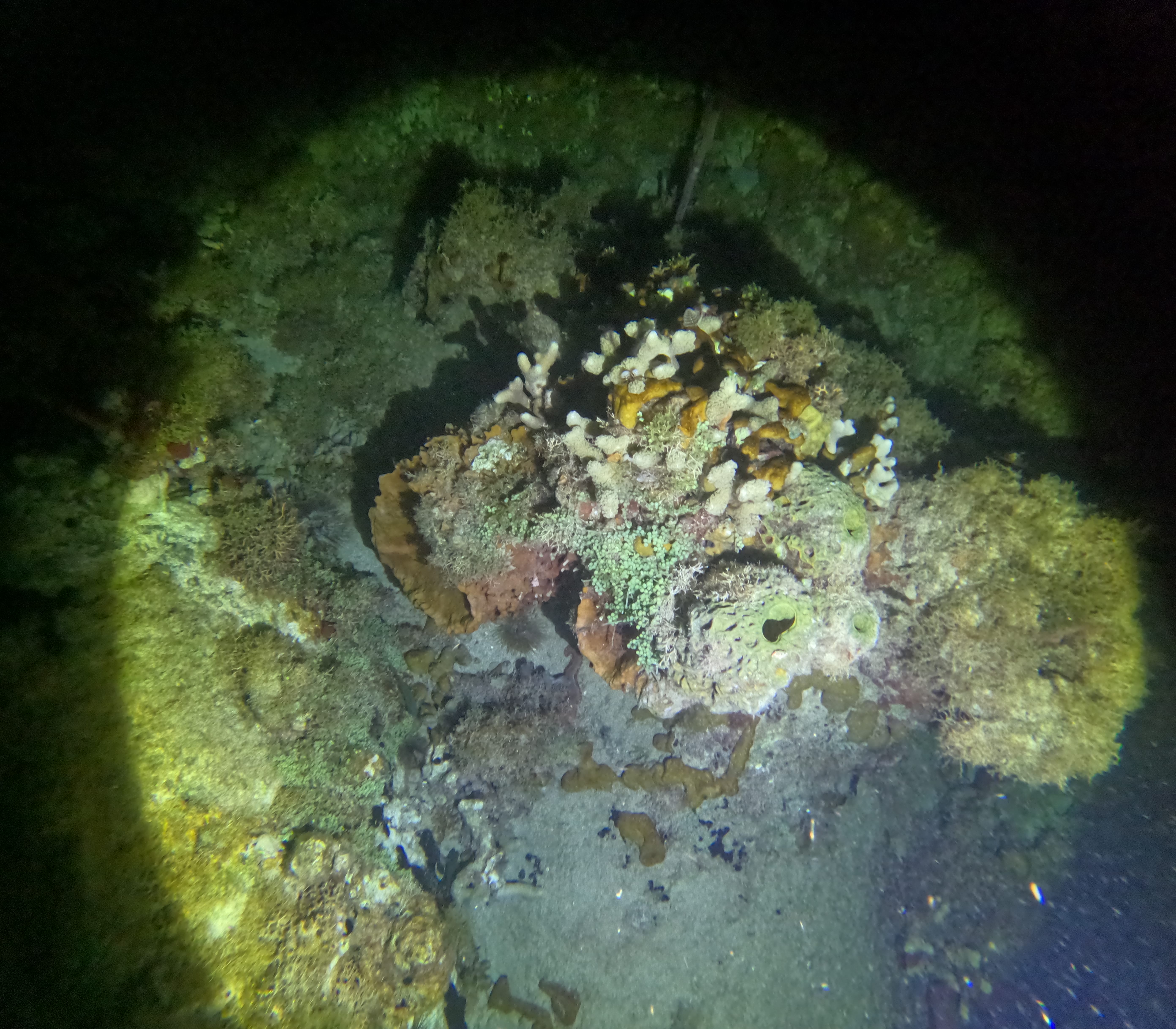
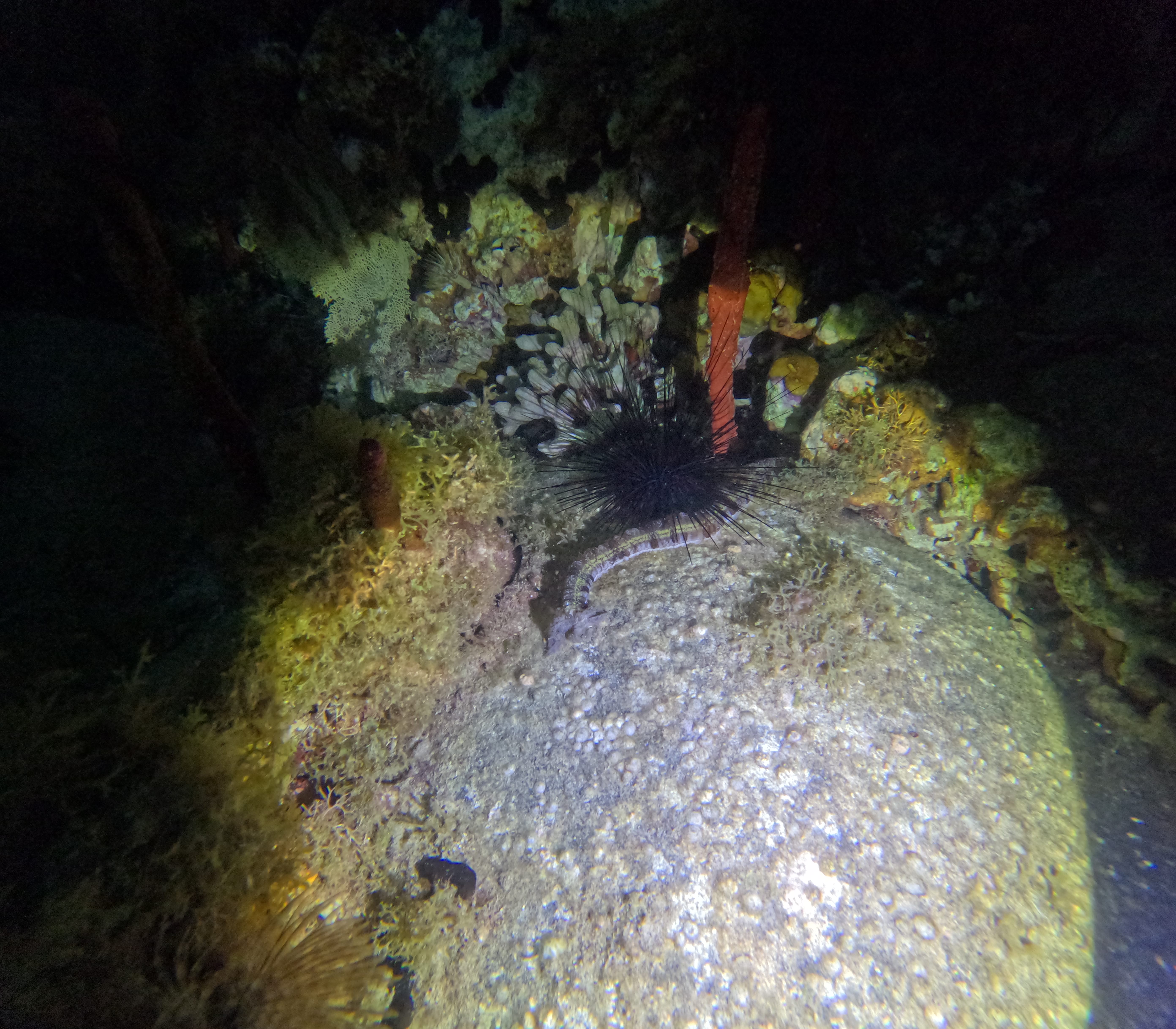
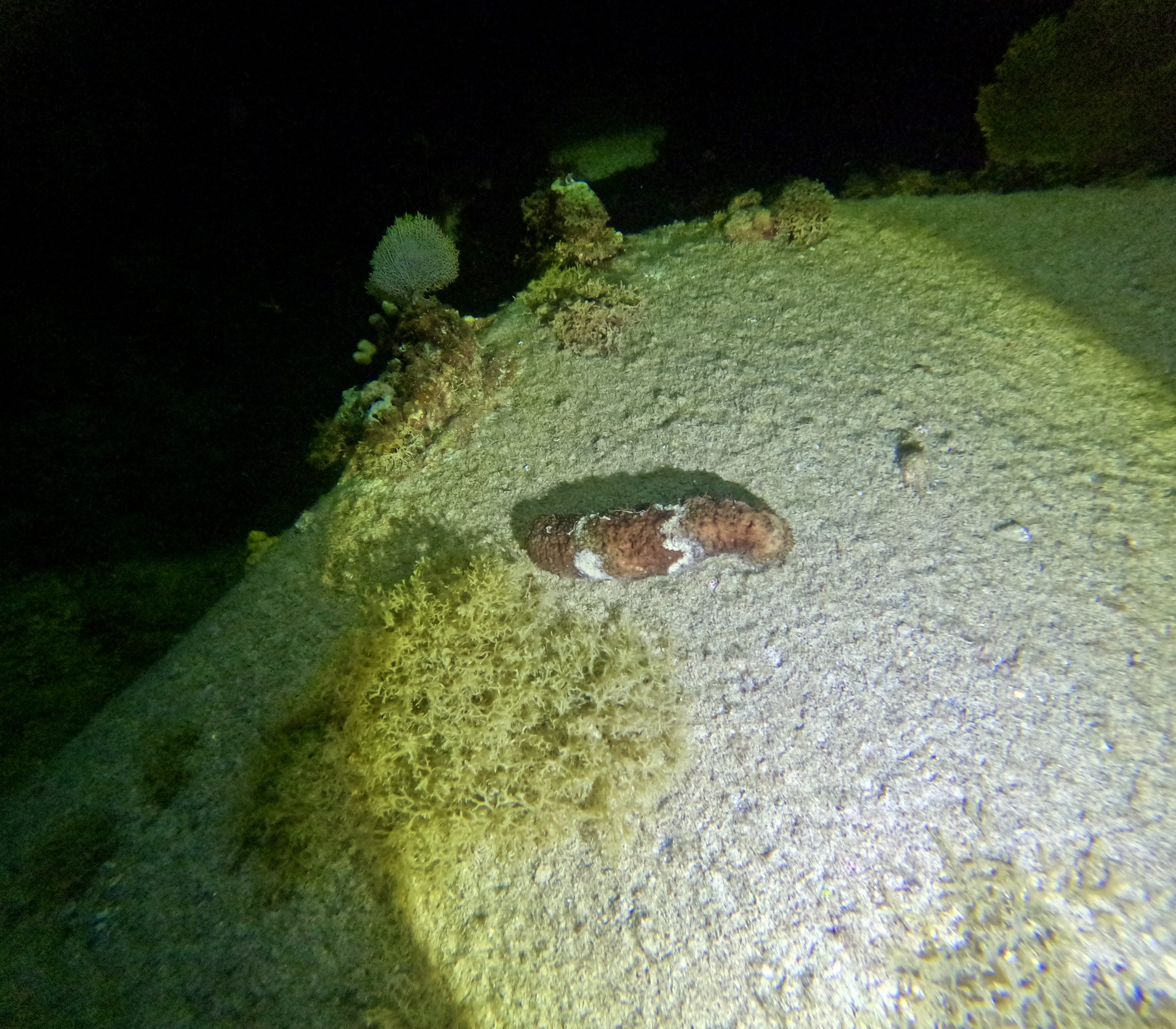
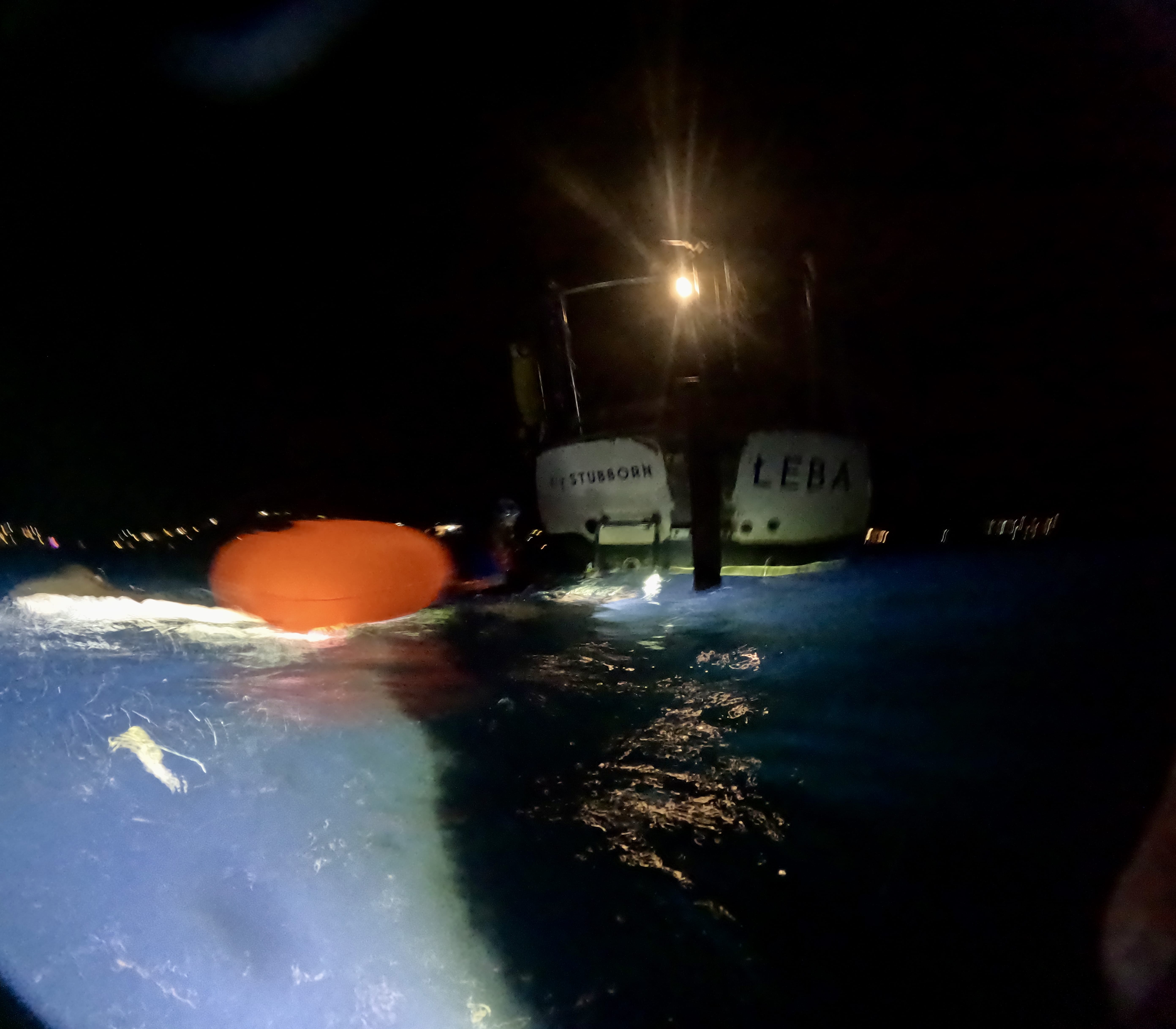
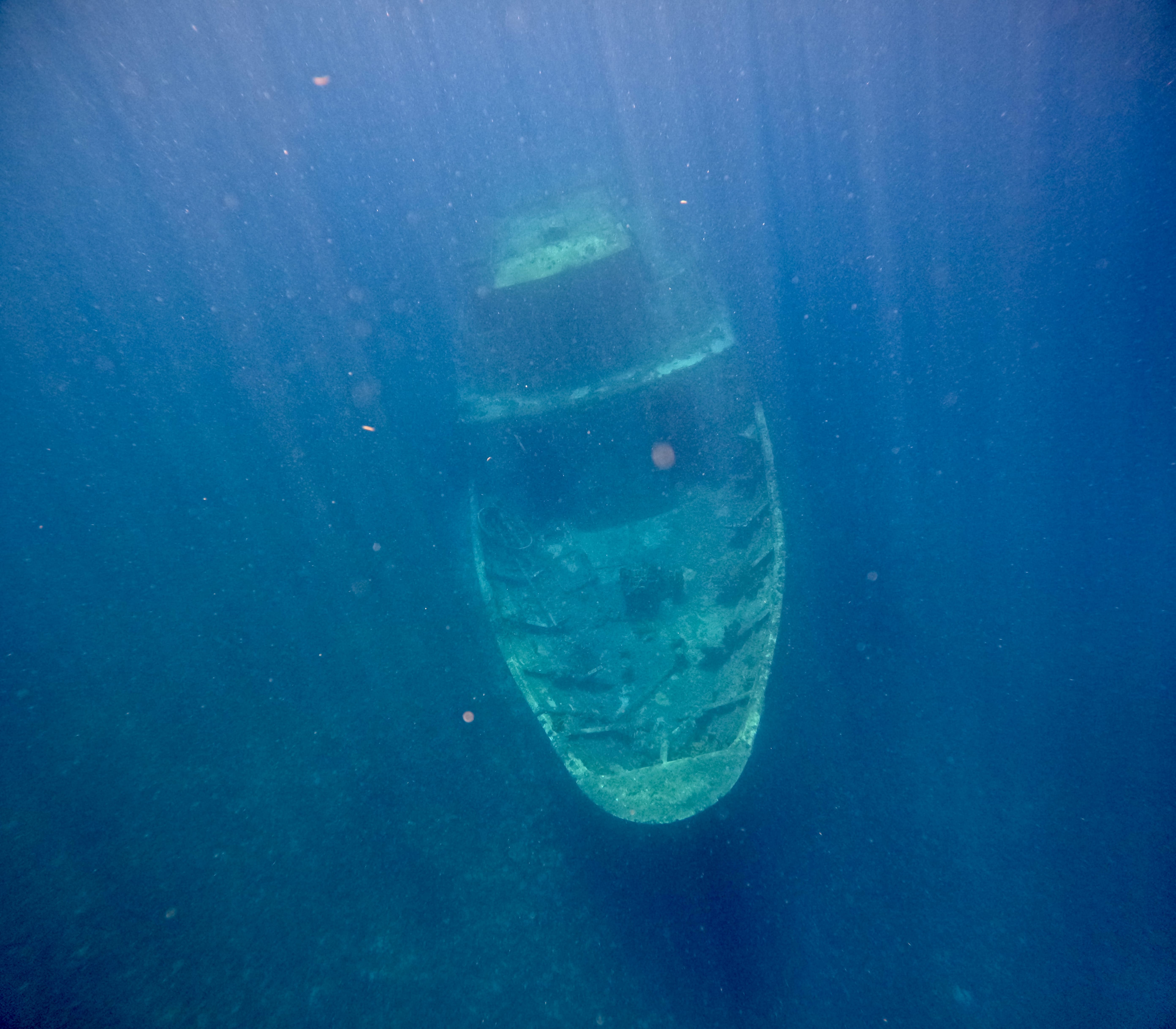
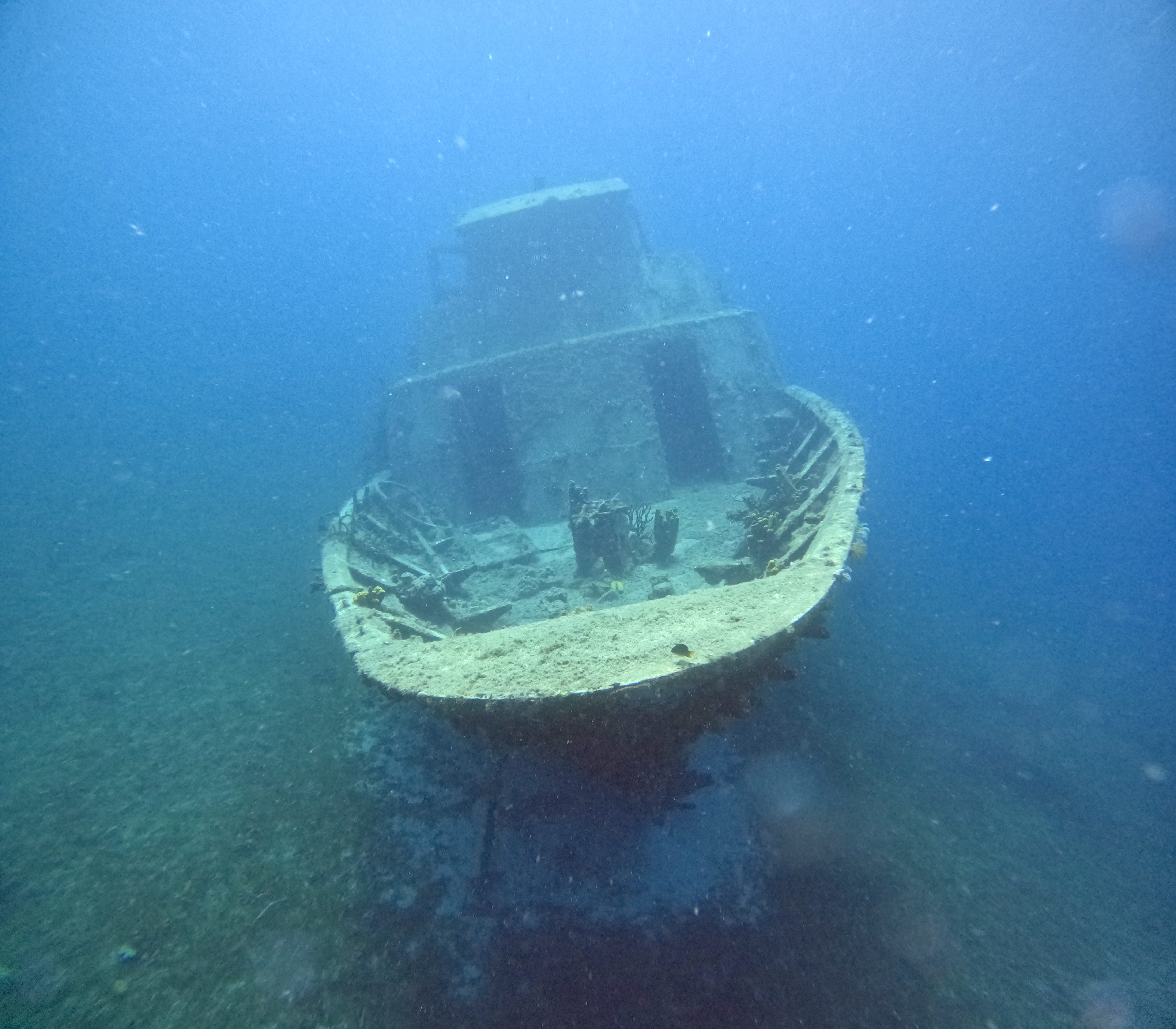
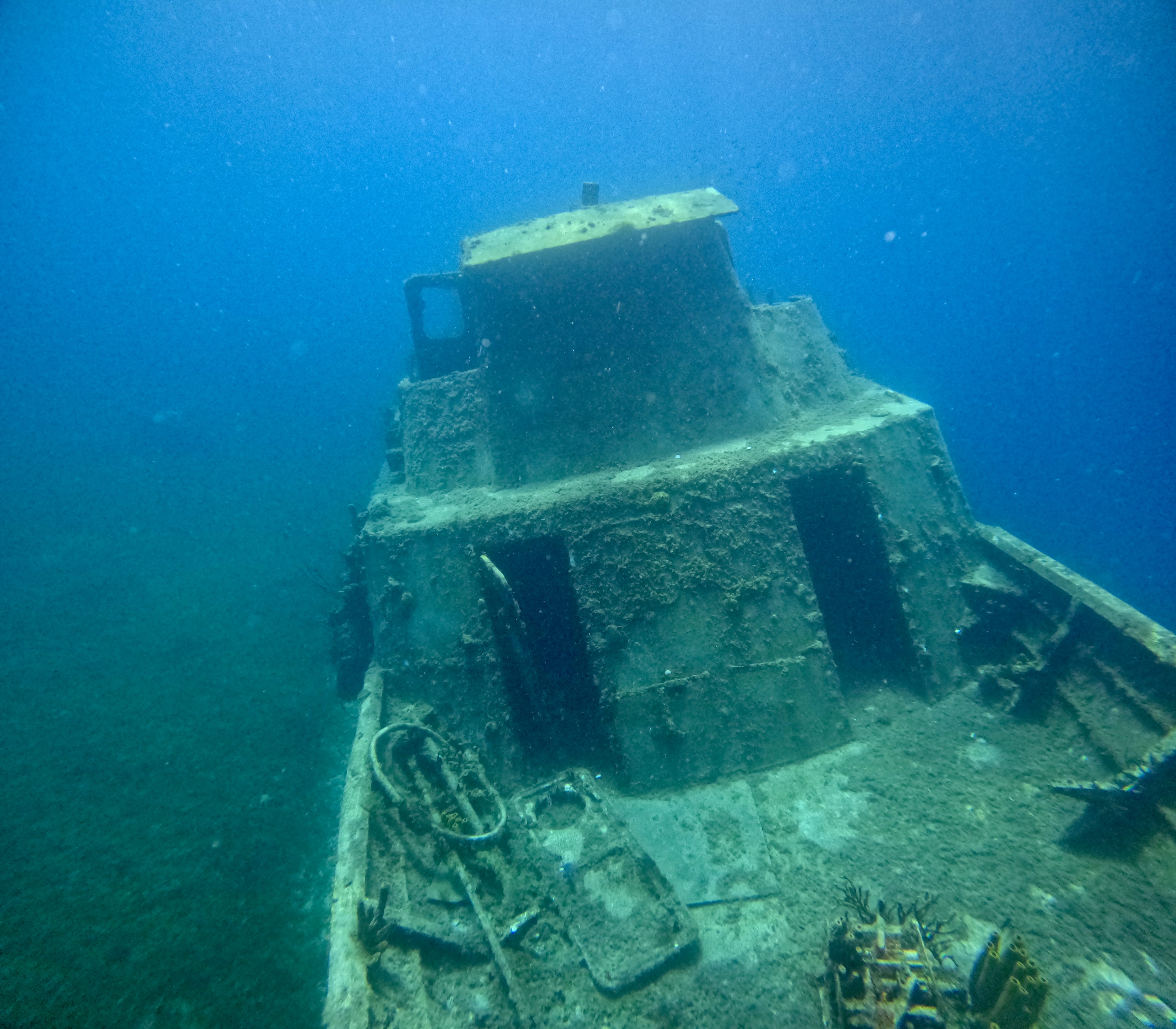
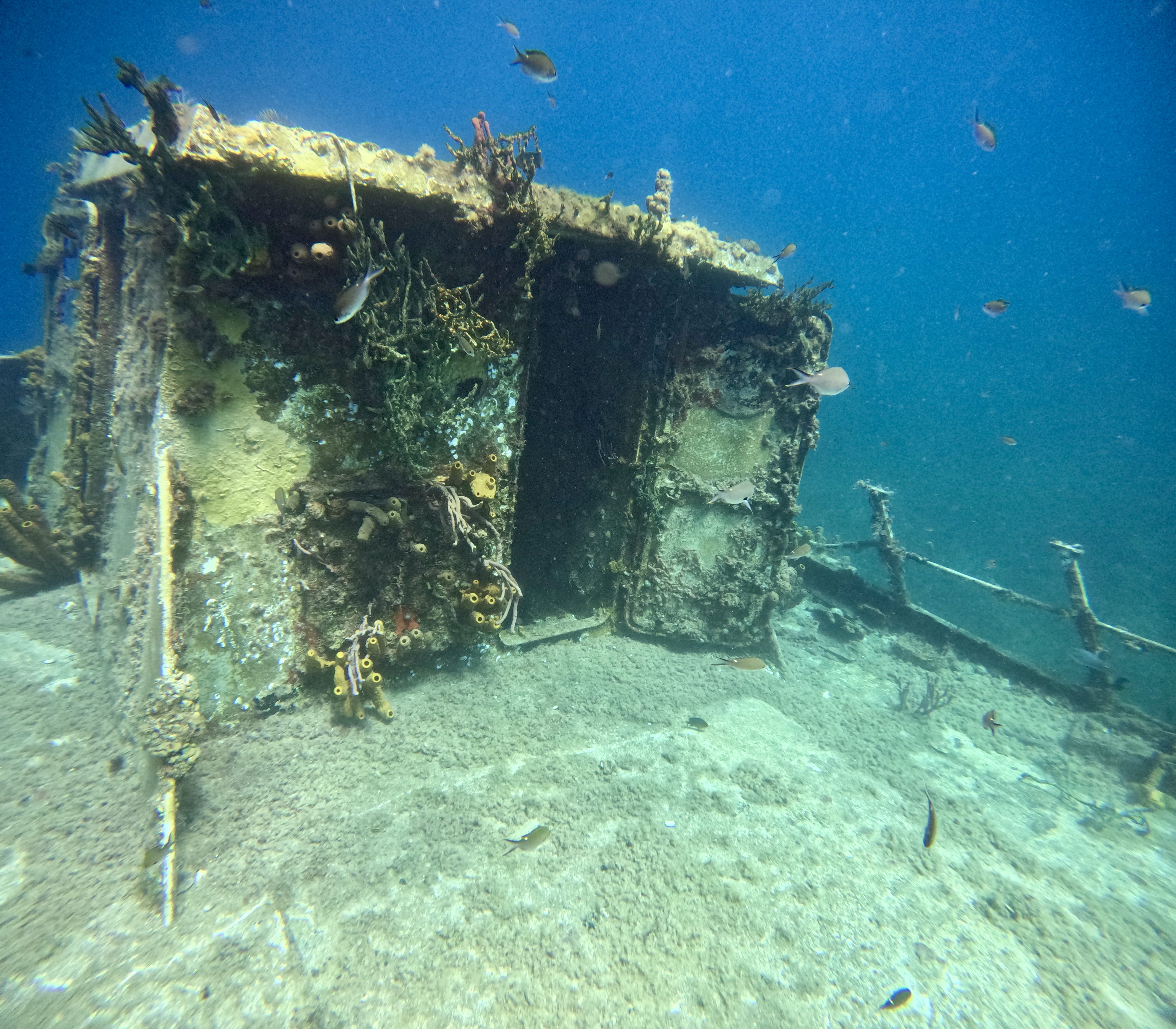
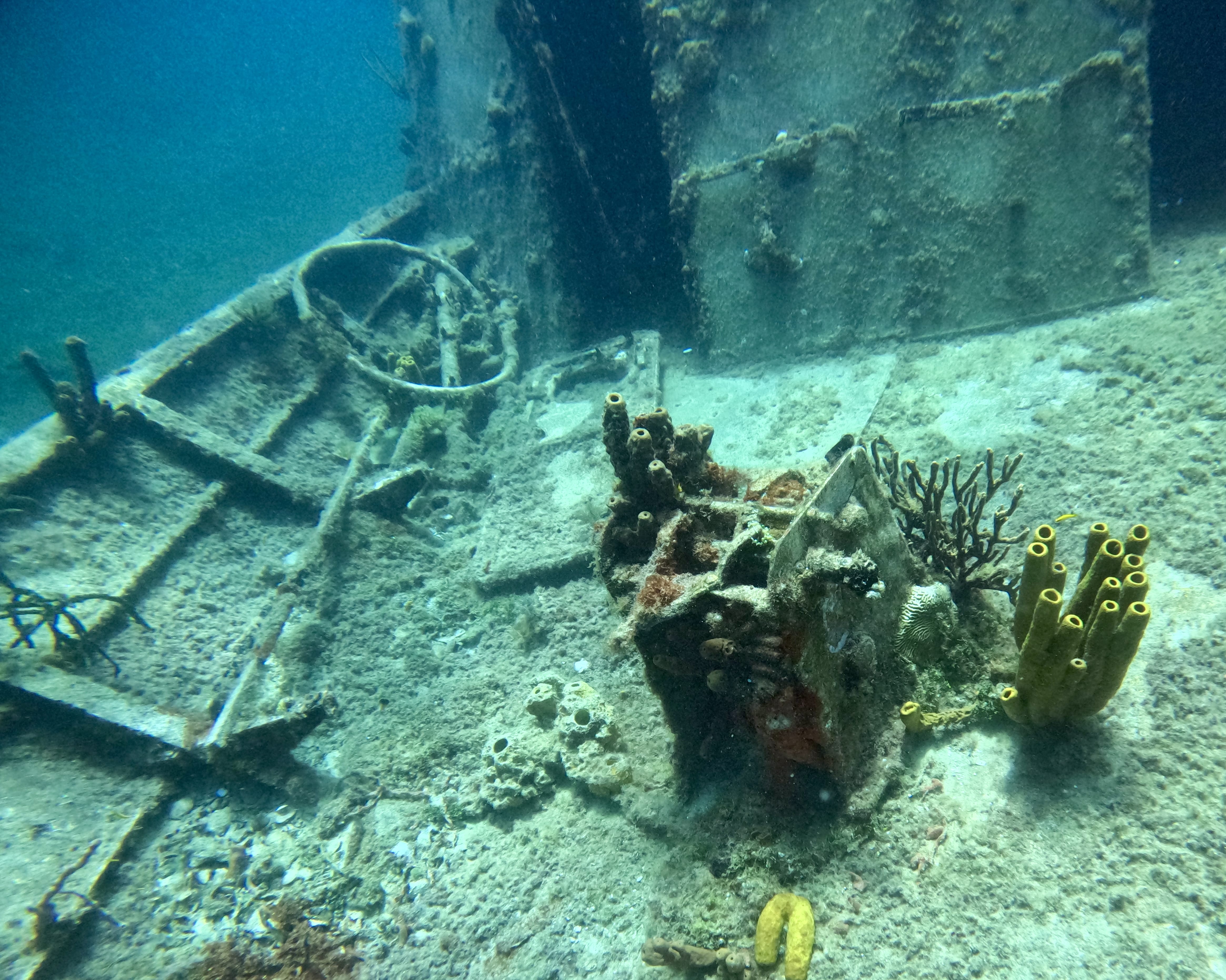
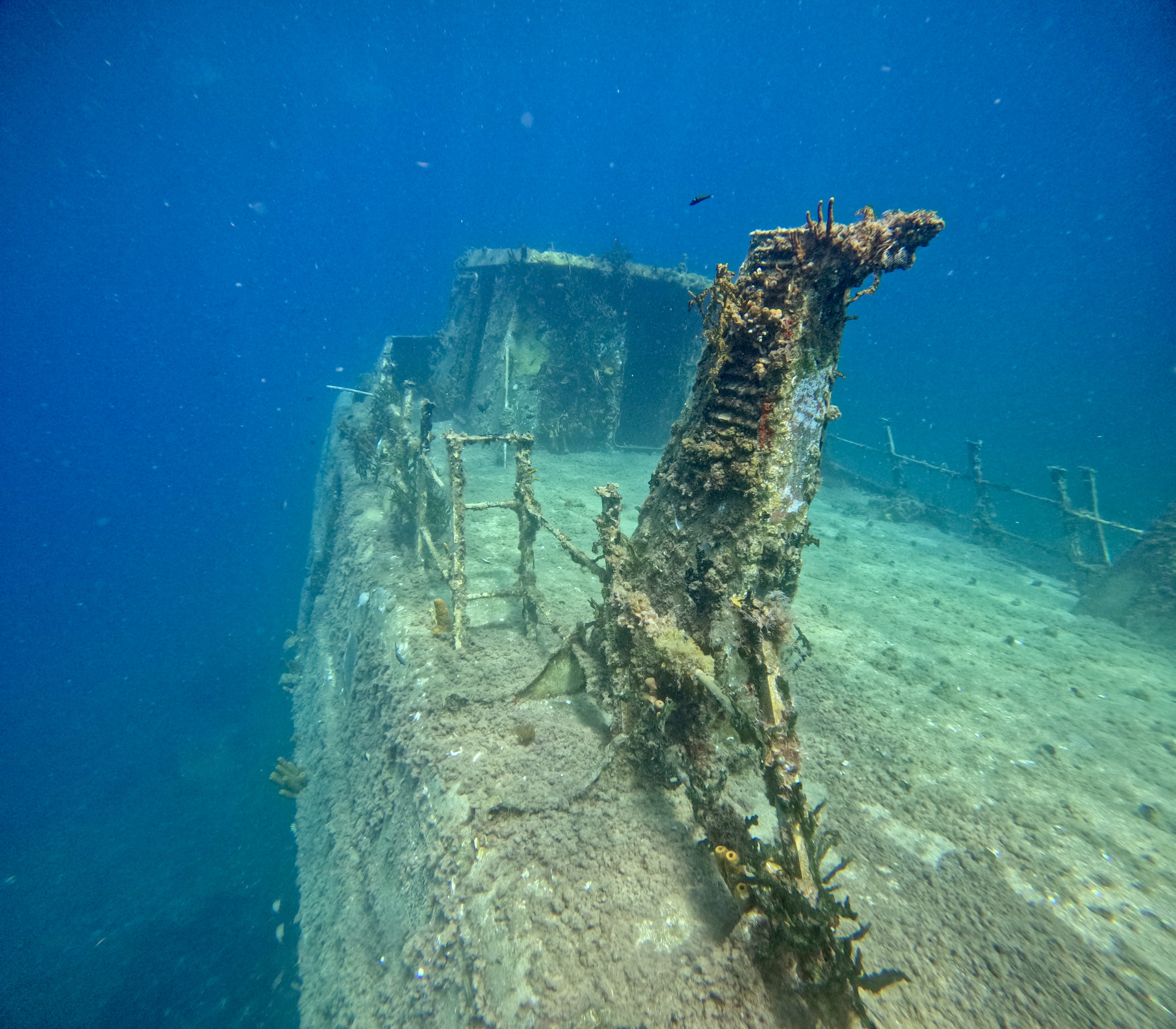
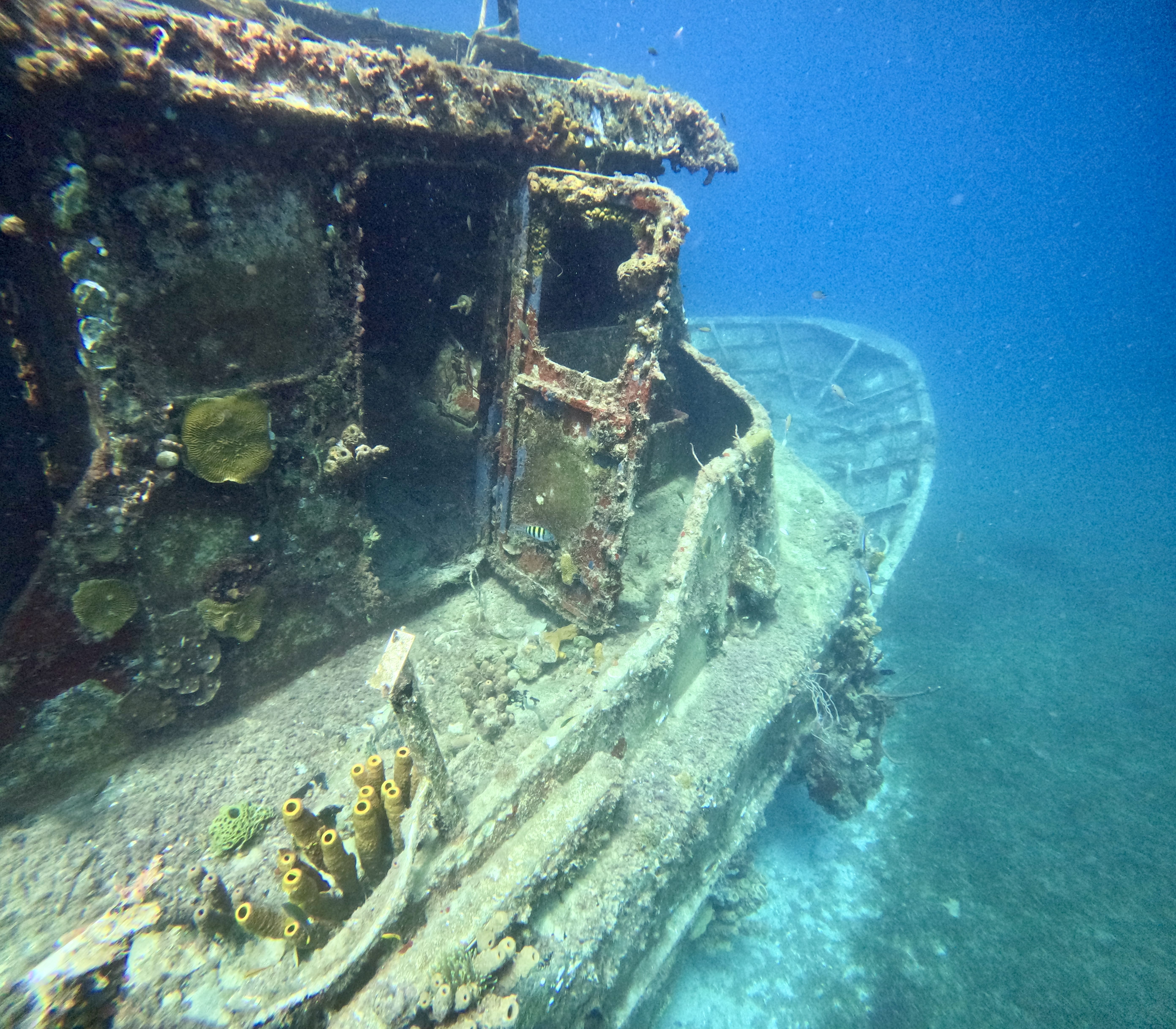
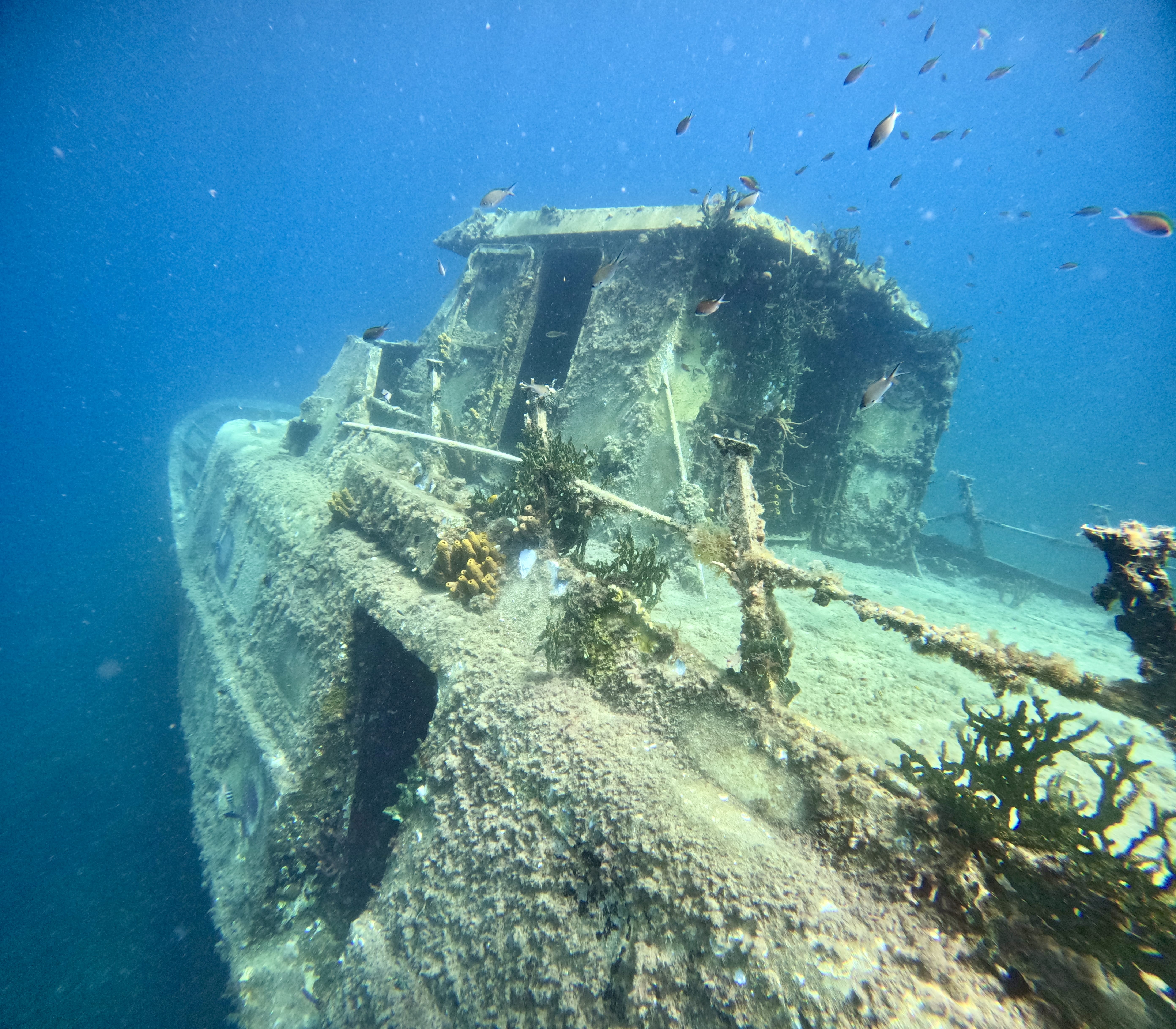
On Thursday, we are moving to the mooring site near the town of Terre de Haut. Unfortunately, there is no gas station here (we need to refill the stove), but there is an opportunity to check in, go shopping, and do laundry. It turns out there is a problem with finding a place to dispose of trash. On most mooring sites, this is included in the price, but here the street bins with small openings are locked with a padlock to prevent bag disposal. There is also a sunken wreck.
By pure chance, we meet the Palzur family, whom we met at Roseau on Dominica. They invite us to their yacht so the kids can play and we can chat.
Compared to Stubborn, their boat is huge - it is 52 feet long. They live on it as a family of four and host guests, offering them cruises around the Caribbean and diving trips. He has a lot of sailing experience, and she is a PADI instructor. When they had their daughter, they felt it was much harder to organize diving trips because they always needed to find a carer for their little one. So they decided to fill a market niche. Their yacht is already adapted for preschoolers - their daughter is 6 years old and their son is 2, so guest children can easily stay on the boat and play with their kids under the care of the man of the house while the adults dive.
We enjoy delicious homemade pizza and chat. The men discuss sailing-technical issues, while the women talk about children and diving - actually, Zuza listens and Shani talks - she has dived professionally on several continents, so her stories are incredibly interesting and educational. For those interested in their services - https://ssshani.wixsite.com/family
The shortest route from the Les Saintes archipelago to the next point on our journey - Antigua leads through a river cutting through Guadeloupe at its narrowest point (Guadeloupe is shaped like a butterfly). However, we want to dive in a very famous and recommended marine reserve near Ilet Pigeon. Before setting off, we decide to make a small repair - we noticed the jib furling line was a bit frayed, making it difficult to roll up the sail. As is often the case with repairs, something that was supposed to take fifteen minutes drags on several times longer- it turns out the line was attached to the roller with a very rusty screw. Kamil struggles with this in a very uncomfortable position, but eventually, he succeeds. After more than an hour, we can set off.
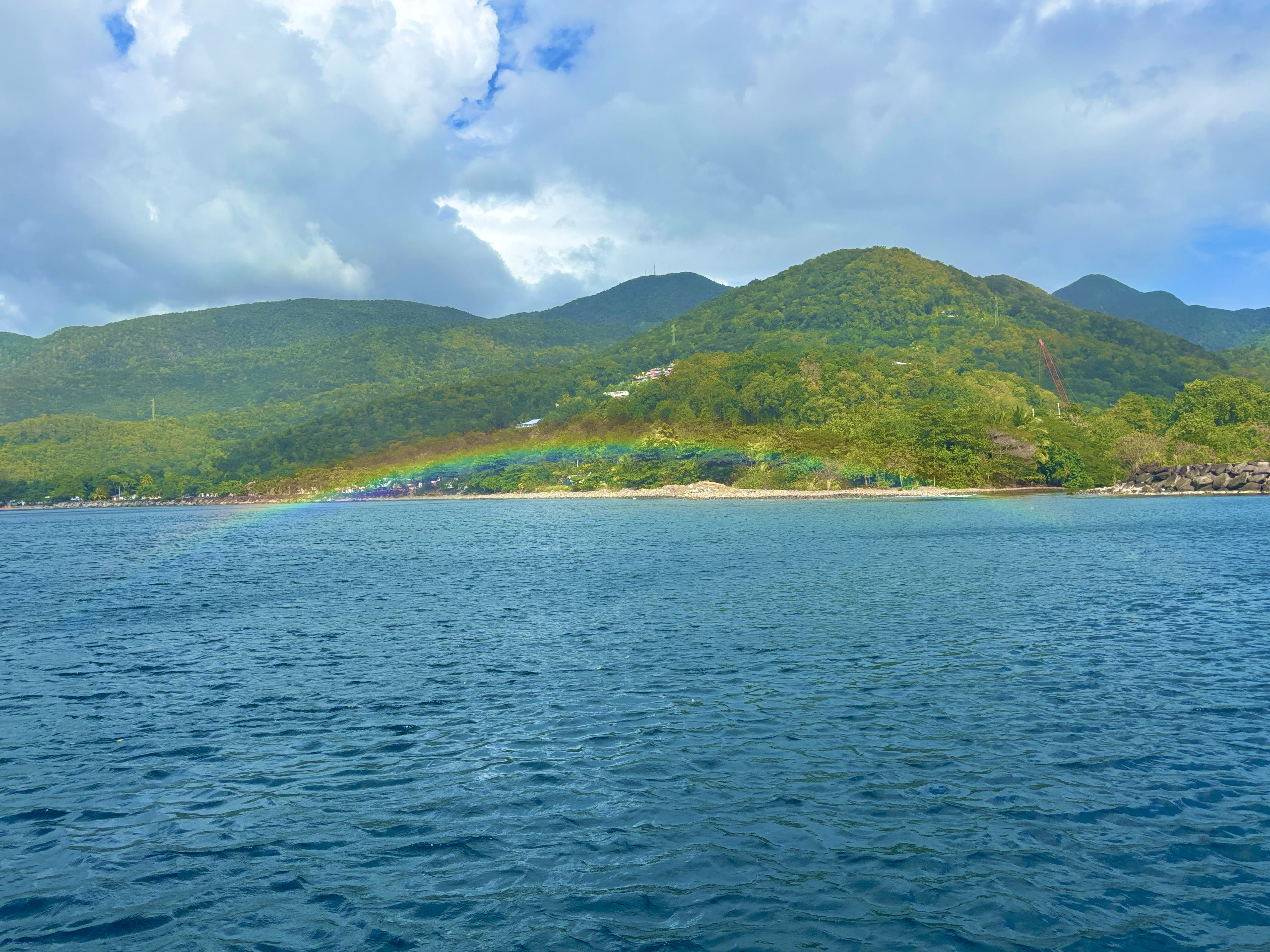
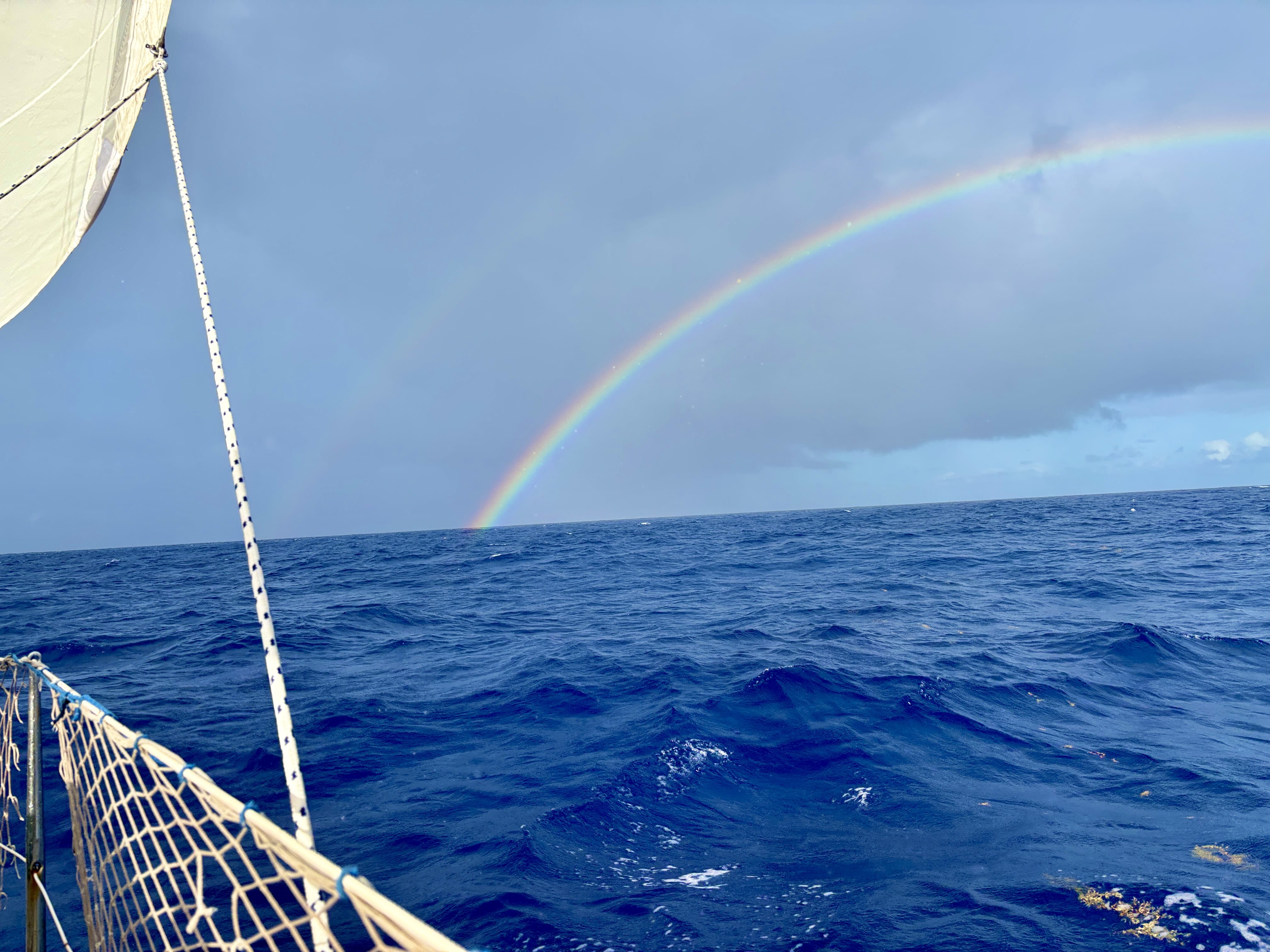
As we are mainly sailing in the shadow of the island, the wind is minimal. Dropping anchor in the dark here is risky because the seabed is covered with rocks, "lettuce" seaweed and only in places patches of sand. The anchor does not hold in the seaweed, stones can trap it permanently (already in Barbados, Kamil dived down 12m to free it), only the sand is suitable here. So we stop earlier and only the next day we park at the anchorage near the town of Bouillante (it is not allowed right next to the reserve).
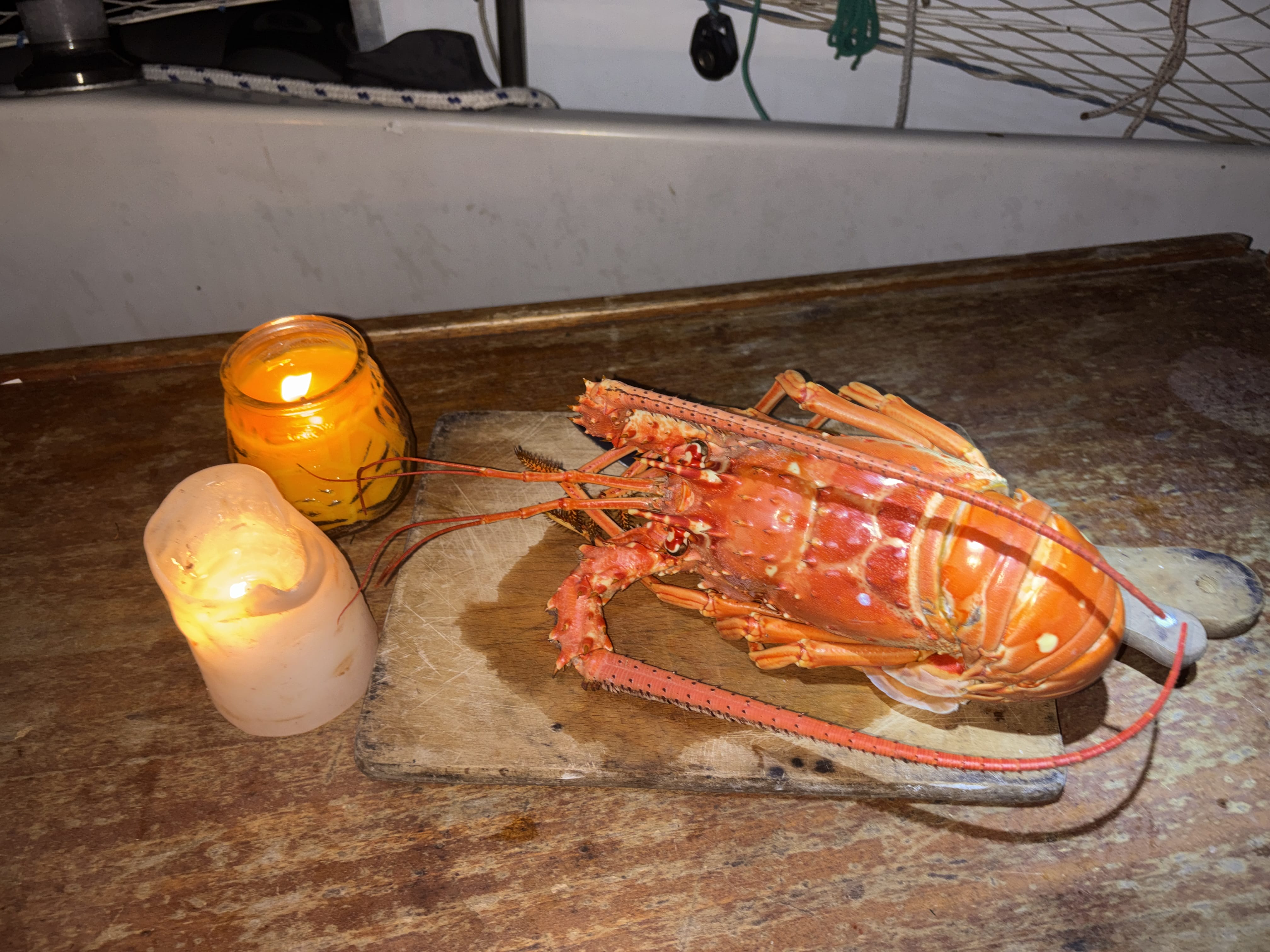
It is best to dive in the morning when the water is the clearest, which is why we decide to visit the reserve tomorrow and spend this day getting rid of rubbish and doing shopping. We plan to anchor in a very picturesque but wild place in Antigua, so now we need to restock, as the next big shopping trip might only be in Curaçao. On the way back from the store, we come across a stall with lobsters. We have always wanted to try this luxurious food, but we couldn't bring ourselves to spend the exorbitant amounts of money they want for it in restaurants. We ask the seller for a small one, but still the beast barely fits into the largest pot we have. It turns out it’s basically a mega shrimp, very tasty and probably similar in price per kilogram of meat.
We set off early for Ilet Pigeon - the wind is strong, towards the ocean, so Kamil must aim our inflatable dinghy well to hit the islet because if we got blown past it, we'd be in serious trouble (just in case, we have a handheld radio in a waterproof swim buoy, along with documents and other essential items). We land on a small beach and head off to dive. Kamil manages to find Jacques Cousteau's underwater sculpture. Besides, there are many fish here that are accustomed to tourists and don't flee as much as in other places (fishing is not allowed here).
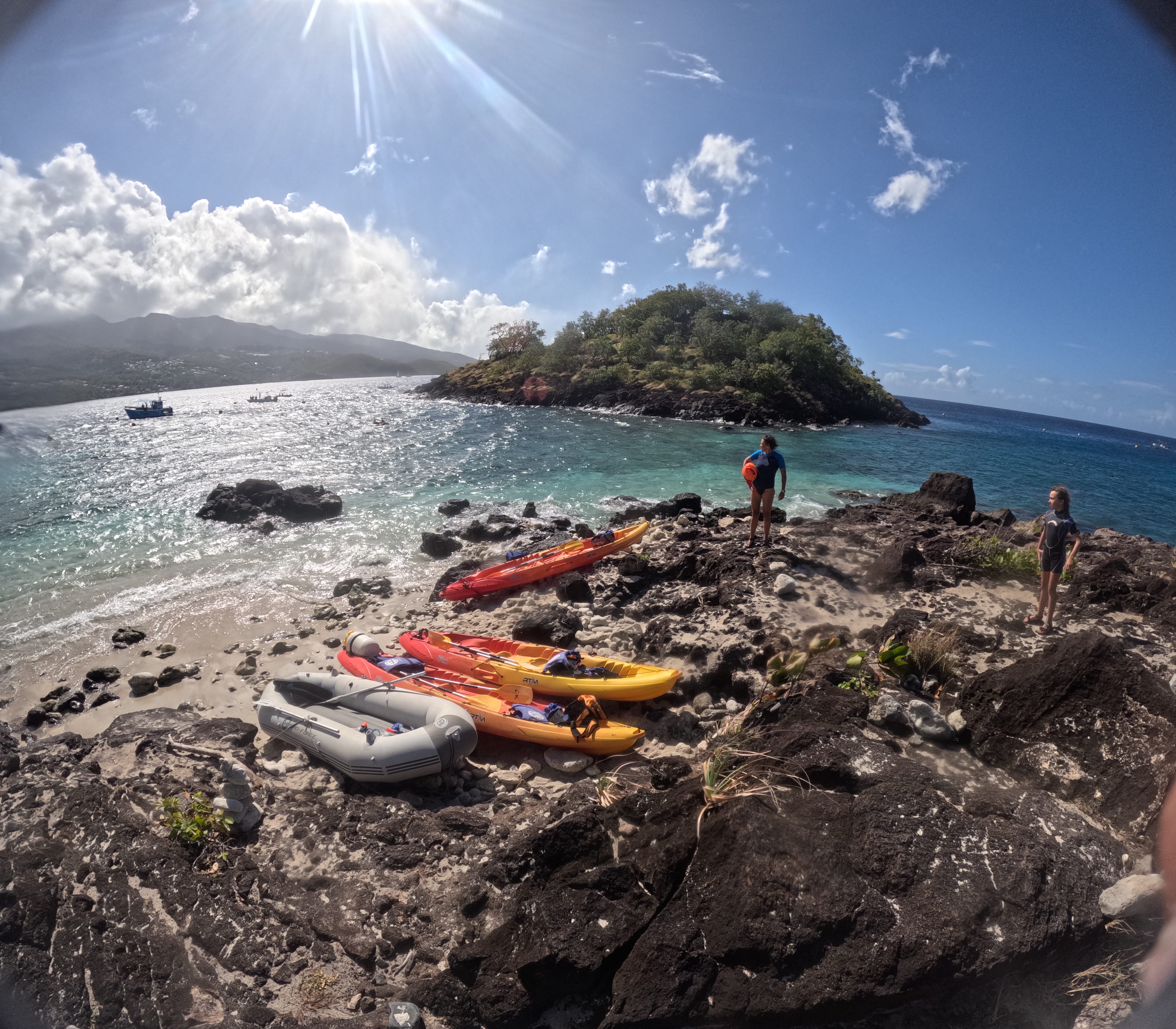
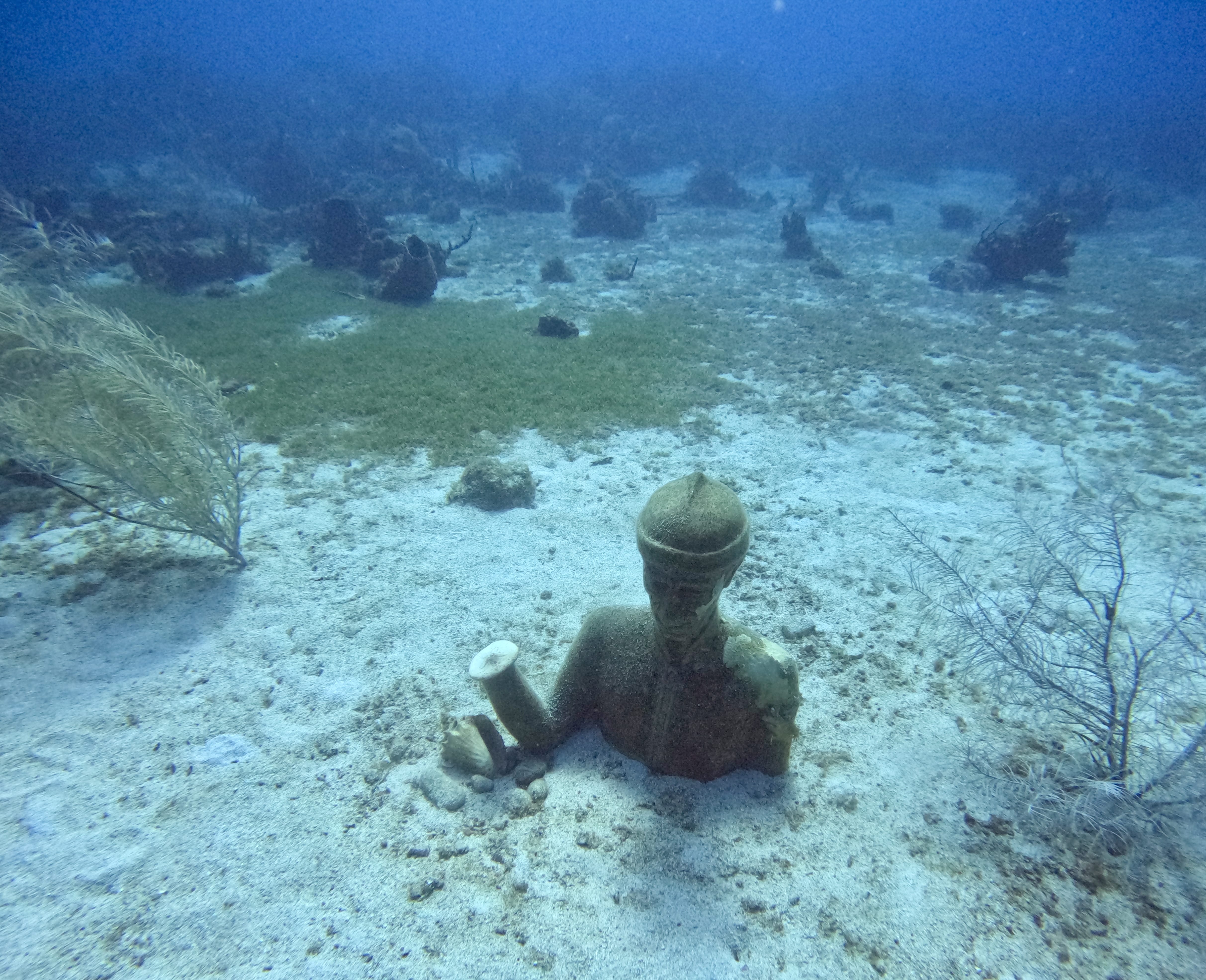
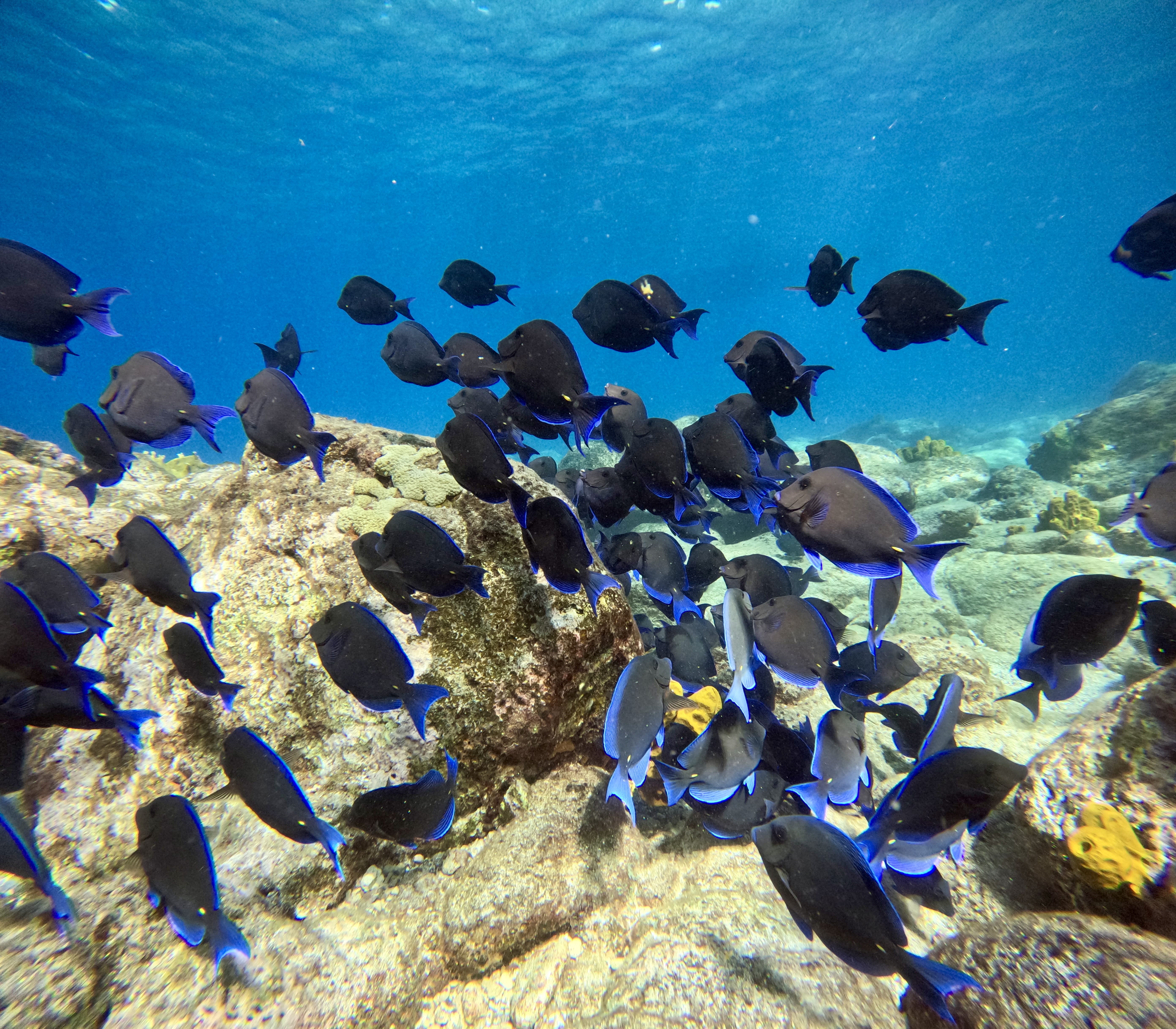
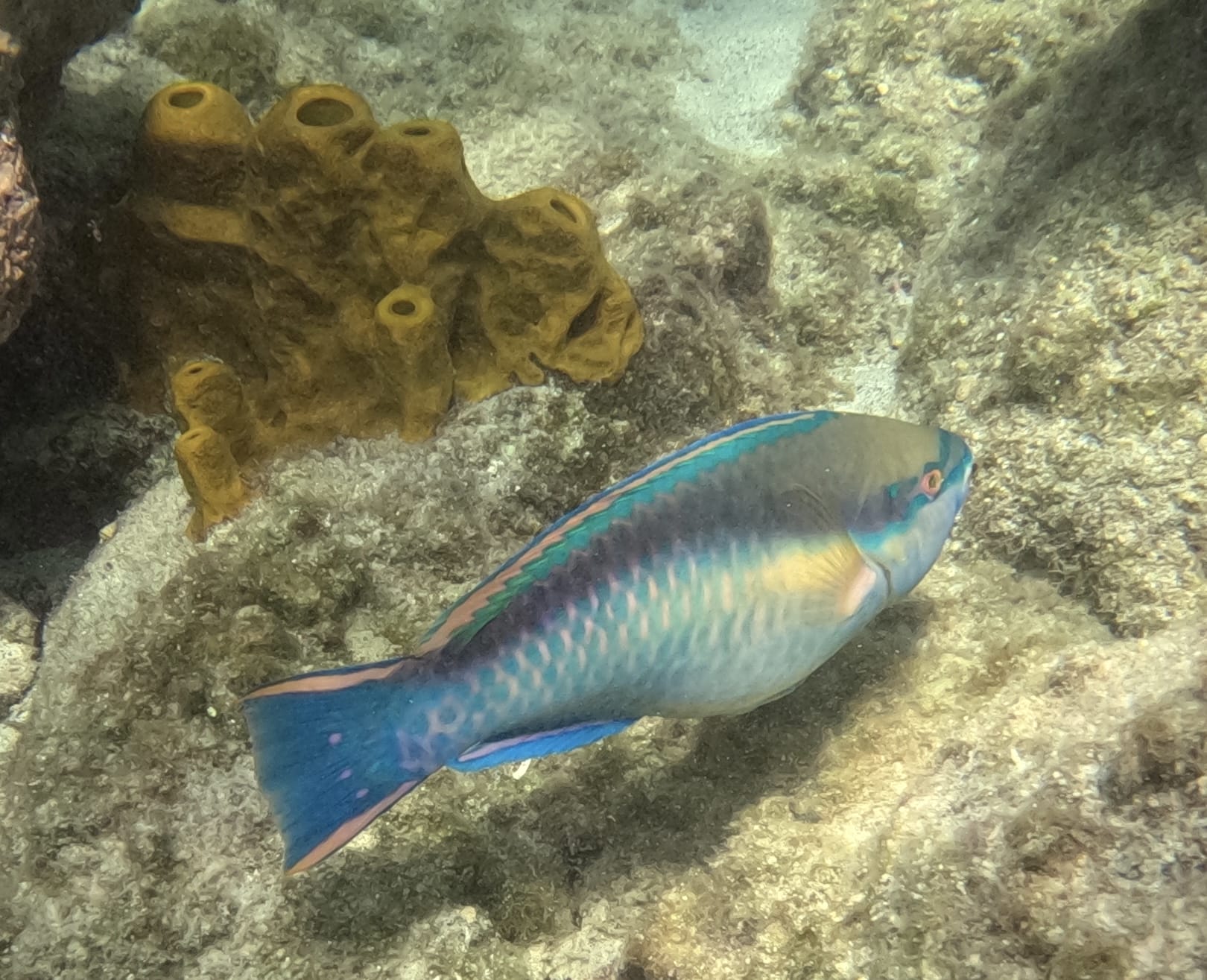
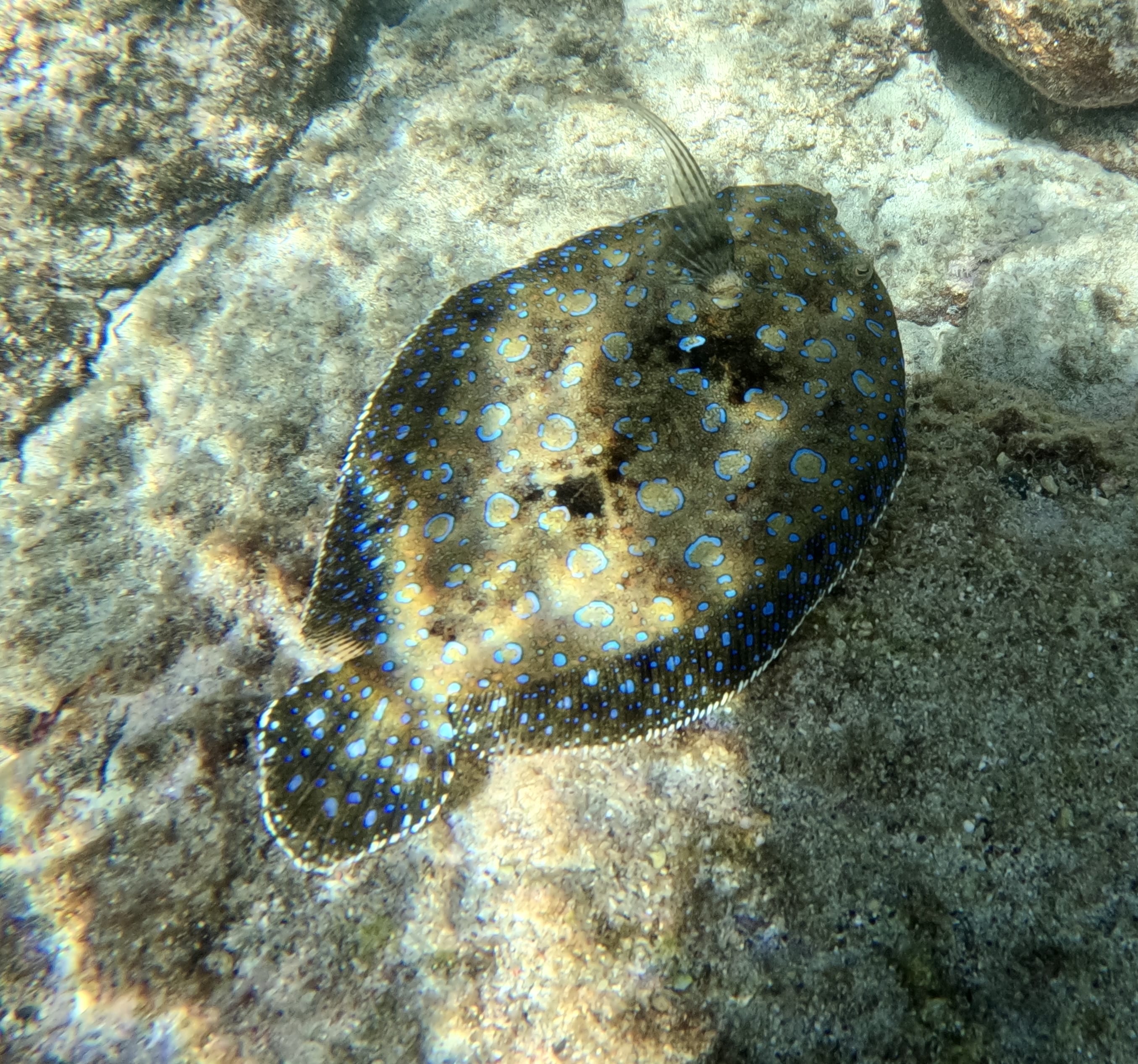
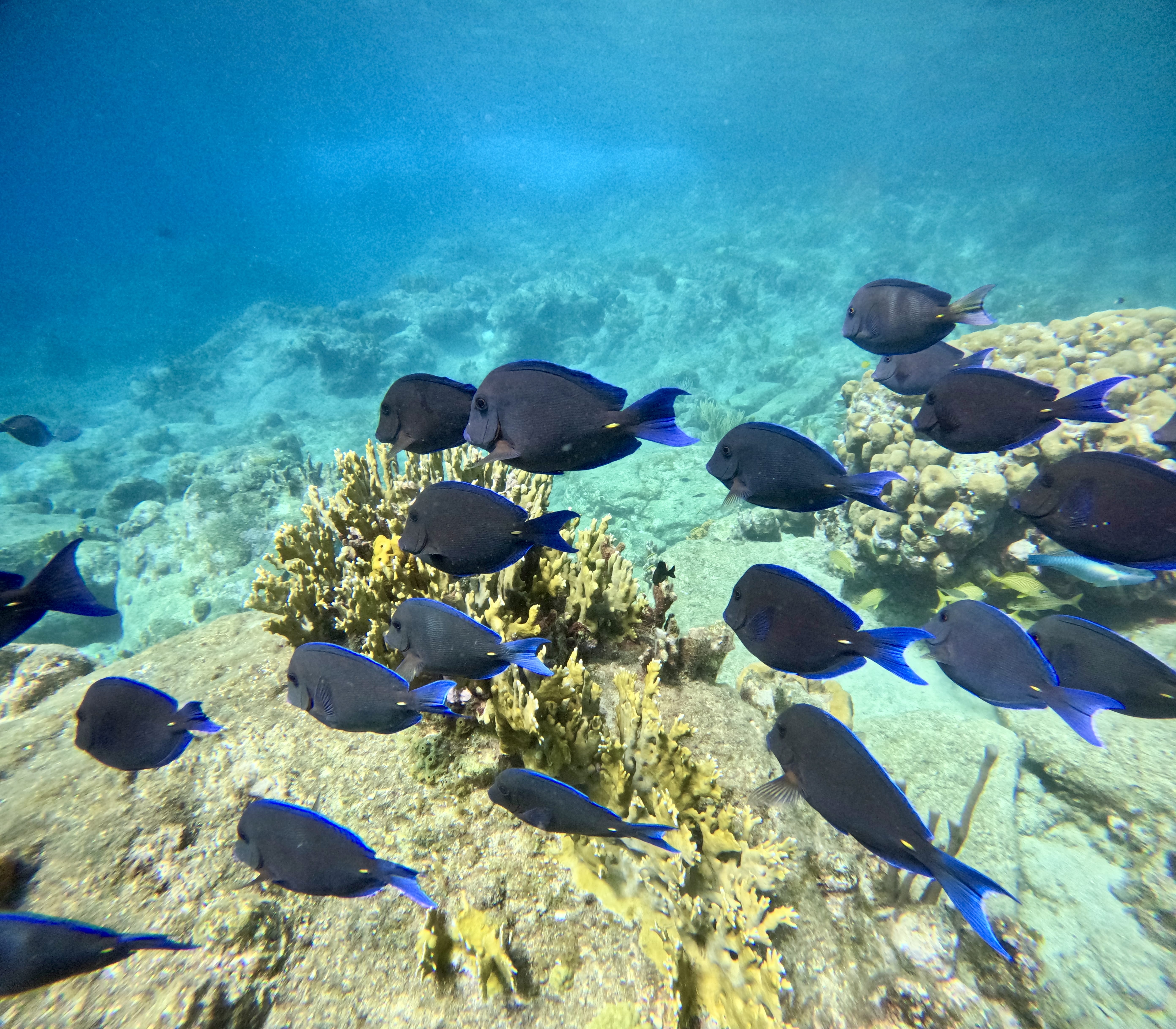
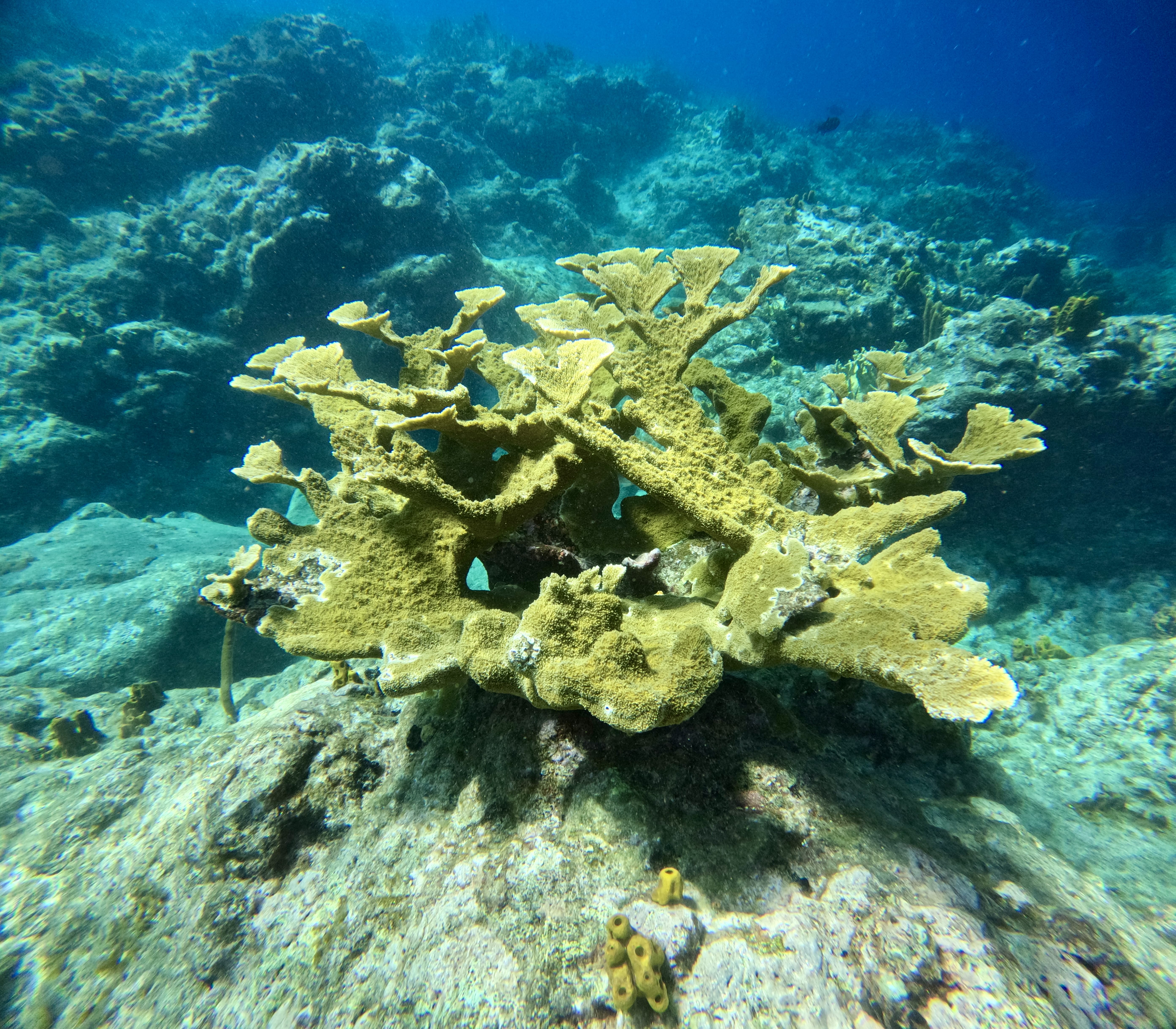
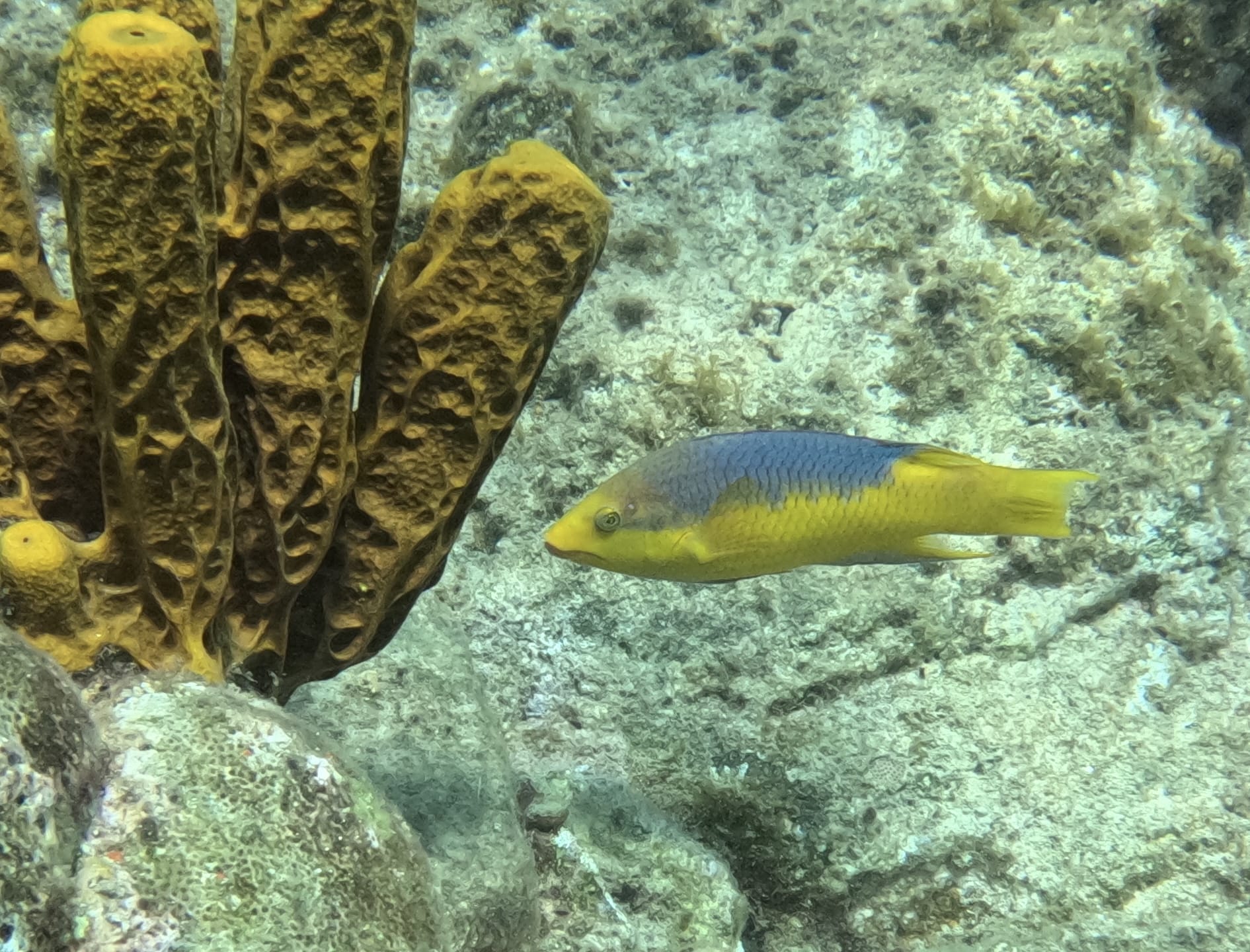
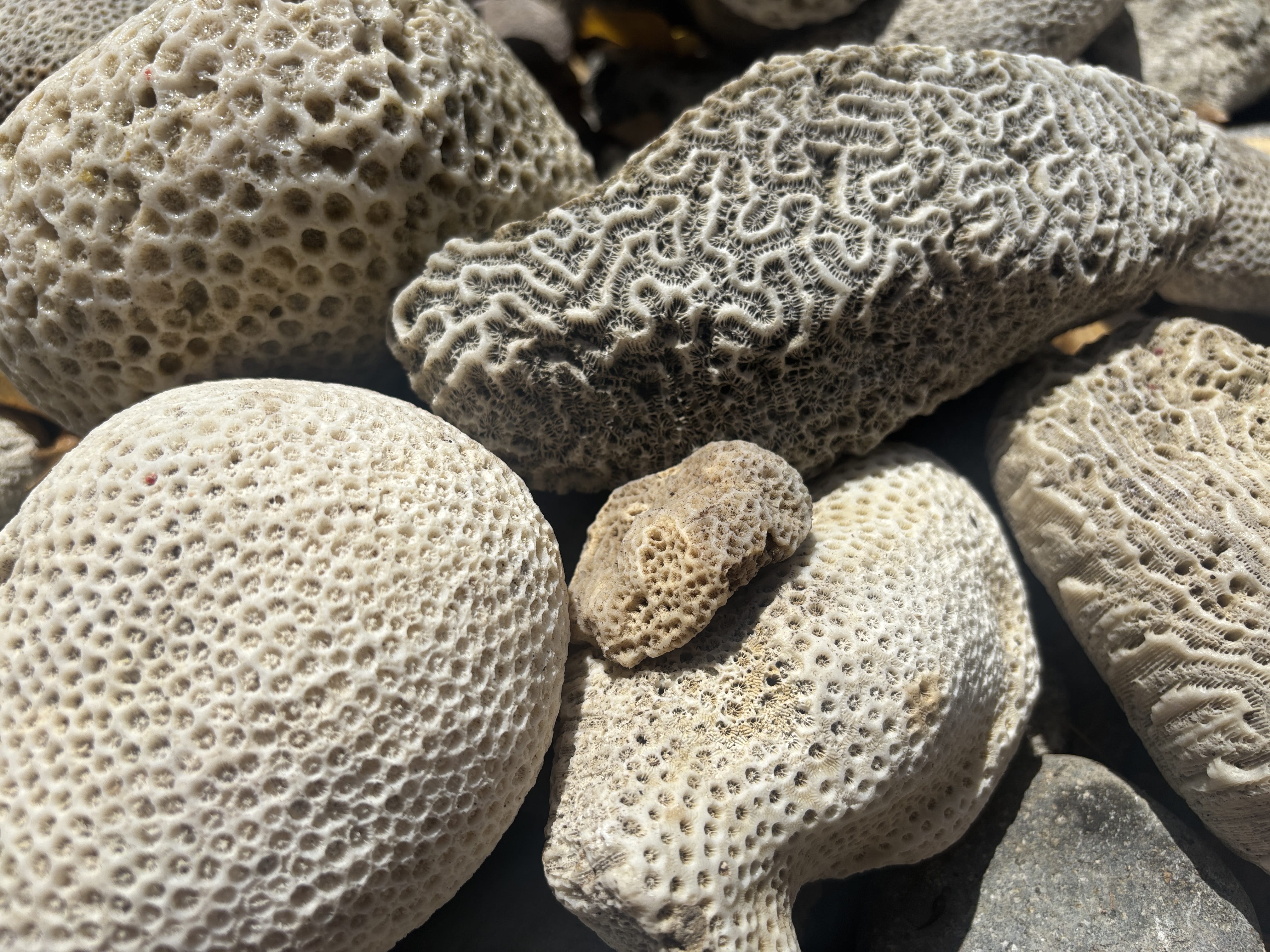
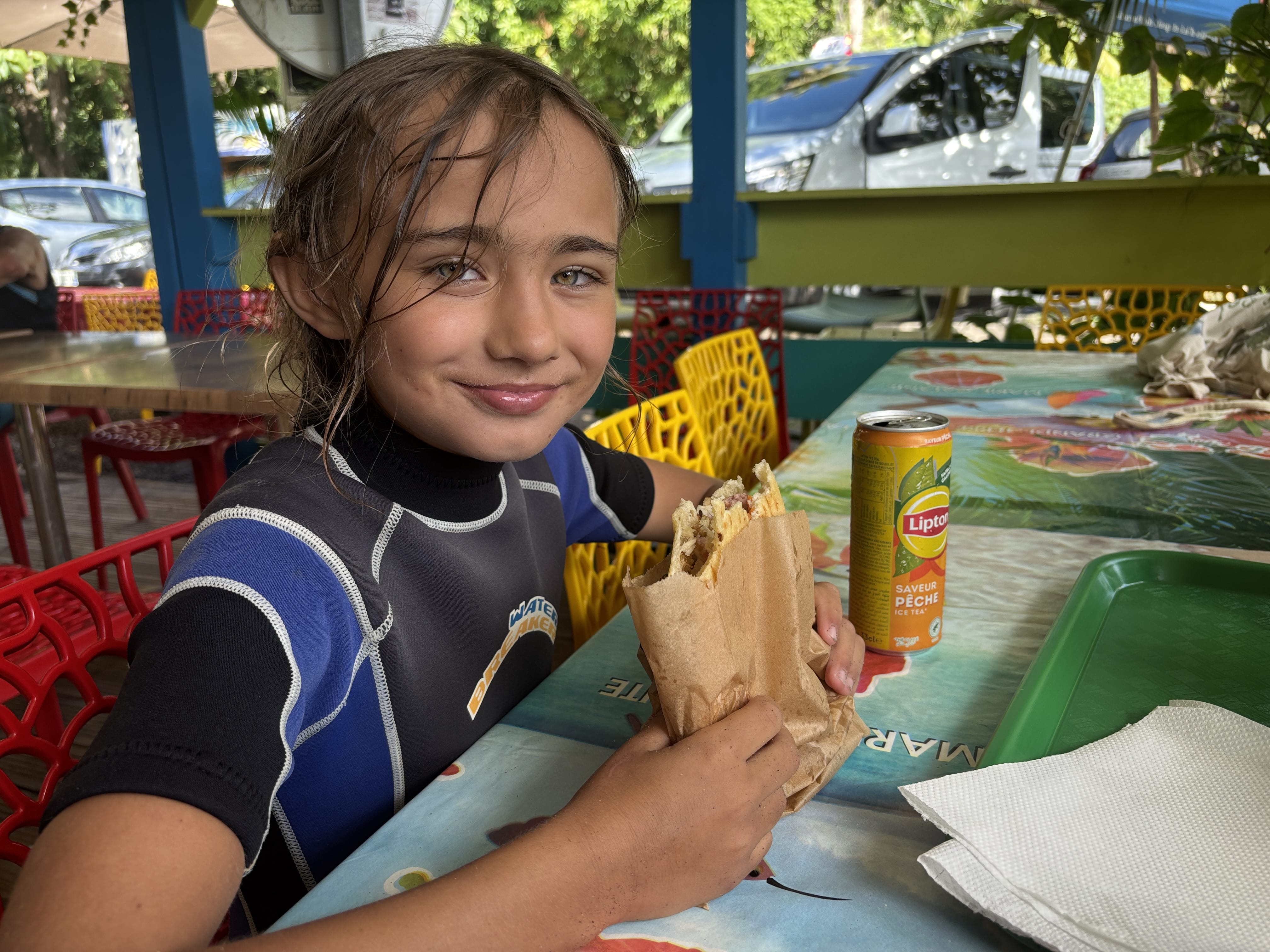
We want to go back, but the wind has picked up even more. Kamil decides to try rowing to the shore; if it doesn't go well, he'll jump into the water with fins and push the dinghy while Zuza takes over the rowing. Just in case, we're heading straight into the wind, so if anything goes wrong, it will push us back to the island. We have a little over a kilometer to cover. With stronger gusts, the dinghy stands still, but Kamil is determined and slowly rows to the shore. At the pier, divers and the owner of the kayak rental congratulate him—the owner had to use a motorboat to get his clients because they couldn't make it, and they watched us to see if we needed help. Since we still have about 2 km along the shore to reach the yacht, we take a short break and eat local fast food called bokit (a warm sandwich with various fillings in something resembling fried pita). Then we return to the yacht, and on the same day, we head to the northern end of Guadeloupe to set off towards Antigua the following day.
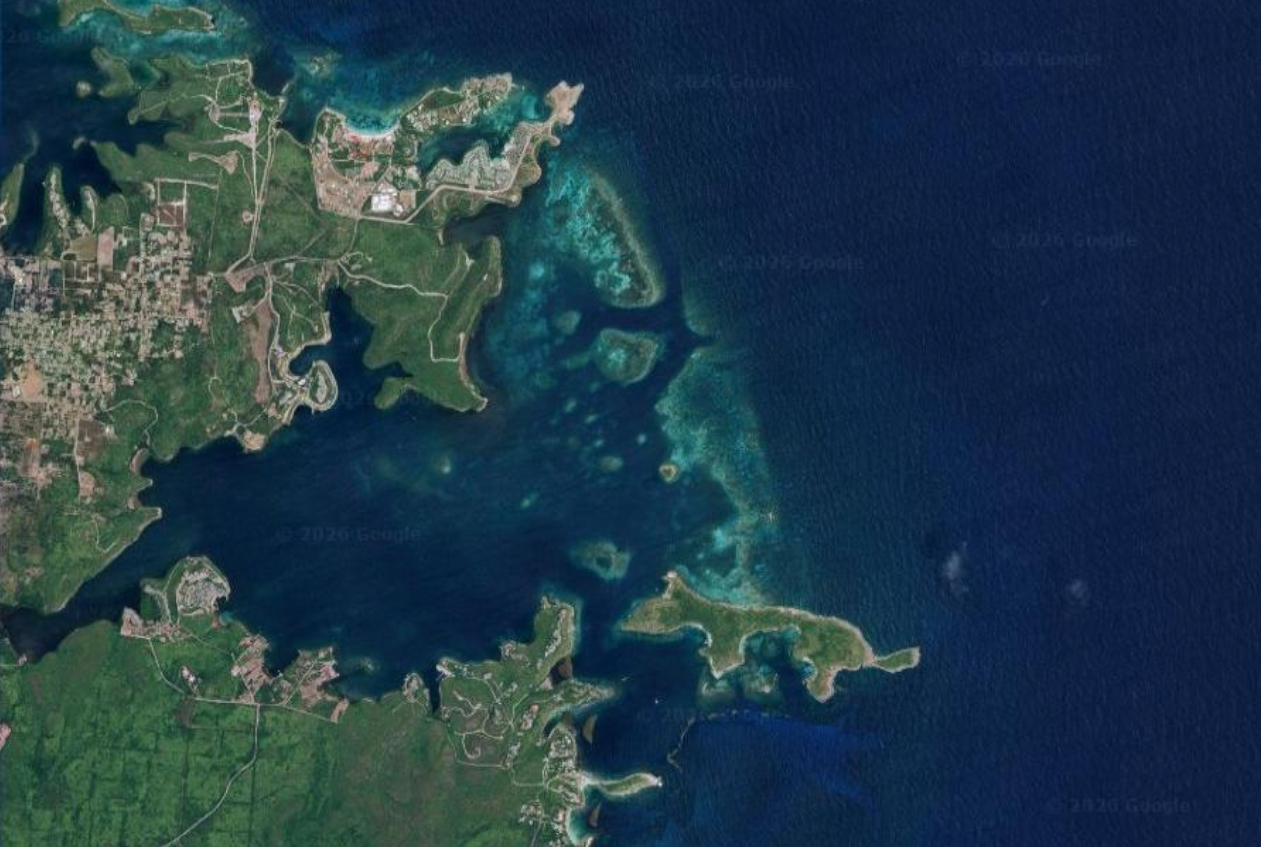
Initially, Antigua was not part of the plans. An Australian sailor met at a PAYS barbecue told Kamil about an incredible anchorage on the eastern side of the island—open to the Atlantic, but separated from the ocean by a coral reef, offering a beautiful view without waves. It's like being in an atoll, though formally it's a "barrier reef" (an atoll cannot have a bigger island, only the reef and at most small pieces of land). We decided to visit it, as there was still time before the full moon, which we needed to sail to Curaçao (the moon provides a lot of light for half of the cycle, but is in the sky all night only for a few days around the full moon). Moonlight is particularly important due to the regional situation and the possibility of encountering unlit boats and military ships. We can’t monitor them on the radar all night – it would kill our small battery.
Antigua
At 4 a.m., we set off for Antigua. We sail close-hauled, so we unfurl both sails, though reefed. The wind is blowing at force 5 with gusts up to 6. The waves have had the entire Atlantic to build up, so they are considerable. It's more sailing than yachting. When we are about two miles from the port, a sailboat on a spinnaker emerges from behind the island. It sped along at the speed of a motorboat. Just before the port, it dropped the spinnaker as smoothly as we'd never seen before. It stopped alongside us in a drift, and the small French crew looked to see if we were okay, then sailed to a well-thought-out location—deep enough and allowing time to lower the mainsail but well-protected from the wind and waves. We followed their lead (we would have lowered our mainsail on quite a wave and not pushed it between the reefs). We were impressed by such skills. It takes excellent sailors to execute such maneuvers with a spinnaker in such a location and in such weather. It was probably a regatta crew of some higher class.
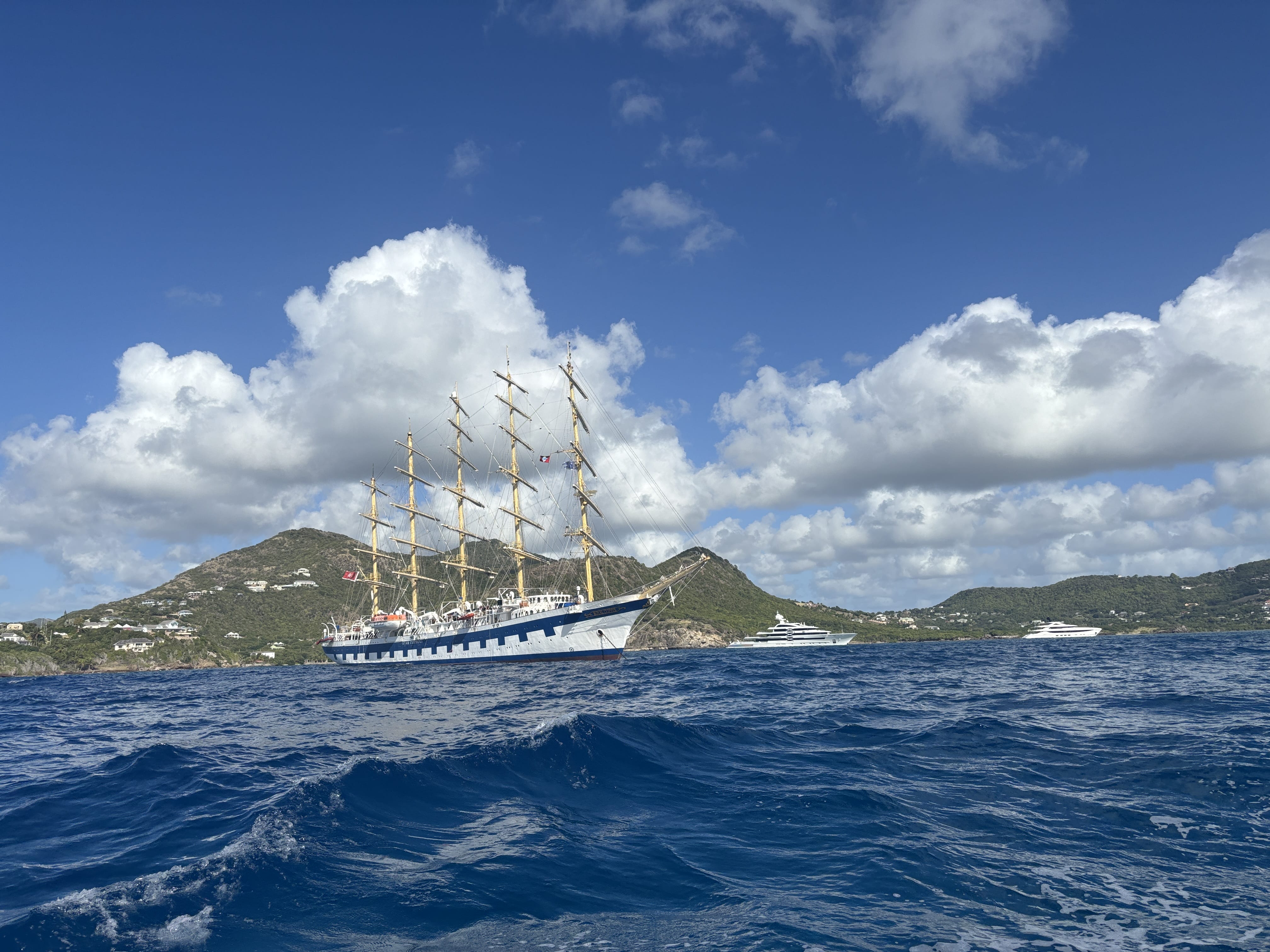
Around 3:00 p.m. we park with relief on a buoy in Falmouth Harbour. During colonial times, this and the neighboring English Bay served as bases for the British Royal Navy. At one time, even Horatio Nelson was stationed here, and now the carefully restored buildings are a tourist attraction. English Bay is still used by yachts as a so-called Hurricane Hole - a place of refuge when a hurricane passes through the area. In contrast, a superyacht port has been developed in Falmouth Bay, and indeed, many of them are anchored here – yachts so large that at first, we mistook some for warships (gray, yet up close they are clearly luxurious). In addition, there are modern three-masted ships, motor yachts with helicopters on deck, those that open a small section of the hull to reveal a parking space for ready-to-use jet skis, and other marvels.
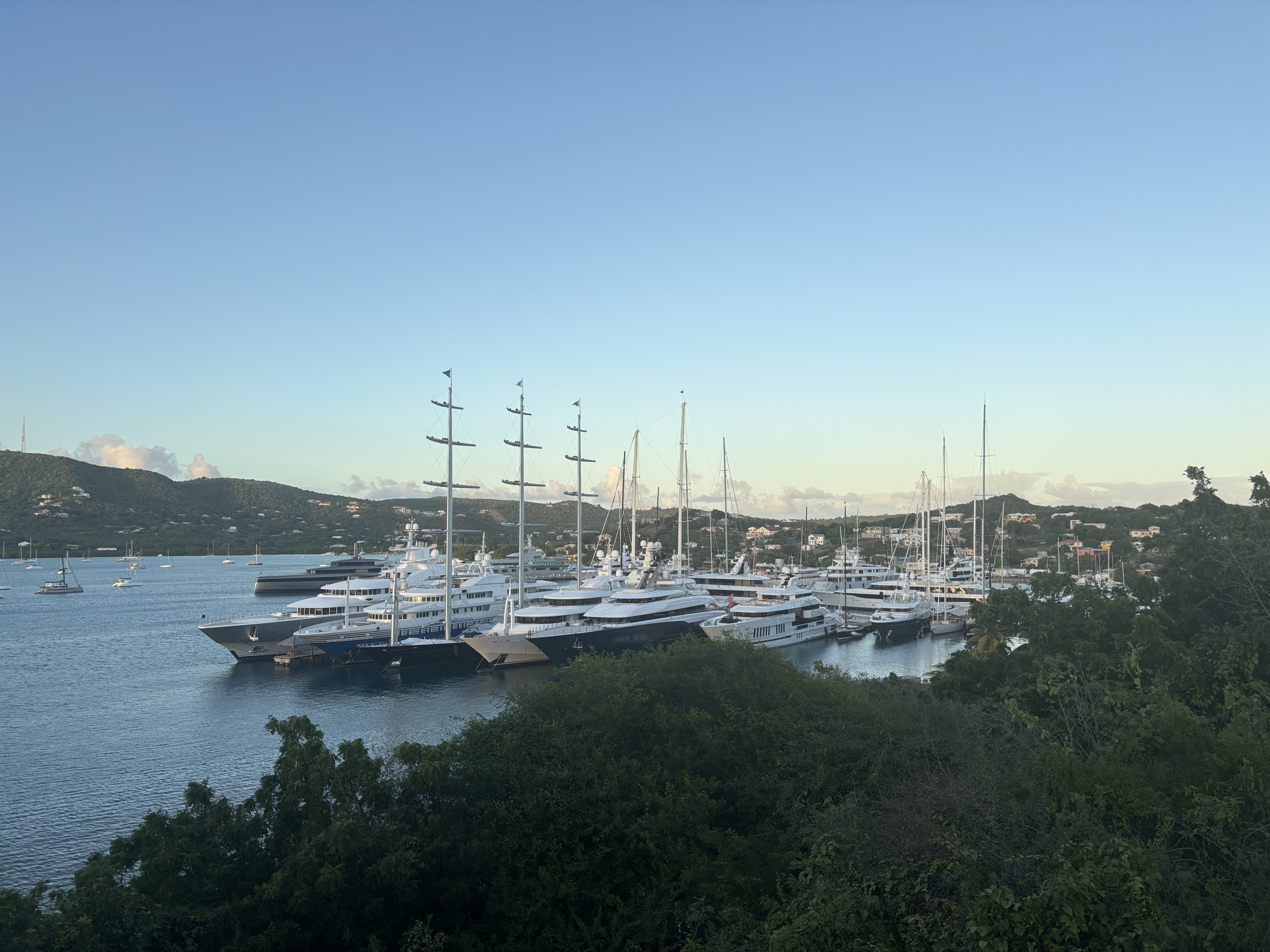
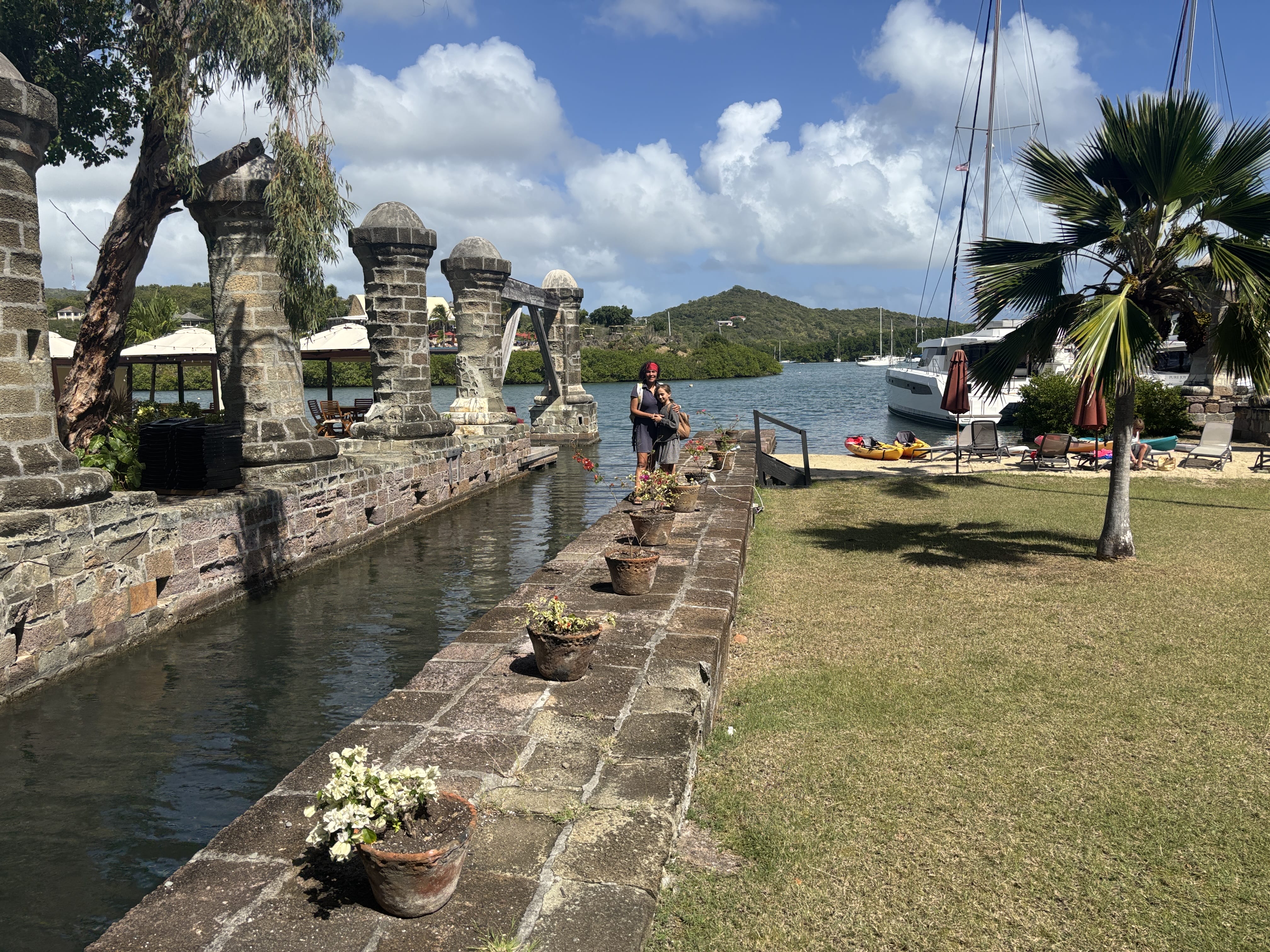
Antigua advertises itself as the heart of the Caribbean. It is said to have 365 beaches, one for each day of the year. It is one of the most expensive islands in the Caribbean - a series of fees are charged at check-in. While the trash fee is understandable, others are less so. We are most surprised that a child cannot be onboard a yacht as a crew member, as minors are not allowed to perform such a function according to local law. This means that a child is counted as a passenger, and a fee of $30 USD is charged for a passenger. As another sailor noted, charter yachts can list paying passengers as crew members, but families must pay for their children as if they were tourists. Two days on a mooring ball costs almost $150 USD (including check-in fees and "climate" fees for staying in a historical location).
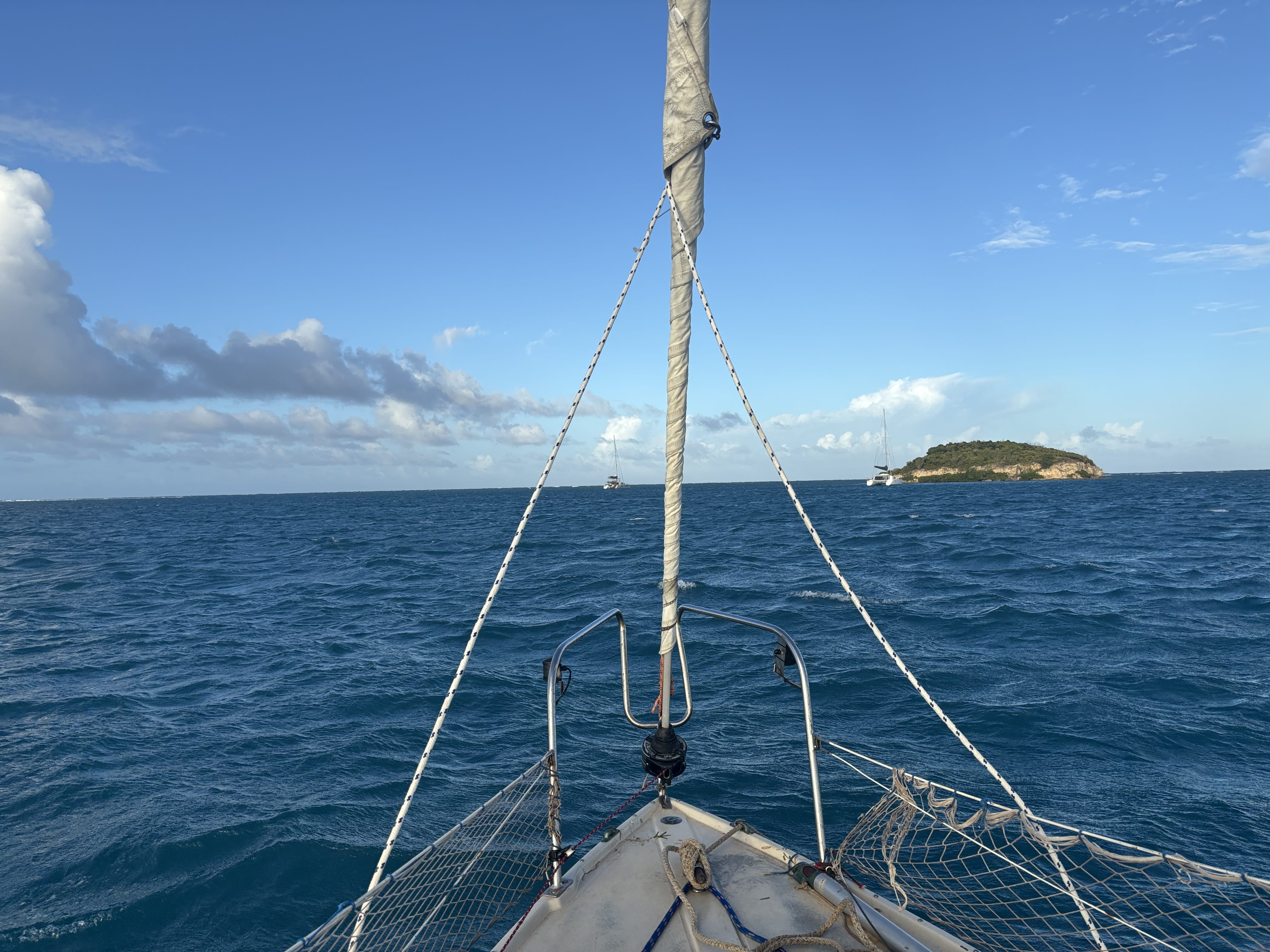
We wait one day for the wind to weaken slightly, and on January 21st we set off from the deep, well-sheltered Falmouth Bay and head east towards the anchorage behind the barrier reef. The distance is short - 10 miles, but we must tack because we are heading directly into the wind (we end up sailing about 30 miles in total). The forecast was for wind speeds of around 21 knots with gusts up to 25, which seemed manageable - it turned out we also had to contend with confused waves and sudden rains, which pelted so hard that it was impossible to keep our eyes open and brought with them very strong squalls.
Before entering between the small islands where the reef is located, the water depth decreased to about 12 meters - the light blue breaking waves may look beautiful, but for a sailboat, these are dangerous conditions. Additionally, about 3 miles before the end of the last tack, we notice that our jib has torn. Fortunately, it can be furled, but under the mainsail alone, the boat goes much slower to windward, the wind is expected to strengthen after 4:00 PM, and it will get dark before 6:00 PM. We decide to start our poor engine. Fortunately, the "Katarina" manages, and before 4:00 PM we hide between the small islands. The anchorage where we originally planned to stop is tiny and already occupied by a boat, so we move further to the bay an Australian told us about. It is indeed beautiful and calm, but the only somewhat sheltered spot from the wind is already filled to capacity. We have no choice but to anchor in the middle of the bay.
The bottom is a mix of sand and seaweed, so there's no guarantee the anchor will hold well. Kamil carefully chooses a spot - if we get dragged, there will be enough space to drift without risk of running aground. This precaution turns out to be fully justified. After dark, the wind rises to 23kt with gusts up to 29kt. Overnight, rain with even stronger squalls arrives. The anchor slips, and we start to drag. We immediately start the engine. In the downpour, we stand ready for action - if the anchor doesn’t catch soon, we will have to raise it, head directly into the wind (watching the GPS track on AIS), and drop it again. Fortunately, after several meters, it holds. It remains secure despite more squalls, and the anchor alarm doesn't sound until morning. Nevertheless, it is hard for us to sleep peacefully.
At breakfast, we see kitesurfers. This bay is certainly a paradise for someone with a windsurf or kite on their yacht. Unfortunately, we can't handle kites, and our yacht is too small for windsurfing. The place is beautiful, with an open ocean view, but it would be friendlier for a yacht in somewhat less gusty conditions. For us at least, it is a strange feeling to be anchored and step onto the deck with a gusty wind blowing over 20kt and constantly howling.
Since the wind dies down a bit during the day and the anchor holds well, we spend the next day in the same place, appreciating its charm and finally completing the first part of our blog for this year. We also want to see at least one of the 365 beaches (there are a few in the bay), but everywhere we want to park close enough to the beach, the squalls pull the anchor out. So, we cannot leave the yacht and have to give up on the beach. We return to the "safe" spot in the middle of the bay and spend the next day there as well.
The last two days before departure are spent again at Falmouth Harbour. Our destination marina in Curaçao is located far from the city, so we decide to do some major shopping here. Kamil reads on the NoForeignLand app that there is an inexpensive eatery with delicious food near the port (on Google, it has a rating of 4.9 with a considerable number of reviews). We check it out, and indeed, it's clear that Zelma's Kitchen is a family business—the selection of dishes is small, but everything is delicious and fresh. We enjoy it so much that the next day we return for a second round.
Curaçao
We aim to sail the Caribbean Sea as close to the full moon as possible, but strong winds are forecast for the full moon itself, and we do not wish to exhaust ourselves, especially at the start, so we decide to set sail on January 27th - although at the beginning we will miss the moon for the last few hours of the night, we will have a full moon near Curaçao instead. The nights are bright and calm, so we go without lights and a transponder. In case of military encounters, we'll turn them on, but we avoid catching the eye of potential pirates.
Typical "yachting." The forecast is between calm and a lull, so seeing the trajectories after the second day, we decide to switch the jib for the genoa. One thing is the dragging time. However, this suits us very well; it doesn't strain the sails or nerves. But the other is the forecast of stronger winds, which we still have a chance to reach Curaçao before (later they brought historically the lowest temperatures to Cuba). The only thing we need to be careful of is to reef the sail well on the roller when it is raining with squalls. No problem, because even at night, they can be seen from afar now.
We put up the genoa in the evening with very calming winds. We reef for the first time only during the day, and a problem arises with the roller. Fortunately, while unreefing after a squall rain, not before it. We discovered before, that if the sails with halyard luffs shorter than the forestay, are extended with a line at the top, the roller might get blocked. Often halfway through the reefing, the sail can't be furled or unfurled anymore, so it can't be lowered. The only option is manually unwinding the sail by looping it around the forestay. Practically possible only in light wind when the "balloons" formed at the top can be sufficiently pulled downward. Other options include tacking in one direction until the sail is unfurled (usually on the engine). In both cases, with disconnected sheets, and rather impractical in bad weather. On the other hand, extending the sails from below was not a problem. Sails still worked low enough, and at the same time, they stopped grazing the bow rails and getting damaged by them. And the roller was not jamming anymore.
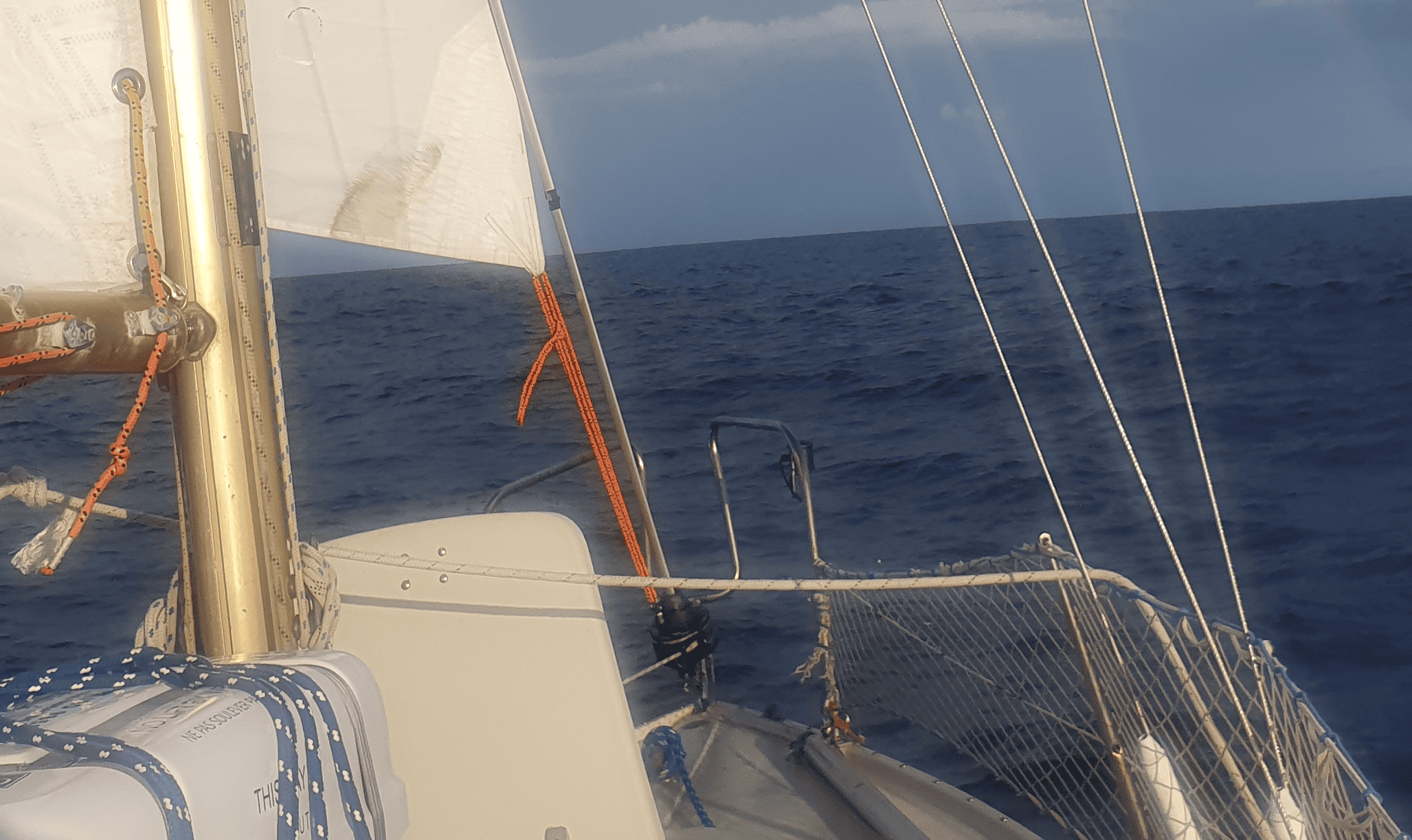
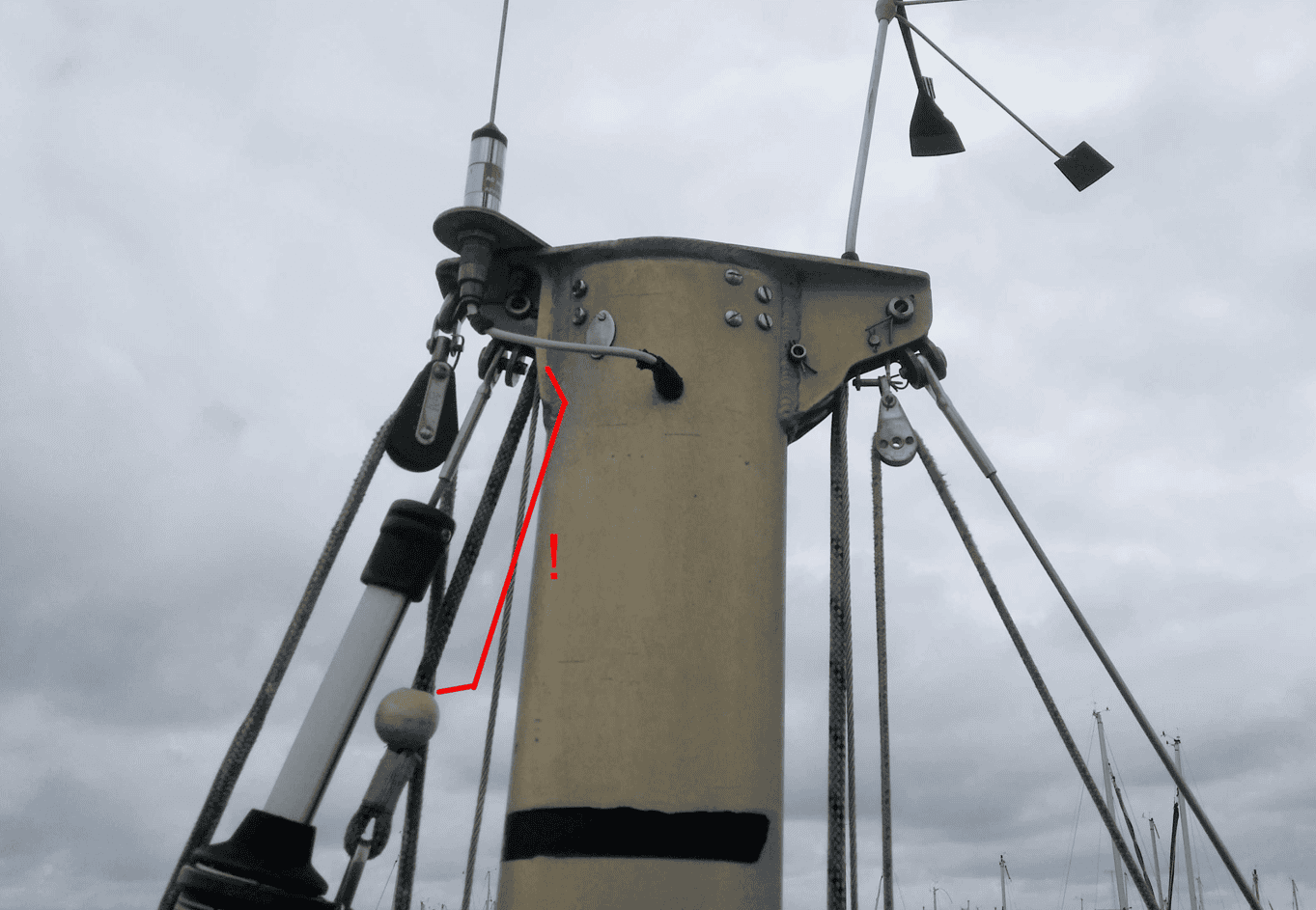
Later, we couldn't quite remember what exactly the problem was. This year, it turned out that it was a matter of the block on the rigid forestay not being pulled tight to the very top of the mast (so that the end of the halyard remaining above it is less than a few cm). Likely, extending the sail at the top would work if this condition was met. This time, we set the genoa, which never needed extending. However, we didn't notice that the chafed sheath of the line at the end of the halyard got jammed in the block at the top of the mast. The genoa had to remain not fully tensioned, which was not clearly visible on the rigid forestay, and a few cm of the halyard at the top remained loose (although it was tight from below). Then, the halyard wraps around the rigid forestay and effectively blocks its rotational movement in both directions. This also happens with shorter sails, even when the halyard is tight, but the block on the rigid forestay is not at its very end. Even a tensioned halyard can then make one twist on the forestay and effectively block its rotation.
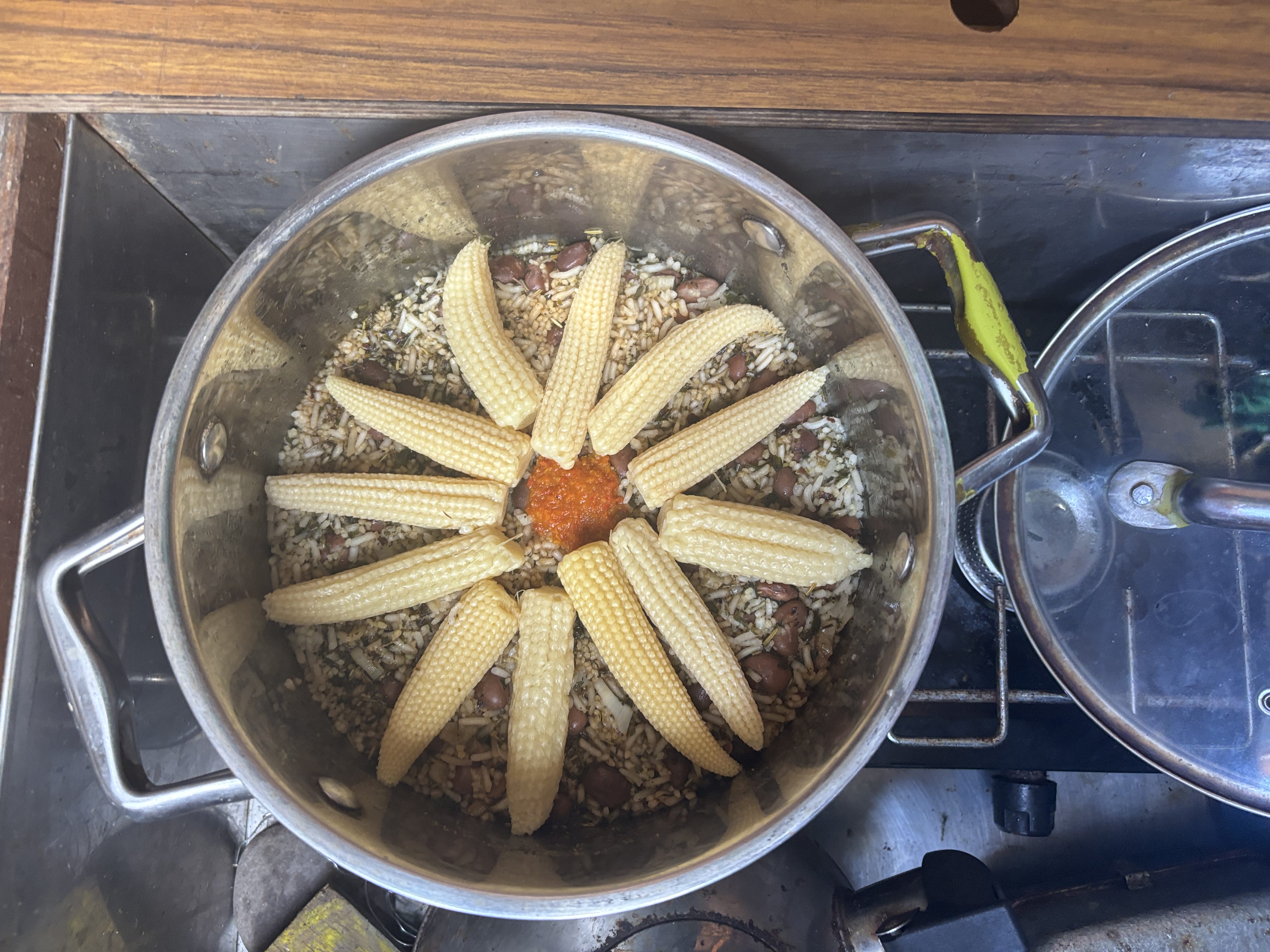
After an hour of diligent work by the entire crew, we have the halyard repaired, the genoa is working, and we return to cooking rice with beans and spices. A popular dish in the Caribbean, tasty, and also quick and easy to make.
On the fourth night, the wind is strong and terribly squally. Moreover, under a clear sky, so the strikes are not announced by typical cumulus clouds with a shelf. We have to go almost to zero, with a very sharp broad reach. If this continues longer, we will miss Curaçao. So the next day, when it calms down a bit, we make a reserve of height with close-hauled (which significantly slows us down with the wave), because the forecasts for the next night are not any better. The maneuver helped, and despite similar conditions, the night passes more peacefully. We can go with a fuller broad reach (further from the beam reach), and when the yacht starts to behave awkwardly, we heavily roll the front sail, slow down, and then it still handles well on the autopilot. This has become a rule. In worse conditions, when the yacht is zigzagging and taking waves on the side, there's no point in trying to adjust, just slow down. It was a mistake not to change the genoa to the jib while the weather was better. Although we can reef it freely on the roller, even when we wait for an inappropriate course relative to the target and go to the minimal size that ensures steerability, you can feel how much force is acting on the roller line. And a sail of this size would be difficult to control if it suddenly unfurled.
The last day is calm from midday. Kama out of boredom tries to catch "sargasso" with a net.
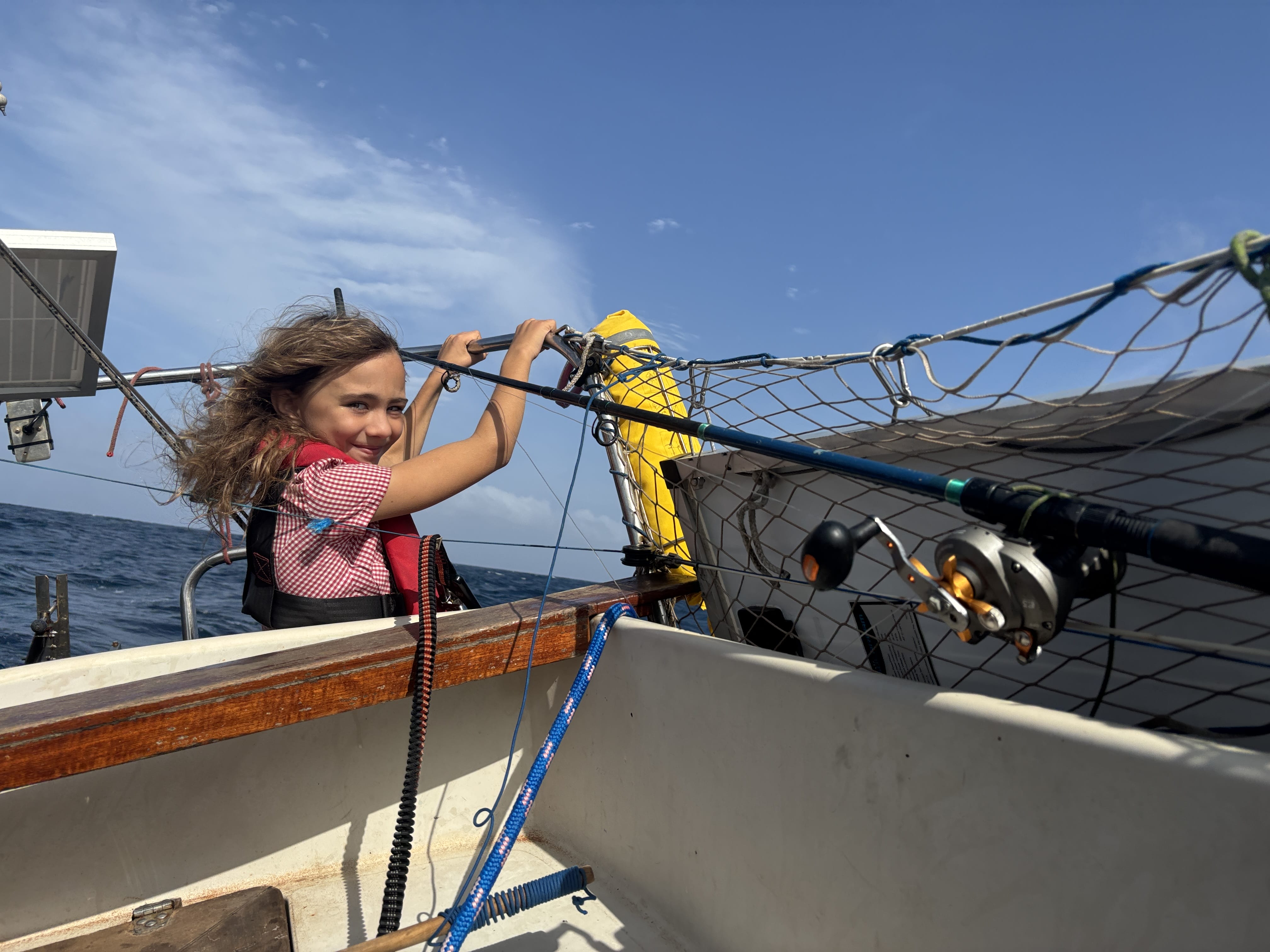
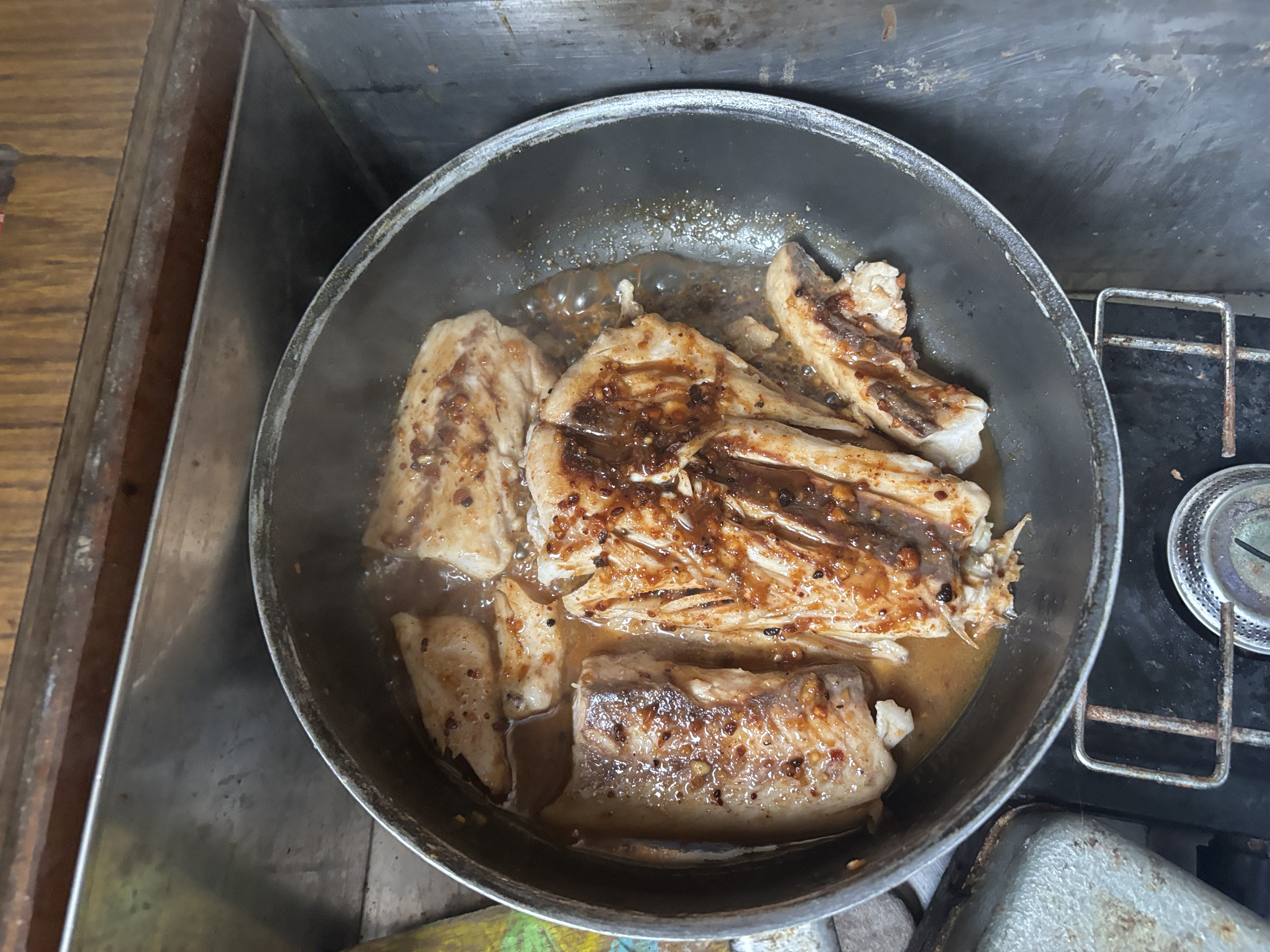
It’s not going well, so Dad decides to help with the fishing rod. The whole trip nothing was caught except for two barracudas (the second one was released alive), because after a minute the hook is always pulled by sargasso and there isn’t a moment when it doesn’t float on the water. So the rod waits. They cast the rod together to catch some sargasso but pull out a big mahi mahi. The best pieces are fried in Jamaican “Jerk” spice mix and served drizzled with a prepared natural mix peanut sauce (peanuts, sugar, salt, paprika, garlic, and oil from something). We really like it, the mix is brought from Suriname and was meant for fish. The dinner is delicious and disappears from the pan to the last drop of sauce. Smaller pieces of fish are waiting cooked in the pressure cooker for soup tomorrow. However, Neptune bids us beautifully farewell this year. By morning we should reach Curaçao.
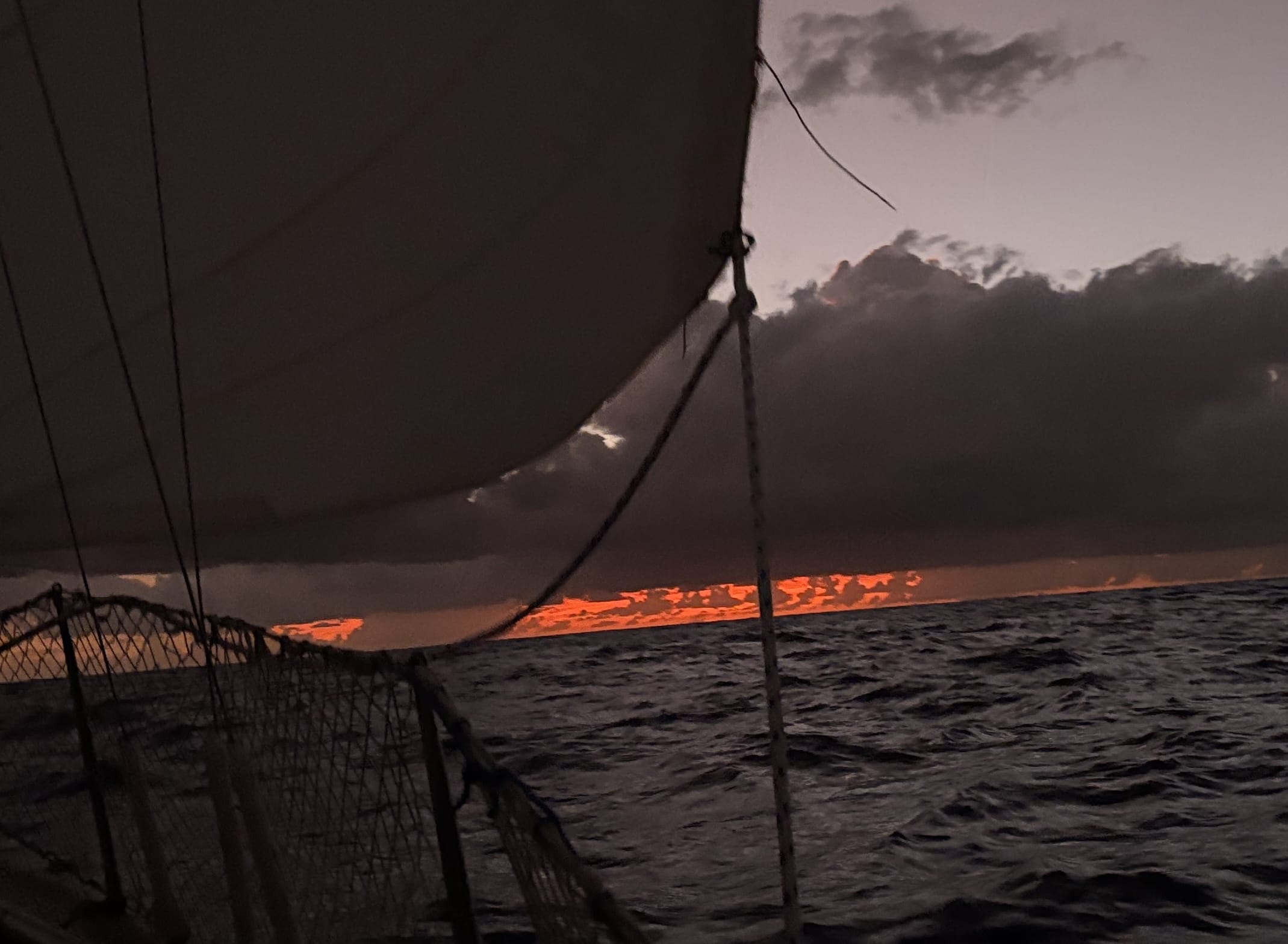
We arrive around five in the morning. Although it is a full moon, we don't dare to enter the narrow, shallow, winding channel that requires maneuvering between water-covered reefs and is completely unmarked. As it is the only way leading to Spanish Waters, where our marina is located we wait, moving very slowly. Next to us, a huge drilling ship that is lit up like a Christmas tree is also waiting - they will only be able to enter Caracas Bay at high water. It so happens that high water comes an hour before sunrise, so we are called by radio and warned to move behind its stern, because when such a giant maneuvers, there is no joking around.
Fortunately, it slowly gets lighter, and we can sail into our channel. There, we moor at a jetty by the beach, where we wait until the customs office opens. Marylin approaches us - she and her husband have been moored here since the pandemic and have received a key for their own use for the showers - the sailor asks if we want to freshen up. We are extremely grateful to her because we are dreaming of a bath in sweet, warm water.
After clearance, we head to our destination marina for the year. Spanish Waters is a large sprawling bay - unfortunately shallow in some places, so navigation requires caution. Our marina is small and has a family atmosphere. Clement and Blanche, at we should reach out if we need a ride or information on where to buy yacht parts - they've been here for a month, doing a thorough renovation of their boat and have probably visited all the chandleries in the area. In the evening, they invite us for dinner. We talk about our voyages. They came to the Caribbean on a different boat and used to host tourists. Now they want to move to the Pacific, so they exchanged their previous 42-foot boat for a 60-foot yacht. The previous owner treated it more like a summer home, so some things - like the retractable keel, need repairs. Then they will probably sail a season in the Caribbean and head to the largest of the oceans.
The next day, we move to the designated spot where Stubborn will spend one and a half years. Here, our neighbors are Ria and Wietze, a retired Dutch couple. They have been spending winters here for 10 years, sailing through the western Caribbean, but now they are gradually planning to sell the boat - they are increasingly struggling with long flights, so they plan to spend winters somewhere in southern Europe. They are also happy to offer us advice and assistance.
Before we leave the boat, we have a long list of tasks to complete, and as usual, some turn out to be more time-consuming than we anticipated. During this year's voyage, we faced a fuel problem. Right from the start, we noticed a brown sludge in the water separator. We changed the filters and used a tube to drain the sludge from the bottom of the tank. We added more poison against microorganisms living in the fuel and causing such contamination. However, the sludge continued to appear in the water separator. In Curaçao, we drained all the fuel from the tank. We found a trace amount of water and confirmed that the problem was biological in nature (the growth of microorganisms requires water). It took a long time to scrape out and remove a sticky, dark substance resembling resin from the bottom of the tank using a metal rod. Later, we discovered that ethyl alcohol dissolves it well, and we managed to clean the tank thoroughly. Luckily, we noticed the same brown, sticky sludge in one of the jerrycans, which definitely contained fresh fuel. There couldn't have been water in it, and besides, we always added poison (diesel biocide) to freshly purchased fuel. Incidentally, the fuel in two other jerrycans became slightly cloudy, and all of them had a brown, sticky sediment at the bottom. Two tanks were recovered from the bilge during the previous season, but one was 100% clean, and the problem was present in all. In the fourth, the fuel was clear, with a slightly different color and no sediment. A consultation with Chat GPT made the situation clear. In three jerrycans, we had fuel purchased in French Guiana (as seen in a photo from last season). It was biodiesel (French Guiana is subject to European Union regulations). We try to live "eco-friendly", but many ideas are quite exaggerated. Just as it's hard to drink thick yoghurt from the bottle because either it drips onto your face from the attached lid or splashes when it breaks off, there should be an option to buy fuel without the addition of frying oil. Let it be more expensive, but available. It turns out biodiesel oxidizes and gels over time, especially when stored in warmth (such as in a yacht tank). It's better not to leave an empty fuel system, as corrosion can set in. According to Chat GPT, the oxidation reaction of fatty acid methyl esters develops exponentially. Therefore, leaving fuel in the tank would probably require replacing injectors, regulators, and all fuel lines in the next season. Fortunately, in Curaçao, the regulations are different, and we buy normal, low-sulfur diesel (with Kamila driving us to the station in Wietze's sports Mercedes :). We just need to figure out if we need to dispose of over 50 liters of bio-fuel. In the next season, we will bring 1-micron and 10-micron filters and perform a process known as "fuel polishing", after which it might be usable, if it hasn't completely thickened by then (however, switching back to regular diesel before a longer stay).
During breaks between work, we explore the area around the marina. It turns out we are on a private, gated property, a former plantation turned into a luxury housing estate and a full-size golf course with grass so thick and green it looks artificial. It's hard to get around without a car here - the only bar and beach on the property are a pleasant 40-minute walk from us, but the nearest shop is outside the gates of the estate and would take over an hour to reach on foot. When we decide to go there, a guy gives us a ride one way, but when we want to return, it turns out we're not allowed to cross the estate gates on foot. The very nice head of security apologizes profusely, but the homeowners do not want any pedestrians - especially since we have a large, slightly tattered backpack with us and probably look somewhat suspicious. She calls one of her employees to drive us to the boat. On the penultimate day of our stay, we decide to go to the bar in Santa Barbara. We have eaten there twice already and are eager to try more dishes. Unfortunately, it is closed on Mondays and Tuesdays, and the neighboring restaurants only serve their own hotel guests (it is even prohibited to enter their part of the beach). On one hand, it is a super safe place to keep the boat (in this regard, we are very satisfied), but on the other hand, it feels a bit claustrophobic - we prefer places where we can observe local life a bit, and here we are enclosed in a golden cage. Fortunately, in this desolate area, we have the opportunity to observe the local wildlife. Iguanas are everywhere. They're quite funny – when they see a human, they first try to puff up their appearance and lash their tails to make a menacing impression, but when you get closer, the lizards flee in panic.
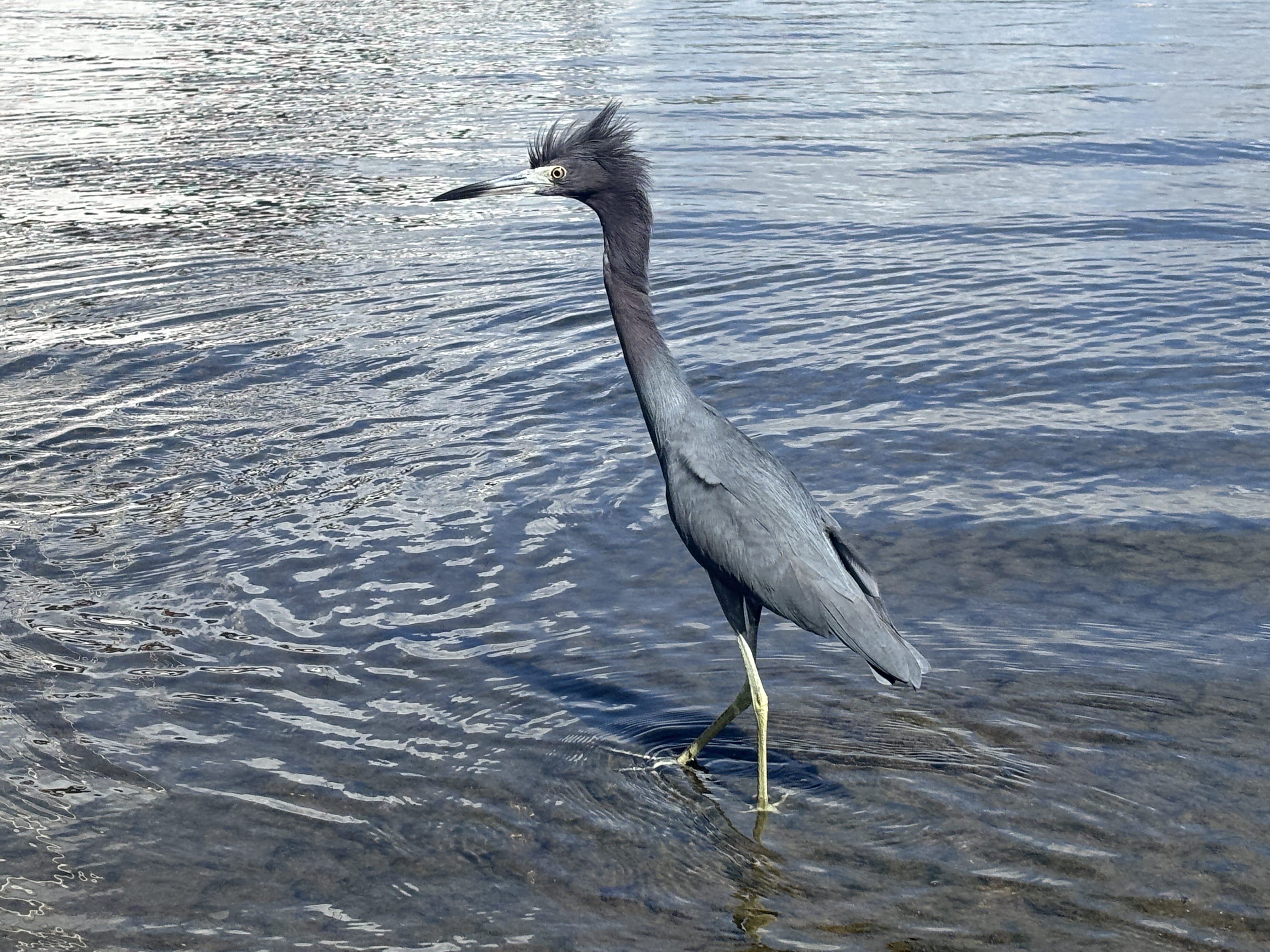
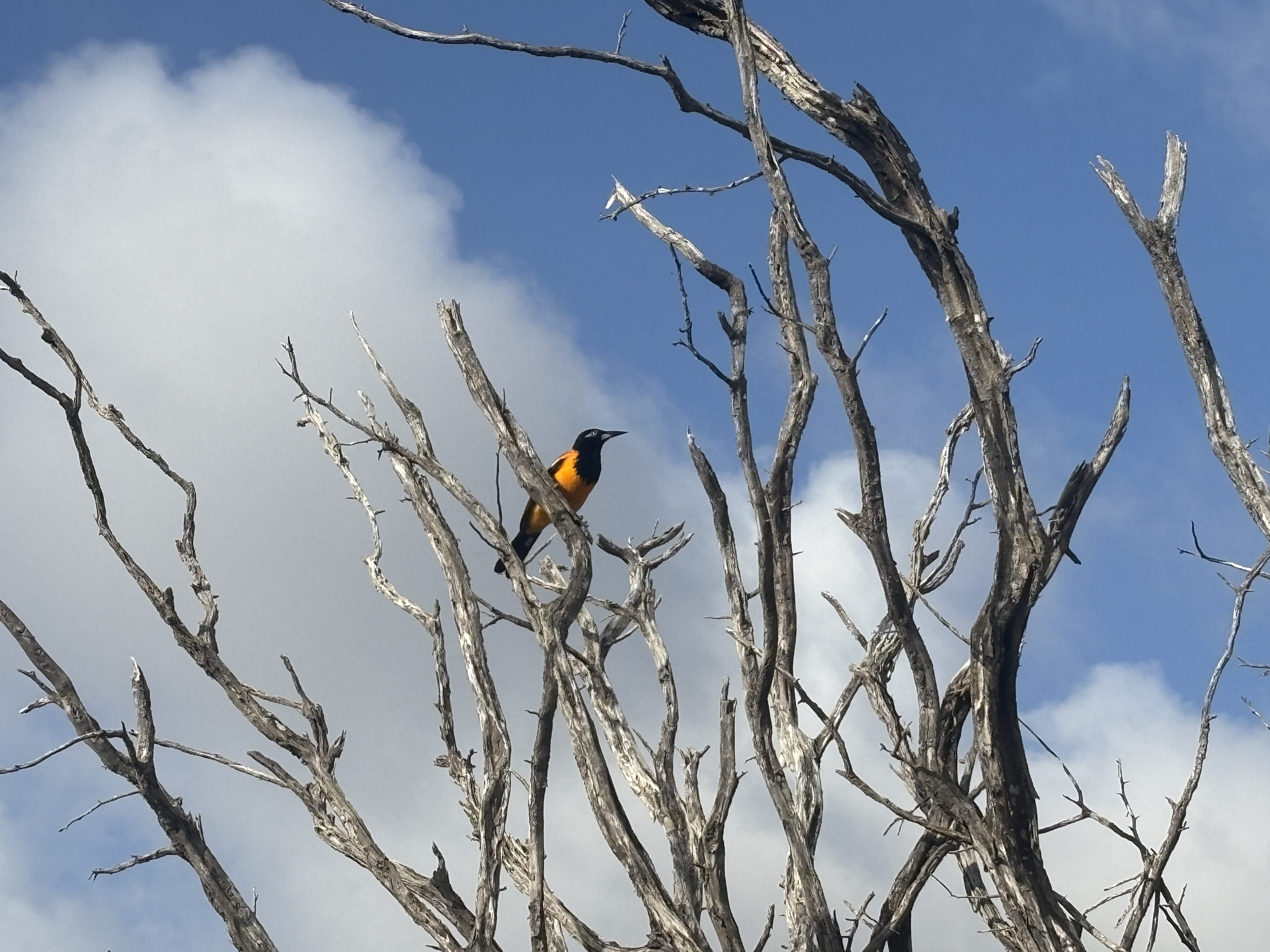
There are also many parrots, pelicans, and other birds. Is possible to encounter hummingbirds as well.
During the installation of a new radar bracket, Kamil realizes that the stainless steel steps we installed back in Assa caused corrosion on our aluminum mast. Over time, the mast will probably need replacement. We unscrewed all the steps to stop the corrosion, and next season, insulating bakelite inserts (made on a lathe) are planned to be used. Kamil needs to secure radar mount now to avoid removing the cable from the radar, which is originally sealed and currently causes no issues. In the other direction, the entire cable cannot be removed without dismantling the mast because a "pipe" was made at the bottom inside long ago, effectively preventing water leaks from the mast onto the hull's frame.
Therefore, he covers the radar mount with resin and fiberglass mat, and insulates the sides with rubber from an old fender. This will effectively stop the corrosion before bringing the bakelite insulating inserts. The entire radar mount is made anew from stainless steel angles. The previous aluminum one was delapidated by corrosion. The stainless steel reinforcements merely shifted the corrosion point and bought time to bring materials and tools. The new one came out well and should be durable. Fortunately, the deteriorating aluminum radar mount protected the mast from corrosion near the spreader, where breaking often occurs.
We are still not happy about the corrosion caused by the steps in other areas (the area of deep corrosion is at 20% of the mast's diameter). Nevertheless, this is not the only reason we are sailing more cautiously regarding speed and forces generated in the rigging. It is a sturdy yacht, but it has its years. Masts often break, for instance, when the shroud attachment fails.
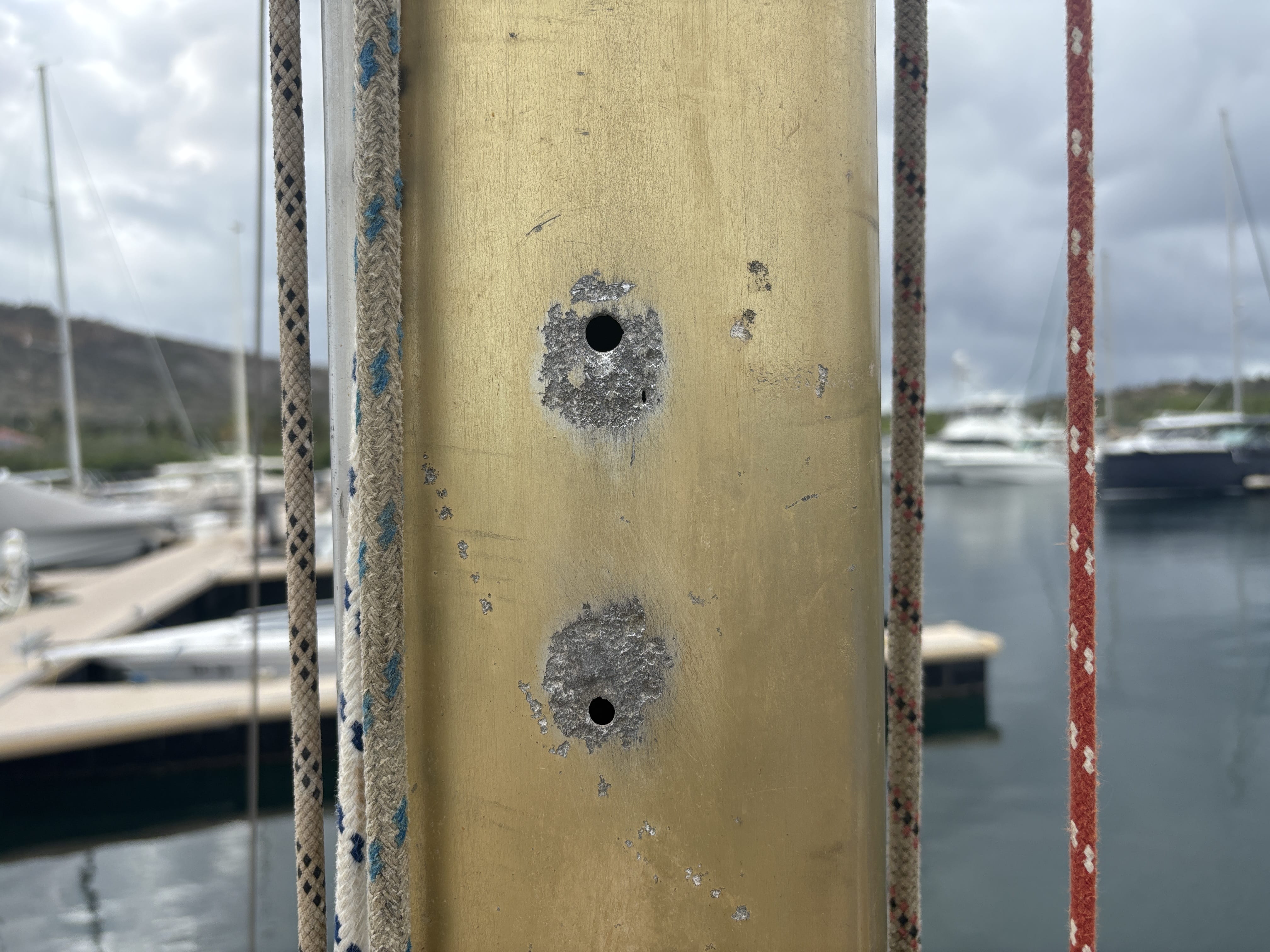
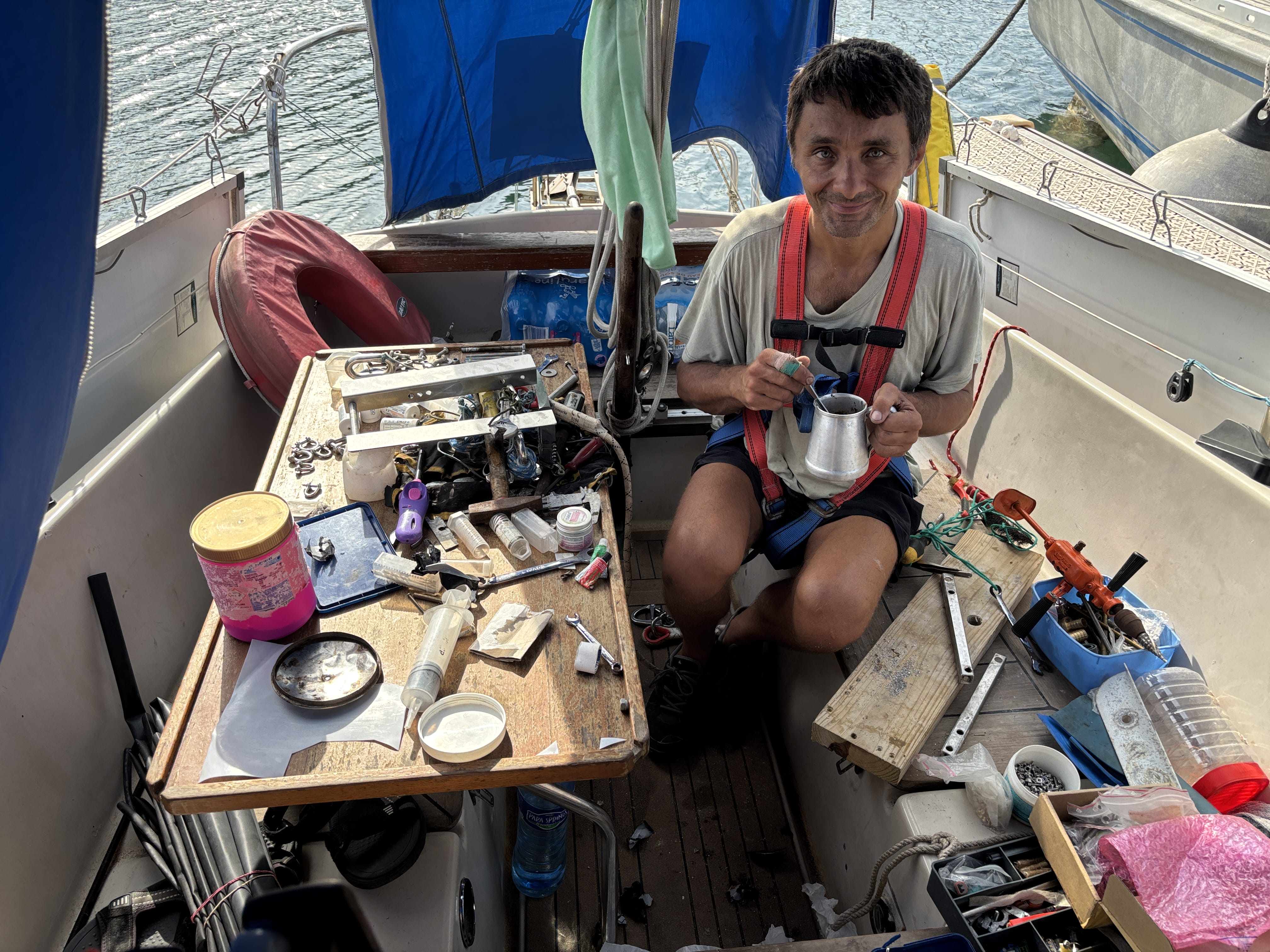
On Wednesday, 11.02, our journey back to Poland starts. Our Dutch neighbors told us about the TUI travel agency offering flights alone. Although the website is only in Dutch, tickets to Amsterdam are priced at 200 EUR - less than half the price of KLM. The flight is scheduled for 18:10, but the plan is to leave the marina at 12:00. It turns out that this hunch was correct - the taxi that arrived broke down and couldn't start. The taxi driver called his daughter for assistance, but before she arrived, Clement and Blanche show up - aware that the airport journey is expensive, they offer to drive us. Gratitude is immense. On the way, we stop for lunch at a small restaurant. On the owner's recommendation, the gentlemen order steak with rice, while the ladies choose kapsalon - chicken with fries, cheese, salad, and sauce. Everything is delicious and filling - perfect before a long flight.
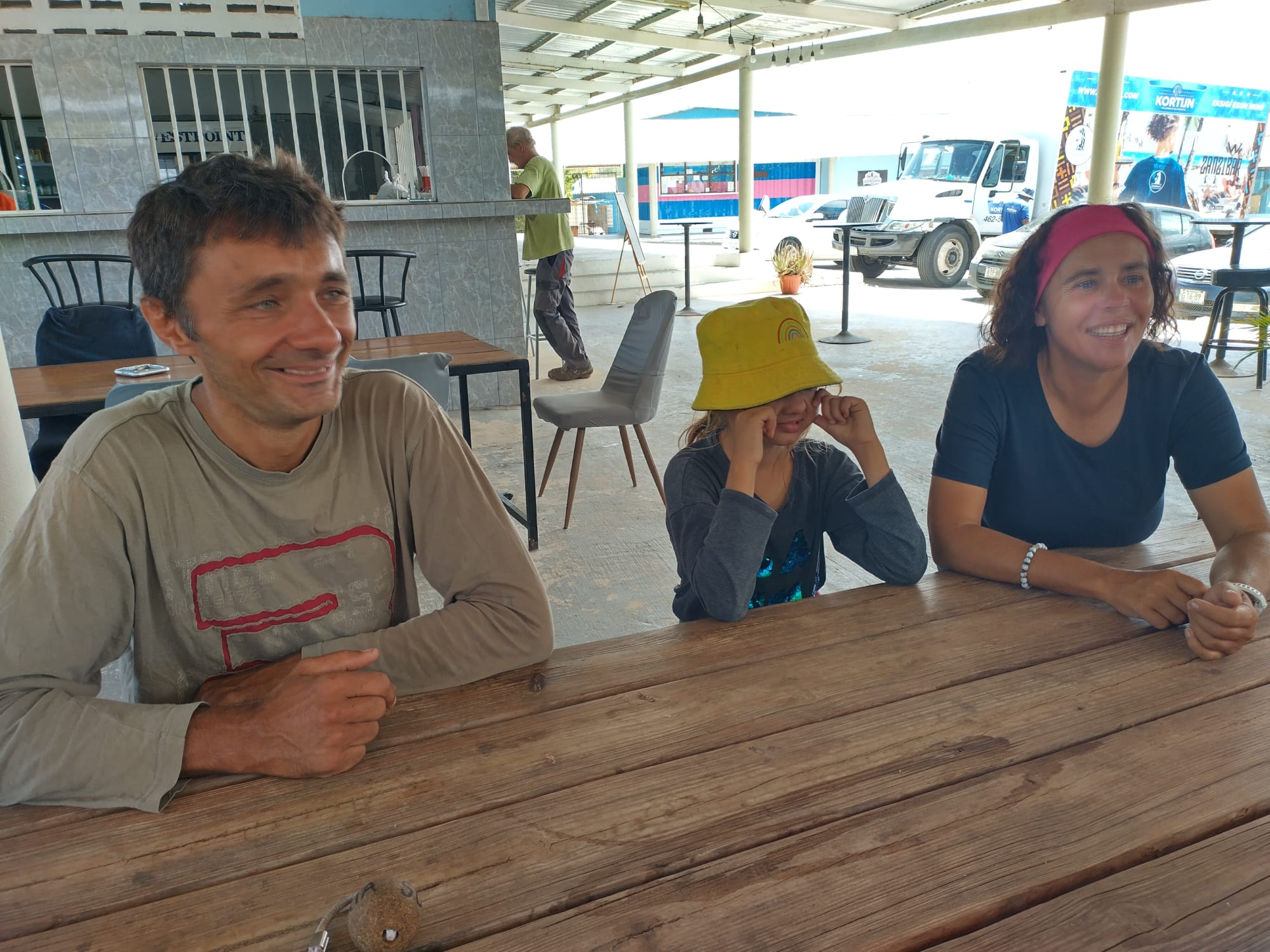
We arrive at the airport without further adventures. In Amsterdam, it turns out that buying cheap air tickets with a few days' notice is unrealistic (although search engines show available seats and the price 'up to', in reality, only much more expensive 'remaining seats' can be purchased). Therefore, we choose a 17-hour journey by direct bus (which makes stops at many stations along the way, hence the travel time). On the way, the bus is searched by German customs officers. Everyone get out! Line up and put your bags in front of you! It's raining and muddy. We're only wearing sweatshirts because we planned a quick transfer at the airport. Luggage on the ground!!! With the help of a dog, they find 2g of weed on one passenger, who they don't detain, but is supposed to receive a letter from the police. Finally, the passengers, in a panic, tear apart the package of documents and hand them over to each other. GDPR?
Tired but happy, we arrive in the wintry landscape of Warsaw.
Comments